<h2>Peugeot 3008 III (Phase I, 2023) e-3008 73 kWh (326 Hp) Dual Motor AWD</h2>
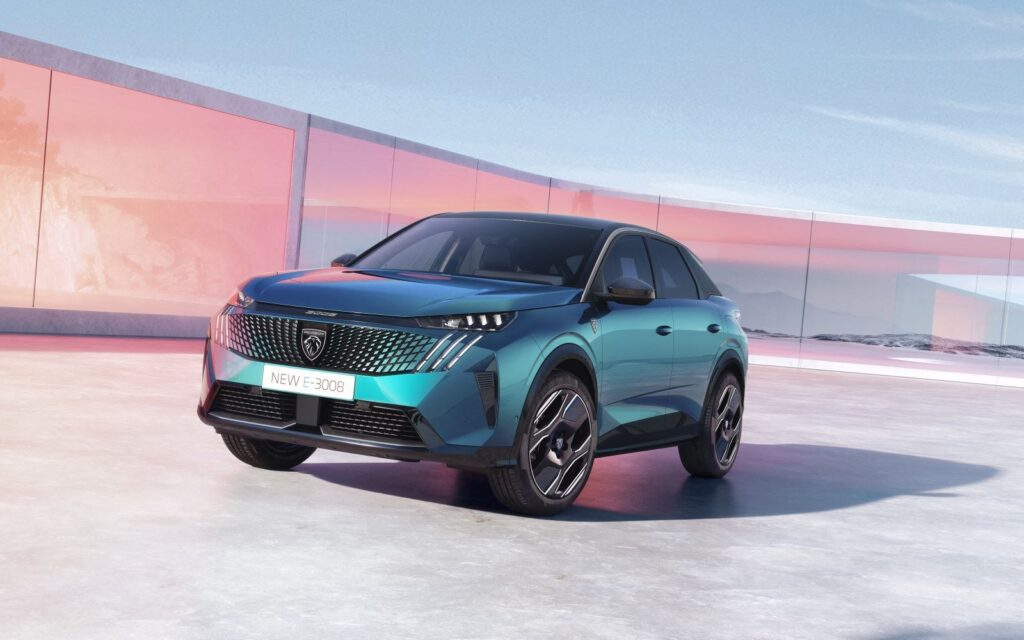
<p>The <strong>Peugeot 3008 III (Phase I, 2023) e-3008 73 kWh (326 Hp) Dual Motor AWD</strong> represents a significant leap for the French automaker into the burgeoning electric vehicle market, marking the third generation of its popular compact crossover SUV. Unveiled in September 2023, this iteration of the 3008 is a pivotal model in Peugeot’s electrification strategy, moving from internal combustion engines and mild hybrids to a dedicated Battery Electric Vehicle (BEV) architecture for its e-3008 variants. While Peugeot models are not widely available in the United States, the 3008 has been a cornerstone of the brand’s success in Europe and other international markets, consistently competing in the highly competitive C-segment SUV category. This all-electric, all-wheel-drive variant showcases Peugeot’s commitment to advanced technology, sustainable mobility, and a distinctive design language, targeting consumers seeking a blend of performance, efficiency, and modern aesthetics in an electric SUV.</p>
<h3>Powertrain and Dynamic Performance</h3>
<p>At the heart of the <strong>Peugeot 3008 III (Phase I, 2023) e-3008 73 kWh (326 Hp) Dual Motor AWD</strong> lies a sophisticated dual-motor electric powertrain, engineered to deliver compelling performance and enhanced traction. This BEV architecture features two synchronous electric motors, one positioned on the front axle and another on the rear, facilitating an intelligent all-wheel-drive (AWD) system. The front electric motor provides a robust 213 horsepower at a wide rev range of 4370-14000 rpm, paired with 252.98 lb-ft of torque available from 250 rpm up to 4370 rpm. Complementing this, the rear electric motor contributes 113 horsepower, peaking between 4760-14000 rpm, and 122.44 lb-ft of torque from a standstill up to 4760 rpm. The combined system output is an impressive 326 horsepower, channeled through a single-speed automatic transmission.</p>
<p>This potent electric setup allows the e-3008 to accelerate from 0 to 60 mph in a swift 6.1 seconds, with a 0-62 mph (0-100 km/h) time of 6.4 seconds, placing it firmly among the more dynamic electric SUVs in its class. The vehicle’s top speed is electronically limited to 111.85 mph (180 km/h), a common practice for electric vehicles to optimize range and battery longevity. The weight-to-power ratio stands at 6.7 kg per horsepower, or 148.2 horsepower per tonne, underscoring its energetic character despite a curb weight of 4847.97 lbs. The drivetrain architecture ensures optimal power distribution, enhancing stability and grip in various driving conditions.</p>
<h3>Battery Technology and Efficiency</h3>
<p>Powering the e-3008 is a high-voltage, 400V Lithium nickel manganese cobalt oxides (Li-NMC) battery with a gross capacity of 73 kWh. This advanced battery technology is renowned for its energy density and performance characteristics. Strategically located below the floor, the battery pack contributes to a low center of gravity, which benefits handling dynamics, and weighs 1146.4 lbs. According to the WLTP (Worldwide Harmonized Light Vehicles Test Procedure) standard, the e-3008 offers an impressive all-electric range of 326.22 miles (525 km) on a single charge. This range makes it a practical option for both daily commuting and longer journeys. Energy consumption is rated at an efficient 13.9 kWh per 100 km, or 22.37 kWh per 100 miles, equating to an estimated 151 MPGe (Miles Per Gallon equivalent) and 4.5 miles per kWh, highlighting its strong energy efficiency credentials.</p>
<h3>Progressive Design and Features of the Peugeot 3008 III (Phase I, 2023)</h3>
<p>The third-generation Peugeot 3008, and specifically the e-3008, embodies a radical evolution in design, moving towards a more coupe-SUV silhouette while retaining the practicality of a traditional SUV. With its distinctive “fastback” profile, the e-3008 sets itself apart with a bold and futuristic aesthetic. The vehicle measures 178.82 inches in length, 74.61 inches in width, and 64.61 inches in height, with a substantial wheelbase of 107.83 inches, providing a commanding road presence and a spacious cabin. The ground clearance of 7.8 inches offers capability over varied terrains, typical of the SUV segment.</p>
<p>Inside, the e-3008 continues Peugeot’s innovative i-Cockpit philosophy, which typically includes a compact steering wheel, a head-up digital instrument cluster, and a large central touchscreen. For a modern electric vehicle, this setup is expected to be highly digital and customizable, featuring advanced infotainment systems, connectivity options, and driver-assistance technologies. While specific features like adaptive cruise control or lane-keeping assist are not detailed in the raw data, they are standard expectations for a premium electric SUV launched in 2023.</p>
<p>The vehicle is designed as a 5-door SUV with seating for five occupants. Practicality is maintained with a minimum trunk space of 16.6 cubic feet (470 liters), which is competitive for the segment. The e-3008 also boasts a permitted trailer load with brakes of 2976.24 lbs (1350 kg), showcasing its versatility. Chassis dynamics are supported by an independent McPherson strut front suspension and an independent multi-link rear suspension, promising a balanced ride and handling. Braking power comes from ventilated discs, measuring 365×37 mm at the front and 356×26 mm at the rear, ensuring confident stopping performance. Standard safety features include ABS (Anti-lock braking system), and the vehicle rides on 235/55 R19 or 235/50 R20 tires, mounted on 19-inch or 20-inch wheel rims, respectively.</p>
<h3>Technical Specifications</h3>
<table border=”1″ style=”width:100%; border-collapse: collapse;”>
<tr><th style=”padding: 8px; text-align: left; background-color: #f2f2f2;”>Category</th><th style=”padding: 8px; text-align: left; background-color: #f2f2f2;”>Specification</th></tr>
<tr><td style=”padding: 8px; border: 1px solid #ddd;”>Brand</td><td style=”padding: 8px; border: 1px solid #ddd;”>Peugeot</td></tr>
<tr><td style=”padding: 8px; border: 1px solid #ddd;”>Model</td><td style=”padding: 8px; border: 1px solid #ddd;”>3008</td></tr>
<tr><td style=”padding: 8px; border: 1px solid #ddd;”>Generation</td><td style=”padding: 8px; border: 1px solid #ddd;”>3008 III (Phase I, 2023)</td></tr>
<tr><td style=”padding: 8px; border: 1px solid #ddd;”>Type (Engine)</td><td style=”padding: 8px; border: 1px solid #ddd;”>e-3008 73 kWh (326 Hp) Dual Motor AWD</td></tr>
<tr><td style=”padding: 8px; border: 1px solid #ddd;”>Start of Production</td><td style=”padding: 8px; border: 1px solid #ddd;”>September, 2023</td></tr>
<tr><td style=”padding: 8px; border: 1px solid #ddd;”>Powertrain Architecture</td><td style=”padding: 8px; border: 1px solid #ddd;”>BEV (Electric Vehicle)</td></tr>
<tr><td style=”padding: 8px; border: 1px solid #ddd;”>Body Type</td><td style=”padding: 8px; border: 1px solid #ddd;”>SUV</td></tr>
<tr><td style=”padding: 8px; border: 1px solid #ddd;”>Seats</td><td style=”padding: 8px; border: 1px solid #ddd;”>5</td></tr>
<tr><td style=”padding: 8px; border: 1px solid #ddd;”>Doors</td><td style=”padding: 8px; border: 1px solid #ddd;”>5</td></tr>
<tr><td style=”padding: 8px; border: 1px solid #ddd;”>Fuel Type</td><td style=”padding: 8px; border: 1px solid #ddd;”>Electricity</td></tr>
<tr><td style=”padding: 8px; border: 1px solid #ddd;”>Acceleration 0-60 mph</td><td style=”padding: 8px; border: 1px solid #ddd;”>6.1 sec</td></tr>
<tr><td style=”padding: 8px; border: 1px solid #ddd;”>Maximum Speed</td><td style=”padding: 8px; border: 1px solid #ddd;”>111.85 mph (180 km/h)</td></tr>
<tr><td style=”padding: 8px; border: 1px solid #ddd;”>Gross Battery Capacity</td><td style=”padding: 8px; border: 1px solid #ddd;”>73 kWh</td></tr>
<tr><td style=”padding: 8px; border: 1px solid #ddd;”>Battery Voltage</td><td style=”padding: 8px; border: 1px solid #ddd;”>400 V</td></tr>
<tr><td style=”padding: 8px; border: 1px solid #ddd;”>Battery Technology</td><td style=”padding: 8px; border: 1px solid #ddd;”>Lithium nickel manganese cobalt oxides (Li-NMC)</td></tr>
<tr><td style=”padding: 8px; border: 1px solid #ddd;”>Battery Weight</td><td style=”padding: 8px; border: 1px solid #ddd;”>1146.4 lbs (520 kg)</td></tr>
<tr><td style=”padding: 8px; border: 1px solid #ddd;”>Battery Location</td><td style=”padding: 8px; border: 1px solid #ddd;”>Below the floor</td></tr>
<tr><td style=”padding: 8px; border: 1px solid #ddd;”>All-Electric Range (WLTP)</td><td style=”padding: 8px; border: 1px solid #ddd;”>326.22 mi (525 km)</td></tr>
<tr><td style=”padding: 8px; border: 1px solid #ddd;”>Average Energy Consumption (WLTP)</td><td style=”padding: 8px; border: 1px solid #ddd;”>22.37 kWh/100 mi (13.9 kWh/100 km) / 151 MPGe</td></tr>
<tr><td style=”padding: 8px; border: 1px solid #ddd;”>Electric Motor 1 Power (Front)</td><td style=”padding: 8px; border: 1px solid #ddd;”>213 Hp @ 4370-14000 rpm</td></tr>
<tr><td style=”padding: 8px; border: 1px solid #ddd;”>Electric Motor 1 Torque (Front)</td><td style=”padding: 8px; border: 1px solid #ddd;”>252.98 lb.-ft. (343 Nm) @ 250-4370 rpm</td></tr>
<tr><td style=”padding: 8px; border: 1px solid #ddd;”>Electric Motor 1 Location</td><td style=”padding: 8px; border: 1px solid #ddd;”>Front axle, Transverse</td></tr>
<tr><td style=”padding: 8px; border: 1px solid #ddd;”>Electric Motor 2 Power (Rear)</td><td style=”padding: 8px; border: 1px solid #ddd;”>113 Hp @ 4760-14000 rpm</td></tr>
<tr><td style=”padding: 8px; border: 1px solid #ddd;”>Electric Motor 2 Torque (Rear)</td><td style=”padding: 8px; border: 1px solid #ddd;”>122.44 lb.-ft. (166 Nm) @ 0-4760 rpm</td></tr>
<tr><td style=”padding: 8px; border: 1px solid #ddd;”>Electric Motor 2 Location</td><td style=”padding: 8px; border: 1px solid #ddd;”>Rear axle, Transverse</td></tr>
<tr><td style=”padding: 8px; border: 1px solid #ddd;”>System Power</td><td style=”padding: 8px; border: 1px solid #ddd;”>326 Hp</td></tr>
<tr><td style=”padding: 8px; border: 1px solid #ddd;”>Kerb Weight</td><td style=”padding: 8px; border: 1px solid #ddd;”>4847.97 lbs (2199 kg)</td></tr>
<tr><td style=”padding: 8px; border: 1px solid #ddd;”>Trunk (Boot) Space – Minimum</td><td style=”padding: 8px; border: 1px solid #ddd;”>16.6 cu. ft. (470 l)</td></tr>
<tr><td style=”padding: 8px; border: 1px solid #ddd;”>Permitted Trailer Load with Brakes (12%)</td><td style=”padding: 8px; border: 1px solid #ddd;”>2976.24 lbs (1350 kg)</td></tr>
<tr><td style=”padding: 8px; border: 1px solid #ddd;”>Length</td><td style=”padding: 8px; border: 1px solid #ddd;”>178.82 in (4542 mm)</td></tr>
<tr><td style=”padding: 8px; border: 1px solid #ddd;”>Width</td><td style=”padding: 8px; border: 1px solid #ddd;”>74.61 in (1895 mm)</td></tr>
<tr><td style=”padding: 8px; border: 1px solid #ddd;”>Height</td><td style=”padding: 8px; border: 1px solid #ddd;”>64.61 in (1641 mm)</td></tr>
<tr><td style=”padding: 8px; border: 1px