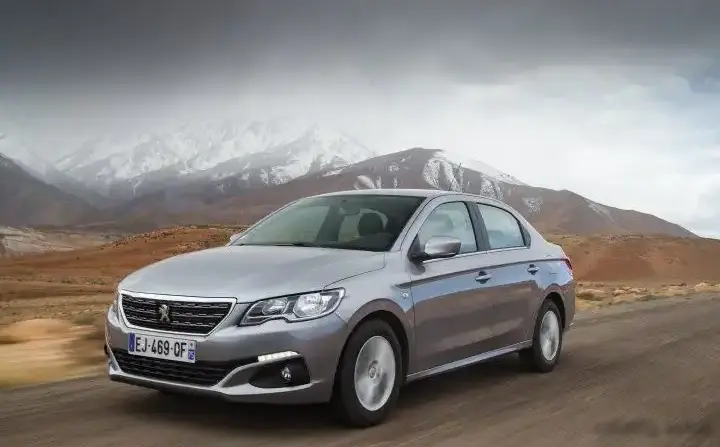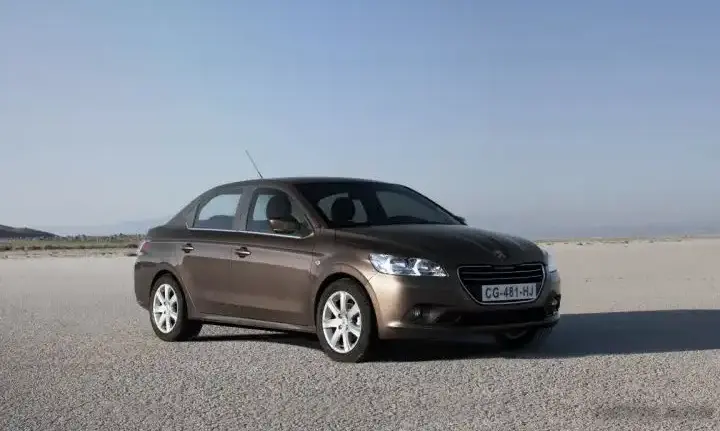
The Peugeot 301 1.6 VTi (115 hp) was a compact sedan produced by the French automaker Peugeot between 2012 and 2017. Positioned as an entry-level model within the 301 range, it was primarily aimed at emerging markets and offered a more affordable alternative to the larger and more technologically advanced Peugeot 308. The 301, and consequently the 1.6 VTi variant, represented Peugeot’s attempt to regain a foothold in segments where value-for-money was a key purchasing factor. It was built on the EMP1 platform, shared with the Citroën C-Elysée, and designed with a focus on practicality and affordability. This model was particularly significant in regions like North Africa, the Middle East, and parts of South America.
Technical Specifications
| Brand | Peugeot |
| Model | 301 |
| Generation | 301 |
| Type (Engine) | 1.6 VTi (115 Hp) |
| Start of production | 2012 |
| End of production | 2017 |
| Powertrain Architecture | Internal Combustion engine |
| Body type | Sedan |
| Seats | 5 |
| Doors | 4 |
| Fuel consumption (urban) | 8.8 l/100 km (26.7 US mpg) |
| Fuel consumption (extra urban) | 5.3 l/100 km (44.4 US mpg) |
| Fuel consumption (combined) | 6.5 l/100 km (36.2 US mpg) |
| Fuel Type | Petrol (Gasoline) |
| Acceleration 0 – 100 km/h | 10.3 sec |
| Acceleration 0 – 62 mph | 10.3 sec |
| Acceleration 0 – 60 mph | 9.8 sec |
| Maximum speed | 188 km/h (116.82 mph) |
| Emission standard | Euro 5 |
| Weight-to-power ratio | 9.5 kg/Hp |
| Weight-to-torque ratio | 7.3 kg/Nm |
| Power | 115 Hp @ 6050 rpm |
| Torque | 150 Nm @ 4000 rpm (110.63 lb.-ft. @ 4000 rpm) |
| Engine layout | Front, Transverse |
| Engine Model/Code | NFP EC5 |
| Engine displacement | 1587 cm3 (96.84 cu. in.) |
| Number of cylinders | 4 |
| Engine configuration | Inline |
| Number of valves per cylinder | 4 |
| Fuel injection system | Multi-port manifold injection |
| Engine aspiration | Naturally aspirated engine |
| Engine oil capacity | 3.25 l (3.43 US qt | 2.86 UK qt) |
| Kerb Weight | 1090 kg (2403.04 lbs.) |
| Max. weight | 1524 kg (3359.84 lbs.) |
| Max load | 434 kg (956.81 lbs.) |
| Trunk (boot) space – minimum | 506 l (17.87 cu. ft.) |
| Trunk (boot) space – maximum | 1332 l (47.04 cu. ft.) |
| Fuel tank capacity | 50 l (13.21 US gal | 11 UK gal) |
| Length | 4442 mm (174.88 in.) |
| Width | 1748 mm (68.82 in.) |
| Height | 1466 mm (57.72 in.) |
| Wheelbase | 2652 mm (104.41 in.) |
| Drivetrain Architecture | The Internal combustion engine (ICE) drives the front wheels of the vehicle. |
| Drive wheel | Front wheel drive |
| Number of gears and type of gearbox | 5 gears, manual transmission |
| Assisting systems | ABS (Anti-lock braking system) |
| Steering type | Steering rack and pinion |
Powertrain & Engine Architecture
The Peugeot 301 1.6 VTi utilized the NFP EC5 engine, a 1.6-liter inline-four cylinder gasoline engine. This engine was part of Peugeot’s ET3 family of engines, known for its relatively simple design and focus on fuel efficiency. The engine featured a multi-point fuel injection system, delivering fuel to each cylinder independently. The valvetrain employed four valves per cylinder (DOHC – Double Overhead Camshaft), contributing to improved breathing and power output. The 115 horsepower peak was achieved at 6050 rpm, while the 150 Nm (110.63 lb-ft) of torque was available at 4000 rpm. The engine was paired with a five-speed manual transmission, which was the standard offering for this variant. The transmission was chosen for its cost-effectiveness and simplicity, aligning with the overall value proposition of the 301.
Driving Characteristics
The 1.6 VTi engine, coupled with the five-speed manual transmission, provided adequate, though not exhilarating, performance. Acceleration from 0 to 100 km/h (0-62 mph) took approximately 10.3 seconds. In real-world driving, the engine felt responsive enough for everyday commuting and highway cruising, but lacked the punch of more powerful engines available in the 301 lineup. The gear ratios were tuned for fuel economy rather than outright performance. Compared to a potential diesel variant (which wasn’t widely available in all markets), the 1.6 VTi offered a smoother and quieter driving experience, but at the expense of fuel efficiency and low-end torque. The manual transmission allowed for a degree of driver engagement, but the shift quality was considered average by many reviewers.
Equipment & Trim Levels
The 301 1.6 VTi typically came with a base level of equipment, reflecting its position as an entry-level model. Standard features generally included power steering, central locking, electric front windows, and an ABS anti-lock braking system. Air conditioning was often an optional extra, as were features like alloy wheels, a radio with USB connectivity, and rear parking sensors. Interior upholstery was typically cloth, and the dashboard featured a functional, if somewhat basic, design. Higher trim levels, available at an additional cost, offered upgrades such as more premium interior materials, additional safety features, and enhanced infotainment systems.
Chassis & Braking
The Peugeot 301 utilized a conventional front-wheel-drive chassis with MacPherson strut suspension at the front and a torsion beam axle at the rear. The suspension setup was tuned for comfort rather than sporty handling. Braking was typically accomplished with disc brakes at the front and drum brakes at the rear, a cost-saving measure common in this segment. The ABS system provided enhanced braking control, particularly in emergency situations. The steering was a rack-and-pinion system, offering reasonable precision and feedback.
Market Reception & Comparison
The Peugeot 301 1.6 VTi was generally well-received in its target markets as a practical and affordable sedan. Critics praised its spacious interior, comfortable ride, and reasonable fuel economy. However, some reviewers noted the engine’s lack of refinement and the somewhat basic interior materials. Compared to other trims in the 301 lineup, such as the potential diesel variants, the 1.6 VTi offered a lower purchase price but sacrificed fuel efficiency and low-end torque. Against competitors like the Renault Symbol and the Dacia Logan, the 301 1.6 VTi offered a comparable level of value and practicality.
Legacy
The Peugeot 301, including the 1.6 VTi variant, proved to be a relatively reliable vehicle, particularly the engine and transmission combination. The NFP EC5 engine, while not known for its cutting-edge technology, was generally durable and relatively inexpensive to maintain. In the used car market, the 301 1.6 VTi remains an affordable option for buyers seeking a practical and economical sedan. However, potential buyers should be aware of the basic interior and the engine’s modest performance. The 301 played a role in Peugeot’s efforts to re-establish its presence in emerging markets, and its success paved the way for future models designed to appeal to value-conscious consumers.