Introduction: The Peugeot 304 1.3 SLS (75 Hp)
The Peugeot 304, a distinctive compact family car, represents a significant chapter in the French automaker’s history, bridging the gap between the smaller 204 and the larger 404/504 models. Launched in 1969, the 304 quickly established itself as a well-regarded offering in the competitive European C-segment. The model under scrutiny, the Peugeot 304 1.3 SLS (75 Hp), specifically refers to a variant produced between September 1976 and October 1979. This particular iteration of the 304 sedan emerged during the latter part of its production run, offering an enhanced engine specification and a more premium trim level, denoted by the “SLS” moniker. Positioned as a practical, comfortable, and efficient four-door sedan, the 304 was designed to appeal to families and individuals seeking reliable transportation with a touch of French flair and engineering prowess. While never officially imported into the United States, its design and mechanical philosophy greatly influenced global automotive trends, particularly in front-wheel-drive architecture and compact packaging.
The Peugeot 304 1.3 SLS (75 Hp): Engineering and Design
The Peugeot 304’s engineering was a testament to Peugeot’s innovative spirit, particularly its embrace of front-wheel-drive technology. Building upon the successful platform of the Peugeot 204, the 304 distinguished itself with a more modern aesthetic and a slightly larger footprint, particularly in the rear, to enhance passenger comfort and trunk capacity. The “SLS” designation typically indicated a higher trim level, often including improved interior appointments and a more powerful engine variant within the 304 range. This particular model, produced from 1976 to 1979, represents a refined version of the original 304 concept, incorporating subtle updates to maintain its competitiveness in the market.
Engine & Performance
At the heart of the Peugeot 304 1.3 SLS (75 Hp) lies a robust 1.3-liter (1290 cm³ or 78.72 cu. in.) naturally aspirated inline four-cylinder engine, designated by the internal code XL6S. This engine, a hallmark of Peugeot’s compact offerings during the era, featured a Single Overhead Camshaft (SOHC) valvetrain with two valves per cylinder. Fuel delivery was managed by a carburetor system, a common and reliable technology for the time, ensuring a balance of performance and economy. With a compression ratio of 8.8:1, the engine produced a respectable 75 horsepower at 6200 rpm, delivering a power per liter output of 58.1 Hp/l. Torque figures stood at 74.49 lb-ft (101 Nm) peaking at 3750 rpm, providing adequate pulling power for its segment.
The engine’s layout was front, transverse, a configuration that allowed for optimal packaging, maximizing interior space within the compact vehicle footprint. Power was sent to the front wheels via a four-speed manual transmission, a standard setup for European compacts of the era, offering a direct and engaging driving experience. This powertrain enabled the 304 1.3 SLS to achieve a top speed of 99.42 mph (160 km/h), a respectable figure for a family sedan in the mid-1970s. Its acceleration, while not blisteringly fast, was sufficient for daily driving and highway cruising. Fuel economy was also a strong suit, with an urban consumption estimated at 24.2 US mpg (9.7 l/100 km) and an impressive extra-urban figure of 36.2 US mpg (6.5 l/100 km), highlighting its efficiency for longer journeys.
Design & Features
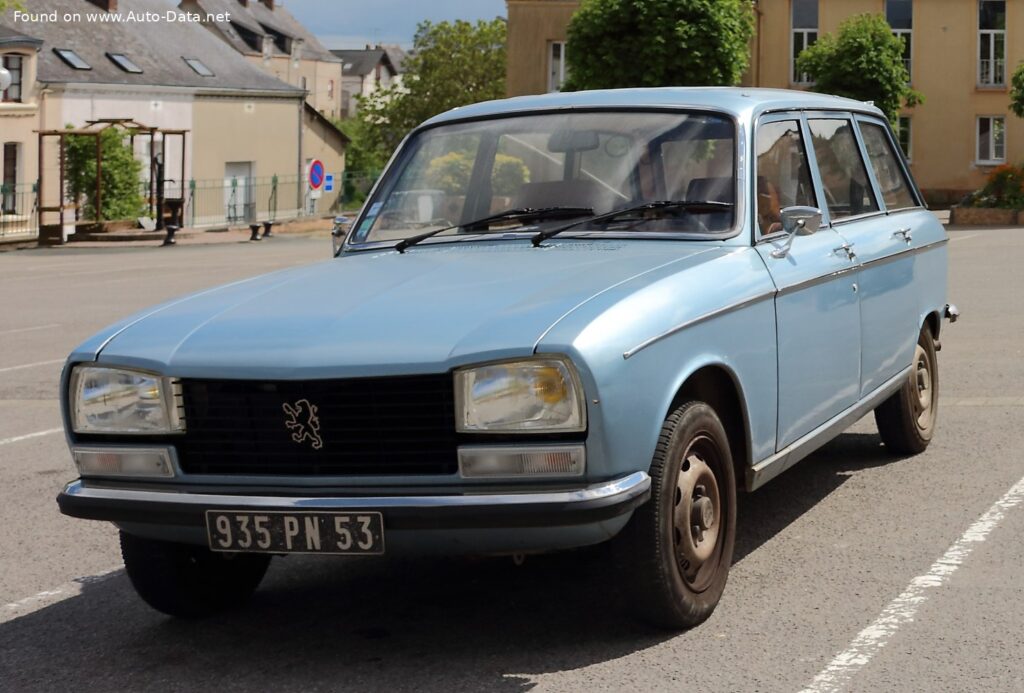
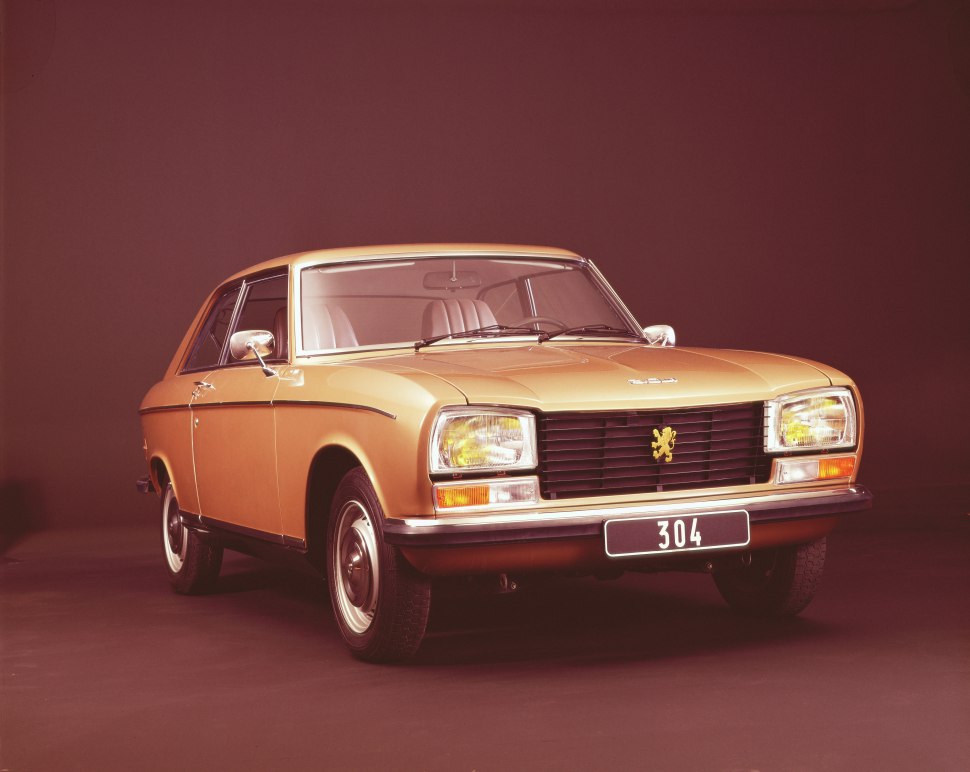
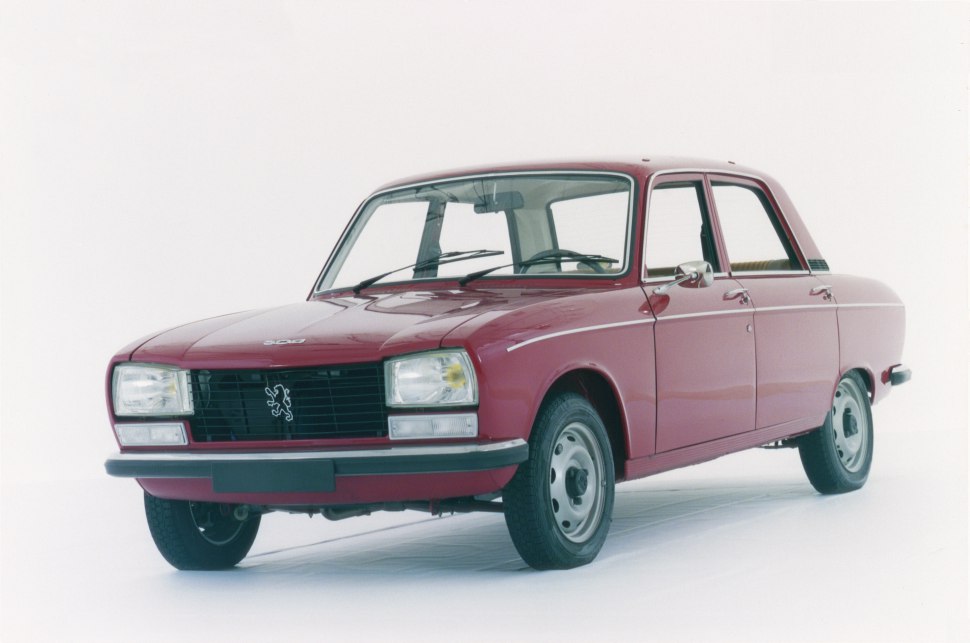
The Peugeot 304 1.3 SLS retained the elegant and understated styling that characterized Peugeot vehicles of the period. As a four-door sedan, it offered practical access for five occupants. Its overall length measured 162.99 inches (4140 mm) and width was 61.81 inches (1570 mm), making it a maneuverable vehicle suitable for European city streets while still providing comfortable interior space. The design featured a distinct front end, reminiscent of the larger 504, with trapezoidal headlights and a stylish grille. The rear, however, was unique to the 304, giving it a balanced and proportionate appearance.
Inside, the 304 1.3 SLS provided a functional and comfortable cabin. Seating for five was standard, with materials and finishes reflecting its “SLS” trim level, likely including better upholstery and more refined dashboard elements than base models. The trunk space was generous for its class, offering 14.66 cu. ft. (415 liters) of cargo capacity, making it a practical choice for family trips or grocery runs. The vehicle’s kerb weight of 2050.3 lbs (930 kg) contributed to its nimble handling and efficiency.
Mechanically, the 304 boasted an advanced chassis for its time. Both front and rear suspensions utilized independent coil springs, a sophisticated setup that contributed to the car’s renowned comfortable ride and predictable handling characteristics. This independent suspension on all four wheels was a significant advantage over many competitors that still relied on simpler, less refined rear axle designs. Braking duties were handled by disc brakes at the front and drum brakes at the rear, a common and effective combination for vehicles of its weight and performance. Steering was a cone worm with recirculation balls type, offering a reasonably precise feel and a minimum turning circle of 34.91 feet (10.64 m), aiding maneuverability in tight urban environments.
Technical Specifications: Peugeot 304 1.3 SLS (75 Hp) Sedan
| Category | Specification |
|---|---|
| General Information | |
| Brand | Peugeot |
| Model | 304 |
| Generation | 304 |
| Type (Engine) | 1.3 SLS (75 Hp) |
| Start of Production | September, 1976 |
| End of Production | October, 1979 |
| Powertrain Architecture | Internal Combustion Engine |
| Body Type | Sedan |
| Seats | 5 |
| Doors | 4 |
| Performance Specifications | |
| Fuel Consumption (Urban) | 9.7 l/100 km (24.2 US mpg) |
| Fuel Consumption (Extra Urban) | 6.5 l/100 km (36.2 US mpg) |
| Fuel Type | Petrol (Gasoline) |
| Maximum Speed | 160 km/h (99.42 mph) |
| Weight-to-Power Ratio | 12.4 kg/Hp (80.6 Hp/tonne) |
| Weight-to-Torque Ratio | 9.2 kg/Nm (108.6 Nm/tonne) |
| Engine Specifications | |
| Power | 75 Hp @ 6200 rpm |
| Power per Liter | 58.1 Hp/l |
| Torque | 101 Nm (74.49 lb-ft) @ 3750 rpm |
| Engine Layout | Front, Transverse |
| Engine Model/Code | XL6S |
| Engine Displacement | 1290 cm³ (1.3 liters / 78.72 cu. in.) |
| Number of Cylinders | 4 |
| Engine Configuration | Inline |
| Cylinder Bore | 78 mm (3.07 in.) |
| Piston Stroke | 67.5 mm (2.66 in.) |
| Compression Ratio | 8.8:1 |
| Number of Valves per Cylinder | 2 |
| Fuel Injection System | Carburetor |
| Engine Aspiration | Naturally Aspirated Engine |
| Valvetrain | SOHC |
| Dimensions, Volume & Weights | |
| Kerb Weight | 930 kg (2050.3 lbs) |
| Max. Weight (Gross Vehicle Weight) | 1330 kg (2932.15 lbs) |
| Max Load | 400 kg (881.85 lbs) |
| Trunk (Boot) Space – Minimum | 415 liters (14.66 cu. ft.) |
| Fuel Tank Capacity | 42 liters (11.1 US gal) |
| Permitted Trailer Load with Brakes (12%) | 950 kg (2094.39 lbs) |
| Length | 4140 mm (162.99 in.) |
| Width | 1570 mm (61.81 in.) |
| Ride Height (Ground Clearance) | 120 mm (4.72 in.) |
| Minimum Turning Circle (Turning Diameter) | 10.64 m (34.91 ft.) |
| Drivetrain, Brakes & Suspension | |
| Drivetrain Architecture | Front-wheel drive, Internal Combustion Engine |
| Drive Wheel | Front Wheel Drive |
| Number of Gears and Type of Gearbox | 4 gears, Manual Transmission |
| Front Suspension | Independent Coil Spring |
| Rear Suspension | Independent Coil Spring |
| Front Brakes | Disc |
| Rear Brakes | Drum |
| Steering Type | Cone worm with recirculation balls |
Legacy & Market Impact
The Peugeot 304, and specifically the 1.3 SLS variant, carved out a significant niche in the European automotive landscape of the 1970s. Its primary market was undoubtedly Europe, where it competed fiercely with rivals such as the Renault 12, Simca 1100, Ford Escort (European models), and Opel Kadett. What set the 304 apart was its blend of sophisticated engineering, particularly its all-independent suspension and front-wheel-drive architecture, which provided superior ride comfort and handling compared to many of its contemporaries. This made it a favorite among drivers who appreciated a refined driving experience in a compact package.
The 304’s reputation was built on its durability, practical design, and fuel efficiency – crucial factors during the energy crises of the 1970s. Its styling, though subtle, was considered elegant and timeless, contributing to its enduring appeal. The “SLS” trim level, with its enhanced engine and features, offered a more upscale option for discerning buyers, cementing the 304’s position as a versatile and desirable family car.
Despite its success in Europe, the Peugeot 304 was never officially sold in the United States. This was largely due to a combination of factors, including the differing market preferences in North America, which leaned towards larger vehicles, and the increasing stringency of US emissions and safety regulations that would have required significant and costly modifications for a European compact. Peugeot focused its limited resources on exporting larger models like the 504 to the US market, which were better suited to American tastes and regulatory requirements.
Today, the Peugeot 304, especially well-preserved examples like the 1.3 SLS, is regarded as a classic by enthusiasts. It represents a golden era of French automotive design and engineering, showcasing Peugeot’s commitment to innovation and driver satisfaction. Its legacy lies in its contribution to the evolution of the front-wheel-drive family car, influencing subsequent generations of compact vehicles and solidifying Peugeot’s reputation as a manufacturer of robust, comfortable, and dynamically capable automobiles. The 304 remains a testament to practical European motoring, admired for its elegant simplicity and engineering integrity.