The Peugeot 304: A European Compact Icon
The Peugeot 304 1.4 GLD (45 Hp) represents a significant chapter in the history of compact family cars, particularly within the European market.
Introduced by the French automaker Peugeot in 1969, the 304 was conceived as a slightly larger and more upscale alternative to the highly successful Peugeot 204, sharing many of its mechanical components but offering a more refined aesthetic and improved interior space.
The specific variant under review, the 1.4 GLD (45 Hp) sedan, was produced from September 1976 to October 1979, falling within the later years of the 304’s production run.
This model was particularly notable for its diesel powertrain, a growing trend in Europe during the 1970s due to increasing fuel prices and a strong emphasis on economy.
While the Peugeot 304 itself was never officially imported to the United States, it played a crucial role in solidifying Peugeot’s reputation for building durable, comfortable, and efficient vehicles in its primary European markets.
It competed fiercely in the compact segment, offering a blend of French style, practicality, and, in this diesel iteration, exceptional fuel efficiency for its time.
Engine and Performance Characteristics of the Peugeot 304
The heart of the Peugeot 304 1.4 GLD (45 Hp) is its robust 1.4-liter (1357 cm3 or 82.81 cu. in.) naturally aspirated diesel engine, identified by the XL4D code.
This inline four-cylinder engine, with its front, transverse layout, was engineered for reliability and economy rather than outright speed.
It produced a modest 45 horsepower at 5000 rpm, which, by modern standards, might seem low, but was competitive for a compact diesel sedan of its era.
More importantly, the engine delivered a respectable 77 Nm (56.79 lb.-ft.) of torque at a low 2500 rpm. This low-end torque was crucial for everyday drivability, especially when navigating city traffic or carrying a full load, providing a feeling of robust, if unhurried, acceleration.
The engine featured a SOHC (Single Overhead Camshaft) valvetrain with two valves per cylinder, a common and reliable configuration for the period.
Its precombustion chamber injection system was typical for diesels of the 1970s, contributing to smoother operation and aiding cold starts compared to direct injection systems that would become more prevalent later.
With a high compression ratio of 23.3:1, the engine was designed to maximize efficiency from diesel fuel.
Power was transmitted to the front wheels via a 4-speed manual transmission, a standard setup for a compact car of its time, emphasizing driver engagement and allowing for optimal use of the engine’s torque band.
Performance figures reflect the car’s utilitarian focus. The 304 1.4 GLD could reach a maximum speed of 80.78 mph (130 km/h), making it suitable for highway travel, though not a speed demon.
Where it truly shined was in fuel economy. Urban consumption was rated at an impressive 37.9 US mpg (6.2 l/100 km), while extra-urban driving could yield up to 42.8 US mpg (5.5 l/100 km).
These figures were outstanding for the mid-to-late 1970s, making the diesel 304 a very attractive option for budget-conscious European families facing rising fuel costs.
Its weight-to-power ratio of 20.8 kg/Hp (48.1 Hp/tonne) and weight-to-torque ratio of 12.1 kg/Nm (82.4 Nm/tonne) underscore its efficient power delivery relative to its mass.
Design and Features of the Peugeot 304 Sedan
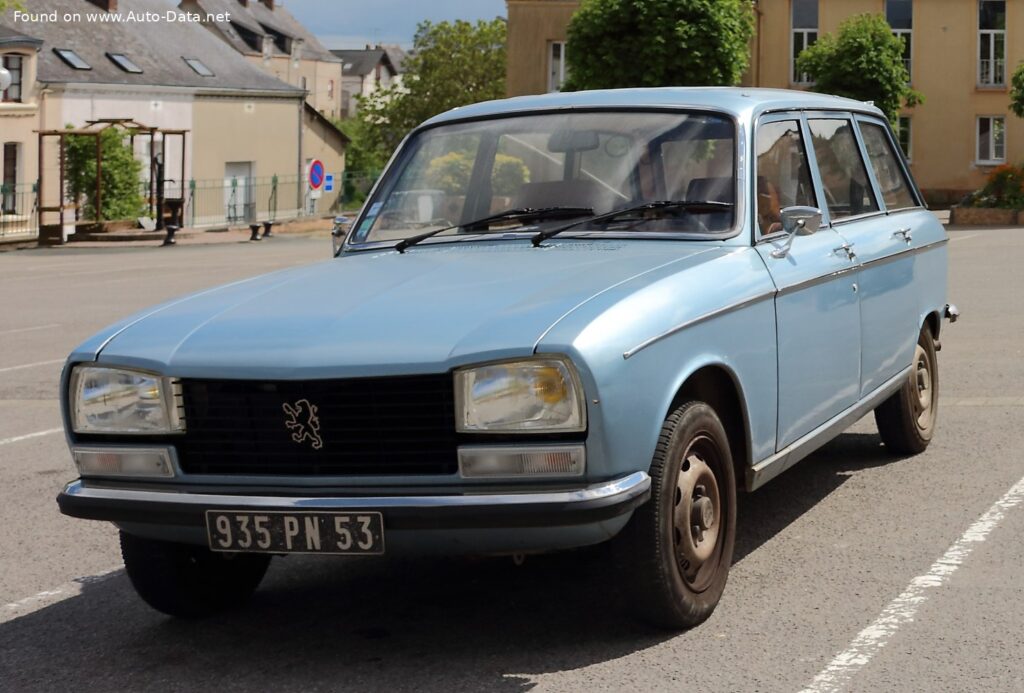
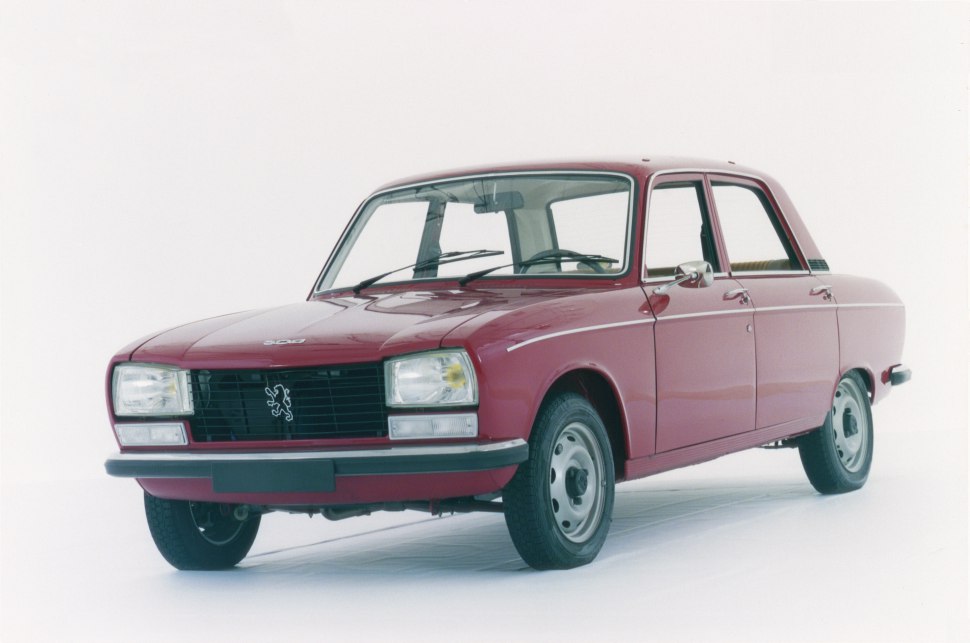
The Peugeot 304 sedan boasted a distinctive design, largely influenced by the Italian design house Pininfarina, which had a long-standing collaboration with Peugeot.
While sharing its central body structure and doors with the smaller 204, the 304 featured a more elegant and elongated front end, incorporating rectangular headlights that gave it a more modern and sophisticated appearance.
The rear also received a unique design, resulting in a longer overall length of 162.99 inches (4140 mm), contributing to a more balanced profile and improved trunk capacity.
With a width of 61.81 inches (1570 mm), it maintained a compact footprint suitable for European city driving and parking.
As a 4-door sedan, the 304 was designed for practicality and family use, offering seating for five occupants.
The interior, while not luxurious, was functional and comfortable, consistent with Peugeot’s reputation for building cars with good ride quality.
The independent coil spring suspension at both the front and rear contributed significantly to this comfort, providing a smooth ride over varied road surfaces, a hallmark of French automotive engineering.
Braking was handled by disc brakes at the front and drum brakes at the rear, a common and effective setup for vehicles of this segment and era.
The steering system, a cone worm with recirculation balls, offered predictable handling and feedback, ensuring ease of maneuverability with a minimum turning circle of 34.91 feet (10.64 meters).
Practicality was further enhanced by a generous trunk (boot) space of 14.66 cu. ft. (415 liters), making it capable of accommodating family luggage or grocery runs.
Its kerb weight of 2061.32 lbs (935 kg) made it a relatively light vehicle, contributing to its agile feel and excellent fuel economy.
With a maximum permissible load of 881.85 lbs (400 kg) and the ability to tow a trailer with brakes up to 1322.77 lbs (600 kg), the 304 proved itself a versatile workhorse for European families.
The 16.38 US gallon (62 liter) fuel tank provided a substantial range, further cementing its appeal as an economical long-distance cruiser.
Technical Specifications: Peugeot 304 1.4 GLD (45 Hp)
| General Information | |
|---|---|
| Brand | Peugeot |
| Model | 304 |
| Generation | 304 |
| Type (Engine) | 1.4 GLD (45 Hp) |
| Start of Production | September, 1976 |
| End of Production | October, 1979 |
| Powertrain Architecture | Internal Combustion engine |
| Body type | Sedan |
| Seats | 5 |
| Doors | 4 |
| Performance Specs | |
| Fuel consumption (economy) – urban | 6.2 l/100 km (37.9 US mpg) |
| Fuel consumption (economy) – extra urban | 5.5 l/100 km (42.8 US mpg) |
| Fuel Type | Diesel |
| Maximum speed | 130 km/h (80.78 mph) |
| Weight-to-power ratio | 20.8 kg/Hp (48.1 Hp/tonne) |
| Weight-to-torque ratio | 12.1 kg/Nm (82.4 Nm/tonne) |
| Engine Specs | |
| Power | 45 Hp @ 5000 rpm |
| Power per liter | 33.2 Hp/l |
| Torque | 77 Nm @ 2500 rpm (56.79 lb.-ft. @ 2500 rpm) |
| Engine layout | Front, Transverse |
| Engine Model/Code | XL4D |
| Engine displacement | 1357 cm3 (1.4 liters / 82.81 cu. in.) |
| Number of cylinders | 4 |
| Engine configuration | Inline |
| Cylinder Bore | 78 mm (3.07 in.) |
| Piston Stroke | 71 mm (2.8 in.) |
| Compression ratio | 23.3:1 |
| Number of valves per cylinder | 2 |
| Fuel injection system | Precombustion chamber injection |
| Engine aspiration | Naturally aspirated engine |
| Valvetrain | SOHC |
| Engine oil capacity | 5 l (5.28 US qt) |
| Coolant | 6.5 l (6.87 US qt) |
| Space, Volume and Weights | |
| Kerb Weight | 935 kg (2061.32 lbs) |
| Max. weight | 1335 kg (2943.17 lbs) |
| Max load | 400 kg (881.85 lbs) |
| Trunk (boot) space – minimum | 415 l (14.66 cu. ft.) |
| Fuel tank capacity | 62 l (16.38 US gal) |
| Permitted trailer load with brakes (12%) | 600 kg (1322.77 lbs) |
| Dimensions | |
| Length | 4140 mm (162.99 in.) |
| Width | 1570 mm (61.81 in.) |
| Ride height (ground clearance) | 120 mm (4.72 in.) |
| Minimum turning circle (turning diameter) | 10.64 m (34.91 ft.) |
| Drivetrain, Brakes and Suspension Specs | |
| Drivetrain Architecture | The Internal combustion engine (ICE) drives the front wheels of the vehicle. |
| Drive wheel | Front wheel drive |
| Number of gears and type of gearbox | 4 gears, manual transmission |
| Front suspension | Independent coil spring |
| Rear suspension | Independent coil spring |
| Front brakes | Disc |
| Rear brakes | Drum |
| Steering type | Cone worm with recirculation balls |
Legacy and Market Impact of the Peugeot 304
The Peugeot 304 carved out a significant niche in the European compact car market throughout its production run, from 1969 to 1980.
The 1.4 GLD (45 Hp) variant, specifically, arrived at a time when the world was grappling with the energy crises of the 1970s.
This made its exceptional fuel economy a major selling point, positioning it as a sensible and economical choice for families and fleet operators alike.
Peugeot had a long-standing reputation for building robust and comfortable vehicles, and the 304 upheld this image, offering a durable chassis and a smooth ride that often surpassed its contemporaries.
In its primary European markets, the Peugeot 304 competed with a diverse range of vehicles.
Its direct rivals included models like the Renault 12, Fiat 128, Opel Kadett, Ford Escort (Mk2), and Volkswagen Golf (Mk1).
Against these competitors, the 304 distinguished itself with its more sophisticated independent suspension on all four wheels, its refined diesel engine option (which was less common in some rivals’ compact offerings during the early 70s), and a distinctive French design aesthetic.
While the Golf would later revolutionize the compact car segment with its hatchback practicality, the 304 offered a more traditional sedan package that appealed to a segment of the market valuing conventional styling and a larger trunk.
The 304’s legacy is tied to its role as a bridge between Peugeot’s earlier, more conservative designs and the more modern, front-wheel-drive platforms that would define the brand in the 1980s.
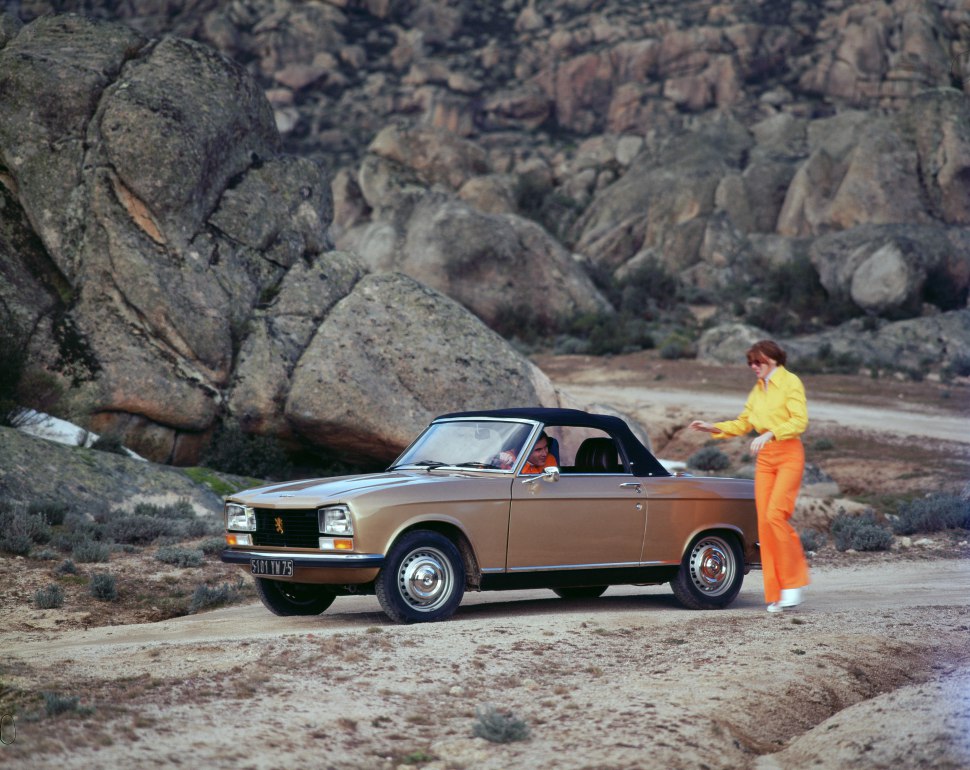
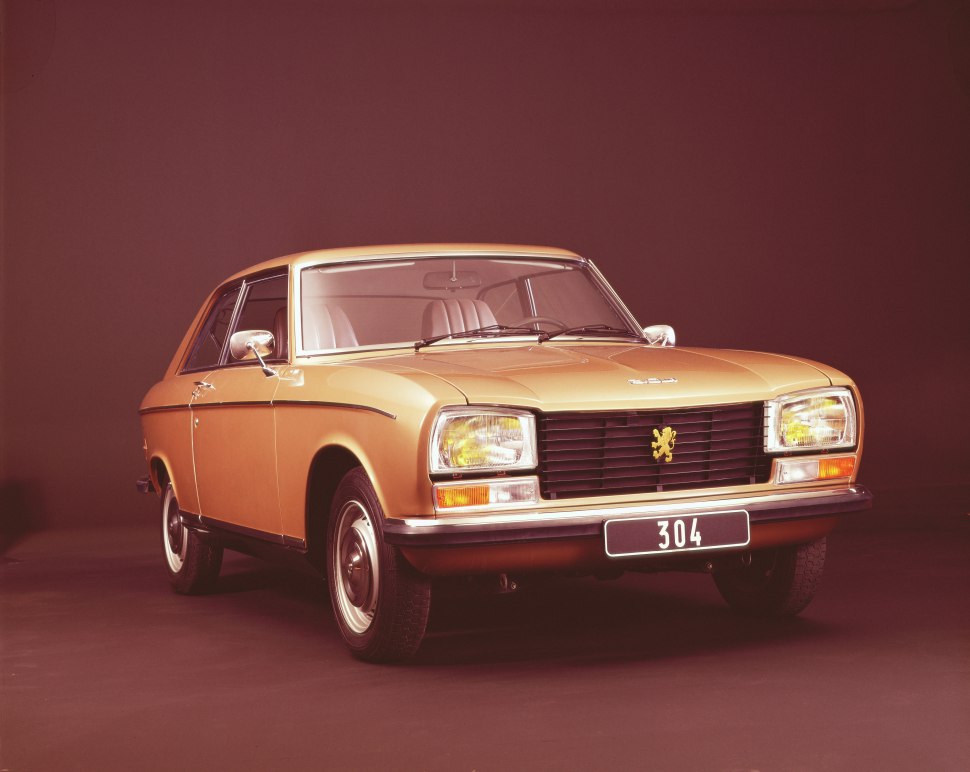
It was part of a successful family of vehicles, including coupe and cabriolet versions, which further diversified its appeal.
The diesel variant, in particular, helped establish Peugeot as a leader in diesel passenger car technology in Europe, a reputation that the brand would carry for decades.
Its reliability and low running costs made it a popular choice for taxi services and rural families, cementing its image as a dependable workhorse.
Today, the Peugeot 304 is regarded as a classic example of 1970s European automotive design and engineering, celebrated for its comfort, economy, and distinctive character, reflecting a pivotal era in automotive history where efficiency began to take precedence alongside style and performance.