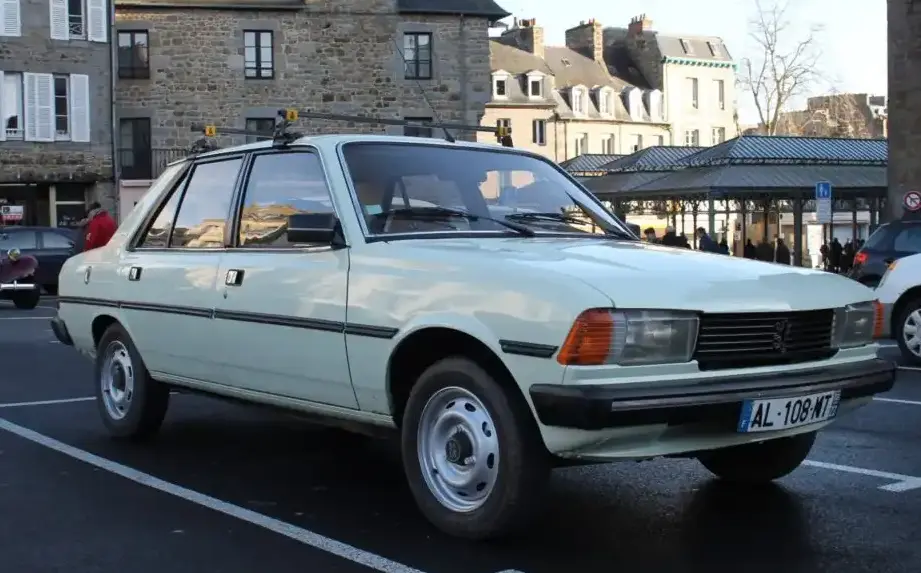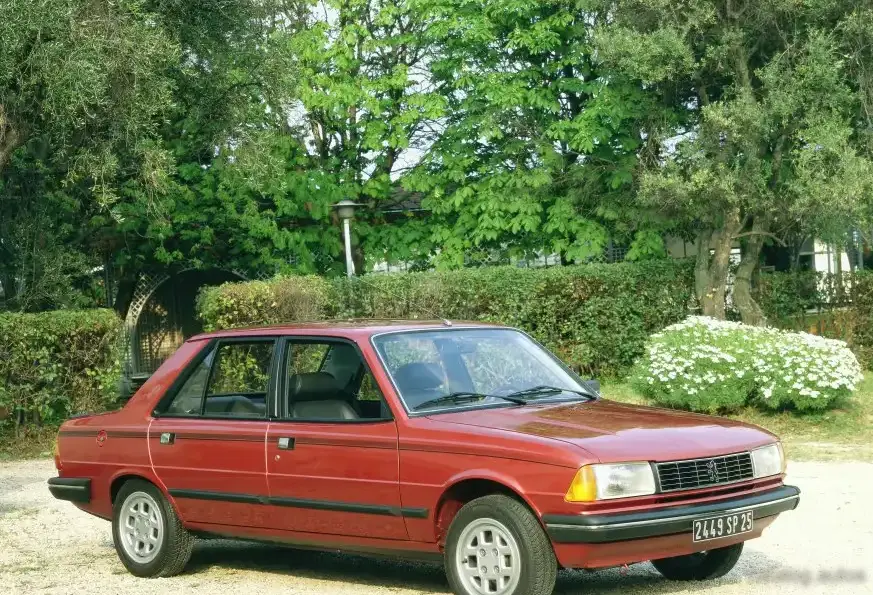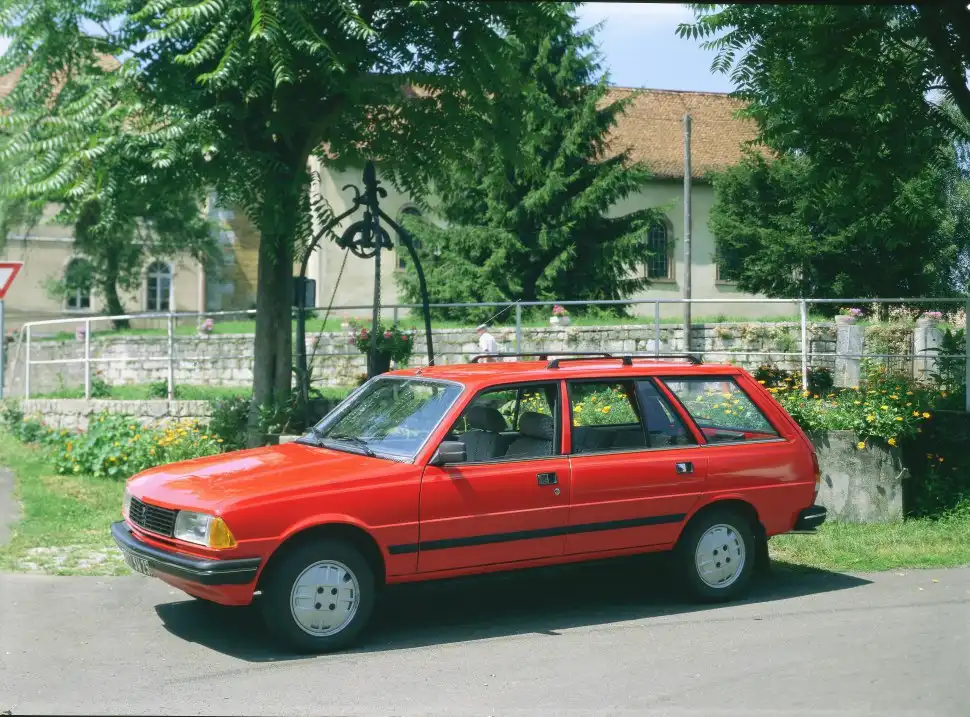
The Peugeot 305 II Break (581E) 1.9 Diesel, produced between 1982 and 1988, represents a practical and economical variant within the broader Peugeot 305 range. As a station wagon (estate) body style, the 581E aimed to provide family-oriented utility, particularly in European markets where fuel efficiency and load-carrying capacity were highly valued. This model occupied a mid-range position in the 305 lineup, offering a balance between affordability and functionality, slotting below the more powerful petrol (gasoline) engine options and often positioned as a workhorse alternative to the base models. The 305 itself was a significant vehicle for Peugeot, intended to modernize their offerings and compete with increasingly popular European rivals like the Volkswagen Passat and Ford Sierra.
Technical Specifications
| Brand | Peugeot |
| Model | 305 |
| Generation | 305 II Break (581E) |
| Type (Engine) | 1.9 Diesel (65 Hp) |
| Start of production | 1982 |
| End of production | 1988 |
| Powertrain Architecture | Internal Combustion engine |
| Body type | Station wagon (estate) |
| Fuel Type | Diesel |
| Power | 65 Hp |
| Engine Model/Code | 162 XUD9 |
| Engine aspiration | Naturally aspirated engine |
| Engine oil capacity | 5 l (5.28 US qt | 4.4 UK qt) |
| Coolant capacity | 9.5 l (10.04 US qt | 8.36 UK qt) |
Powertrain & Engine Architecture
The heart of the 305 II Break 1.9 Diesel is the XUD9 engine, specifically the 162 variant. This 1.9-liter, naturally aspirated diesel engine is an indirect injection design, a common characteristic of diesel engines of that era. The XUD9 family of engines were renowned for their robustness and longevity, becoming a staple in Peugeot and Citroën vehicles for many years. The indirect injection system utilizes a pre-chamber where fuel is initially injected and partially combusted, before being ignited in the main combustion chamber. This design reduces engine noise and improves combustion efficiency compared to direct injection systems of the time. The engine produces 65 horsepower (48 kW) and approximately 128 Nm (94 lb-ft) of torque. While not a performance powerhouse, the XUD9 delivers its torque at relatively low engine speeds, making it well-suited for hauling loads and providing reasonable acceleration in everyday driving. The engine is paired with a four-speed manual transmission, although a three-speed automatic transmission was also available, albeit less common. The automatic transmission was a simple hydraulic unit, prioritizing durability over shift speed.
Driving Characteristics
The 1.9 Diesel-powered 305 Break offers a driving experience focused on practicality and economy rather than outright performance. Acceleration is modest, with a 0-60 mph time estimated to be around 14-16 seconds. However, the engine’s torque characteristics provide adequate pulling power for loaded vehicles or when tackling inclines. The four-speed manual transmission allows for reasonable control over engine speed, while the optional automatic transmission provides convenience at the expense of some responsiveness. The suspension, typical of European cars of the period, is tuned for comfort and provides a relatively smooth ride, even on uneven surfaces. Steering is unassisted, requiring a bit more effort at low speeds, but providing good feedback. Compared to the petrol-powered 305 variants, the diesel model offers significantly better fuel economy, a major selling point for many buyers. The diesel’s lower horsepower output means it’s noticeably slower than the 1.6 or 2.0-liter petrol engines, but the increased torque makes it feel less strained when carrying a full load.
Equipment & Trim Levels
The 305 II Break 1.9 Diesel typically came equipped with a fairly basic level of standard features, reflecting its position as a value-oriented model. Interior upholstery was generally cloth, with durable and practical materials used throughout the cabin. The dashboard layout is functional, with clearly labeled controls. Standard equipment usually included a basic radio, heater, and manual windows. Optional extras included a sunroof, upgraded stereo system, and more comfortable seating. Higher trim levels, such as the GR (Grand Réserve) or SR (Super Réserve), offered additional features like central locking, electric windows, and upgraded interior trim. The Break (estate) body style inherently offered a large cargo area, making it a practical choice for families or those needing to transport bulky items. The rear seats could be folded down to further increase cargo capacity.
Chassis & Braking
The 305 II Break utilizes a traditional body-on-frame construction, providing a robust and durable chassis. The front suspension consists of independent wishbones with coil springs and anti-roll bar, while the rear suspension employs a live axle with leaf springs. Braking is typically accomplished with disc brakes on the front wheels and drum brakes on the rear wheels. The braking system is hydraulically assisted, providing adequate stopping power for the vehicle’s weight and performance. Steering is a recirculating ball system, offering a direct but somewhat heavy feel. Stabilizer bars (anti-roll bars) were often included, particularly on higher trim levels, to reduce body roll during cornering. The chassis and braking system were designed to provide a safe and reliable driving experience, prioritizing durability and ease of maintenance.
Market Reception & Comparison
The Peugeot 305 II Break 1.9 Diesel was generally well-received in European markets as a practical and economical family vehicle. Critics praised its fuel efficiency, spacious interior, and robust engine. However, some criticized its modest performance and somewhat dated interior design. Compared to other diesel-powered station wagons of the time, such as the Volkswagen Passat Diesel, the 305 offered a competitive level of fuel economy and practicality at a relatively affordable price point. The 305’s diesel engine was considered more refined than some of its competitors, offering a quieter and smoother driving experience. However, the Passat often offered a more modern interior and a wider range of available features. The 305’s simplicity and robust construction also made it a popular choice for fleet operators and commercial users.
Legacy
The Peugeot 305 II Break 1.9 Diesel, and the XUD9 engine in particular, have earned a reputation for exceptional reliability and longevity. Many examples are still on the road today, a testament to their robust construction and durable components. The XUD9 engine is known for its ability to withstand high mileage with minimal maintenance. In the used car market, these vehicles are often sought after by enthusiasts and those looking for a simple, reliable, and economical mode of transportation. While parts availability may be becoming more challenging, the XUD9 engine is relatively easy to work on, and many aftermarket parts are still available. The 305 Break 1.9 Diesel represents a significant chapter in Peugeot’s history, showcasing their commitment to building practical and durable vehicles for the masses.