
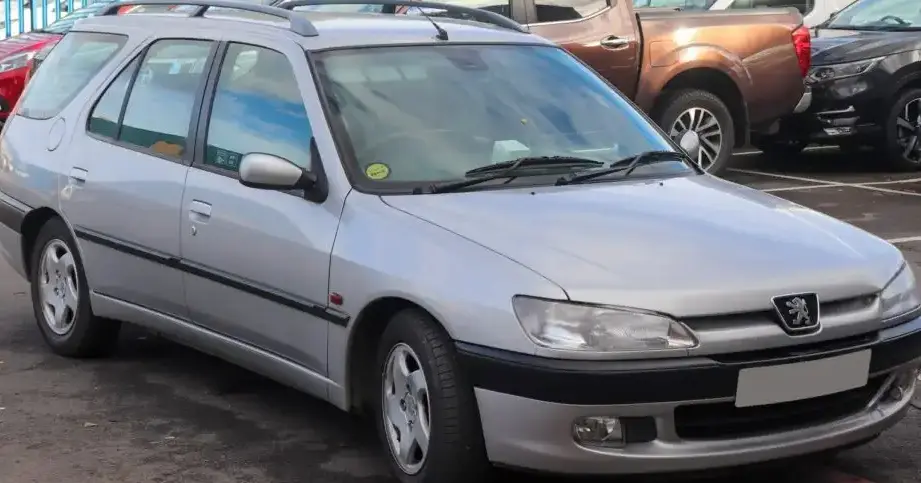
Technical Specifications
| Brand | Peugeot |
| Model | 306 |
| Generation | 306 Break (7E) |
| Type (Engine) | 2.0 HDi (90 Hp) |
| Start of production | 1999 year |
| End of production | 2002 year |
| Powertrain Architecture | Internal Combustion engine |
| Body type | Station wagon (estate) |
| Seats | 5 |
| Doors | 5 |
| Fuel consumption (urban) | 6.9 l/100 km (34.1 US mpg, 40.9 UK mpg, 14.5 km/l) |
| Fuel consumption (extra urban) | 4.3 l/100 km (54.7 US mpg, 65.7 UK mpg, 23.3 km/l) |
| Fuel Type | Diesel |
| Acceleration 0 – 100 km/h | 13.2 sec |
| Acceleration 0 – 62 mph | 13.2 sec |
| Acceleration 0 – 60 mph | 12.5 sec |
| Maximum speed | 181 km/h (112.47 mph) |
| Weight-to-power ratio | 13.3 kg/Hp, 75 Hp/tonne |
| Weight-to-torque ratio | 5.9 kg/Nm, 170.8 Nm/tonne |
| Power | 90 Hp @ 4000 rpm |
| Power per litre | 45.1 Hp/l |
| Torque | 205 Nm @ 2000 rpm (151.2 lb.-ft. @ 2000 rpm) |
| Engine layout | Front, Transverse |
| Engine Model/Code | RHY DW10TD |
| Engine displacement | 1997 cm3 (121.86 cu. in.) |
| Number of cylinders | 4 |
| Engine configuration | Inline |
| Cylinder Bore | 85 mm (3.35 in.) |
| Piston Stroke | 88 mm (3.46 in.) |
| Compression ratio | 18:1 |
| Number of valves per cylinder | 2 |
| Fuel injection system | Diesel Commonrail |
| Engine aspiration | Turbocharger |
| Valvetrain | DOHC |
| Engine oil capacity | 4.3 l (4.54 US qt | 3.78 UK qt) |
| Coolant | 8 l (8.45 US qt | 7.04 UK qt) |
| Kerb Weight | 1200 kg (2645.55 lbs.) |
| Max. weight | 1655 kg (3648.65 lbs.) |
| Max load | 455 kg (1003.1 lbs.) |
| Trunk (boot) space – minimum | 442 l (15.61 cu. ft.) |
| Trunk (boot) space – maximum | 1512 l (53.4 cu. ft.) |
| Fuel tank capacity | 60 l (15.85 US gal | 13.2 UK gal) |
| Length | 4338 mm (170.79 in.) |
| Width | 1680 mm (66.14 in.) |
| Height | 1415 mm (55.71 in.) |
| Wheelbase | 2580 mm (101.57 in.) |
| Front track | 1423-1433 mm (56.02 – 56.42 in.) |
| Rear (Back) track | 1424-1432 mm (56.06 – 56.38 in.) |
| Front overhang | 815 mm (32.09 in.) |
| Rear overhang | 943 mm (37.13 in.) |
| Drivetrain Architecture | The Internal combustion engine (ICE) drives the front wheels of the vehicle. |
| Drive wheel | Front wheel drive |
| Number of gears and type of gearbox | 5 gears, manual transmission |
| Front suspension | Wishbone |
| Rear suspension | Trailing arm |
| Front brakes | Disc |
| Rear brakes | Disc |
| Assisting systems | ABS (Anti-lock braking system) |
| Steering type | Steering rack and pinion |
| Power steering | Hydraulic Steering |
| Tires size | 185/65 R14 |
The Peugeot 306 Break 2.0 HDi was a station wagon variant produced between 1999 and 2002, falling within the latter part of the 306’s production run (1993-2002). This model, designated as the 7E series, represented a practical and fuel-efficient option within the 306 lineup, aimed at families and those requiring a versatile vehicle. It was positioned as a mid-range offering, bridging the gap between the more basic petrol engine options and the higher-performance, or more expensive diesel trims. The 306, in general, was a significant model for Peugeot, achieving considerable sales success in Europe and establishing the brand as a competitor in the compact family car segment.
Powertrain & Engine Architecture
The heart of the 306 Break 2.0 HDi was the RHY DW10TD engine, a 1.997-liter inline-four cylinder diesel. This engine was part of Peugeot’s DW10 family, known for its robust construction and relatively simple design. The ‘HDi’ designation signified the use of direct injection technology, specifically a common rail system. This system, a relatively new technology at the time, allowed for more precise fuel delivery, resulting in improved fuel economy, reduced emissions, and quieter operation compared to older diesel injection methods. The RHY engine featured a single turbocharger, providing a modest boost to increase power output. The engine utilized a double overhead camshaft (DOHC) valvetrain with two valves per cylinder. The 5-speed manual transmission was the standard offering, chosen for its efficiency and cost-effectiveness. The engine’s design prioritized torque delivery over outright horsepower, making it well-suited for hauling loads and providing relaxed cruising.
Driving Characteristics
The 90 hp 2.0 HDi engine in the 306 Break delivered a practical, if not exhilarating, driving experience. Acceleration was adequate for everyday driving, with a 0-60 mph time of around 12.5 seconds. The engine’s strong low-end torque made it easy to pull away from a standstill and maintain speed on inclines. However, it lacked the punch of the higher-output petrol versions, such as the 1.6 or 2.0-liter naturally aspirated engines. The 5-speed manual transmission was well-matched to the engine’s characteristics, with gear ratios optimized for fuel efficiency and relaxed cruising. Compared to the 1.9 TDI versions available in some markets, the 2.0 HDi offered a slightly smoother and quieter driving experience, though with a similar level of performance. The Break’s estate body style added weight compared to the hatchback, slightly impacting acceleration and handling.
Equipment & Trim Levels
The 306 Break 2.0 HDi typically came with a reasonable level of standard equipment. This included central locking, power steering, electric front windows, and an adjustable steering column. Interior upholstery was typically cloth, with a durable and practical finish. Optional extras included air conditioning, alloy wheels, a sunroof, and a CD player. Trim levels varied slightly depending on the market, but generally, the 2.0 HDi sat in the mid-range of the 306 Break lineup. It offered a step up in terms of engine refinement and fuel economy compared to the base models, without the added cost of the more luxurious or performance-oriented trims.
Chassis & Braking
The 306 Break utilized a relatively simple suspension setup, consisting of independent wishbones at the front and a trailing arm arrangement at the rear. This setup provided a comfortable ride quality, although it wasn’t particularly sporty. The 2.0 HDi models were equipped with disc brakes on all four wheels, providing adequate stopping power for the vehicle’s weight and performance. An Anti-lock Braking System (ABS) was standard, enhancing safety. The steering was rack and pinion, offering precise control. Tire size was typically 185/65 R14, providing a good balance between comfort and handling.
Market Reception & Comparison
The Peugeot 306 Break 2.0 HDi was generally well-received by critics and buyers alike. It was praised for its fuel efficiency, practicality, and comfortable ride. The HDi engine was seen as a significant improvement over older diesel engines, offering a quieter and more refined driving experience. Compared to petrol-powered 306s, the 2.0 HDi offered significantly better fuel economy, making it an attractive option for high-mileage drivers. However, some critics noted that the engine lacked the performance of the petrol alternatives. In terms of reliability, the DW10 engine family was generally considered to be robust, although common rail systems could be prone to issues if not properly maintained.
Legacy
The Peugeot 306 Break 2.0 HDi remains a relatively common sight on European roads today, testament to its durability and practicality. The DW10 engine has proven to be a long-lasting unit, capable of covering high mileages with proper maintenance. In the used car market, these models are often sought after by those looking for an affordable and fuel-efficient estate car. While not a particularly collectible model, the 306 Break 2.0 HDi represents a significant step forward in diesel engine technology and a practical choice for families and those needing a versatile vehicle. Its blend of fuel economy, practicality, and reasonable running costs ensures its continued relevance in the used car market.
