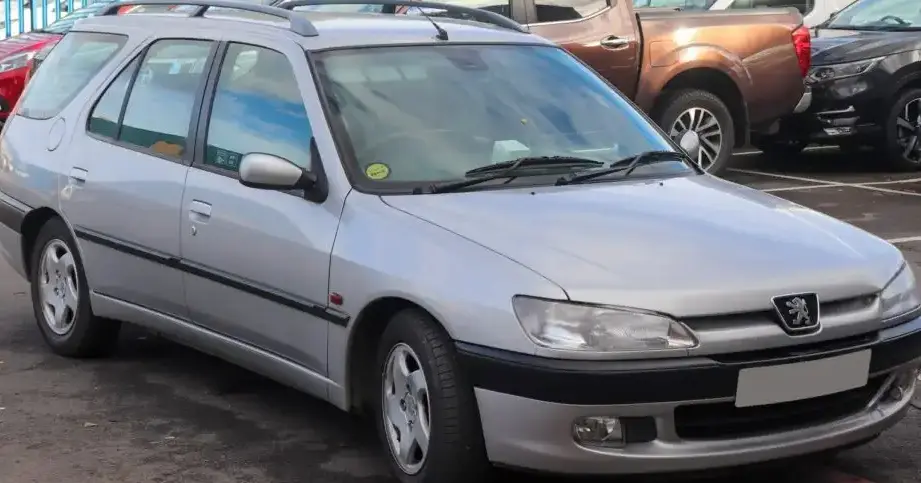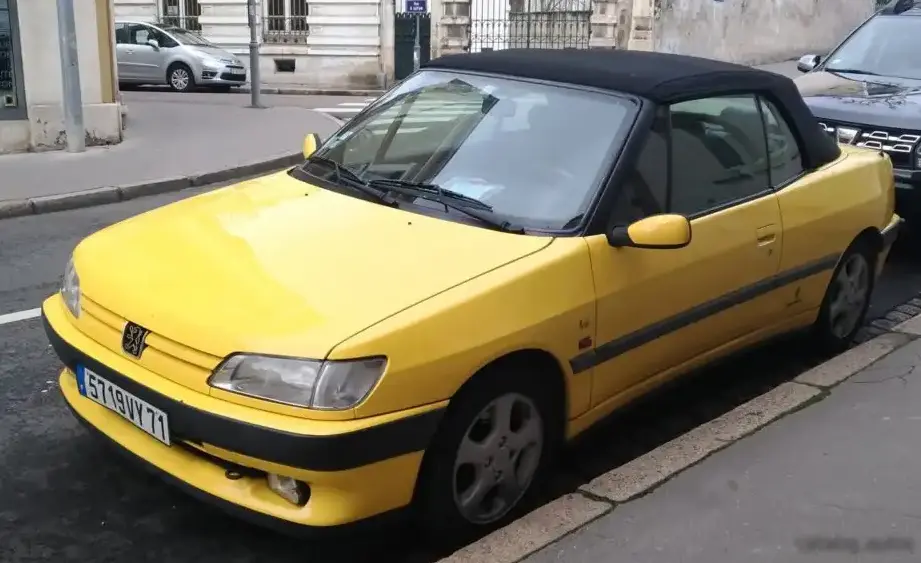
The Peugeot 306 Cabriolet 1.8 (101 hp) Automatic, produced between 1994 and 1997, represents a popular entry point into open-top motoring for European buyers during that period. Part of the 7D series, this variant occupied a mid-range position within the 306 Cabriolet lineup, offering a balance between affordability, reasonable performance, and convenience with its automatic transmission. It was built on the Peugeot 306 platform, sharing its underpinnings with the hatchback and saloon versions, but distinguished by its Pininfarina-designed convertible body style. This model aimed to provide a stylish and accessible convertible experience, appealing to drivers seeking a blend of practicality and leisure.
Technical Specifications
| Brand | Peugeot |
| Model | 306 |
| Generation | 306 Cabrio (7D) |
| Type (Engine) | 1.8 (101 Hp) Automatic |
| Start of production | 1994 |
| End of production | 1997 |
| Powertrain Architecture | Internal Combustion engine |
| Body type | Cabriolet |
| Seats | 4 |
| Doors | 2 |
| Fuel consumption (combined) | 8.2 l/100 km |
| Fuel consumption (US mpg) | 28.7 US mpg |
| Fuel consumption (UK mpg) | 34.4 UK mpg |
| Fuel consumption (km/l) | 12.2 km/l |
| Fuel Type | Petrol (Gasoline) |
| Acceleration 0 – 100 km/h | 12.6 sec |
| Acceleration 0 – 62 mph | 12.6 sec |
| Acceleration 0 – 60 mph | 12 sec |
| Maximum speed | 182 km/h (113.09 mph) |
| Weight-to-power ratio | 12.1 kg/Hp |
| Power | 101 Hp @ 6000 rpm |
| Power per litre | 57.3 Hp/l |
| Torque | 153 Nm @ 3000 rpm (112.85 lb.-ft. @ 3000 rpm) |
| Engine layout | Front, Transverse |
| Engine Model/Code | LFZ XU7JP |
| Engine displacement | 1762 cm3 (107.52 cu. in.) |
| Number of cylinders | 4 |
| Engine configuration | Inline |
| Cylinder Bore | 83 mm (3.27 in.) |
| Piston Stroke | 81.4 mm (3.2 in.) |
| Compression ratio | 9.2:1 |
| Number of valves per cylinder | 2 |
| Fuel injection system | Multi-port manifold injection |
| Engine aspiration | Naturally aspirated engine |
| Valvetrain | OHC |
| Engine oil capacity | 4.3 l (4.54 US qt | 3.78 UK qt) |
| Coolant capacity | 7.5 l (7.93 US qt | 6.6 UK qt) |
| Kerb Weight | 1220 kg (2689.64 lbs.) |
| Max. weight | 1570 kg (3461.26 lbs.) |
| Max load | 350 kg (771.62 lbs.) |
| Trunk (boot) space – minimum | 274 l (9.68 cu. ft.) |
| Fuel tank capacity | 56 l (14.79 US gal | 12.32 UK gal) |
| Length | 4144 mm (163.15 in.) |
| Width | 1689 mm (66.5 in.) |
| Height | 1356 mm (53.39 in.) |
| Wheelbase | 2540 mm (100 in.) |
| Front track | 1454 mm (57.24 in.) |
| Rear track | 1429 mm (56.26 in.) |
| Drivetrain Architecture | Front wheel drive |
| Number of gears | 4 |
| Gearbox type | Automatic transmission |
| Front suspension | Wishbone |
| Rear suspension | Trailing arm |
| Front brakes | Ventilated discs |
| Rear brakes | Drum |
| Assisting systems | ABS (Anti-lock braking system) |
| Steering type | Steering rack and pinion |
| Power steering | Hydraulic Steering |
| Tires size | 185/60 R14 |
| Wheel rims size | 14 |
Introduction
The Peugeot 306 Cabriolet 1.8 Automatic, launched in 1994, was a key model in Peugeot’s strategy to broaden its appeal in the competitive European compact car market. The 306 range, built on the 1HX0/A3 platform, was known for its practicality and affordability. The Cabriolet variant, designed by Pininfarina, added a touch of style and open-air enjoyment. The 1.8-liter engine paired with an automatic transmission was positioned as a comfortable and convenient option, aimed at buyers who prioritized ease of driving over outright performance. It offered a more relaxed driving experience compared to the sportier, manual transmission versions.
Powertrain & Engine Architecture
At the heart of the 306 Cabriolet 1.8 Automatic lies the XU7JP engine, specifically the LFZ variant. This 1762cc inline-four cylinder engine is a naturally aspirated unit featuring a single overhead camshaft (OHC) and two valves per cylinder. It utilizes multi-point fuel injection, a common setup for the era, delivering fuel directly into the intake ports. The engine’s design prioritized reliability and fuel efficiency over peak power output. The automatic transmission is a four-speed unit, designed to provide smooth gear changes and ease of use. While not known for its rapid acceleration, the transmission was well-suited to the engine’s torque characteristics and the Cabriolet’s intended use as a comfortable cruiser. The engine code LFZ is a key identifier, allowing for specific parts sourcing and maintenance information.
Driving Characteristics
The 1.8-liter engine with the automatic transmission delivers a relatively relaxed driving experience. Acceleration from 0-60 mph takes around 12 seconds, and the top speed is approximately 113 mph. Compared to the more powerful 2.0-liter 16V versions or even the diesel variants, the 1.8 Automatic feels noticeably less responsive. The automatic transmission, while convenient, contributes to this by sometimes hunting for the right gear, particularly during uphill climbs. However, the gear ratios are well-chosen for comfortable cruising, and the engine provides sufficient torque for everyday driving. The steering is light and precise, making the car easy to maneuver in urban environments. The Cabriolet’s soft top provides reasonable insulation from wind noise, but it’s not as refined as a hardtop convertible.
Equipment & Trim Levels
The 1.8 Automatic Cabriolet typically came equipped with a reasonable level of standard features. Interior upholstery was usually cloth, with options for leather upgrades. Standard equipment included power steering, central locking, and an AM/FM radio. Optional extras included alloy wheels, electric windows, and a more sophisticated sound system. The dashboard layout was typical of the 306 range, with a functional and straightforward design. Trim levels varied slightly depending on the market, but generally, the 1.8 Automatic was positioned as a mid-range offering, bridging the gap between the basic models and the more luxurious trims.
Chassis & Braking
The 306 Cabriolet utilizes a front-wheel-drive layout with independent wishbone suspension at the front and a trailing arm setup at the rear. The braking system features ventilated discs on the front wheels and drum brakes on the rear. ABS (Anti-lock Braking System) was a standard feature, enhancing safety by preventing wheel lockup during hard braking. The suspension is tuned for comfort, providing a relatively smooth ride, although it can feel slightly soft in corners. The weight distribution is reasonably balanced, contributing to predictable handling characteristics. Stabilizer bars were fitted to both the front and rear axles to reduce body roll.
Market Reception & Comparison
The Peugeot 306 Cabriolet 1.8 Automatic was generally well-received by automotive critics as an affordable and stylish convertible. It was praised for its comfortable ride and ease of use, but criticized for its relatively modest performance. Compared to the higher-output 2.0-liter versions, the 1.8 Automatic offered less excitement but better fuel economy. The 1.9 TDI diesel variant provided superior fuel efficiency and torque but lacked the smooth refinement of the petrol engine. The 1.8 Automatic appealed to buyers who prioritized comfort and convenience over outright performance, making it a popular choice for those seeking a relaxed open-top driving experience.
Legacy
The Peugeot 306 Cabriolet 1.8 Automatic has proven to be a relatively reliable vehicle, with the XU7JP engine being known for its durability. However, like all cars of this age, it requires regular maintenance to prevent issues. Common problems include corrosion, particularly on the bodywork, and wear and tear on suspension components. In the used car market today, the 306 Cabriolet 1.8 Automatic remains an affordable and accessible classic. It’s a popular choice for enthusiasts seeking a stylish and enjoyable open-top experience, and well-maintained examples are increasingly sought after. The combination of Pininfarina styling, a comfortable ride, and a relatively simple mechanical layout makes it a charming and rewarding classic car.