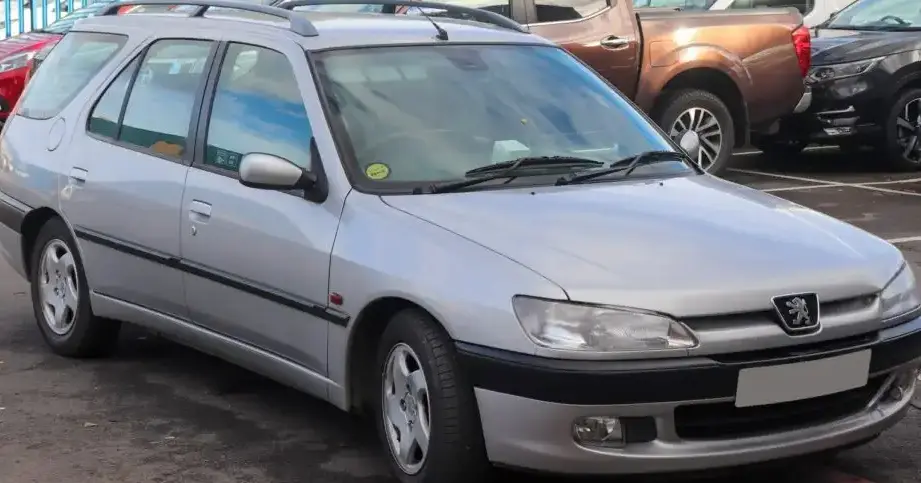
Technical Specifications
| Brand | Peugeot |
| Model | 306 |
| Generation | 306 Cabrio (7D) |
| Type (Engine) | 2.0 (121 Hp) |
| Start of production | 1994 |
| End of production | 1997 |
| Powertrain Architecture | Internal Combustion engine |
| Body type | Cabriolet |
| Seats | 4 |
| Doors | 2 |
| Fuel consumption (combined) | 8.4 l/100 km |
| Fuel consumption (US mpg) | 28 US mpg |
| Fuel consumption (UK mpg) | 33.6 UK mpg |
| Fuel consumption (km/l) | 11.9 km/l |
| Fuel Type | Petrol (Gasoline) |
| Acceleration 0 – 100 km/h | 10.8 sec |
| Acceleration 0 – 62 mph | 10.8 sec |
| Acceleration 0 – 60 mph | 10.3 sec |
| Maximum speed | 194 km/h (120.55 mph) |
| Weight-to-power ratio | 10.4 kg/Hp |
| Power per litre | 60.6 Hp/l |
| Torque | 176 Nm @ 2750 rpm (129.81 lb.-ft. @ 2750 rpm) |
| Engine layout | Front, Transverse |
| Engine Model/Code | RFX XU10J2 |
| Engine displacement | 1998 cm3 (121.93 cu. in.) |
| Number of cylinders | 4 |
| Engine configuration | Inline |
| Cylinder Bore | 86 mm (3.39 in.) |
| Piston Stroke | 86 mm (3.39 in.) |
| Compression ratio | 9.5:1 |
| Number of valves per cylinder | 2 |
| Fuel injection system | Multi-port manifold injection |
| Engine aspiration | Naturally aspirated engine |
| Valvetrain | OHC |
| Engine oil capacity | 4.3 l (4.54 US qt | 3.78 UK qt) |
| Coolant capacity | 7.5 l (7.93 US qt | 6.6 UK qt) |
| Kerb Weight | 1260 kg (2777.82 lbs.) |
| Max. weight | 1610 kg (3549.44 lbs.) |
| Max load | 350 kg (771.62 lbs.) |
| Trunk (boot) space – minimum | 274 l (9.68 cu. ft.) |
| Fuel tank capacity | 56 l (14.79 US gal | 12.32 UK gal) |
| Length | 4144 mm (163.15 in.) |
| Width | 1689 mm (66.5 in.) |
| Height | 1356 mm (53.39 in.) |
| Wheelbase | 2540 mm (100 in.) |
| Front track | 1464 mm (57.64 in.) |
| Rear (Back) track | 1439 mm (56.65 in.) |
| Drivetrain Architecture | The Internal combustion engine (ICE) drives the front wheels of the vehicle. |
| Drive wheel | Front wheel drive |
| Number of gears | 5 gears, manual transmission |
| Front suspension | Wishbone |
| Rear suspension | Trailing arm |
| Front brakes | Ventilated discs |
| Rear brakes | Disc |
| Assisting systems | ABS (Anti-lock braking system) |
| Steering type | Steering rack and pinion |
| Power steering | Hydraulic Steering |
| Tires size | 185/55 R15 |
The Peugeot 306 Cabriolet 2.0, launched in 1994, offered a compelling blend of style, affordability, and driving enjoyment. It was a key part of Peugeot’s strategy to provide a modern, accessible convertible option to European buyers. The 7D chassis code designates the Cabriolet variant, distinguishing it from the 306 hatchback and sedan models. This 2.0-liter version occupied a sweet spot in the range, providing noticeably more power than the entry-level models without the higher price tag of the more performance-oriented 16-valve variants. It aimed to appeal to buyers seeking a stylish and comfortable open-top experience for everyday use.
Powertrain & Engine Architecture
At the heart of the 306 Cabriolet 2.0 lies the RFX XU10J2 engine, a 1998cc inline-four cylinder petrol engine. This engine is a naturally aspirated unit, meaning it doesn’t employ turbocharging or supercharging. It utilizes a single overhead camshaft (OHC) valvetrain with two valves per cylinder. Fuel delivery is managed by a multi-port fuel injection system, providing precise fuel metering for optimal combustion. The XU10J2 engine is known for its robustness and relatively simple design, contributing to its reliability. The engine’s 121 horsepower at 5750 rpm and 176 Nm (129.81 lb-ft) of torque at 2750 rpm provided a reasonable level of performance for the time. The engine is transversely mounted in the front of the vehicle, driving the front wheels. The 306 Cabriolet 2.0 came exclusively with a 5-speed manual transmission, offering precise gear changes and a more engaging driving experience.
Driving Characteristics
The 306 Cabriolet 2.0 offered a balanced driving experience. While not a sports car, the 2.0-liter engine provided sufficient power for comfortable cruising and enjoyable back-road driving. Acceleration from 0-60 mph took around 10.3 seconds, and it could reach a top speed of 194 km/h (120.55 mph). The 5-speed manual transmission allowed drivers to keep the engine in its optimal power band. The gear ratios were well-chosen for everyday driving, providing good acceleration in lower gears and comfortable cruising at highway speeds. Compared to the lower-powered 1.4 and 1.6-liter models, the 2.0-liter version felt significantly more responsive and capable, especially when carrying passengers or luggage. It didn’t possess the outright performance of the 2.0-liter 16-valve models, but it offered a more relaxed and accessible driving experience.
Equipment & Trim Levels
The 306 Cabriolet 2.0 typically came with a reasonable level of standard equipment. Interior features included cloth upholstery, a basic stereo system, and power steering. The dashboard layout was functional and straightforward, typical of Peugeot designs of the era. Optional extras included leather upholstery, alloy wheels, and a more advanced stereo system. The Cabriolet also featured a manually operated soft top, which could be raised or lowered relatively easily. Safety features included ABS (Anti-lock Braking System) as standard, a notable feature for a car of this era. Trim levels varied slightly depending on the market, but generally, the 2.0-liter model was positioned as a mid-range offering, bridging the gap between the basic models and the more luxurious trims.
Chassis & Braking
The 306 Cabriolet utilized a front-wheel-drive chassis with independent wishbone suspension at the front and a trailing arm suspension at the rear. This suspension setup provided a comfortable ride quality, absorbing bumps and imperfections in the road surface effectively. The front brakes were ventilated discs, providing good stopping power, while the rear brakes were solid discs. The hydraulic power steering provided light and precise steering feel. The car’s weight of around 1260 kg (2777.82 lbs) was relatively light for a convertible, contributing to its nimble handling. Stabilizer bars were fitted to both the front and rear axles to reduce body roll during cornering.
Market Reception & Comparison
The Peugeot 306 Cabriolet 2.0 was generally well-received by automotive critics. It was praised for its stylish design, comfortable ride, and reasonable performance. Compared to its siblings, the 2.0-liter model offered a noticeable performance advantage over the 1.4 and 1.6-liter versions, making it a more appealing option for drivers who enjoyed spirited driving. However, it didn’t quite match the performance of the 2.0-liter 16-valve models, which were more focused on outright speed. Fuel economy was respectable for a convertible of its time, averaging around 28 US mpg. Reliability was generally good, with the XU10J2 engine proving to be a durable and dependable unit.
Legacy
The Peugeot 306 Cabriolet 2.0 has become a popular choice among classic car enthusiasts. The XU10J2 engine is known for its longevity and relatively simple maintenance requirements. Parts availability is generally good, making it a relatively affordable classic to own and maintain. Today, well-maintained examples of the 306 Cabriolet 2.0 are sought after by collectors and enthusiasts who appreciate its stylish design and enjoyable driving experience. It represents a significant chapter in Peugeot’s history, showcasing the brand’s ability to produce attractive and affordable convertibles.