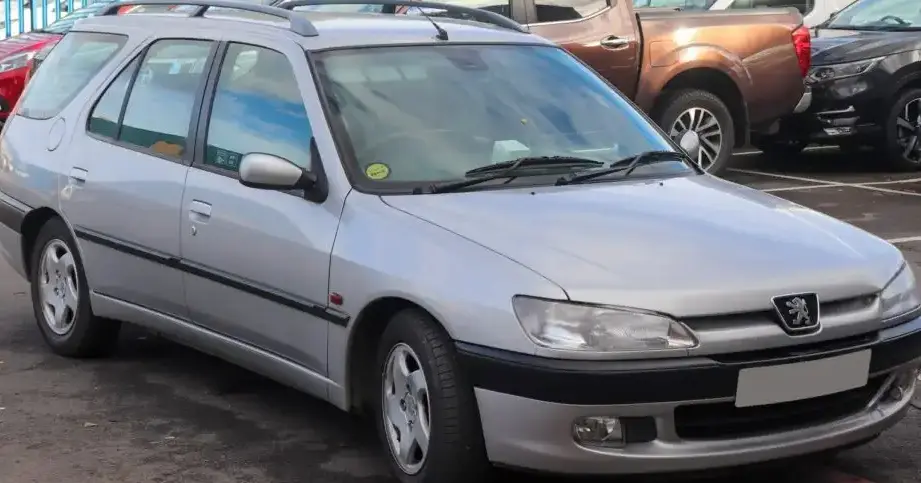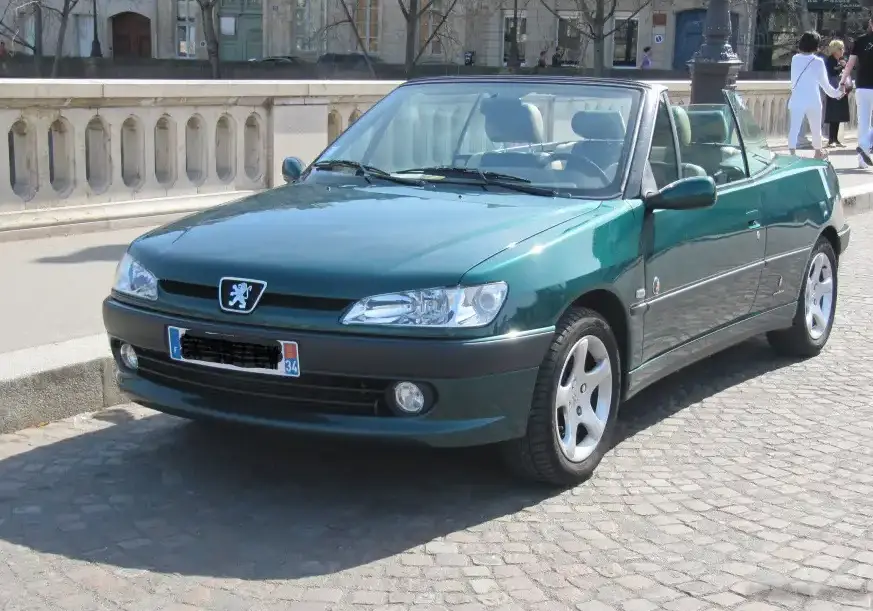
The Peugeot 306 Cabriolet, particularly the facelifted version introduced in 1997, represented a significant offering in the European compact convertible market. Produced from 1997 through 2002, the 1.6i variant with an automatic transmission, delivering 88 horsepower, occupied a specific niche within the 306 range. It was positioned as an accessible entry point into open-top motoring, appealing to buyers prioritizing style and convenience over outright performance. This model was built upon the 306 platform, sharing its underpinnings with other 306 body styles but distinguished by its Pininfarina-designed convertible top and reinforced chassis.
Technical Specifications
| Brand | Peugeot |
| Model | 306 |
| Generation | 306 Cabrio (facelift 1997) |
| Type (Engine) | 1.6i (88 Hp) Automatic |
| Start of production | 1997 |
| End of production | 2002 |
| Powertrain Architecture | Internal Combustion engine |
| Body type | Cabriolet |
| Seats | 4 |
| Doors | 2 |
| Fuel consumption (urban) | 10.9 l/100 km (21.6 US mpg, 25.9 UK mpg, 9.2 km/l) |
| Fuel consumption (extra urban) | 6.1 l/100 km (38.6 US mpg, 46.3 UK mpg, 16.4 km/l) |
| Fuel consumption (combined) | 7.9 l/100 km (29.8 US mpg, 35.8 UK mpg, 12.7 km/l) |
| CO2 emissions | 189 g/km |
| Fuel Type | Petrol (Gasoline) |
| Maximum speed | 174 km/h (108.12 mph) |
| Weight-to-power ratio | 14 kg/Hp, 71.5 Hp/tonne |
| Weight-to-torque ratio | 9.1 kg/Nm, 109.8 Nm/tonne |
| Power | 88 Hp @ 5600 rpm |
| Power per litre | 55.5 Hp/l |
| Torque | 135 Nm @ 3000 rpm (99.57 lb.-ft. @ 3000 rpm) |
| Engine layout | Front, Transverse |
| Engine Model/Code | NFZ TU5JP |
| Engine displacement | 1587 cm3 (96.84 cu. in.) |
| Number of cylinders | 4 |
| Engine configuration | Inline |
| Cylinder Bore | 78.5 mm (3.09 in.) |
| Piston Stroke | 82 mm (3.23 in.) |
| Compression ratio | 9.6:1 |
| Number of valves per cylinder | 2 |
| Fuel injection system | Multi-port manifold injection |
| Engine aspiration | Naturally aspirated engine |
| Valvetrain | SOHC |
| Engine oil capacity | 3.2 l (3.38 US qt | 2.82 UK qt) |
| Coolant capacity | 7 l (7.4 US qt | 6.16 UK qt) |
| Kerb Weight | 1230 kg (2711.69 lbs.) |
| Max. weight | 1660 kg (3659.67 lbs.) |
| Max load | 430 kg (947.99 lbs.) |
| Trunk (boot) space – minimum | 274 l (9.68 cu. ft.) |
| Fuel tank capacity | 60 l (15.85 US gal | 13.2 UK gal) |
| Length | 4179 mm (164.53 in.) |
| Width | 1680 mm (66.14 in.) |
| Height | 1356 mm (53.39 in.) |
| Wheelbase | 2540 mm (100 in.) |
| Front track | 1454-1465 mm (57.24 – 57.68 in.) |
| Rear track | 1420-1439 mm (55.91 – 56.65 in.) |
| Front overhang | 815 mm (32.09 in.) |
| Rear overhang | 824 mm (32.44 in.) |
| Ride height (ground clearance) | 120 mm (4.72 in.) |
| Drag coefficient (Cd) | 0.37 |
| Minimum turning circle | 11.0 m (36.09 ft.) |
| Drivetrain Architecture | Front wheel drive |
| Number of gears | 4 |
| Gearbox type | Automatic transmission |
| Front suspension | Wishbone |
| Rear suspension | Trailing arm |
| Front brakes | Ventilated discs |
| Rear brakes | Drum |
| Assisting systems | ABS (Anti-lock braking system) |
| Steering type | Steering rack and pinion |
| Power steering | Hydraulic Steering |
| Tires size | 185/65 R14 H |
| Wheel rims size | 14 |
Powertrain & Engine Architecture
The 1.6i engine, designated NFZ (TU5JP), is a naturally aspirated, inline-four cylinder petrol engine. It featured a single overhead camshaft (SOHC) valvetrain operating two valves per cylinder. Fuel delivery was managed by a multi-port fuel injection system, providing a balance between efficiency and performance. The engine’s 1587cc displacement produced 88 horsepower at 5600 rpm and 135 Nm (99.57 lb-ft) of torque at 3000 rpm. This engine was a common sight in various Peugeot and Citroën models of the era. The automatic transmission was a four-speed unit, designed for smooth operation and ease of use, but not particularly known for its sportiness or efficiency. It was a conventional hydraulic automatic, lacking the electronic controls found in later transmissions.
Driving Characteristics
The 306 Cabriolet 1.6i Automatic offered a relaxed driving experience. Acceleration was adequate for everyday driving, but the combination of the relatively low horsepower and the automatic transmission meant it wasn’t a particularly quick car. The four-speed automatic transmission, while providing convenience, resulted in noticeable gear changes and didn’t allow the engine to operate in its most efficient power band as effectively as a manual transmission would. Compared to the more powerful 2.0i or even the diesel variants, the 1.6i Automatic felt noticeably slower, especially when fully loaded or tackling inclines. The steering was light and easy, making it maneuverable in urban environments, but lacked the feedback desired by more enthusiastic drivers.
Equipment & Trim Levels
The 1.6i Automatic Cabriolet typically came with a reasonable level of standard equipment. This included power steering, central locking, electric front windows, and an AM/FM radio. Interior upholstery was usually cloth, with options for upgraded materials available. The dashboard layout was typical of 306 models, featuring a functional but somewhat dated design. Optional extras included leather upholstery, air conditioning, and alloy wheels. The trim level often dictated the availability of these options, with higher trims offering more features as standard.
Chassis & Braking
The 306 Cabriolet’s chassis was reinforced compared to the standard 306 hatchback to compensate for the lack of a fixed roof. Front suspension utilized a wishbone setup, while the rear employed a trailing arm configuration. Braking consisted of ventilated discs on the front wheels and drum brakes on the rear. Anti-lock Braking System (ABS) was standard, enhancing safety. The suspension was tuned for comfort, providing a relatively smooth ride, although it could feel somewhat soft and prone to body roll during spirited driving. The rear drum brakes were a cost-saving measure and a point of criticism compared to the all-disc setups found on higher-spec models.
Market Reception & Comparison
The 306 Cabriolet 1.6i Automatic was generally well-received as an affordable and stylish entry into the convertible market. Critics praised its Pininfarina-designed aesthetics and comfortable ride. However, the performance of the 1.6i engine, particularly when paired with the automatic transmission, was often cited as a drawback. Compared to the 2.0i models, the 1.6i offered significantly less power and a less engaging driving experience. The diesel variants, while not as refined, provided superior fuel economy. Despite these criticisms, the 1.6i Automatic remained a popular choice for buyers prioritizing affordability and ease of use.
Legacy
The Peugeot 306 Cabriolet 1.6i Automatic has become a relatively affordable classic in the used car market. The NFZ engine is generally considered reliable, although regular maintenance is crucial. The automatic transmission, while not known for its longevity, can provide years of service with proper fluid changes. Rust can be a concern, particularly on older examples. Today, these cars are often sought after by enthusiasts looking for a stylish and affordable classic convertible, representing a nostalgic reminder of 1990s French motoring. Parts availability is generally good, although some trim-specific components may be harder to find.