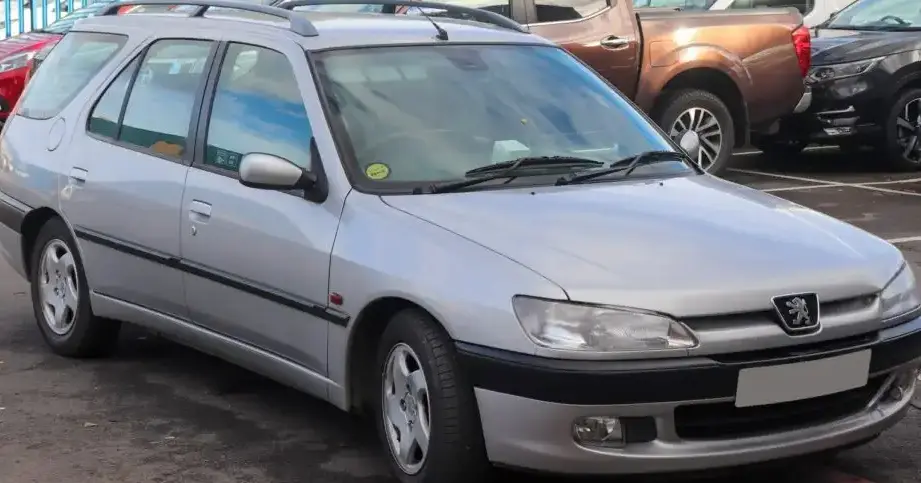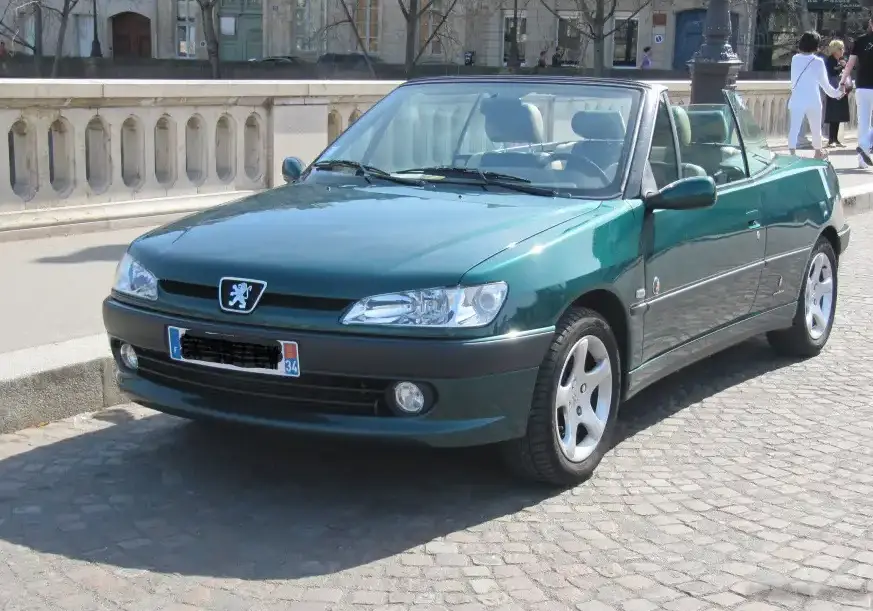
The Peugeot 306 Cabriolet, particularly the facelifted version introduced in 1997, represented a stylish and accessible entry into the world of open-top motoring. Produced between 1997 and 2002, the 1.8i variant with the automatic transmission offered a blend of comfort and practicality aimed at buyers seeking a relaxed driving experience. This model sat within the broader 306 range, which was based on the 1HX0/A3 platform shared with Citroën and, briefly, Fiat. The 1.8i Automatic was positioned as a mid-range offering, bridging the gap between the more economical base models and the sportier, higher-performance versions.
Technical Specifications
| Brand | Peugeot |
| Model | 306 |
| Generation | 306 Cabrio (facelift 1997) |
| Type (Engine) | 1.8i (101 Hp) Automatic |
| Start of production | 1997 |
| End of production | 2002 |
| Powertrain Architecture | Internal Combustion engine |
| Body type | Cabriolet |
| Seats | 4 |
| Doors | 2 |
| Fuel consumption (urban) | 13 l/100 km (18.1 US mpg, 21.7 UK mpg, 7.7 km/l) |
| Fuel consumption (extra urban) | 7 l/100 km (33.6 US mpg, 40.4 UK mpg, 14.3 km/l) |
| Fuel consumption (combined) | 9.2 l/100 km (25.6 US mpg, 30.7 UK mpg, 10.9 km/l) |
| CO2 emissions | 217 g/km |
| Fuel Type | Petrol (Gasoline) |
| Acceleration 0 – 100 km/h | 15.9 sec |
| Acceleration 0 – 62 mph | 15.9 sec |
| Acceleration 0 – 60 mph | 15.1 sec |
| Maximum speed | 175 km/h (108.74 mph) |
| Weight-to-power ratio | 12.1 kg/Hp, 82.8 Hp/tonne |
| Weight-to-torque ratio | 8 kg/Nm, 125.4 Nm/tonne |
| Power | 101 Hp @ 6000 rpm |
| Power per litre | 57.3 Hp/l |
| Torque | 153 Nm @ 3000 rpm (112.85 lb.-ft. @ 3000 rpm) |
| Engine layout | Front, Transverse |
| Engine Model/Code | LFZ XU7JP |
| Engine displacement | 1762 cm3 (107.52 cu. in.) |
| Number of cylinders | 4 |
| Engine configuration | Inline |
| Cylinder Bore | 83 mm (3.27 in.) |
| Piston Stroke | 81.4 mm (3.2 in.) |
| Compression ratio | 9.2:1 |
| Number of valves per cylinder | 2 |
| Fuel injection system | Multi-port manifold injection |
| Engine aspiration | Naturally aspirated engine |
| Valvetrain | DOHC |
| Engine oil capacity | 4.3 l (4.54 US qt | 3.78 UK qt) |
| Coolant | 7.5 l (7.93 US qt | 6.6 UK qt) |
| Kerb Weight | 1220 kg (2689.64 lbs.) |
| Max. weight | 1655 kg (3648.65 lbs.) |
| Max load | 435 kg (959.01 lbs.) |
| Trunk (boot) space – minimum | 274 l (9.68 cu. ft.) |
| Fuel tank capacity | 60 l (15.85 US gal | 13.2 UK gal) |
| Permitted trailer load with brakes (12%) | 1000 kg (2204.62 lbs.) |
| Permitted trailer load without brakes | 640 kg (1410.96 lbs.) |
| Length | 4179 mm (164.53 in.) |
| Width | 1680 mm (66.14 in.) |
| Height | 1356 mm (53.39 in.) |
| Wheelbase | 2540 mm (100 in.) |
| Front track | 1454-1465 mm (57.24 – 57.68 in.) |
| Rear (Back) track | 1420-1439 mm (55.91 – 56.65 in.) |
| Front overhang | 815 mm (32.09 in.) |
| Rear overhang | 824 mm (32.44 in.) |
| Ride height (ground clearance) | 120 mm (4.72 in.) |
| Drag coefficient (Cd) | 0.37 |
| Minimum turning circle (turning diameter) | 11.0 m (36.09 ft.) |
| Drivetrain Architecture | The Internal combustion engine (ICE) drives the front wheels of the vehicle. |
| Drive wheel | Front wheel drive |
| Number of gears and type of gearbox | 4 gears, automatic transmission |
| Front suspension | Wishbone |
| Rear suspension | Trailing arm |
| Front brakes | Ventilated discs |
| Rear brakes | Drum |
| Assisting systems | ABS (Anti-lock braking system) |
| Steering type | Steering rack and pinion |
| Power steering | Hydraulic Steering |
| Tires size | 185/65 R14 H |
| Wheel rims size | 14 |
Powertrain & Engine Architecture
The heart of the 306 Cabriolet 1.8i Automatic is the LFZ XU7JP engine, a 1.8-liter inline-four cylinder powerplant. This engine, a staple in many Peugeot and Citroën vehicles of the era, features a naturally aspirated configuration and a multi-port fuel injection system. The XU7JP engine utilizes a double overhead camshaft (DOHC) valvetrain with two valves per cylinder, contributing to its relatively smooth operation. The 9.2:1 compression ratio was a common specification for this engine family. The automatic transmission employed was typically a four-speed unit, designed to provide comfortable and convenient shifting. While not known for its sportiness, this transmission was reliable and well-suited to the engine’s torque characteristics.
Driving Characteristics
The 1.8i Automatic version of the 306 Cabriolet offered a relaxed and comfortable driving experience. With 101 horsepower and 113 lb-ft of torque, acceleration was adequate but not particularly brisk. The 0-60 mph time of around 15.1 seconds reflects this. The automatic transmission, while smooth, did detract from the overall responsiveness compared to the five-speed manual versions. Gear ratios were optimized for fuel efficiency and cruising comfort rather than outright performance. The car felt best suited to leisurely drives with the top down, rather than spirited cornering. The weight of the convertible top mechanism and associated reinforcements did contribute to a slightly heavier feel compared to the coupe versions.
Equipment & Trim Levels
The 1.8i Automatic trim typically included features such as power steering, central locking, electric front windows, and an AM/FM radio. Interior upholstery was generally cloth, with options for upgraded materials available. The dashboard layout was functional and straightforward, typical of Peugeot designs of the period. Optional extras could include air conditioning, alloy wheels, and a more sophisticated audio system. The Cabriolet specifically benefitted from a well-engineered folding roof mechanism, offering a reasonable level of weather protection when closed.
Chassis & Braking
The 306 Cabriolet utilized a front-wheel-drive layout with a wishbone suspension at the front and a trailing arm suspension at the rear. The front brakes were ventilated discs, providing adequate stopping power, while the rear brakes were drums. ABS (Anti-lock Braking System) was a standard safety feature. The suspension setup was tuned for comfort, prioritizing a smooth ride over sharp handling. Stabilizer bars were fitted to both the front and rear axles to reduce body roll during cornering, but the overall handling characteristics were more geared towards everyday usability than sporty performance.
Market Reception & Comparison
The 306 Cabriolet 1.8i Automatic was generally well-received as an affordable and stylish convertible. Critics praised its comfortable ride and well-equipped interior, but noted its lack of outright performance compared to some rivals. Compared to the more powerful 2.0-liter versions, the 1.8i offered better fuel economy (around 25.6 US mpg combined) but significantly less power. The 1.9 TDI diesel version provided even better fuel economy but lacked the refinement of the petrol engine. The automatic transmission was seen as a convenience feature, but many enthusiasts preferred the engagement of the manual gearbox.
Legacy
The Peugeot 306 Cabriolet 1.8i Automatic has proven to be a relatively reliable classic in the used car market. The XU7JP engine is known for its durability, and the automatic transmission, while not particularly advanced, is generally robust. However, as with any older vehicle, regular maintenance is crucial. Common issues can include corrosion, particularly on the bodywork, and wear and tear on suspension components. Today, the 306 Cabriolet is appreciated by enthusiasts for its retro styling and affordable entry into classic convertible ownership. It remains a popular choice for those seeking a stylish and enjoyable open-top driving experience without breaking the bank.