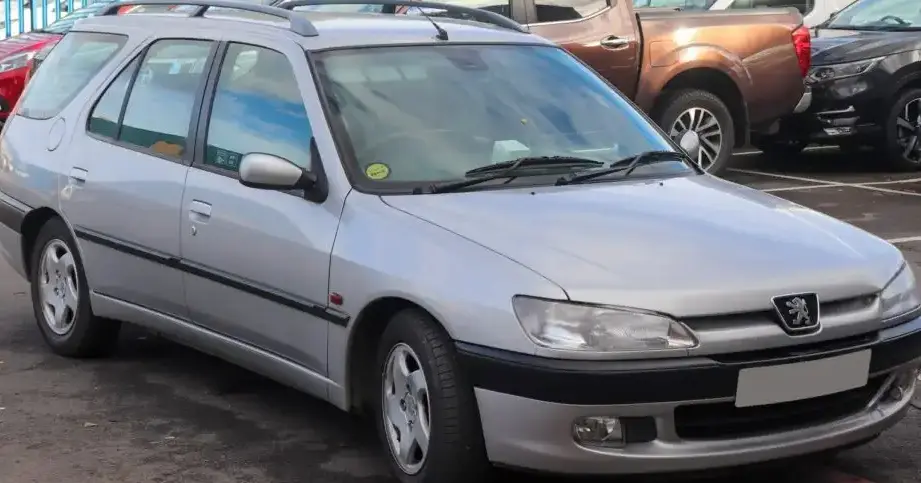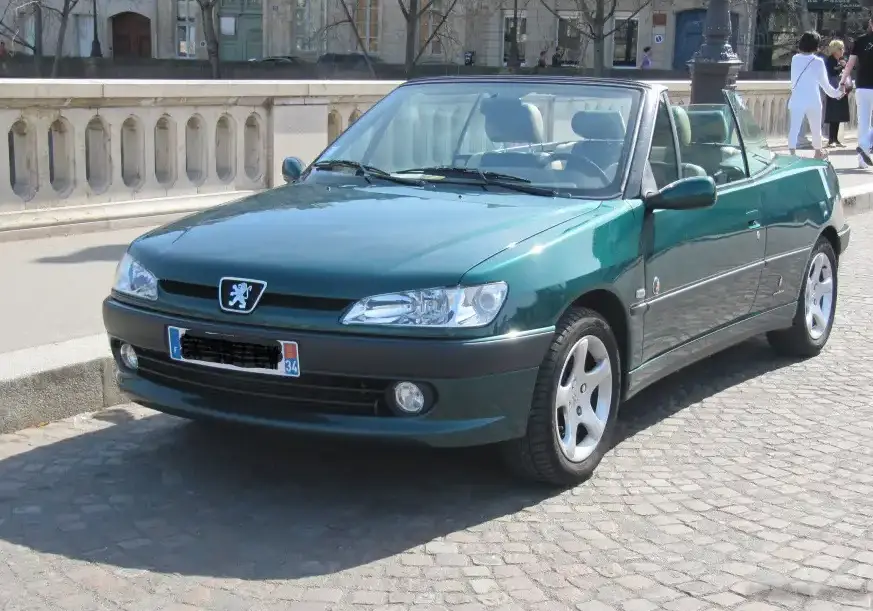
The Peugeot 306 Cabriolet, particularly the facelifted version introduced in 1997, represented a stylish and accessible entry into the world of open-top motoring. Produced from 1997 through 2002, the 1.8i 16V variant, boasting 110 horsepower, occupied a middle ground within the 306 Cabrio range. It aimed to balance performance with affordability, appealing to buyers seeking a fun-to-drive convertible without the higher price tag of more powerful models. This generation of the 306 Cabrio built upon the success of the original 306 platform (developed in the early 1990s) and benefited from styling updates and mechanical refinements.
Technical Specifications
| Brand | Peugeot |
| Model | 306 |
| Generation | 306 Cabrio (facelift 1997) |
| Type (Engine) | 1.8i 16V (110 Hp) |
| Start of production | 1997 |
| End of production | 2002 |
| Powertrain Architecture | Internal Combustion engine |
| Body type | Cabriolet |
| Seats | 4 |
| Doors | 2 |
| Fuel consumption (urban) | 11.8 l/100 km (19.9 US mpg, 23.9 UK mpg, 8.5 km/l) |
| Fuel consumption (extra urban) | 6.3 l/100 km (37.3 US mpg, 44.8 UK mpg, 15.9 km/l) |
| Fuel consumption (combined) | 8.3 l/100 km (28.3 US mpg, 34 UK mpg, 12 km/l) |
| Fuel Type | Petrol (Gasoline) |
| Acceleration 0 – 100 km/h | 12.5 sec |
| Acceleration 0 – 62 mph | 12.5 sec |
| Acceleration 0 – 60 mph | 11.9 sec |
| Maximum speed | 189 km/h (117.44 mph) |
| Weight-to-power ratio | 11.4 kg/Hp, 88 Hp/tonne |
| Weight-to-torque ratio | 8.1 kg/Nm, 124 Nm/tonne |
| Power | 110 Hp @ 5500 rpm |
| Power per litre | 62.4 Hp/l |
| Torque | 155 Nm @ 4250 rpm (114.32 lb.-ft. @ 4250 rpm) |
| Engine layout | Front, Transverse |
| Engine Model/Code | LFY XU7JP4 |
| Engine displacement | 1762 cm3 (107.52 cu. in.) |
| Number of cylinders | 4 |
| Engine configuration | Inline |
| Cylinder Bore | 83 mm (3.27 in.) |
| Piston Stroke | 81.4 mm (3.2 in.) |
| Compression ratio | 10.4:1 |
| Number of valves per cylinder | 4 |
| Fuel injection system | Multi-port manifold injection |
| Engine aspiration | Naturally aspirated engine |
| Valvetrain | DOHC |
| Engine oil capacity | 4.3 l (4.54 US qt | 3.78 UK qt) |
| Coolant | 7.5 l (7.93 US qt | 6.6 UK qt) |
| Kerb Weight | 1250 kg (2755.78 lbs.) |
| Max. weight | 1660 kg (3659.67 lbs.) |
| Max load | 410 kg (903.9 lbs.) |
| Trunk (boot) space – minimum | 274 l (9.68 cu. ft.) |
| Fuel tank capacity | 60 l (15.85 US gal | 13.2 UK gal) |
| Permitted trailer load with brakes (12%) | 1000 kg (2204.62 lbs.) |
| Permitted trailer load without brakes | 660 kg (1455.05 lbs.) |
| Length | 4179 mm (164.53 in.) |
| Width | 1680 mm (66.14 in.) |
| Height | 1356 mm (53.39 in.) |
| Wheelbase | 2540 mm (100 in.) |
| Front track | 1454-1465 mm (57.24 – 57.68 in.) |
| Rear (Back) track | 1420-1439 mm (55.91 – 56.65 in.) |
| Front overhang | 815 mm (32.09 in.) |
| Rear overhang | 824 mm (32.44 in.) |
| Ride height (ground clearance) | 120 mm (4.72 in.) |
| Drag coefficient (Cd) | 0.37 |
| Minimum turning circle (turning diameter) | 11.0 m (36.09 ft.) |
| Drivetrain Architecture | The Internal combustion engine (ICE) drives the front wheels of the vehicle. |
| Drive wheel | Front wheel drive |
| Number of gears and type of gearbox | 5 gears, manual transmission |
| Front suspension | Wishbone |
| Rear suspension | Trailing arm |
| Front brakes | Ventilated discs |
| Rear brakes | Drum |
| Assisting systems | ABS (Anti-lock braking system) |
| Steering type | Steering rack and pinion |
| Power steering | Hydraulic Steering |
| Tires size | 185/65 R14 H |
| Wheel rims size | 14 |
Powertrain & Engine Architecture
The heart of the 306 Cabrio 1.8i 16V is the LFY (or sometimes XU7JP4) engine, a 1.8-liter inline-four cylinder powerplant. This engine is a naturally aspirated unit featuring a multi-port fuel injection system and a double overhead camshaft (DOHC) valvetrain. The 16 valves (four per cylinder) contribute to improved breathing and higher-end power delivery. The engine’s 10.4:1 compression ratio was fairly standard for the era. The 306 Cabrio 1.8i 16V typically came equipped with a 5-speed manual transmission, although an automatic option was available. The automatic transmission, while offering convenience, generally resulted in slightly reduced acceleration and fuel economy compared to the manual.
Driving Characteristics
The 1.8i 16V Cabriolet offered a reasonably engaging driving experience, particularly with the manual transmission. While not a sports car, the 110 horsepower provided adequate power for comfortable cruising and spirited driving. Acceleration from 0-60 mph took around 11.9 seconds, and the top speed was approximately 117 mph. The automatic transmission, while smooth, did detract somewhat from the overall responsiveness. Gear ratios were tuned for a balance between fuel efficiency and usability, rather than outright performance. Compared to the more powerful 2.0-liter 16V versions, the 1.8 felt less urgent, but it offered a more forgiving and accessible driving experience.
Equipment & Trim Levels
The 1.8i 16V Cabriolet typically came with a decent level of standard equipment. This included power steering, central locking, electric front windows, and an AM/FM radio. Higher trim levels, often denoted by names like “Quiksilver” or “GLX”, added features such as alloy wheels, leather upholstery, air conditioning, and a more sophisticated sound system. The interior was generally well-appointed for its class, with a focus on practicality and comfort. The convertible top was manually operated, adding to the driver involvement.
Chassis & Braking
The 306 Cabriolet utilized a front-wheel-drive layout with independent wishbone suspension at the front and a trailing arm setup at the rear. This suspension configuration provided a reasonable compromise between ride comfort and handling. Braking duties were handled by ventilated discs at the front and drum brakes at the rear. Anti-lock Braking System (ABS) was standard, enhancing safety. The chassis was reinforced to compensate for the lack of a fixed roof, ensuring adequate structural rigidity.
Market Reception & Comparison
The Peugeot 306 Cabrio 1.8i 16V was generally well-received by automotive critics as an affordable and stylish convertible. It was praised for its comfortable ride, decent performance, and attractive design. However, some reviewers noted that the engine could feel a little underpowered, especially when fully loaded or tackling steep hills. Compared to the more expensive 2.0-liter models, the 1.8 offered a more economical option, appealing to a wider range of buyers. Fuel economy was respectable for a convertible of its era, averaging around 28 mpg in combined driving.
Legacy
The Peugeot 306 Cabriolet, including the 1.8i 16V variant, has developed a loyal following among enthusiasts. The XU7 engine is known for its reliability and relative simplicity, making it relatively easy to maintain. While age and mileage inevitably take their toll, well-maintained examples can still provide years of enjoyable open-top motoring. Today, the 306 Cabrio is considered a classic, and prices for good condition examples are steadily rising. The 1.8i 16V represents a sweet spot in the range, offering a good balance of performance, affordability, and reliability.