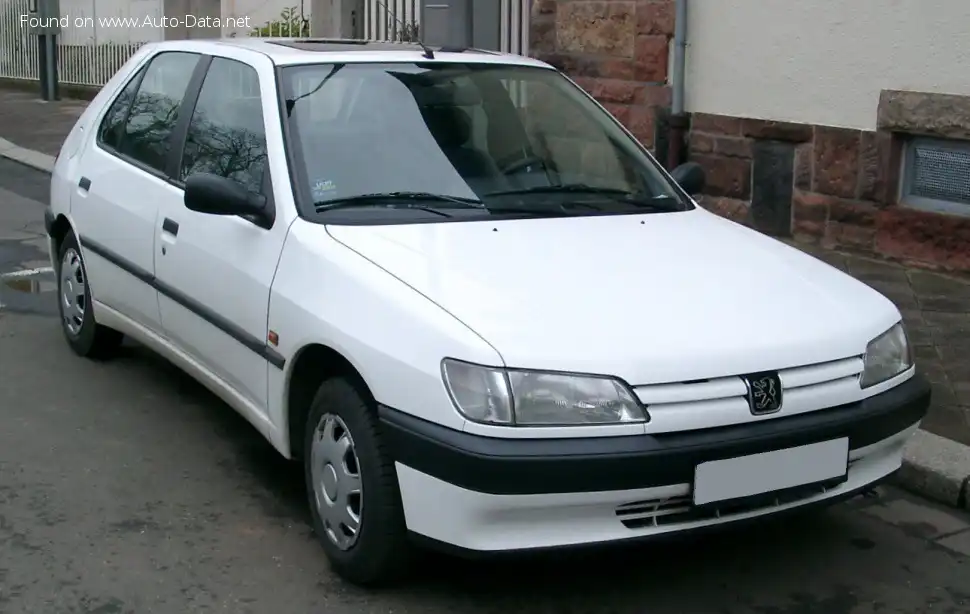
The Peugeot 306 2.0 S16, produced between 1994 and 1997, represents a performance-oriented variant within the 306 Hatchback (7A/C) range. Positioned as a premium trim level, the S16 offered a significant step up in power and handling compared to the base models. It was a key player in Peugeot’s strategy to offer a sporty and engaging driving experience in the compact hatchback segment, primarily targeting European markets where such vehicles were highly popular. The 306 itself was a successful model for Peugeot, known for its comfortable ride and relatively affordable price point, and the S16 capitalized on this foundation with a more potent engine and enhanced features.
Technical Specifications
| Brand | Peugeot |
| Model | 306 |
| Generation | 306 Hatchback (7A/C) |
| Type (Engine) | 2.0 S16 (150 Hp) |
| Start of production | 1994 |
| End of production | 1997 |
| Powertrain Architecture | Internal Combustion engine |
| Body type | Hatchback |
| Seats | 5 |
| Doors | 3-5 |
| Fuel consumption (combined) | 8.6 l/100 km (27.4 US mpg, 32.8 UK mpg, 11.6 km/l) |
| Fuel Type | Petrol (Gasoline) |
| Acceleration 0 – 100 km/h | 9.2 sec |
| Acceleration 0 – 62 mph | 9.2 sec |
| Acceleration 0 – 60 mph | 8.7 sec |
| Maximum speed | 215 km/h (133.59 mph) |
| Weight-to-power ratio | 7.7 kg/Hp, 129.3 Hp/tonne |
| Weight-to-torque ratio | 6.3 kg/Nm, 157.8 Nm/tonne |
| Power | 150 Hp @ 6500 rpm |
| Power per litre | 75.1 Hp/l |
| Torque | 183 Nm @ 3500 rpm (134.97 lb.-ft. @ 3500 rpm) |
| Engine layout | Front, Transverse |
| Engine Model/Code | RFT XU10J4 |
| Engine displacement | 1998 cm3 (121.93 cu. in.) |
| Number of cylinders | 4 |
| Engine configuration | Inline |
| Cylinder Bore | 86 mm (3.39 in.) |
| Piston Stroke | 86 mm (3.39 in.) |
| Compression ratio | 10.4:1 |
| Number of valves per cylinder | 4 |
| Fuel injection system | Multi-port manifold injection |
| Engine aspiration | Naturally aspirated engine |
| Valvetrain | DOHC |
| Engine oil capacity | 4.3 l (4.54 US qt | 3.78 UK qt) |
| Coolant | 7.5 l (7.93 US qt | 6.6 UK qt) |
| Kerb Weight | 1160 kg (2557.36 lbs.) |
| Max. weight | 1670 kg (3681.72 lbs.) |
| Max load | 510 kg (1124.36 lbs.) |
| Trunk (boot) space – minimum | 338 l (11.94 cu. ft.) |
| Trunk (boot) space – maximum | 1146 l (40.47 cu. ft.) |
| Fuel tank capacity | 60 l (15.85 US gal | 13.2 UK gal) |
| Length | 3995 mm (157.28 in.) |
| Width | 1692 mm (66.61 in.) |
| Height | 1365 mm (53.74 in.) |
| Wheelbase | 2580 mm (101.57 in.) |
| Front track | 1464 mm (57.64 in.) |
| Rear (Back) track | 1439 mm (56.65 in.) |
| Drivetrain Architecture | The Internal combustion engine (ICE) drives the front wheels of the vehicle. |
| Drive wheel | Front wheel drive |
| Number of gears and type of gearbox | 5 gears, manual transmission |
| Front suspension | Wishbone |
| Rear suspension | Trailing arm |
| Front brakes | Ventilated discs |
| Rear brakes | Disc |
| Assisting systems | ABS (Anti-lock braking system) |
| Steering type | Steering rack and pinion |
| Power steering | Hydraulic Steering |
| Tires size | 195/50 R15 |
Powertrain & Engine Architecture
The heart of the 306 2.0 S16 is the XU10J4 engine, a 1.998-liter (121.93 cubic inches) inline-four cylinder powerplant. This engine is a naturally aspirated unit, meaning it doesn’t utilize a turbocharger or supercharger. It features a double overhead camshaft (DOHC) valvetrain with four valves per cylinder, contributing to its relatively high power output for its displacement. Fuel delivery is managed by a multi-port fuel injection system, ensuring precise fuel metering for optimal combustion. The XU10J4 engine is known for its robust construction and relatively simple design, making it a reliable unit when properly maintained. The engine produced 150 horsepower at 6500 rpm and 183 Nm (135 lb-ft) of torque at 3500 rpm. The engine was mated to a five-speed manual transmission, providing drivers with full control over the power delivery. This transmission was chosen to complement the engine’s sporty character and allow for engaging driving dynamics.
Driving Characteristics
The 306 2.0 S16 offered a noticeably more spirited driving experience than the lower-spec models. The 150 hp engine provided brisk acceleration, with a 0-60 mph time of around 8.7 seconds and a top speed of 133.59 mph. While not a sports car by modern standards, it was quick for its time and class. The five-speed manual transmission allowed drivers to keep the engine in its optimal power band, maximizing acceleration and responsiveness. The gear ratios were well-chosen, providing a good balance between acceleration and cruising comfort. Compared to the 1.6-liter or diesel variants, the S16 felt significantly more powerful and capable, especially during overtaking maneuvers or on winding roads. The suspension was also tuned for a sportier feel, offering improved handling and reduced body roll.
Equipment & Trim Levels
The 2.0 S16 trim level came well-equipped for its era. Standard features typically included power steering, ABS anti-lock brakes, alloy wheels, and a more comprehensive instrument cluster. The interior featured sport seats with enhanced bolstering for improved lateral support, and often included upgraded upholstery. Optional extras could include a sunroof, air conditioning, and a more advanced audio system. The S16 also benefited from subtle exterior styling enhancements, such as a rear spoiler and unique badging, to differentiate it from the other 306 models.
Chassis & Braking
The 306 2.0 S16 utilized a MacPherson strut front suspension and a trailing arm rear suspension. This setup provided a good balance between ride comfort and handling. The front brakes were ventilated discs, offering superior stopping power compared to the solid discs found on some lower-spec models. The rear brakes were also discs, providing consistent braking performance. The chassis was reinforced in certain areas to handle the increased power and torque of the 2.0-liter engine. The steering was a rack and pinion system with hydraulic power assistance, providing precise and responsive steering feel.
Market Reception & Comparison
The Peugeot 306 2.0 S16 was generally well-received by automotive critics. It was praised for its lively performance, engaging handling, and comfortable ride. However, some critics noted that the interior quality, while decent, wasn’t quite as refined as some of its rivals, such as the Volkswagen Golf GTI. Compared to the 1.6-liter models, the S16 offered a significant performance upgrade, but at the cost of slightly higher fuel consumption. Compared to the diesel variants, the S16 provided a more exciting driving experience, but with lower fuel economy. The S16 positioned itself as a compelling alternative to other hot hatches of the time, offering a good balance of performance, practicality, and affordability.
Legacy
The XU10J4 engine, found in the 306 2.0 S16, is known for its durability and reliability when properly maintained. While age and mileage can take their toll, these engines are generally capable of high mileage with regular servicing. Today, the 306 2.0 S16 is gaining popularity among classic car enthusiasts, particularly those who appreciate its sporty character and relatively simple mechanicals. Parts availability is generally good, although some specific trim pieces may be difficult to find. The 306 2.0 S16 represents a significant chapter in Peugeot’s history, showcasing the brand’s ability to produce engaging and affordable performance hatchbacks.