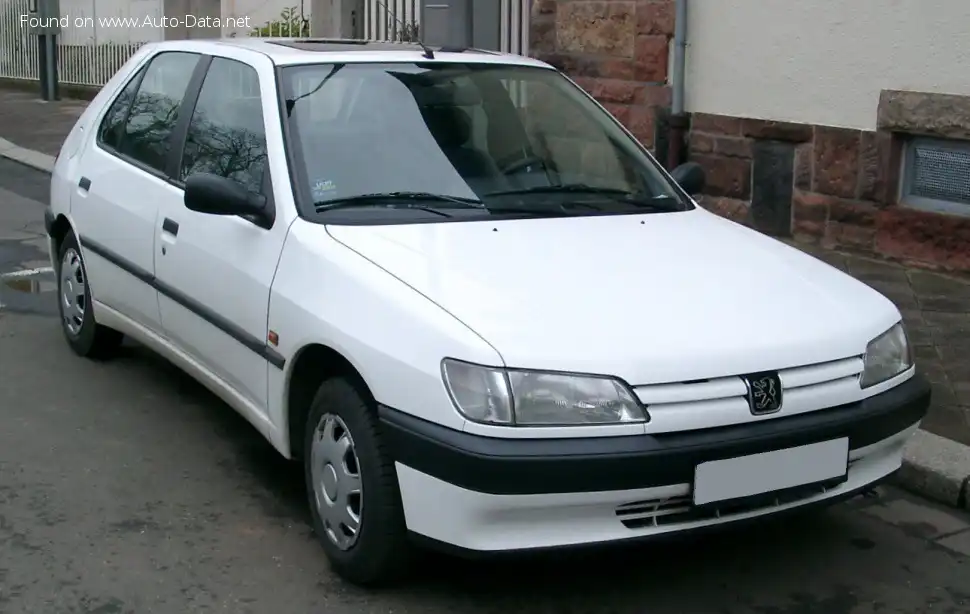
The Peugeot 306 2.0 XSi, produced between 1993 and 1997, represents a performance-oriented variant within the popular 306 hatchback range (7A/C chassis). Positioned as a mid-to-high trim level, the XSi offered a more engaging driving experience than the base models, appealing to enthusiasts seeking a blend of practicality and spirited performance. It was a key model in Peugeot’s lineup during a period of significant growth and design evolution for the brand, competing with rivals like the Volkswagen Golf and Ford Escort in the European market. The 306, in general, was a successful model for Peugeot, known for its comfortable ride and relatively affordable price point.
Technical Specifications
| Brand | Peugeot |
| Model | 306 |
| Generation | 306 Hatchback (7A/C) |
| Type (Engine) | 2.0 XSi (121 Hp) |
| Start of production | 1993 |
| End of production | 1997 |
| Powertrain Architecture | Internal Combustion engine |
| Body type | Hatchback |
| Seats | 5 |
| Doors | 3-5 |
| Fuel consumption (urban) | 11 l/100 km (21.4 US mpg, 25.7 UK mpg, 9.1 km/l) |
| Fuel consumption (extra urban) | 7.5 l/100 km (31.4 US mpg, 37.7 UK mpg, 13.3 km/l) |
| Fuel consumption (combined) | 8.2 l/100 km (28.7 US mpg, 34.4 UK mpg, 12.2 km/l) |
| Fuel Type | Petrol (Gasoline) |
| Acceleration 0 – 100 km/h | 10.4 sec |
| Acceleration 0 – 62 mph | 10.4 sec |
| Acceleration 0 – 60 mph | 9.9 sec |
| Maximum speed | 197 km/h (122.41 mph) |
| Weight-to-power ratio | 9.4 kg/Hp, 106.1 Hp/tonne |
| Weight-to-torque ratio | 6.5 kg/Nm, 154.4 Nm/tonne |
| Power | 121 Hp @ 5750 rpm |
| Power per litre | 60.6 Hp/l |
| Torque | 176 Nm @ 2750 rpm (129.81 lb.-ft. @ 2750 rpm) |
| Engine layout | Front, Transverse |
| Engine Model/Code | RFX XU10J2 |
| Engine displacement | 1998 cm3 (121.93 cu. in.) |
| Number of cylinders | 4 |
| Engine configuration | Inline |
| Cylinder Bore | 86 mm (3.39 in.) |
| Piston Stroke | 86 mm (3.39 in.) |
| Compression ratio | 9.5:1 |
| Number of valves per cylinder | 2 |
| Fuel injection system | Multi-port manifold injection |
| Engine aspiration | Naturally aspirated engine |
| Valvetrain | OHC |
| Engine oil capacity | 4.3 l (4.54 US qt | 3.78 UK qt) |
| Coolant | 7.5 l (7.93 US qt | 6.6 UK qt) |
| Kerb Weight | 1140 kg (2513.27 lbs.) |
| Max. weight | 1650 kg (3637.63 lbs.) |
| Max load | 510 kg (1124.36 lbs.) |
| Trunk (boot) space – minimum | 338 l (11.94 cu. ft.) |
| Trunk (boot) space – maximum | 1146 l (40.47 cu. ft.) |
| Fuel tank capacity | 60 l (15.85 US gal | 13.2 UK gal) |
| Length | 3995 mm (157.28 in.) |
| Width | 1692 mm (66.61 in.) |
| Height | 1367 mm (53.82 in.) |
| Wheelbase | 2580 mm (101.57 in.) |
| Front track | 1464 mm (57.64 in.) |
| Rear (Back) track | 1439 mm (56.65 in.) |
| Drivetrain Architecture | The Internal combustion engine (ICE) drives the front wheels of the vehicle. |
| Drive wheel | Front wheel drive |
| Number of gears and type of gearbox | 5 gears, manual transmission |
| Front suspension | Wishbone |
| Rear suspension | Trailing arm |
| Front brakes | Ventilated discs |
| Rear brakes | Disc |
| Assisting systems | ABS (Anti-lock braking system) |
| Steering type | Steering rack and pinion |
| Power steering | Hydraulic Steering |
| Tires size | 185/55 R15 |
Powertrain & Engine Architecture
The 2.0 XSi variant was powered by the RFX engine, a member of Peugeot’s XU10J2 family of inline-four cylinder petrol engines. This engine featured a 1998cc displacement, achieving 121 horsepower at 5750 rpm and 176 Nm (129.81 lb-ft) of torque at 2750 rpm. It utilized a multi-port fuel injection system and a single overhead camshaft (OHC) valvetrain with two valves per cylinder. The XU10J2 was known for its robustness and relatively simple design, contributing to its longevity. The engine was transversely mounted at the front of the vehicle, driving the front wheels. The five-speed manual transmission was the standard offering, providing a direct and engaging driving experience.
Driving Characteristics
The 2.0 XSi offered a noticeable step up in performance compared to the lower-spec 1.4 and 1.6-liter versions of the 306. The 0-60 mph time of around 9.9 seconds and a top speed of 122.41 mph were respectable for the early 1990s. The engine provided a good balance of low-end torque for everyday driving and sufficient power for overtaking maneuvers. The five-speed gearbox allowed for efficient cruising on the highway, while also providing the flexibility to keep the engine in its power band during spirited driving. Compared to the later 2.0 HDI diesel variants, the XSi prioritized responsiveness and a more traditional petrol engine feel over fuel economy. While not a dedicated sports model, the XSi offered a more dynamic driving experience than its more economical siblings.
Equipment & Trim Levels
The 2.0 XSi trim level typically included features such as power steering, central locking, electric front windows, and an upgraded interior trim compared to the base models. The interior often featured sportier seats with patterned upholstery. Optional extras could include a sunroof, alloy wheels, and upgraded audio systems. The dashboard layout was typical of the era, with a functional and straightforward design. Air conditioning was often an optional extra, and higher-spec examples might have included features like trip computers.
Chassis & Braking
The 306 2.0 XSi utilized a MacPherson strut front suspension and a trailing arm rear suspension. This setup provided a good balance of ride comfort and handling. The braking system consisted of ventilated discs on the front wheels and solid discs on the rear, providing adequate stopping power for the vehicle’s weight and performance. Anti-lock braking system (ABS) was standard, enhancing safety. The steering was a rack and pinion system with hydraulic power assistance, offering precise and responsive steering feel.
Market Reception & Comparison
The Peugeot 306 2.0 XSi was generally well-received by automotive critics. It was praised for its comfortable ride, responsive engine, and relatively affordable price. Compared to rivals like the Volkswagen Golf GTI, the 306 XSi offered a slightly softer ride and a more understated appearance. However, it was often considered to be a more engaging driver’s car than some of the more comfort-oriented competitors. Fuel economy was reasonable for a 2.0-liter petrol engine of the time, but it couldn’t match the efficiency of the diesel variants.
Legacy
The Peugeot 306 2.0 XSi remains a popular choice among enthusiasts and classic car collectors. The XU10J2 engine is known for its durability and relatively simple maintenance requirements. While age and mileage can lead to typical wear and tear, the engine is generally considered to be reliable. Parts availability is generally good, although some specific trim pieces may become increasingly difficult to find. Today, the 306 2.0 XSi represents a well-rounded and enjoyable driving experience, offering a nostalgic glimpse into the 1990s hatchback market.