Technical Specifications
| Brand | Peugeot |
| Model | 306 |
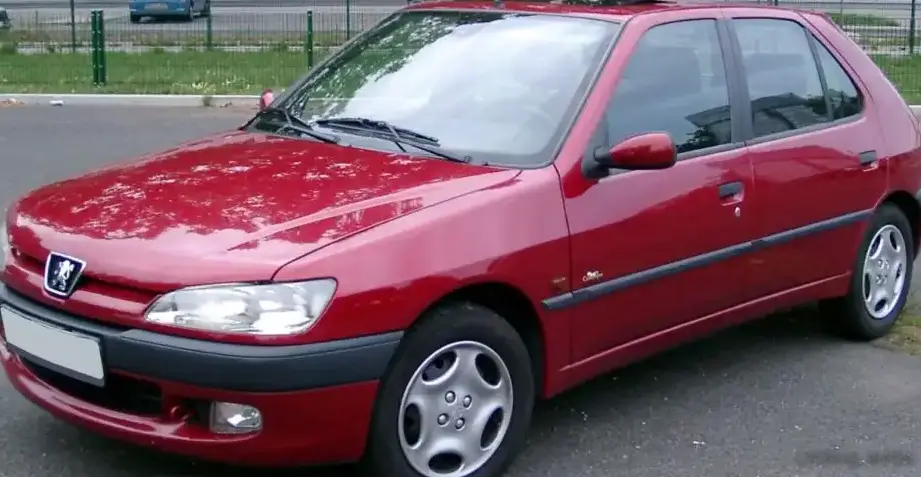
| Generation | 306 Hatchback (facelift 1997) |
| Type (Engine) | 1.6i (88 Hp) |
| Start of production | 1997 |
| End of production | 2002 |
| Powertrain Architecture | Internal Combustion engine |
| Body type | Hatchback |
| Seats | 5 |
| Doors | 5 |
| Fuel consumption (urban) | 9.9 l/100 km (23.8 US mpg, 28.5 UK mpg, 10.1 km/l) |
| Fuel consumption (extra urban) | 5.8 l/100 km (40.6 US mpg, 48.7 UK mpg, 17.2 km/l) |
| Fuel consumption (combined) | 7.3 l/100 km (32.2 US mpg, 38.7 UK mpg, 13.7 km/l) |
| CO2 emissions | 177 g/km |
| Fuel Type | Petrol (Gasoline) |
| Acceleration 0 – 100 km/h | 13.5 sec |
| Acceleration 0 – 62 mph | 13.5 sec |
| Acceleration 0 – 60 mph | 12.8 sec |
| Maximum speed | 179 km/h (111.23 mph) |
| Weight-to-power ratio | 12.4 kg/Hp, 80.7 Hp/tonne |
| Weight-to-torque ratio | 8.1 kg/Nm, 123.9 Nm/tonne |
| Power | 88 Hp @ 5600 rpm |
| Power per litre | 55.5 Hp/l |
| Torque | 135 Nm @ 3000 rpm (99.57 lb.-ft. @ 3000 rpm) |
| Engine layout | Front, Transverse |
| Engine Model/Code | NFZ TU5JP |
| Engine displacement | 1587 cm3 (96.84 cu. in.) |
| Number of cylinders | 4 |
| Engine configuration | Inline |
| Cylinder Bore | 78.5 mm (3.09 in.) |
| Piston Stroke | 82 mm (3.23 in.) |
| Compression ratio | 9.6:1 |
| Number of valves per cylinder | 2 |
| Fuel injection system | Multi-port manifold injection |
| Engine aspiration | Naturally aspirated engine |
| Valvetrain | SOHC |
| Engine oil capacity | 3.2 l (3.38 US qt | 2.82 UK qt) |
| Coolant | 7 l (7.4 US qt | 6.16 UK qt) |
| Kerb Weight | 1090 kg (2403.04 lbs.) |
| Max. weight | 1555 kg (3428.19 lbs.) |
| Max load | 465 kg (1025.15 lbs.) |
| Trunk (boot) space – minimum | 338 l (11.94 cu. ft.) |
| Trunk (boot) space – maximum | 1146 l (40.47 cu. ft.) |
| Fuel tank capacity | 60 l (15.85 US gal | 13.2 UK gal) |
| Permitted trailer load with brakes (12%) | 1200 kg (2645.55 lbs.) |
| Permitted trailer load without brakes | 580 kg (1278.68 lbs.) |
| Length | 4030 mm (158.66 in.) |
| Width | 1689 mm (66.5 in.) |
| Height | 1380 mm (54.33 in.) |
| Wheelbase | 2580 mm (101.57 in.) |
| Front track | 1454 mm (57.24 in.) |
| Rear (Back) track | 1423 mm (56.02 in.) |
| Ride height (ground clearance) | 120 mm (4.72 in.) |
| Drag coefficient (Cd) | 0.33 |
| Minimum turning circle (turning diameter) | 11.0 m (36.09 ft.) |
| Drivetrain Architecture | The Internal combustion engine (ICE) drives the front wheels of the vehicle. |
| Drive wheel | Front wheel drive |
| Number of gears and type of gearbox | 5 gears, manual transmission |
| Front suspension | Trailing arm |
| Rear suspension | Trailing arm |
| Front brakes | Ventilated discs |
| Rear brakes | Drum |
| Assisting systems | ABS (Anti-lock braking system) |
| Steering type | Steering rack and pinion |
| Tires size | 185/65 R14 T |
| Wheel rims size | 14 |
The Peugeot 306, particularly the facelifted model produced from 1997 to 2002, was a cornerstone of Peugeot’s lineup in Europe, representing a significant evolution in the competitive compact hatchback segment. The 1.6i variant, delivering 88 horsepower, served as a popular entry-level to mid-range option during this period, appealing to buyers prioritizing affordability and practicality. This version played a vital role in solidifying the 306’s reputation as a well-rounded and desirable choice in a market dominated by compact hatchbacks.
Powertrain & Engine Architecture
The 306 1.6i’s engine was the NFZ (also known as TU5JP), a 1.6-liter inline-four cylinder gasoline engine. This engine was widely used across various Peugeot and Citroën models of the time. It employed a single overhead camshaft (SOHC) operating two valves per cylinder. Fuel was delivered via a multi-port fuel injection system, offering a good compromise between fuel efficiency and performance. The engine generated 88 horsepower at 5600 rpm and 135 Nm (99.57 lb-ft) of torque at 3000 rpm. Its relatively straightforward design contributed to its inherent reliability and ease of maintenance. A five-speed manual transmission was the standard configuration, providing suitable gear ratios for everyday driving. An automatic transmission was offered, but it was less frequently chosen and often criticized for its diminished performance and reduced fuel economy.
Driving Characteristics
The 306 1.6i provided a comfortable, though not particularly sporty, driving experience. Acceleration from 0 to 60 mph took approximately 12.8 seconds, with a top speed around 111 mph. The engine felt adequate for both city and highway driving, but lacked the responsiveness of the higher-performance variants, such as the 2.0-liter 16-valve models. The manual transmission offered precise gear changes, while the automatic version, when equipped, felt noticeably slower and less engaging. The 306’s suspension, utilizing trailing arms at both the front and rear, delivered a compliant ride, effectively absorbing road imperfections. However, it wasn’t designed for spirited driving, exhibiting noticeable body roll during cornering maneuvers.
Equipment & Trim Levels
The 1.6i trim typically included standard features like power steering, central locking, and an adjustable steering column. The interior was usually upholstered in cloth, and the dashboard featured a simple, functional layout. Optional extras included air conditioning, electric windows, and a radio/cassette player. Higher trim levels, such as the GLX, added enhancements like alloy wheels, upgraded interior materials, and a sunroof. The 306’s interior was generally well-constructed and durable, although some of the plastic materials felt somewhat basic.
Chassis & Braking
The 306 1.6i featured a front-wheel-drive layout with a relatively uncomplicated chassis design. The front suspension utilized trailing arms, and the rear suspension also employed trailing arms. Braking was provided by ventilated discs at the front and drum brakes at the rear. An anti-lock braking system (ABS) was available as an option, improving safety by preventing wheel lockup during hard braking. The 306’s steering was a rack and pinion system, offering reasonable precision and feedback.
Market Reception & Comparison
The Peugeot 306 1.6i was generally well-received by automotive critics as a practical and affordable hatchback. It offered a good balance of comfort, fuel economy, and reliability. However, it was often noted for its lack of performance compared to the more powerful models in the range. When compared to competitors like the Volkswagen Golf and Ford Focus, the 306 1.6i offered a more comfortable ride and a more stylish interior, but didn’t quite match their level of refinement or driving dynamics. Fuel economy was competitive, averaging around 32.2 US mpg in combined driving conditions.
Legacy
The Peugeot 306 1.6i has proven to be a remarkably reliable vehicle, with a significant number of examples still in operation today. The NFZ engine is known for its durability, although consistent maintenance, including regular oil changes and timing belt replacements, is crucial to prevent potential issues. Parts availability remains generally good, and the 306’s straightforward design makes it relatively easy to repair. In the used car market, the 306 1.6i represents an affordable and practical option for buyers seeking a classic European hatchback. Its continued popularity is a testament to its inherent qualities of comfort, style, and dependability.