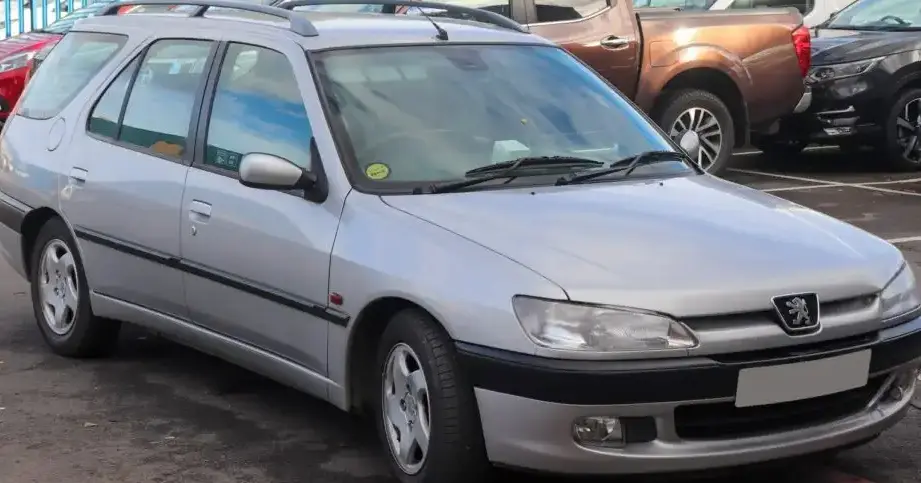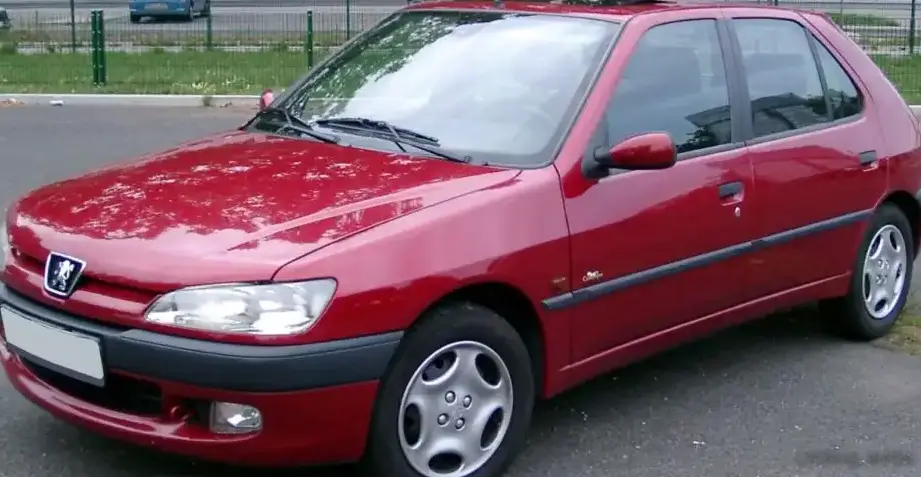
The Peugeot 306, particularly the facelifted model introduced in 1997, represented a significant step forward for the French automaker in the competitive compact hatchback segment. Produced from 1997 to 2002, the 1.6i variant with an automatic transmission offered a blend of affordability and convenience, aimed at buyers prioritizing ease of driving over outright performance. This version occupied a mid-range position within the 306 lineup, slotting below the more powerful 2.0-liter models and the sporty XSi trims, but above the base 1.4-liter engine option. It was a common sight on European roads, offering a practical and relatively economical transportation solution.
Technical Specifications
| Brand | Peugeot |
| Model | 306 |
| Generation | 306 Hatchback (facelift 1997) |
| Type (Engine) | 1.6i (88 Hp) Automatic |
| Start of production | 1997 |
| End of production | 2002 |
| Powertrain Architecture | Internal Combustion engine |
| Body type | Hatchback |
| Seats | 5 |
| Doors | 5 |
| Fuel consumption (urban) | 10.8 l/100 km (21.8 US mpg, 26.2 UK mpg, 9.3 km/l) |
| Fuel consumption (extra urban) | 6 l/100 km (39.2 US mpg, 47.1 UK mpg, 16.7 km/l) |
| Fuel consumption (combined) | 7.8 l/100 km (30.2 US mpg, 36.2 UK mpg, 12.8 km/l) |
| Fuel Type | Petrol (Gasoline) |
| Acceleration 0 – 100 km/h | 14.1 sec |
| Acceleration 0 – 62 mph | 14.1 sec |
| Acceleration 0 – 60 mph | 13.4 sec |
| Maximum speed | 174 km/h (108.12 mph) |
| Weight-to-power ratio | 12.6 kg/Hp, 79.3 Hp/tonne |
| Weight-to-torque ratio | 8.2 kg/Nm, 121.6 Nm/tonne |
| Power | 88 Hp @ 5600 rpm |
| Power per litre | 55.5 Hp/l |
| Torque | 135 Nm @ 3000 rpm (99.57 lb.-ft. @ 3000 rpm) |
| Engine layout | Front, Transverse |
| Engine Model/Code | NFZ TU5JP |
| Engine displacement | 1587 cm3 (96.84 cu. in.) |
| Number of cylinders | 4 |
| Engine configuration | Inline |
| Cylinder Bore | 78.5 mm (3.09 in.) |
| Piston Stroke | 82 mm (3.23 in.) |
| Compression ratio | 9.6:1 |
| Number of valves per cylinder | 2 |
| Fuel injection system | Multi-port manifold injection |
| Engine aspiration | Naturally aspirated engine |
| Valvetrain | SOHC |
| Engine oil capacity | 3.2 l (3.38 US qt | 2.82 UK qt) |
| Coolant | 7 l (7.4 US qt | 6.16 UK qt) |
| Kerb Weight | 1110 kg (2447.13 lbs.) |
| Max. weight | 1575 kg (3472.28 lbs.) |
| Max load | 465 kg (1025.15 lbs.) |
| Trunk (boot) space – minimum | 338 l (11.94 cu. ft.) |
| Trunk (boot) space – maximum | 1146 l (40.47 cu. ft.) |
| Fuel tank capacity | 60 l (15.85 US gal | 13.2 UK gal) |
| Length | 4030 mm (158.66 in.) |
| Width | 1689 mm (66.5 in.) |
| Height | 1380 mm (54.33 in.) |
| Wheelbase | 2580 mm (101.57 in.) |
| Front track | 1454 mm (57.24 in.) |
| Rear (Back) track | 1423 mm (56.02 in.) |
| Ride height (ground clearance) | 120 mm (4.72 in.) |
| Drag coefficient (Cd) | 0.33 |
| Minimum turning circle | 11.0 m (36.09 ft.) |
| Drivetrain Architecture | The Internal combustion engine (ICE) drives the front wheels of the vehicle. |
| Drive wheel | Front wheel drive |
| Number of gears and type of gearbox | 4 gears, automatic transmission |
| Front suspension | Trailing arm |
| Rear suspension | Trailing arm |
| Front brakes | Ventilated discs |
| Rear brakes | Drum |
| Assisting systems | ABS (Anti-lock braking system) |
| Steering type | Steering rack and pinion |
| Tires size | 185/65 R14 T |
| Wheel rims size | 14 |
Powertrain & Engine Architecture
The heart of the 306 1.6i Automatic is the NFZ (also known as TU5JP) 1.6-liter inline-four cylinder engine. This engine, a staple in many Peugeot and Citroën vehicles of the era, is a naturally aspirated unit featuring a single overhead camshaft (SOHC) design and two valves per cylinder. It utilizes a multi-port fuel injection system, providing a balance between fuel efficiency and adequate power delivery. The engine’s 88 horsepower output at 5600 rpm and 135 Nm (99.57 lb-ft) of torque at 3000 rpm were considered respectable for its displacement and intended application. The automatic transmission was typically a four-speed unit, designed for smooth, if not particularly rapid, gear changes. This transmission was chosen to provide a comfortable driving experience, especially in urban environments.
Driving Characteristics
The 306 1.6i Automatic offered a comfortable and predictable driving experience. Acceleration was modest, with a 0-60 mph time of around 13.4 seconds. The automatic transmission, while convenient, did detract from the overall responsiveness compared to the five-speed manual versions. Gear ratios were optimized for fuel economy and smooth cruising rather than spirited performance. The engine felt somewhat strained when pushed hard, and overtaking maneuvers required careful planning. However, for everyday commuting and general transportation, the 1.6i Automatic provided sufficient power and a relaxed driving experience. The steering was light and easy, making it maneuverable in city traffic.
Equipment & Trim Levels
The 1.6i Automatic trim typically included features such as central locking, power steering, and an AM/FM radio. Interior upholstery was usually cloth, with a relatively simple dashboard layout. Optional extras included air conditioning, electric windows, and alloy wheels. Higher-spec versions might have featured upgraded sound systems or more luxurious interior trim. The focus was on providing a well-equipped, but not overly lavish, package at an affordable price point. Safety features were relatively basic for the time, typically including a driver’s airbag and ABS (Anti-lock Braking System).
Chassis & Braking
The 306 1.6i Automatic utilized a relatively simple suspension setup, featuring trailing arms at both the front and rear. This configuration provided a comfortable ride, but didn’t offer the same level of handling precision as more sophisticated independent suspension systems. Braking was handled by ventilated discs at the front and drum brakes at the rear. ABS was standard, enhancing braking performance and stability, particularly on slippery surfaces. The chassis was designed to provide a good balance between comfort and handling, prioritizing ride quality over sporty dynamics.
Market Reception & Comparison
The Peugeot 306 1.6i Automatic was generally well-received by critics as a practical and affordable family hatchback. It was praised for its comfortable ride, ease of use, and relatively low running costs. However, it was often criticized for its lack of performance compared to higher-powered variants and competitors. Compared to the 2.0-liter models, the 1.6i Automatic offered significantly less power and acceleration, but it was more fuel-efficient and cheaper to insure. The 1.9 TDI diesel version provided superior fuel economy and torque, but at the expense of refinement and initial purchase price. The 1.6i Automatic appealed to buyers who prioritized comfort and convenience over outright performance.
Legacy
The Peugeot 306 1.6i Automatic, while not a particularly groundbreaking vehicle, remains a popular choice among classic car enthusiasts and budget-conscious buyers. The NFZ engine is known for its reliability, although regular maintenance is essential to prevent issues such as oil leaks and timing belt failure. The automatic transmission, while not the most modern, is generally durable if properly serviced. Today, these cars can be found in reasonable condition for relatively low prices, making them an affordable entry point into classic French motoring. Parts availability is generally good, although some components may be becoming increasingly difficult to source. The 306 1.6i Automatic represents a solid and dependable compact hatchback from a bygone era.