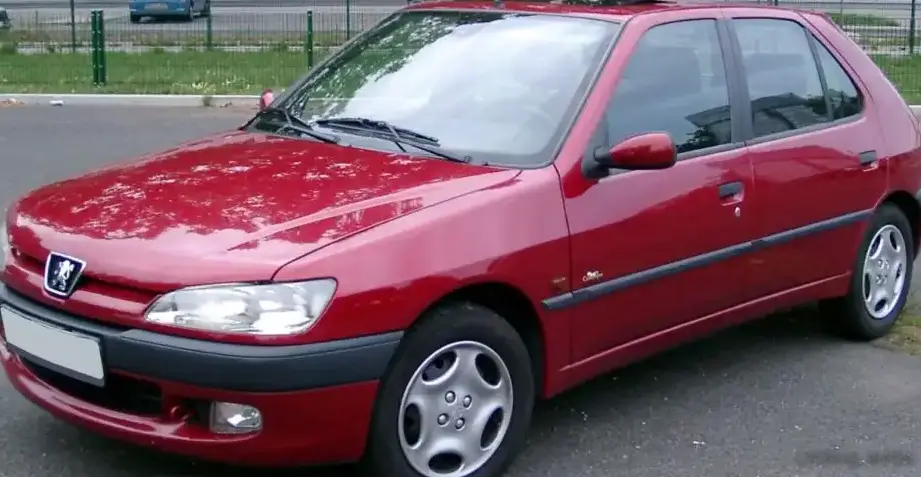
Technical Specifications
| Brand | Peugeot |
| Model | 306 |
| Generation | 306 Hatchback (facelift 1997) |
| Type (Engine) | 1.8 D (58 Hp) |
| Start of production | 1998 |
| End of production | 2002 |
| Powertrain Architecture | Internal Combustion engine |
| Body type | Hatchback |
| Fuel Type | Diesel |
| Power | 58 Hp |
| Engine Model/Code | A9A XUD7 |
| Engine aspiration | Naturally aspirated engine |
| Engine oil capacity | 4 l (4.23 US qt | 3.52 UK qt) |
| Coolant capacity | 9 l (9.51 US qt | 7.92 UK qt) |
The Peugeot 306, a small family car produced by the French manufacturer Peugeot, spanned a production run from 1993 to 2002. The facelifted version introduced in 1997 brought revised styling and minor mechanical updates. Among the various engine and trim combinations offered, the 1.8 D variant, powered by the XUD7 diesel engine and producing 58 horsepower, represented an entry-level option primarily aimed at economy-minded buyers. Production of this specific configuration ran from 1998 to 2002, and it was a significant offering in European markets where diesel fuel was more prevalent and affordable than gasoline.
Powertrain & Engine Architecture
The heart of the 306 1.8 D was the XUD7 engine, a 1769cc naturally aspirated diesel engine. This engine, designated with the code A9A, was a workhorse in the Peugeot-Citroën group for many years, known for its durability and relatively simple mechanical design. It featured indirect injection, utilizing a Bosch rotary injection pump to deliver fuel into the pre-chamber before entering the main combustion chamber. This pre-chamber design aided in smoother combustion and reduced engine noise, a characteristic of older diesel technology. The engine employed a single overhead camshaft (SOHC) operating two valves per cylinder. While not a powerhouse, the XUD7 was designed for longevity and fuel efficiency rather than outright performance. The engine was typically paired with a five-speed manual transmission, though a four-speed automatic transmission was also available, albeit less common. The automatic transmission, while offering convenience, further diminished the already modest acceleration of the 1.8 D.
Driving Characteristics
The 1.8 D variant of the 306 offered a decidedly unhurried driving experience. With only 58 horsepower on tap, acceleration was slow, particularly when equipped with the automatic transmission. The engine produced a modest 88 lb-ft of torque, which was available from relatively low RPMs, making it reasonably tractable for everyday driving. However, overtaking maneuvers required careful planning and a significant drop in gear. Compared to the more powerful gasoline variants, such as the 1.6 or 2.0-liter engines, the 1.8 D felt significantly underpowered. Even compared to other diesel options within the 306 range, like the 1.9 D, the 1.8 D lagged in performance. The gear ratios in the manual transmission were geared towards maximizing fuel economy, further emphasizing the car’s focus on practicality over sportiness. The automatic transmission, while providing ease of use, exacerbated the sluggishness, with noticeable delays in downshifting and a tendency to hunt for gears on inclines.
Equipment & Trim Levels
The 1.8 D trim level typically represented the base model in the 306 range. Standard equipment was relatively sparse, focusing on essential features. This generally included central locking, power steering, and basic cloth upholstery. Air conditioning was often an optional extra, as were electric windows. The dashboard layout was functional but lacked the more sophisticated touches found in higher-spec models. Interior trim was typically dark grey or black, with hard-wearing plastics dominating the cabin. Safety features were also basic, with driver and passenger airbags becoming increasingly common towards the end of the production run, but ABS brakes were typically reserved for higher trim levels. The target audience for this trim was budget-conscious buyers who prioritized fuel economy and reliability over luxury or performance.
Chassis & Braking
The 306 1.8 D utilized a MacPherson strut front suspension and a torsion beam rear suspension. This setup provided a reasonable compromise between ride comfort and handling, although it wasn’t particularly sporty. The torsion beam rear suspension was a cost-effective solution commonly found in cars of this class. Braking was typically accomplished with disc brakes on the front wheels and drum brakes on the rear. This configuration was adequate for the car’s weight and performance, but lacked the stopping power of all-disc setups found on higher-spec models. Stabilizer bars were often omitted on the base 1.8 D trim, contributing to a slightly more pronounced body roll in corners. The steering was hydraulically assisted, providing light and easy steering feel.
Market Reception & Comparison
The 306 1.8 D received mixed reviews. Critics acknowledged its fuel efficiency and robust engine, but often criticized its lack of performance. It was generally seen as a sensible and practical choice for those covering high mileage or prioritizing low running costs. Compared to its gasoline counterparts, the 1.8 D offered significantly better fuel economy, making it a popular choice for fleet operators and private buyers alike. However, the 1.9 D variant, while slightly more expensive, offered a noticeable improvement in performance and was often considered a better overall value. In terms of reliability, the XUD7 engine proved to be exceptionally durable, with many examples exceeding 200,000 miles with proper maintenance. However, the indirect injection system was prone to issues with injector clogging and pump wear if not properly maintained.
Legacy
The Peugeot 306 1.8 D, while not a particularly exciting car, holds a significant place in automotive history as a representative of the era’s focus on fuel efficiency and practicality. The XUD7 engine became legendary for its longevity and relatively simple maintenance requirements. Today, these cars are relatively rare and are often sought after by enthusiasts looking for a simple, reliable, and affordable classic. While finding well-maintained examples can be challenging, the 306 1.8 D remains a testament to Peugeot’s engineering prowess and its commitment to building durable and economical vehicles. The used car market values these vehicles based on condition, mileage, and originality, with prices generally remaining quite low, reflecting their age and basic specification. However, the enduring reputation of the XUD7 engine ensures continued interest from those seeking a dependable and fuel-efficient classic car.