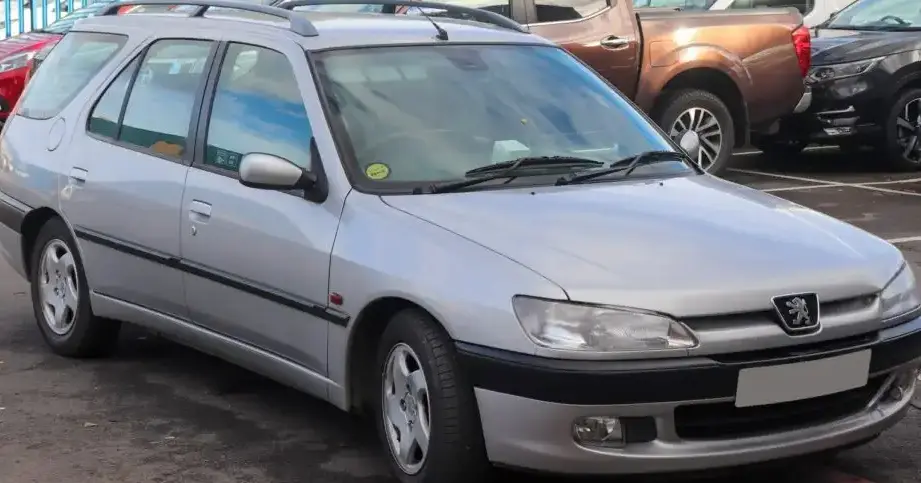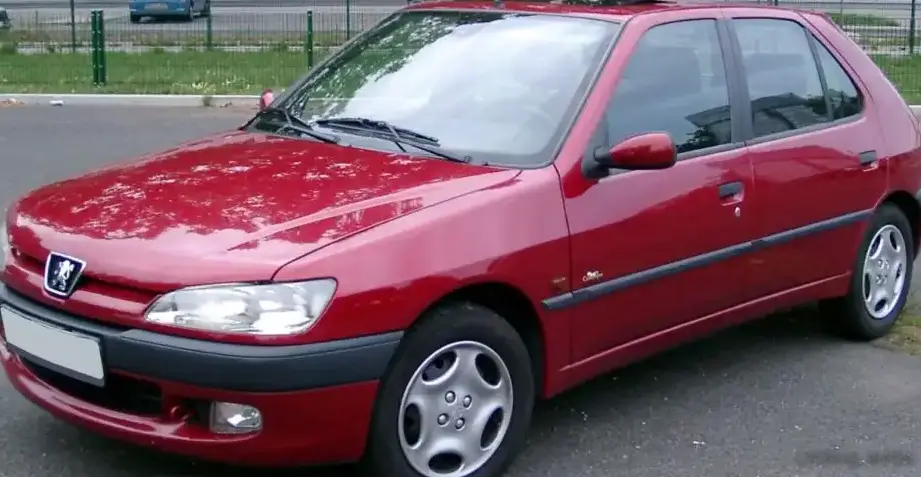
The Peugeot 306 2.0 S16, produced from 1997 to 2000, represents a performance-oriented variant within the facelifted second generation of the popular 306 hatchback. Positioned as a premium trim level, the S16 offered a significant step up in power and driving experience compared to lower-spec models. This variant was primarily marketed in Europe, where the 306 enjoyed considerable success as a practical yet engaging compact car. The 2.0 S16 aimed to appeal to drivers seeking a sporty hatchback with a capable engine and refined features.
Technical Specifications
| Brand | Peugeot |
| Model | 306 |
| Generation | 306 Hatchback (facelift 1997) |
| Type (Engine) | 2.0 S16 (163 Hp) |
| Start of production | 1997 |
| End of production | 2000 |
| Powertrain Architecture | Internal Combustion engine |
| Body type | Hatchback |
| Seats | 5 |
| Doors | 3 |
| Fuel consumption (urban) | 13.6 l/100 km (17.3 US mpg, 20.8 UK mpg, 7.4 km/l) |
| Fuel consumption (extra urban) | 7.1 l/100 km (33.1 US mpg, 39.8 UK mpg, 14.1 km/l) |
| Fuel consumption (combined) | 9.5 l/100 km (24.8 US mpg, 29.7 UK mpg, 10.5 km/l) |
| CO2 emissions | 224 g/km |
| Fuel Type | Petrol (Gasoline) |
| Acceleration 0 – 100 km/h | 8.8 sec |
| Acceleration 0 – 62 mph | 8.8 sec |
| Acceleration 0 – 60 mph | 8.4 sec |
| Maximum speed | 220 km/h (136.7 mph) |
| Weight-to-power ratio | 7.5 kg/Hp, 134.2 Hp/tonne |
| Weight-to-torque ratio | 6.3 kg/Nm, 158.8 Nm/tonne |
| Power | 163 Hp @ 6500 rpm |
| Power per litre | 81.6 Hp/l |
| Torque | 193 Nm @ 5500 rpm (142.35 lb.-ft. @ 5500 rpm) |
| Engine layout | Front, Transverse |
| Engine Model/Code | RFS XU10JARS |
| Engine displacement | 1998 cm3 (121.93 cu. in.) |
| Number of cylinders | 4 |
| Engine configuration | Inline |
| Cylinder Bore | 86 mm (3.39 in.) |
| Piston Stroke | 86 mm (3.39 in.) |
| Compression ratio | 10.8:1 |
| Number of valves per cylinder | 4 |
| Fuel injection system | Multi-port manifold injection |
| Engine aspiration | Naturally aspirated engine |
| Valvetrain | DOHC |
| Engine oil capacity | 4.3 l (4.54 US qt | 3.78 UK qt) |
| Coolant | 7.5 l (7.93 US qt | 6.6 UK qt) |
| Kerb Weight | 1215 kg (2678.62 lbs.) |
| Max. weight | 1630 kg (3593.53 lbs.) |
| Max load | 415 kg (914.92 lbs.) |
| Trunk (boot) space – minimum | 338 l (11.94 cu. ft.) |
| Trunk (boot) space – maximum | 1146 l (40.47 cu. ft.) |
| Fuel tank capacity | 60 l (15.85 US gal | 13.2 UK gal) |
| Permitted trailer load with brakes (12%) | 1000 kg (2204.62 lbs.) |
| Permitted trailer load without brakes | 575 kg (1267.66 lbs.) |
| Length | 4030 mm (158.66 in.) |
| Width | 1689 mm (66.5 in.) |
| Height | 1350 mm (53.15 in.) |
| Wheelbase | 2580 mm (101.57 in.) |
| Front track | 1464 mm (57.64 in.) |
| Rear (Back) track | 1433 mm (56.42 in.) |
| Ride height (ground clearance) | 120 mm (4.72 in.) |
| Drag coefficient (Cd) | 0.33 |
| Minimum turning circle (turning diameter) | 11.0 m (36.09 ft.) |
| Drivetrain Architecture | The Internal combustion engine (ICE) drives the front wheels of the vehicle. |
| Drive wheel | Front wheel drive |
| Number of gears and type of gearbox | 6 gears, manual transmission |
| Front suspension | Trailing arm |
| Rear suspension | Trailing arm |
| Front brakes | Ventilated discs |
| Rear brakes | Disc |
| Assisting systems | ABS (Anti-lock braking system) |
| Steering type | Steering rack and pinion |
| Tires size | 195/55 R15 V |
| Wheel rims size | 15 |
Powertrain & Engine Architecture
The heart of the 306 2.0 S16 is the XU10JARS engine, a 1.998-liter (121.93 cubic inches) inline-four cylinder powerplant. This engine is a member of Peugeot-Citroën’s XU series, known for its durability and tunability. The ‘S16’ designation signifies sixteen valves – four valves per cylinder – operated by a double overhead camshaft (DOHC) valvetrain. Fuel delivery is managed by a multi-port fuel injection system, providing precise fuel metering for optimal performance and efficiency. The engine produces 163 horsepower at 6500 rpm and 193 Nm (142.35 lb-ft) of torque at 5500 rpm. The engine’s robust construction and relatively simple design contribute to its reliability. The 306 S16 exclusively came with a 6-speed manual transmission, designed to handle the engine’s power output and provide engaging gear changes.
Driving Characteristics
The 306 2.0 S16 delivers a noticeably more spirited driving experience than lower-powered variants. Acceleration from 0 to 60 mph takes approximately 8.4 seconds, and it achieves a top speed of 136.7 mph. The six-speed manual transmission allows drivers to keep the engine in its optimal power band, resulting in responsive acceleration. While not a dedicated sports car, the S16 offers a good balance between performance and everyday usability. The suspension, while relatively simple with trailing arm setups front and rear, provides a comfortable ride without sacrificing handling. The steering is direct and provides good feedback, enhancing driver confidence.
Equipment & Trim Levels
The 2.0 S16 trim level typically included features such as alloy wheels, sports seats, a leather-wrapped steering wheel, and electric windows. Air conditioning was often standard, and options like a sunroof and upgraded audio systems were available. The interior trim generally featured a sporty aesthetic, with unique upholstery and dashboard accents differentiating it from base models. The S16 was positioned as a well-equipped and desirable variant, appealing to buyers who prioritized both performance and comfort.
Chassis & Braking
The 306 2.0 S16 utilizes a front-wheel-drive layout. The suspension consists of trailing arms at both the front and rear, providing a balance between ride comfort and handling. Braking duties are handled by ventilated discs at the front and solid discs at the rear, offering adequate stopping power for the vehicle’s performance capabilities. An Anti-lock Braking System (ABS) was standard, enhancing safety and control during emergency braking situations.
Market Reception & Comparison
The Peugeot 306 2.0 S16 was generally well-received by automotive critics, who praised its lively engine, engaging handling, and comfortable ride. Compared to other hot hatches of the era, such as the Volkswagen Golf GTI, the 306 S16 offered a slightly more affordable alternative with a distinctive French flair. Fuel economy, at around 24.8 US mpg combined, was reasonable for a performance-oriented hatchback. Reliability was generally good, although some owners reported minor issues with electrical components.
Legacy
The Peugeot 306 2.0 S16 remains a popular choice among enthusiasts today. The XU10JARS engine is known for its durability and potential for modification. While finding well-maintained examples can be challenging, the 306 S16 offers a compelling combination of performance, style, and affordability. Its status as a classic French hatchback continues to grow, and it is often regarded as one of the most desirable variants of the 306 model range. The 6-speed manual transmission and the robust engine make it a fun and rewarding car to drive, even by modern standards.