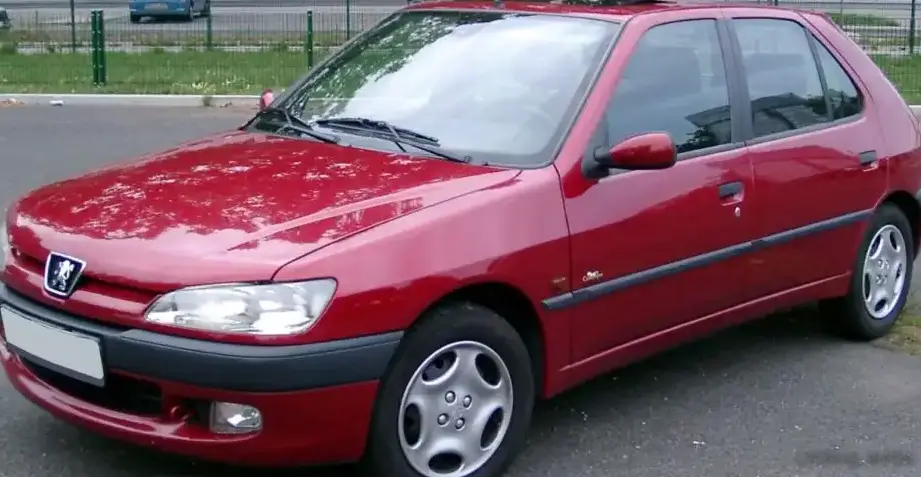
The Peugeot 306, particularly the facelifted version introduced in 1997, represented a significant step forward for the French automaker in the competitive compact hatchback segment. Produced from 1997 to 2002, the 2.0i 16V Automatic variant occupied a mid-range position within the 306 lineup, offering a blend of performance and convenience aimed at buyers seeking a more refined driving experience. This model, based on the T1 platform, was a popular choice in European markets, offering a more premium alternative to base models while remaining more accessible than the performance-oriented XSi variants.
Technical Specifications
| Brand | Peugeot |
| Model | 306 |
| Generation | 306 Hatchback (facelift 1997) |
| Type (Engine) | 2.0i 16V (133 Hp) Automatic |
| Start of production | 1997 |
| End of production | 2002 |
| Powertrain Architecture | Internal Combustion engine |
| Body type | Hatchback |
| Seats | 5 |
| Doors | 3-5 |
| Fuel consumption (urban) | 13.7 l/100 km (17.2 US mpg, 20.6 UK mpg, 7.3 km/l) |
| Fuel consumption (extra urban) | 6.5 l/100 km (36.2 US mpg, 43.5 UK mpg, 15.4 km/l) |
| Fuel consumption (combined) | 9.2 l/100 km (25.6 US mpg, 30.7 UK mpg, 10.9 km/l) |
| CO2 emissions | 221 g/km |
| Fuel Type | Petrol (Gasoline) |
| Acceleration 0 – 100 km/h | 11.4 sec |
| Acceleration 0 – 62 mph | 11.4 sec |
| Acceleration 0 – 60 mph | 10.8 sec |
| Maximum speed | 199 km/h (123.65 mph) |
| Weight-to-power ratio | 9.1 kg/Hp, 110.3 Hp/tonne |
| Weight-to-torque ratio | 6.7 kg/Nm, 149.3 Nm/tonne |
| Power | 133 Hp @ 5500 rpm |
| Power per litre | 66.6 Hp/l |
| Torque | 180 Nm @ 4200 rpm (132.76 lb.-ft. @ 4200 rpm) |
| Engine layout | Front, Transverse |
| Engine Model/Code | RFV XU10J4R |
| Engine displacement | 1998 cm3 (121.93 cu. in.) |
| Number of cylinders | 4 |
| Engine configuration | Inline |
| Cylinder Bore | 86 mm (3.39 in.) |
| Piston Stroke | 86 mm (3.39 in.) |
| Compression ratio | 10.4:1 |
| Number of valves per cylinder | 4 |
| Fuel injection system | Multi-port manifold injection |
| Engine aspiration | Naturally aspirated engine |
| Valvetrain | DOHC |
| Engine oil capacity | 4.5 l (4.76 US qt | 3.96 UK qt) |
| Coolant | 7.5 l (7.93 US qt | 6.6 UK qt) |
| Kerb Weight | 1206 kg (2658.77 lbs.) |
| Trunk (boot) space – minimum | 338 l (11.94 cu. ft.) |
| Trunk (boot) space – maximum | 1146 l (40.47 cu. ft.) |
| Fuel tank capacity | 60 l (15.85 US gal | 13.2 UK gal) |
| Length | 4030 mm (158.66 in.) |
| Width | 1689 mm (66.5 in.) |
| Height | 1380 mm (54.33 in.) |
| Wheelbase | 2580 mm (101.57 in.) |
| Front track | 1454 mm (57.24 in.) |
| Rear (Back) track | 1423 mm (56.02 in.) |
| Ride height (ground clearance) | 120 mm (4.72 in.) |
| Drag coefficient (Cd) | 0.33 |
| Minimum turning circle | 11.0 m (36.09 ft.) |
| Drivetrain Architecture | The Internal combustion engine (ICE) drives the front wheels of the vehicle. |
| Drive wheel | Front wheel drive |
| Number of gears and type of gearbox | 4 gears, automatic transmission |
| Front suspension | Trailing arm |
| Rear suspension | Trailing arm |
| Front brakes | Ventilated discs |
| Rear brakes | Disc |
| Assisting systems | ABS (Anti-lock braking system) |
| Steering type | Steering rack and pinion |
| Tires size | 185/65 R14 H |
| Wheel rims size | 14 |
Powertrain & Engine Architecture
The heart of the 306 2.0i 16V Automatic is the RFV XU10J4R engine, a naturally aspirated, 1998cc inline-four cylinder powerplant. This engine is a member of the well-regarded XU series, known for its durability and relatively simple design. It features a dual overhead camshaft (DOHC) valvetrain operating 16 valves (four per cylinder), and utilizes multi-port fuel injection for precise fuel delivery. The engine produces 133 horsepower at 5500 rpm and 180 Nm (132.76 lb-ft) of torque at 4200 rpm. The automatic transmission is a four-speed unit, designed to provide smooth and convenient gear changes. While not known for its sportiness, this transmission was reliable and well-suited to the engine’s torque curve.
Driving Characteristics
The 306 2.0i 16V Automatic offered a comfortable and relaxed driving experience. Acceleration from 0-60 mph took around 10.8 seconds, and top speed was approximately 123.65 mph. Compared to the manual transmission version of the same engine, the automatic suffered a slight performance penalty due to the inherent losses in the torque converter. However, the automatic provided a more forgiving driving experience, particularly in urban traffic. The gear ratios were tuned for fuel efficiency and smooth cruising, rather than outright performance. Compared to the more potent XSi models with their higher-output engines, the 2.0i Automatic prioritized comfort and ease of use.
Equipment & Trim Levels
The 2.0i 16V Automatic trim typically included features such as central locking, power windows, power steering, and an upgraded audio system. Interior upholstery was usually cloth, with options for higher-grade materials available. Air conditioning was a common option, as were alloy wheels. The dashboard layout was typical of late-1990s Peugeot designs, with a functional and ergonomic design. Optional extras could include a sunroof, upgraded sound systems, and metallic paint finishes.
Chassis & Braking
The 306 2.0i 16V Automatic utilized a trailing arm rear suspension, a design common in European hatchbacks of the era. The front suspension employed a similar trailing arm setup. Braking consisted of ventilated discs on the front wheels and solid discs on the rear. Anti-lock Braking System (ABS) was standard, enhancing safety and control. The suspension was tuned for a comfortable ride, prioritizing smoothness over sharp handling. Stabilizer bars were fitted to both the front and rear axles to reduce body roll during cornering.
Market Reception & Comparison
The 306 2.0i 16V Automatic was generally well-received by automotive critics as a practical and comfortable family hatchback. Fuel economy was reasonable for the time, averaging around 25.6 US mpg in combined driving. However, it wasn’t the most economical option in the 306 range, with the diesel variants offering significantly better fuel consumption. Compared to the manual transmission version, the automatic was often criticized for its slightly slower acceleration and less engaging driving experience. However, its convenience and ease of use appealed to a broader range of buyers.
Legacy
The Peugeot 306 2.0i 16V Automatic has proven to be a relatively reliable vehicle, with the XU10J4R engine being particularly durable. However, like all cars of this age, maintenance is key to ensuring longevity. Common issues include wear and tear on suspension components, corrosion, and potential problems with the automatic transmission if not regularly serviced. Today, the 306 is gaining a following among classic car enthusiasts, particularly well-maintained examples. The 2.0i 16V Automatic represents a comfortable and refined option within the 306 range, offering a taste of French automotive engineering from the late 1990s.