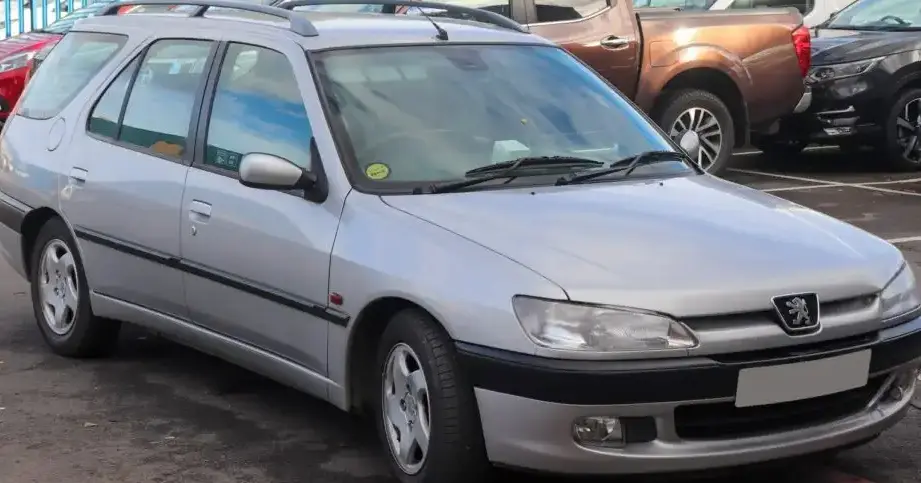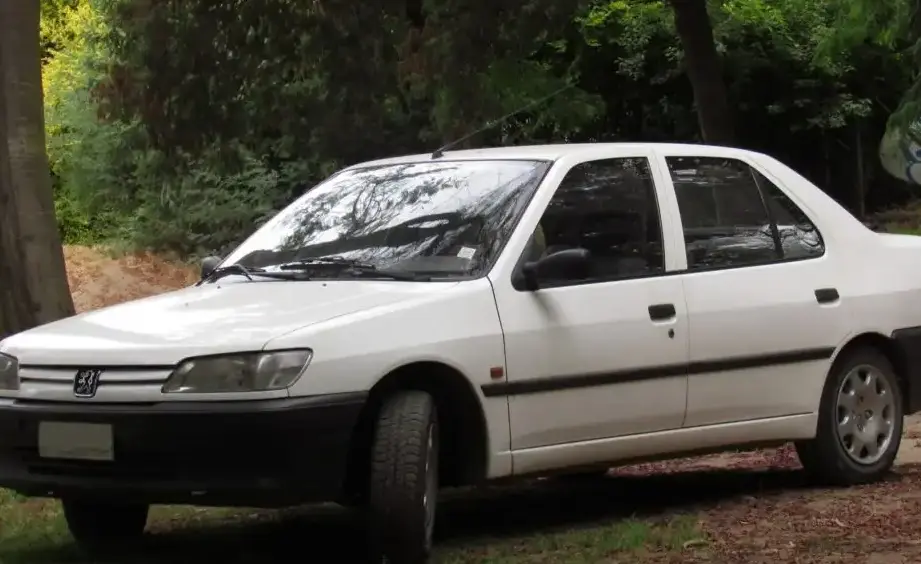
The Peugeot 306 Sedan (7B) 1.8 ST Automatic, produced between 1994 and 1997, represented a mid-range offering within the broader 306 sedan lineup. Positioned above the base 1.4L models and below the more performance-oriented 2.0L XSi variants, the 1.8 ST Automatic aimed to provide a balance of comfort, fuel efficiency, and reasonable performance for family buyers. It was primarily sold in European markets, where the 306 competed with vehicles like the Ford Escort, Opel Astra, and Renault 19. The 7B designation refers to the sedan body style within the 306 series, which also included hatchback and cabriolet versions.
Technical Specifications
| Brand | Peugeot |
| Model | 306 |
| Generation | 306 Sedan (7B) |
| Type (Engine) | 1.8 ST (101 Hp) Automatic |
| Start of production | 1994 |
| End of production | 1997 |
| Powertrain Architecture | Internal Combustion engine |
| Body type | Sedan |
| Seats | 5 |
| Doors | 4 |
| Fuel consumption (combined) | 8 l/100 km (29.4 US mpg, 35.3 UK mpg, 12.5 km/l) |
| Fuel Type | Petrol (Gasoline) |
| Acceleration 0 – 100 km/h | 12.2 sec |
| Acceleration 0 – 62 mph | 12.2 sec |
| Acceleration 0 – 60 mph | 11.6 sec |
| Maximum speed | 185 km/h (114.95 mph) |
| Weight-to-power ratio | 10.9 kg/Hp, 91.8 Hp/tonne |
| Weight-to-torque ratio | 7.2 kg/Nm, 139.1 Nm/tonne |
| Power | 101 Hp @ 6000 rpm |
| Power per litre | 57.3 Hp/l |
| Torque | 153 Nm @ 3000 rpm (112.85 lb.-ft. @ 3000 rpm) |
| Engine layout | Front, Transverse |
| Engine Model/Code | LFY XU7JP4 |
| Engine displacement | 1762 cm3 (107.52 cu. in.) |
| Number of cylinders | 4 |
| Engine configuration | Inline |
| Cylinder Bore | 83 mm (3.27 in.) |
| Piston Stroke | 81.4 mm (3.2 in.) |
| Compression ratio | 9.2:1 |
| Number of valves per cylinder | 2 |
| Fuel injection system | Multi-port manifold injection |
| Engine aspiration | Naturally aspirated engine |
| Valvetrain | OHC |
| Engine oil capacity | 4.3 l (4.54 US qt | 3.78 UK qt) |
| Coolant | 7.5 l (7.93 US qt | 6.6 UK qt) |
| Kerb Weight | 1100 kg (2425.08 lbs.) |
| Max. weight | 1625 kg (3582.51 lbs.) |
| Max load | 525 kg (1157.43 lbs.) |
| Trunk (boot) space – minimum | 463 l (16.35 cu. ft.) |
| Fuel tank capacity | 60 l (15.85 US gal | 13.2 UK gal) |
| Length | 4232 mm (166.61 in.) |
| Width | 1689 mm (66.5 in.) |
| Height | 1386 mm (54.57 in.) |
| Wheelbase | 2580 mm (101.57 in.) |
| Front track | 1454 mm (57.24 in.) |
| Rear (Back) track | 1429 mm (56.26 in.) |
| Drivetrain Architecture | The Internal combustion engine (ICE) drives the front wheels of the vehicle. |
| Drive wheel | Front wheel drive |
| Number of gears and type of gearbox | 4 gears, automatic transmission |
| Front suspension | Wishbone |
| Rear suspension | Trailing arm |
| Front brakes | Ventilated discs |
| Rear brakes | Drum |
| Assisting systems | ABS (Anti-lock braking system) |
| Steering type | Steering rack and pinion |
| Power steering | Hydraulic Steering |
| Tires size | 185/60 R14 |
| Wheel rims size | 14 |
Powertrain & Engine Architecture
The 1.8 ST Automatic variant of the Peugeot 306 Sedan utilized the XU7JP4 engine, a 1762cc inline-four cylinder petrol engine. This engine, often referred to by its LFY engine code, was a staple in Peugeot and Citroën vehicles of the era. It featured a single overhead camshaft (OHC) design with two valves per cylinder. Fuel delivery was managed by a multi-port fuel injection system, providing a balance between efficiency and performance. The engine’s 9.2:1 compression ratio was typical for naturally aspirated engines of the time. The automatic transmission was a four-speed unit, designed to provide smooth shifts and ease of driving, particularly in urban environments. While not known for its sportiness, this transmission was reliable and well-suited to the engine’s torque characteristics.
Driving Characteristics
The 1.8 ST Automatic offered a comfortable, if not particularly exhilarating, driving experience. With 101 horsepower and 113 lb-ft of torque, acceleration from 0-60 mph took around 11.6 seconds. The four-speed automatic transmission, while smooth, did result in some power loss compared to the available five-speed manual gearbox. Gear ratios were optimized for fuel economy and everyday drivability rather than outright performance. The automatic transmission tended to hold onto gears longer, prioritizing fuel efficiency over rapid acceleration. Compared to the more powerful 2.0L XSi models, the 1.8 ST Automatic felt noticeably slower, especially during overtaking maneuvers. However, it provided a more relaxed driving experience, particularly in stop-and-go traffic.
Equipment & Trim Levels
The 1.8 ST Automatic trim level typically included features such as central locking, power steering, and an AM/FM radio. Interior upholstery was generally cloth, with a relatively simple dashboard layout. Optional extras included air conditioning, electric windows, and a sunroof. The ST designation indicated a slightly higher level of equipment compared to the base models, but it wasn’t as lavishly equipped as the XSi variants. Safety features were relatively basic for the time, typically including a driver’s airbag and ABS anti-lock brakes.
Chassis & Braking
The 306 Sedan featured a front-wheel-drive layout with independent wishbone suspension at the front and a trailing arm suspension at the rear. The 1.8 ST Automatic, due to its weight, utilized a slightly firmer suspension setup compared to the base models to improve handling. Braking consisted of ventilated discs at the front and drum brakes at the rear. ABS was standard, providing improved braking performance and stability, especially on slippery surfaces. The steering was a rack and pinion system with hydraulic power assistance, offering a reasonable level of feel and responsiveness.
Market Reception & Comparison
The Peugeot 306 1.8 ST Automatic was generally well-received as a practical and affordable family sedan. Critics praised its comfortable ride, reasonable fuel economy (around 29.4 mpg), and ease of driving. However, it was often criticized for its lack of outright performance compared to rivals like the Ford Escort and Opel Astra. The automatic transmission, while convenient, was seen as detracting from the engine’s potential. In terms of reliability, the XU7JP4 engine was generally considered robust, but the automatic transmission could be prone to issues if not properly maintained. The 1.8 ST Automatic offered a compelling value proposition for buyers seeking a comfortable and economical sedan.
Legacy
The Peugeot 306 1.8 ST Automatic has become a relatively affordable classic car in the used market. The XU7JP4 engine is known for its durability, and many examples are still on the road today. However, finding well-maintained examples can be challenging, as age and mileage take their toll. The automatic transmission requires regular fluid changes to prevent issues. While not a particularly sought-after variant, the 1.8 ST Automatic represents a solid and reliable choice for those seeking a classic French sedan. Parts availability is generally good, although some trim-specific components may be difficult to find. Its enduring appeal lies in its blend of practicality, affordability, and the inherent charm of a 1990s French automobile.