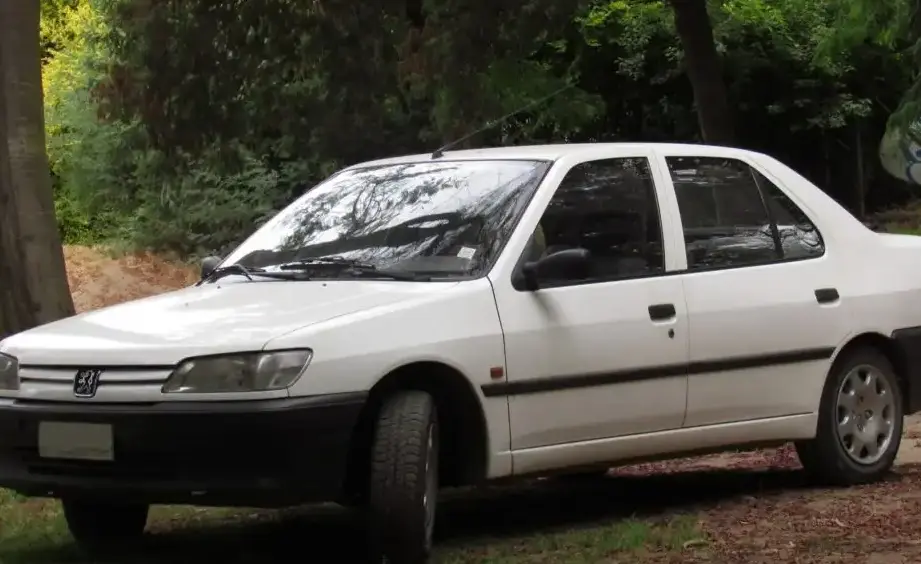
The Peugeot 306 Sedan (7B) 1.9 SRDT, produced between 1994 and 1997, represented a compelling entry in the compact sedan market, particularly in Europe. Positioned as a fuel-efficient and practical option, this variant utilized a turbocharged diesel engine paired with a five-speed manual transmission. It was part of the broader 306 range, which encompassed hatchback, cabriolet, and wagon body styles, all built on Peugeot’s 306 platform. The 1.9 SRDT aimed to provide a balance between performance and economy, appealing to drivers seeking a comfortable and reliable daily driver.
Technical Specifications
| Brand | Peugeot |
| Model | 306 |
| Generation | 306 Sedan (7B) |
| Type (Engine) | 1.9 SRDT (90 Hp) |
| Start of production | 1994 |
| End of production | 1997 |
| Powertrain Architecture | Internal Combustion engine |
| Body type | Sedan |
| Seats | 5 |
| Doors | 4 |
| Fuel consumption (combined) | 6 l/100 km (39.2 US mpg, 47.1 UK mpg, 16.7 km/l) |
| Fuel Type | Diesel |
| Acceleration 0 – 100 km/h | 12.4 sec |
| Acceleration 0 – 62 mph | 12.4 sec |
| Acceleration 0 – 60 mph | 11.8 sec |
| Maximum speed | 180 km/h (111.85 mph) |
| Weight-to-power ratio | 12.7 kg/Hp, 78.9 Hp/tonne |
| Weight-to-torque ratio | 5.8 kg/Nm, 171.1 Nm/tonne |
| Power | 90 Hp @ 4000 rpm |
| Power per litre | 47.2 Hp/l |
| Torque | 195 Nm @ 2250 rpm (143.82 lb.-ft. @ 2250 rpm) |
| Engine layout | Front, Transverse |
| Engine Model/Code | D8A XUD9TE |
| Engine displacement | 1905 cm3 (116.25 cu. in.) |
| Number of cylinders | 4 |
| Engine configuration | Inline |
| Cylinder Bore | 83 mm (3.27 in.) |
| Piston Stroke | 88 mm (3.46 in.) |
| Compression ratio | 21.8:1 |
| Number of valves per cylinder | 2 |
| Fuel injection system | Precombustion chamber injection |
| Engine aspiration | Turbocharger |
| Valvetrain | OHC |
| Engine oil capacity | 4 l (4.23 US qt | 3.52 UK qt) |
| Coolant | 9 l (9.51 US qt | 7.92 UK qt) |
| Kerb Weight | 1140 kg (2513.27 lbs.) |
| Max. weight | 1665 kg (3670.7 lbs.) |
| Max load | 525 kg (1157.43 lbs.) |
| Trunk (boot) space – minimum | 463 l (16.35 cu. ft.) |
| Fuel tank capacity | 60 l (15.85 US gal | 13.2 UK gal) |
| Length | 4232 mm (166.61 in.) |
| Width | 1689 mm (66.5 in.) |
| Height | 1386 mm (54.57 in.) |
| Wheelbase | 2580 mm (101.57 in.) |
| Front track | 1454 mm (57.24 in.) |
| Rear (Back) track | 1429 mm (56.26 in.) |
| Drivetrain Architecture | The Internal combustion engine (ICE) drives the front wheels of the vehicle. |
| Drive wheel | Front wheel drive |
| Number of gears and type of gearbox | 5 gears, manual transmission |
| Front suspension | Wishbone |
| Rear suspension | Trailing arm |
| Front brakes | Ventilated discs |
| Rear brakes | Drum |
| Assisting systems | ABS (Anti-lock braking system) |
| Steering type | Steering rack and pinion |
| Power steering | Hydraulic Steering |
| Tires size | 185/60 R14 |
Powertrain & Engine Architecture
The heart of the 306 Sedan 1.9 SRDT was the D8A XUD9TE engine, a 1.9-liter inline-four cylinder diesel. This engine was a mainstay in Peugeot and Citroën vehicles throughout the 1990s, known for its durability and relatively simple design. The “XUD” designation refers to a family of diesel engines developed by Peugeot. The SRDT variant featured a turbocharger with intercooling, boosting power output to 90 horsepower at 4000 rpm and 195 Nm (144 lb-ft) of torque at 2250 rpm. The engine employed precombustion chamber injection, a system where fuel is injected into a small pre-chamber connected to the main combustion chamber, promoting more complete combustion. The overhead camshaft (OHC) valvetrain operated two valves per cylinder. The five-speed manual transmission was a standard feature, providing a good balance between acceleration and fuel efficiency.
Driving Characteristics
The 1.9 SRDT offered a distinctly different driving experience compared to the gasoline-powered 306 variants. While not particularly quick – 0-60 mph took around 11.8 seconds – the engine’s strong low-end torque made it feel responsive in everyday driving situations. The turbocharger provided a noticeable boost in power, particularly when overtaking. The five-speed gearbox allowed drivers to keep the engine in its optimal power band. Compared to the higher-output 2.0-liter gasoline engines, the 1.9 SRDT prioritized fuel economy over outright performance. The manual transmission offered more driver engagement than the optional automatic transmission available on other 306 models.
Equipment & Trim Levels
The 1.9 SRDT trim level typically included features such as power steering, central locking, and electric front windows. Interior upholstery was generally cloth, with a functional and durable design. Optional extras included air conditioning, a sunroof, and upgraded audio systems. The dashboard layout was typical of early 1990s Peugeot designs, with a focus on practicality and ease of use. The SRDT trim sat in the mid-range of the 306 Sedan lineup, offering a step up in equipment and performance compared to the base models, but lacking the luxury features found in the higher-spec versions.
Chassis & Braking
The 306 Sedan featured a front-wheel-drive layout with independent wishbone suspension at the front and a trailing arm suspension at the rear. This setup provided a comfortable ride and decent handling characteristics. The 1.9 SRDT variant, due to its increased weight compared to the base models, benefited from a slightly stiffer suspension setup to maintain stability. Braking consisted of ventilated discs at the front and drum brakes at the rear. An Anti-lock Braking System (ABS) was included as standard, enhancing safety. The steering utilized a rack and pinion system with hydraulic power assistance, providing precise and responsive steering feel.
Market Reception & Comparison
The Peugeot 306 Sedan 1.9 SRDT was generally well-received by automotive critics for its fuel efficiency, reliability, and comfortable ride. It was seen as a practical and affordable option for those seeking a compact sedan. Compared to the gasoline-powered 306 variants, the 1.9 SRDT offered significantly better fuel economy, making it a popular choice for high-mileage drivers. However, it lacked the refinement and performance of the more powerful gasoline engines. Against competitors like the Volkswagen Golf and Ford Escort, the 306 SRDT offered a compelling combination of features and value.
Legacy
The D8A XUD9TE engine proved to be remarkably durable, and many 306 Sedans equipped with this engine are still on the road today. While maintenance costs can increase with age, the engine’s robust construction and relatively simple design make it relatively easy to repair. The 306 Sedan 1.9 SRDT remains a popular choice among enthusiasts seeking a classic European diesel sedan. Its fuel efficiency, reliability, and affordability continue to make it a viable option in the used car market, particularly for those seeking a practical and economical daily driver.