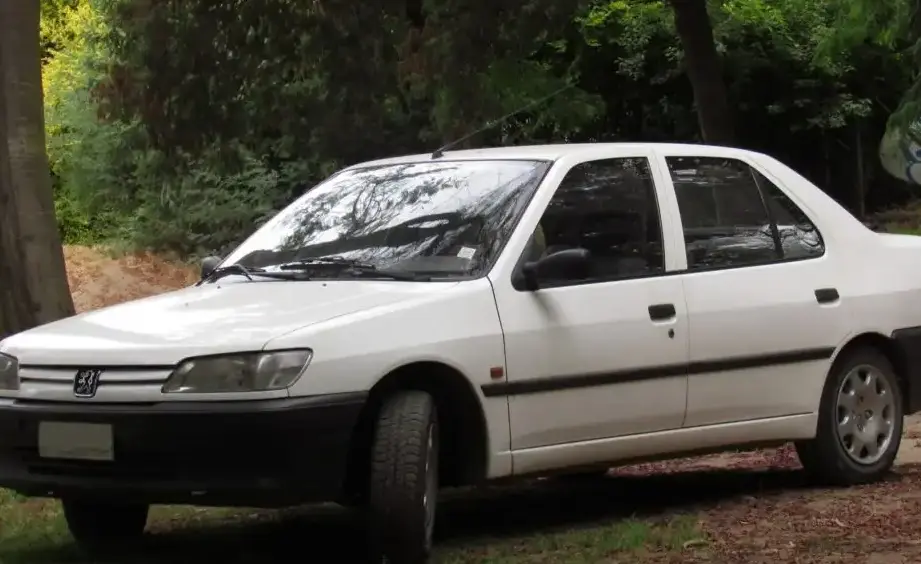
The Peugeot 306 Sedan (7B) 2.0 ST, produced between 1994 and 1997, represented a performance-oriented variant within the 306 sedan range. Positioned as a step up from the base models, the 2.0 ST offered a more powerful engine and sportier driving experience. It was part of the broader 306 family, which encompassed hatchback, cabriolet, and wagon body styles, all based on Peugeot’s platform. The 7B designation specifically refers to the four-door sedan version sold primarily in Europe and select international markets. This model aimed to provide a balance between practicality, affordability, and engaging performance for drivers seeking something beyond the standard commuter car.
Technical Specifications
| Brand | Peugeot |
| Model | 306 |
| Generation | 306 Sedan (7B) |
| Type (Engine) | 2.0 ST (121 Hp) |
| Start of production | 1994 |
| End of production | 1997 |
| Powertrain Architecture | Internal Combustion engine |
| Body type | Sedan |
| Seats | 5 |
| Doors | 4 |
| Fuel consumption (combined) | 8 l/100 km (29.4 US mpg, 35.3 UK mpg, 12.5 km/l) |
| Fuel Type | Petrol (Gasoline) |
| Acceleration 0 – 100 km/h | 11.2 sec |
| Acceleration 0 – 62 mph | 11.2 sec |
| Acceleration 0 – 60 mph | 10.6 sec |
| Maximum speed | 197 km/h (122.41 mph) |
| Weight-to-power ratio | 9.5 kg/Hp, 105.2 Hp/tonne |
| Weight-to-torque ratio | 6.5 kg/Nm, 153 Nm/tonne |
| Power | 121 Hp @ 5750 rpm |
| Power per litre | 60.6 Hp/l |
| Torque | 176 Nm @ 2750 rpm (129.81 lb.-ft. @ 2750 rpm) |
| Engine layout | Front, Transverse |
| Engine Model/Code | RFX XU10J2 |
| Engine displacement | 1998 cm3 (121.93 cu. in.) |
| Number of cylinders | 4 |
| Engine configuration | Inline |
| Cylinder Bore | 86 mm (3.39 in.) |
| Piston Stroke | 86 mm (3.39 in.) |
| Compression ratio | 9.5:1 |
| Number of valves per cylinder | 2 |
| Fuel injection system | Multi-port manifold injection |
| Engine aspiration | Naturally aspirated engine |
| Valvetrain | OHC |
| Engine oil capacity | 4.3 l (4.54 US qt | 3.78 UK qt) |
| Coolant | 7.5 l (7.93 US qt | 6.6 UK qt) |
| Kerb Weight | 1150 kg (2535.32 lbs.) |
| Max. weight | 1675 kg (3692.74 lbs.) |
| Max load | 525 kg (1157.43 lbs.) |
| Trunk (boot) space – minimum | 463 l (16.35 cu. ft.) |
| Fuel tank capacity | 60 l (15.85 US gal | 13.2 UK gal) |
| Length | 4239 mm (166.89 in.) |
| Width | 1689 mm (66.5 in.) |
| Height | 1386 mm (54.57 in.) |
| Wheelbase | 2580 mm (101.57 in.) |
| Front track | 1454 mm (57.24 in.) |
| Rear (Back) track | 1429 mm (56.26 in.) |
| Drivetrain Architecture | The Internal combustion engine (ICE) drives the front wheels of the vehicle. |
| Drive wheel | Front wheel drive |
| Number of gears and type of gearbox | 5 gears, manual transmission |
| Front suspension | Wishbone |
| Rear suspension | Trailing arm |
| Front brakes | Ventilated discs |
| Rear brakes | Disc |
| Assisting systems | ABS (Anti-lock braking system) |
| Steering type | Steering rack and pinion |
| Power steering | Hydraulic Steering |
| Tires size | 185/60 R14 |
Powertrain & Engine Architecture
The heart of the 306 Sedan 2.0 ST was the RFX XU10J2 engine, a 1.998-liter inline-four cylinder powerplant. This engine was a mainstay in many Peugeot and Citroën models during the 1990s. It featured a single overhead camshaft (OHC) design operating two valves per cylinder. Fuel delivery was handled by a multi-port fuel injection system, contributing to improved efficiency and responsiveness compared to earlier carbureted engines. The XU10J2 engine was known for its robust construction and relatively simple design, making it reasonably reliable. The engine produced 121 horsepower at 5750 rpm and 176 Nm (129.81 lb-ft) of torque at 2750 rpm. The engine was transversely mounted, driving the front wheels through a five-speed manual transmission. This configuration was typical for European front-wheel-drive vehicles of the era.
Driving Characteristics
The 2.0 ST offered a noticeable performance upgrade over the lower-spec 306 sedan models. The 121 hp engine provided brisk acceleration, with a 0-60 mph time of around 10.6 seconds and a top speed of 122.41 mph. While not a sports car by modern standards, it was considered lively for a family sedan in the mid-1990s. The five-speed manual transmission allowed drivers to effectively utilize the engine’s powerband. Gear ratios were well-spaced, providing good acceleration in each gear. Compared to the base 1.4 or 1.6-liter engines, the 2.0 ST felt significantly more responsive, particularly during overtaking maneuvers. The handling was generally considered safe and predictable, though not particularly sporty. The suspension was tuned for comfort, resulting in a relatively smooth ride, but body roll was noticeable during cornering.
Equipment & Trim Levels
The 2.0 ST trim level typically included features such as power steering, central locking, electric front windows, and an upgraded interior trim compared to the base models. Interior upholstery was usually cloth, with a sporty pattern. Optional extras could include air conditioning, a sunroof, and upgraded audio systems. The dashboard layout was typical of Peugeot designs from the period, with a functional and straightforward design. The instrument cluster featured a speedometer, tachometer, fuel gauge, and temperature gauge. Safety features included ABS (Anti-lock Braking System) as standard equipment, which was becoming increasingly common on European cars during the 1990s.
Chassis & Braking
The 306 Sedan 2.0 ST utilized a front-wheel-drive chassis with an independent wishbone suspension at the front and a trailing arm suspension at the rear. This suspension setup provided a reasonable balance between ride comfort and handling. The braking system consisted of ventilated discs at the front and solid discs at the rear. The ABS system helped to prevent wheel lockup during hard braking, improving stability and control. The steering was a rack and pinion system with hydraulic power assistance, providing light and precise steering feel.
Market Reception & Comparison
The Peugeot 306 Sedan 2.0 ST was generally well-received by automotive critics as a capable and affordable family sedan. It was praised for its lively engine, comfortable ride, and good value for money. Compared to rivals such as the Ford Escort and Vauxhall/Opel Astra, the 306 offered a more refined driving experience and a distinctive French design. Fuel economy was reasonable for a 2.0-liter engine, averaging around 29.4 US mpg. Reliability was generally good, although some owners reported minor issues with electrical components. The 2.0 ST represented a sweet spot in the 306 lineup, offering a significant performance upgrade over the base models without the higher cost of the more powerful and less common variants.
Legacy
The Peugeot 306 Sedan 2.0 ST remains a popular choice among classic car enthusiasts and collectors. The XU10J2 engine is known for its durability and relatively simple maintenance requirements. Parts availability is generally good, although some components may be becoming increasingly difficult to find. The 306’s reputation for reliability and affordability has helped to maintain its value in the used car market. Today, well-maintained examples of the 2.0 ST are sought after by those looking for a classic French sedan that offers a rewarding driving experience.