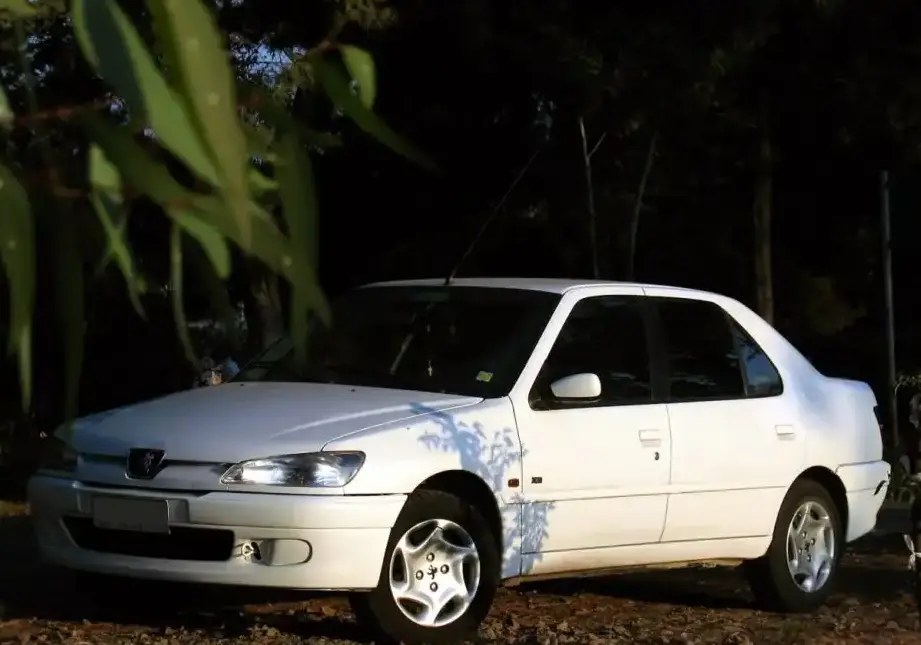
The Peugeot 306 Sedan, specifically the 1.4i variant producing 75 horsepower, was a mainstay of the Peugeot lineup from 1997 to 2002. Introduced as part of the facelifted 306 range, this model represented an entry-level option within the sedan body style, appealing to buyers seeking affordable and practical transportation. It was positioned below the more powerful 1.6i and 2.0i models, and served as a more economical alternative to the hatchback versions of the 306. The 306 itself was a significant model for Peugeot, building upon the success of the 205 and establishing a foothold in the competitive compact car segment, particularly in Europe.
Technical Specifications
| Brand | Peugeot |
| Model | 306 |
| Generation | 306 Sedan (facelift 1997) |
| Type (Engine) | 1.4i (75 Hp) |
| Start of production | 1997 |
| End of production | 2002 |
| Powertrain Architecture | Internal Combustion engine |
| Body type | Sedan |
| Seats | 5 |
| Doors | 4 |
| Fuel consumption (urban) | 9.1 l/100 km (25.8 US mpg, 31 UK mpg, 11 km/l) |
| Fuel consumption (extra urban) | 5.6 l/100 km (42 US mpg, 50.4 UK mpg, 17.9 km/l) |
| Fuel consumption (combined) | 6.9 l/100 km (34.1 US mpg, 40.9 UK mpg, 14.5 km/l) |
| CO2 emissions | 170 g/km |
| Fuel Type | Petrol (Gasoline) |
| Acceleration 0 – 100 km/h | 14.9 sec |
| Acceleration 0 – 62 mph | 14.9 sec |
| Acceleration 0 – 60 mph | 14.2 sec |
| Maximum speed | 173 km/h (107.5 mph) |
| Weight-to-power ratio | 13.9 kg/Hp, 72.1 Hp/tonne |
| Weight-to-torque ratio | 9.4 kg/Nm, 106.7 Nm/tonne |
| Power | 75 Hp @ 5500 rpm |
| Power per litre | 55.1 Hp/l |
| Torque | 111 Nm @ 3400 rpm (81.87 lb.-ft. @ 3400 rpm) |
| Engine layout | Front, Transverse |
| Engine Model/Code | KFX TU3JP |
| Engine displacement | 1361 cm3 (83.05 cu. in.) |
| Number of cylinders | 4 |
| Engine configuration | Inline |
| Cylinder Bore | 75 mm (2.95 in.) |
| Piston Stroke | 77 mm (3.03 in.) |
| Compression ratio | 10.2:1 |
| Number of valves per cylinder | 2 |
| Fuel injection system | Multi-port manifold injection |
| Engine aspiration | Naturally aspirated engine |
| Valvetrain | SOHC |
| Engine oil capacity | 3.2 l (3.38 US qt | 2.82 UK qt) |
| Coolant | 6.5 l (6.87 US qt | 5.72 UK qt) |
| Kerb Weight | 1040 kg (2292.81 lbs.) |
| Max. weight | 1515 kg (3340 lbs.) |
| Max load | 475 kg (1047.2 lbs.) |
| Trunk (boot) space – minimum | 463 l (16.35 cu. ft.) |
| Fuel tank capacity | 60 l (15.85 US gal | 13.2 UK gal) |
| Permitted trailer load with brakes (12%) | 1200 kg (2645.55 lbs.) |
| Permitted trailer load without brakes | 555 kg (1223.57 lbs.) |
| Length | 4267 mm (167.99 in.) |
| Width | 1689 mm (66.5 in.) |
| Height | 1386 mm (54.57 in.) |
| Wheelbase | 2580 mm (101.57 in.) |
| Front track | 1454 mm (57.24 in.) |
| Rear (Back) track | 1423 mm (56.02 in.) |
| Ride height (ground clearance) | 120 mm (4.72 in.) |
| Drag coefficient (Cd) | 0.32 |
| Minimum turning circle (turning diameter) | 11.0 m (36.09 ft.) |
| Drivetrain Architecture | The Internal combustion engine (ICE) drives the front wheels of the vehicle. |
| Drive wheel | Front wheel drive |
| Number of gears and type of gearbox | 5 gears, manual transmission |
| Front suspension | Wishbone |
| Rear suspension | Trailing arm |
| Front brakes | Ventilated discs |
| Rear brakes | Drum |
| Assisting systems | ABS (Anti-lock braking system) |
| Steering type | Steering rack and pinion |
| Power steering | Hydraulic Steering |
| Tires size | 185/65 R14 T |
| Wheel rims size | 14 |
Powertrain & Engine Architecture
The heart of the 306 1.4i was the KFX (also sometimes referred to as TU3JP) engine, a 1.4-liter inline-four cylinder petrol engine. This engine was a common sight in various Peugeot and Citroën models of the era. It featured a single overhead camshaft (SOHC) valvetrain with two valves per cylinder. Fuel delivery was handled by a multi-port fuel injection system, providing a balance between efficiency and performance. The engine produced 75 horsepower at 5500 rpm and 111 Nm (81.87 lb-ft) of torque at 3400 rpm. The engine’s relatively simple design contributed to its reliability and ease of maintenance. The 306 1.4i was typically equipped with a 5-speed manual transmission, although a 4-speed automatic transmission was also available, albeit less common. The automatic transmission was designed for smooth, comfortable driving, prioritizing ease of use over outright performance.
Driving Characteristics
The 306 1.4i with the manual transmission offered a reasonably engaging driving experience for its class. However, the 75 horsepower output meant acceleration was modest, taking around 14.9 seconds to reach 62 mph. The automatic version was even slower, sacrificing some responsiveness for convenience. The engine felt best suited to urban driving and relaxed cruising, with sufficient torque for everyday maneuvers. The 5-speed manual allowed drivers to keep the engine in its optimal power band, while the automatic transmission featured relatively long gear ratios, prioritizing fuel economy over spirited acceleration. Handling was typical of front-wheel-drive cars of the period – safe and predictable, but not particularly sporty.
Equipment & Trim Levels
The 1.4i model generally represented the base trim level for the 306 Sedan. Standard equipment typically included central locking, power steering, and an adjustable steering column. Interior upholstery was usually cloth, and the dashboard featured a functional, if somewhat basic, design. Optional extras could include air conditioning, electric windows, and a radio/cassette player. Higher trim levels, such as the XR or XT, added features like alloy wheels, upgraded interior trim, and additional comfort items.
Chassis & Braking
The 306 Sedan utilized a front-wheel-drive layout with a MacPherson strut front suspension and a trailing arm rear suspension. This setup provided a comfortable ride quality, although it wasn’t particularly sophisticated. Braking consisted of ventilated discs on the front wheels and drum brakes on the rear. Anti-lock Braking System (ABS) was often included as standard equipment, enhancing safety. The chassis was designed to provide a balance between handling and ride comfort, prioritizing stability over sporty dynamics.
Market Reception & Comparison
The Peugeot 306 1.4i Sedan was generally well-received as an affordable and practical family car. Critics praised its fuel efficiency and comfortable ride, but noted its lack of outright performance. Compared to the more powerful 1.6i and 2.0i models, the 1.4i offered lower running costs but sacrificed acceleration and overall driving enjoyment. The 1.9 TDI diesel version provided superior fuel economy and torque, but at a higher purchase price. The 1.4i appealed to buyers who prioritized economy and practicality over performance.
Legacy
The Peugeot 306 1.4i Sedan, while not the most exciting variant in the range, proved to be a reliable and durable car. The KFX engine is known for its longevity, and with regular maintenance, many examples are still on the road today. In the used car market, the 1.4i represents an affordable entry point into 306 ownership, appealing to those seeking a classic French car with low running costs. Its simplicity and relatively straightforward mechanics make it a popular choice for DIY enthusiasts and those looking for a dependable and economical vehicle.