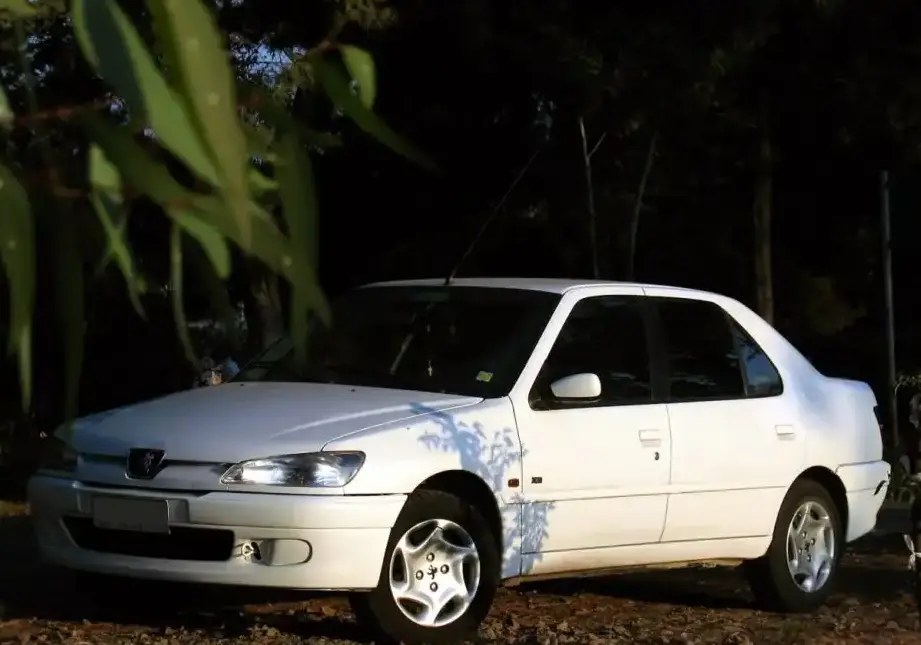
The Peugeot 306 Sedan 1.6i Automatic, produced between 1997 and 2002, was a significant model within Peugeot’s compact car range. This facelifted iteration of the 306 sedan aimed to deliver a comfortable and economical option for families and commuters, primarily targeting European markets. Positioned as an entry-level to mid-range trim, it balanced practicality, fuel efficiency, and ease of driving, appealing to buyers who valued convenience. The vehicle was built on the T7 platform, shared with other Peugeot and Citroën models of the era.
Technical Specifications
| Brand | Peugeot |
| Model | 306 |
| Generation | 306 Sedan (facelift 1997) |
| Type (Engine) | 1.6i (88 Hp) Automatic |
| Start of production | 1997 |
| End of production | 2002 |
| Powertrain Architecture | Internal Combustion engine |
| Body type | Sedan |
| Seats | 5 |
| Doors | 4 |
| Fuel consumption (urban) | 10.8 l/100 km (21.8 US mpg, 26.2 UK mpg, 9.3 km/l) |
| Fuel consumption (extra urban) | 6 l/100 km (39.2 US mpg, 47.1 UK mpg, 16.7 km/l) |
| Fuel consumption (combined) | 7.8 l/100 km (30.2 US mpg, 36.2 UK mpg, 12.8 km/l) |
| Fuel Type | Petrol (Gasoline) |
| Acceleration 0 – 100 km/h | 14.1 sec |
| Acceleration 0 – 62 mph | 14.1 sec |
| Acceleration 0 – 60 mph | 13.4 sec |
| Maximum speed | 174 km/h (108.12 mph) |
| Weight-to-power ratio | 12.7 kg/Hp, 78.6 Hp/tonne |
| Weight-to-torque ratio | 8.3 kg/Nm, 120.5 Nm/tonne |
| Power | 88 Hp @ 5600 rpm |
| Power per litre | 55.5 Hp/l |
| Torque | 135 Nm @ 3000 rpm (99.57 lb.-ft. @ 3000 rpm) |
| Engine layout | Front, Transverse |
| Engine Model/Code | NFZ TU5JP |
| Engine displacement | 1587 cm3 (96.84 cu. in.) |
| Number of cylinders | 4 |
| Engine configuration | Inline |
| Cylinder Bore | 78.5 mm (3.09 in.) |
| Piston Stroke | 82 mm (3.23 in.) |
| Compression ratio | 9.6:1 |
| Number of valves per cylinder | 2 |
| Fuel injection system | Multi-port manifold injection |
| Engine aspiration | Naturally aspirated engine |
| Valvetrain | SOHC |
| Engine oil capacity | 3.2 l (3.38 US qt | 2.82 UK qt) |
| Coolant | 7 l (7.4 US qt | 6.16 UK qt) |
| Kerb Weight | 1120 kg (2469.18 lbs.) |
| Max. weight | 1595 kg (3516.37 lbs.) |
| Max load | 475 kg (1047.2 lbs.) |
| Trunk (boot) space – minimum | 463 l (16.35 cu. ft.) |
| Fuel tank capacity | 60 l (15.85 US gal | 13.2 UK gal) |
| Length | 4267 mm (167.99 in.) |
| Width | 1689 mm (66.5 in.) |
| Height | 1386 mm (54.57 in.) |
| Wheelbase | 2580 mm (101.57 in.) |
| Front track | 1454 mm (57.24 in.) |
| Rear (Back) track | 1423 mm (56.02 in.) |
| Ride height (ground clearance) | 120 mm (4.72 in.) |
| Drag coefficient (Cd) | 0.32 |
| Minimum turning circle | 11.0 m (36.09 ft.) |
| Drivetrain Architecture | Front wheel drive |
| Number of gears and type of gearbox | 4 gears, automatic transmission |
| Front suspension | Wishbone |
| Rear suspension | Trailing arm |
| Front brakes | Ventilated discs |
| Rear brakes | Drum |
| Assisting systems | ABS (Anti-lock braking system) |
| Steering type | Steering rack and pinion |
| Power steering | Hydraulic Steering |
| Tires size | 185/65 R14 T |
| Wheel rims size | 14 |
Powertrain & Engine Architecture
The 1.6i engine, internally designated NFZ (TU5JP), is a naturally aspirated, inline-four cylinder petrol engine. This engine was a common fixture in Peugeot and Citroën vehicles throughout the 1990s and early 2000s. It features a single overhead camshaft (SOHC) valvetrain operating two valves per cylinder. Fuel delivery is managed by a multi-port fuel injection system, providing adequate, though not exceptional, performance. The engine’s 9.6:1 compression ratio represents a balance between efficiency and power output. The automatic transmission is a four-speed unit, engineered for smooth operation and ease of use. While not particularly sporty, it delivers acceptable acceleration for everyday driving. The transmission’s shift points are calibrated for fuel economy and comfort, rather than aggressive performance.
Driving Characteristics
The 306 1.6i Automatic provides a comfortable, if somewhat uninspiring, driving experience. Producing 88 horsepower and 135 Nm of torque, acceleration is leisurely, requiring approximately 14.1 seconds to reach 62 mph. The automatic transmission contributes to a relaxed driving style, but also results in some power loss compared to the manual transmission versions. Gear ratios are optimized for fuel efficiency, meaning the engine can feel strained during overtaking maneuvers or when ascending hills. The steering is light and easy, making it well-suited for urban driving. Overall, this variant prioritizes comfort and convenience over sporty handling or rapid acceleration.
Equipment & Trim Levels
The 1.6i Automatic trim typically includes features such as power steering, central locking, electric front windows, and an AM/FM radio. Interior upholstery is generally cloth, with a relatively basic dashboard layout. Optional extras could include air conditioning, alloy wheels, and a sunroof. The specific level of equipment varies depending on the market and any optional packages selected by the original buyer. Safety features were relatively basic for the time, typically including a driver’s airbag and ABS brakes.
Chassis & Braking
The 306 Sedan utilizes a front-wheel-drive layout with a wishbone front suspension and a trailing arm rear suspension. This configuration provides a reasonable compromise between ride comfort and handling. The front brakes are ventilated discs, offering adequate stopping power, while the rear brakes are drums, a cost-saving measure common in this segment. The ABS system assists in maintaining steering control during emergency braking. The chassis is relatively lightweight, contributing to the car’s fuel efficiency.
Market Reception & Comparison
The 306 1.6i Automatic was generally well-received as a practical and affordable family car. Critics praised its comfortable ride and ease of use, but noted its lack of performance compared to higher-powered variants like the 2.0i or diesel models. Compared to the manual transmission version, the automatic offered less driver engagement but greater convenience. Fuel economy was respectable for its time, but not class-leading. Reliability was generally good, although the automatic transmission could be susceptible to issues if not properly maintained.
Legacy
The Peugeot 306 1.6i Automatic remains a relatively common vehicle on the used car market, particularly in Europe. The NFZ engine is known for its durability, although regular maintenance is crucial to prevent potential problems. The automatic transmission, while reliable when properly serviced, can be expensive to repair. Today, these cars are often sought after by enthusiasts looking for a classic French hatchback or as affordable transportation. While not a performance icon, the 306 1.6i Automatic represents a solid and dependable option for those seeking a comfortable and practical compact sedan.