Technical Specifications
| Brand | Peugeot |
| Model | 306 |
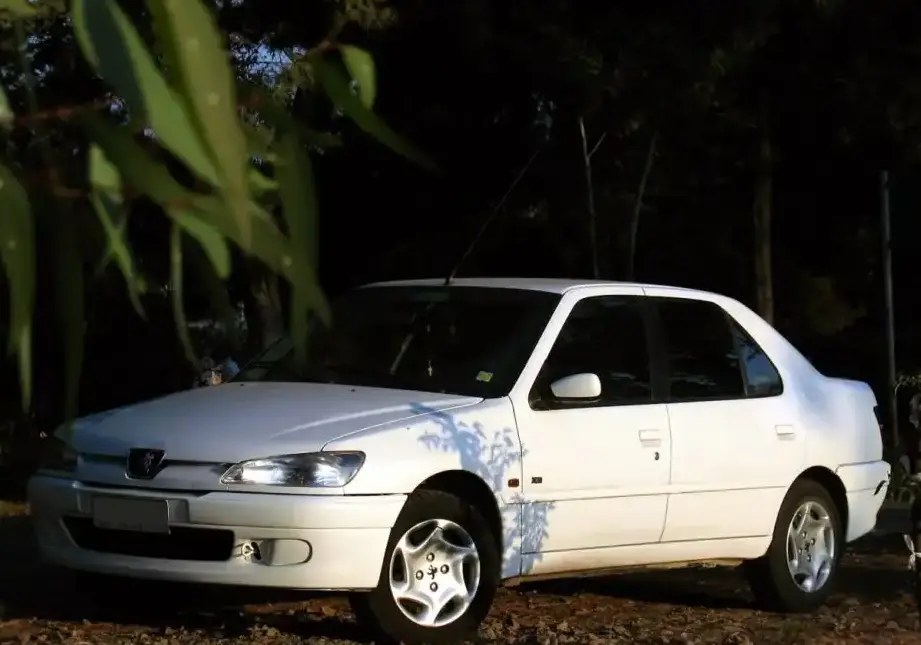
| Generation | 306 Sedan (facelift 1997) |
| Type (Engine) | 1.8i 16V (110 Hp) |
| Start of production | 1997 |
| End of production | 2002 |
| Powertrain Architecture | Internal Combustion engine |
| Body type | Sedan |
| Seats | 5 |
| Doors | 4 |
| Fuel consumption (urban) | 11.6 l/100 km (20.3 US mpg, 24.4 UK mpg, 8.6 km/l) |
| Fuel consumption (extra urban) | 6.1 l/100 km (38.6 US mpg, 46.3 UK mpg, 16.4 km/l) |
| Fuel consumption (combined) | 8 l/100 km (29.4 US mpg, 35.3 UK mpg, 12.5 km/l) |
| Fuel Type | Petrol (Gasoline) |
| Acceleration 0 – 100 km/h | 12.2 sec |
| Acceleration 0 – 62 mph | 12.2 sec |
| Acceleration 0 – 60 mph | 11.6 sec |
| Maximum speed | 192 km/h (119.3 mph) |
| Weight-to-power ratio | 10 kg/Hp, 100 Hp/tonne |
| Weight-to-torque ratio | 7.1 kg/Nm, 140.9 Nm/tonne |
| Power | 110 Hp @ 5500 rpm |
| Power per litre | 62.5 Hp/l |
| Torque | 155 Nm @ 4250 rpm (114.32 lb.-ft. @ 4250 rpm) |
| Engine layout | Front, Transverse |
| Engine Model/Code | LFY XU7JP4 |
| Engine displacement | 1761 cm3 (107.46 cu. in.) |
| Number of cylinders | 4 |
| Engine configuration | Inline |
| Cylinder Bore | 83 mm (3.27 in.) |
| Piston Stroke | 81.4 mm (3.2 in.) |
| Compression ratio | 10:1 |
| Number of valves per cylinder | 4 |
| Fuel injection system | Multi-port manifold injection |
| Engine aspiration | Naturally aspirated engine |
| Valvetrain | DOHC |
| Engine oil capacity | 4.3 l (4.54 US qt | 3.78 UK qt) |
| Coolant | 7.5 l (7.93 US qt | 6.6 UK qt) |
| Kerb Weight | 1100 kg (2425.08 lbs.) |
| Max. weight | 1625 kg (3582.51 lbs.) |
| Max load | 525 kg (1157.43 lbs.) |
| Trunk (boot) space – minimum | 463 l (16.35 cu. ft.) |
| Fuel tank capacity | 60 l (15.85 US gal | 13.2 UK gal) |
| Length | 4267 mm (167.99 in.) |
| Width | 1689 mm (66.5 in.) |
| Height | 1386 mm (54.57 in.) |
| Wheelbase | 2580 mm (101.57 in.) |
| Front track | 1454 mm (57.24 in.) |
| Rear (Back) track | 1423 mm (56.02 in.) |
| Ride height (ground clearance) | 120 mm (4.72 in.) |
| Drag coefficient (Cd) | 0.32 |
| Minimum turning circle (turning diameter) | 11.0 m (36.09 ft.) |
| Drivetrain Architecture | The Internal combustion engine (ICE) drives the front wheels of the vehicle. |
| Drive wheel | Front wheel drive |
| Number of gears and type of gearbox | 5 gears, manual transmission |
| Front suspension | Wishbone |
| Rear suspension | Trailing arm |
| Front brakes | Disc |
| Rear brakes | Drum |
| Assisting systems | ABS (Anti-lock braking system) |
| Steering type | Steering rack and pinion |
| Power steering | Hydraulic Steering |
| Tires size | 185/65 R14 |
| Wheel rims size | 14 |
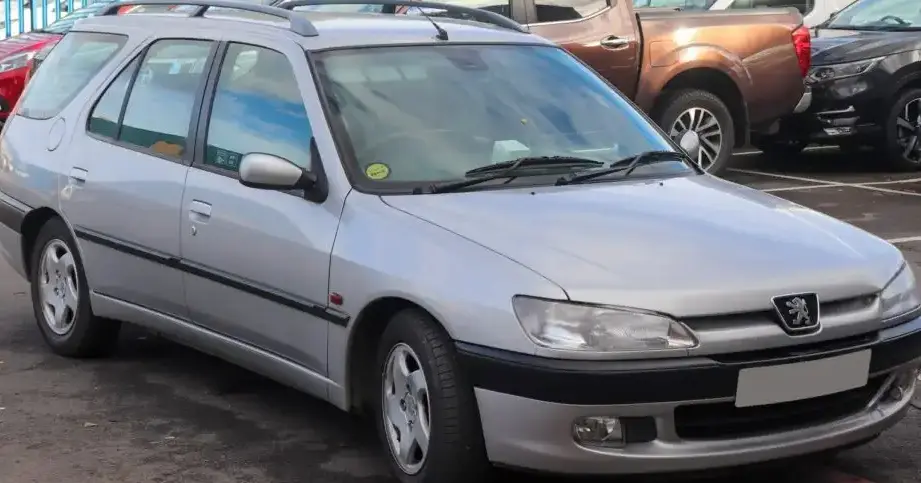
The Peugeot 306 Sedan, particularly the facelifted version introduced in 1997, represented a significant evolution for Peugeot in the compact sedan segment. Produced from 1997 to 2002, this variant, specifically the 1.8i 16V model generating 110 horsepower, aimed to strike a balance between performance, fuel efficiency, and affordability. It was positioned as a mid-range offering within the 306 sedan lineup, situated between the entry-level 1.4L engine and the more potent 2.0L variants. The 306 sedan itself was a derivative of the popular 306 hatchback, adapted for markets where sedan body styles were favored, most notably outside of Western Europe.
Powertrain & Engine Architecture
The 306 1.8i 16V’s core is the XU7JP4 engine, a 1.8-liter inline-four cylinder powerplant. This engine, commonly identified by its code LFY, is a naturally aspirated unit featuring a double overhead camshaft (DOHC) valvetrain and multi-port fuel injection. The 16 valves (four per cylinder) enhance breathing and contribute to improved high-end power delivery. The XU7 engine family is known for its durability and relatively straightforward design. This 1.8L version produced 110 horsepower at 5500 rpm and 155 Nm (114 lb-ft) of torque at 4250 rpm. A five-speed manual transmission was standard, providing a reasonably engaging driving experience. The engine’s design prioritized reliability and ease of maintenance over maximizing performance.
Driving Characteristics
The 306 1.8i 16V delivered a comfortable and predictable driving experience. While not a performance-oriented vehicle, the 110 horsepower engine provided sufficient acceleration for everyday driving, achieving a 0-60 mph time of approximately 11.6 seconds. The five-speed manual transmission allowed drivers to maintain the engine within its optimal power range. Compared to the base 1.4L engine, the 1.8L offered a noticeable improvement in performance, especially during overtaking maneuvers or when ascending hills. However, it didn’t quite match the responsiveness of the 2.0L versions. The suspension, tuned for comfort, effectively absorbed road imperfections, making it a pleasant vehicle for longer journeys. The steering, while hydraulically assisted, lacked significant feedback, but it was light and easy to maneuver in urban settings.
Equipment & Trim Levels
The 1.8i 16V trim typically included standard features such as central locking, power steering, and an AM/FM radio. Higher trim levels offered optional extras like air conditioning, electric windows, and alloy wheels. Interior upholstery was generally cloth, with a relatively simple and functional dashboard layout. Safety features were basic for the era, usually comprising a driver’s airbag and ABS brakes. The overall interior ambiance was durable and practical, rather than luxurious.
Chassis & Braking
The 306 sedan employed a front-wheel-drive layout with a wishbone front suspension and a trailing arm rear suspension. This configuration provided a good compromise between ride comfort and handling characteristics. Brakes consisted of discs on the front wheels and drums on the rear, a common setup for vehicles in this class during that period. ABS (Anti-lock Braking System) was frequently included as standard equipment, enhancing safety during emergency braking situations.
Market Reception & Comparison
The Peugeot 306 1.8i 16V was generally well-received by automotive critics as a practical and dependable family sedan. It offered a solid balance between performance, fuel economy, and price. Compared to competitors like the Ford Escort and Opel Astra, the 306 was often praised for its comfortable ride and attractive design. Fuel economy was respectable for the time, averaging around 29.4 US mpg in combined driving. The 1.8L engine provided a better compromise between performance and fuel efficiency than the more powerful 2.0L variants, making it a popular choice for drivers prioritizing practicality.
Legacy
The Peugeot 306 1.8i 16V has proven to be a relatively durable and reliable vehicle. The XU7 engine is renowned for its longevity, and numerous examples remain on the road today. However, as with any older vehicle, regular maintenance is crucial for ensuring continued reliability. Common issues include wear and tear on suspension components and potential corrosion in areas susceptible to rust. In the used car market, the 306 1.8i 16V represents an affordable and practical option for those seeking a classic European sedan. Its simple mechanicals and readily available parts make it a relatively easy vehicle to maintain and repair.