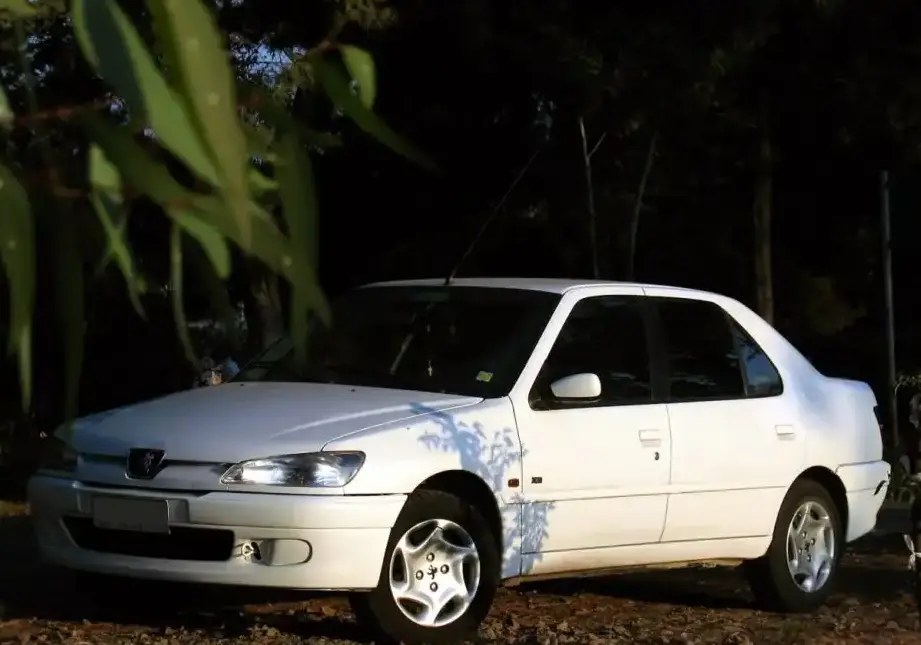
The Peugeot 306 Sedan, specifically the 2.0i 16V variant with an automatic transmission, was produced from 1997 to 2002 as part of the facelifted first generation (1993-2002) of the 306 series. Introduced to offer a more refined and powerful option within the 306 sedan range, this model aimed to appeal to buyers seeking a comfortable and relatively quick family car. It occupied a mid-to-upper position in the 306 sedan lineup, positioned above the base 1.4 and 1.6 liter models, but below any potential performance-oriented trims. The 306, in general, was a significant model for Peugeot, representing a move towards more modern design and engineering, and achieving considerable sales success in Europe.
Technical Specifications
| Brand | Peugeot |
| Model | 306 |
| Generation | 306 Sedan (facelift 1997) |
| Type (Engine) | 2.0i 16V (133 Hp) Automatic |
| Start of production | 1997 |
| End of production | 2002 |
| Powertrain Architecture | Internal Combustion engine |
| Body type | Sedan |
| Seats | 5 |
| Doors | 4 |
| Fuel consumption (urban) | 13.7 l/100 km (17.2 US mpg, 20.6 UK mpg, 7.3 km/l) |
| Fuel consumption (extra urban) | 6.5 l/100 km (36.2 US mpg, 43.5 UK mpg, 15.4 km/l) |
| Fuel consumption (combined) | 9.2 l/100 km (25.6 US mpg, 30.7 UK mpg, 10.9 km/l) |
| CO2 emissions | 221 g/km |
| Fuel Type | Petrol (Gasoline) |
| Acceleration 0 – 100 km/h | 11.5 sec |
| Acceleration 0 – 62 mph | 11.5 sec |
| Acceleration 0 – 60 mph | 10.9 sec |
| Maximum speed | 202 km/h (125.52 mph) |
| Weight-to-power ratio | 9.1 kg/Hp, 110.3 Hp/tonne |
| Weight-to-torque ratio | 6.7 kg/Nm, 149.3 Nm/tonne |
| Power | 133 Hp @ 5500 rpm |
| Power per litre | 66.6 Hp/l |
| Torque | 180 Nm @ 4200 rpm (132.76 lb.-ft. @ 4200 rpm) |
| Engine layout | Front, Transverse |
| Engine Model/Code | RFV XU10J4R |
| Engine displacement | 1998 cm3 (121.93 cu. in.) |
| Number of cylinders | 4 |
| Engine configuration | Inline |
| Cylinder Bore | 86 mm (3.39 in.) |
| Piston Stroke | 86 mm (3.39 in.) |
| Compression ratio | 10.4:1 |
| Number of valves per cylinder | 4 |
| Fuel injection system | Multi-port manifold injection |
| Engine aspiration | Naturally aspirated engine |
| Valvetrain | DOHC |
| Engine oil capacity | 4.5 l (4.76 US qt | 3.96 UK qt) |
| Coolant | 7.5 l (7.93 US qt | 6.6 UK qt) |
| Kerb Weight | 1206 kg (2658.77 lbs.) |
| Trunk (boot) space – minimum | 463 l (16.35 cu. ft.) |
| Fuel tank capacity | 60 l (15.85 US gal | 13.2 UK gal) |
| Length | 4267 mm (167.99 in.) |
| Width | 1689 mm (66.5 in.) |
| Height | 1386 mm (54.57 in.) |
| Wheelbase | 2580 mm (101.57 in.) |
| Front track | 1454 mm (57.24 in.) |
| Rear (Back) track | 1423 mm (56.02 in.) |
| Ride height (ground clearance) | 120 mm (4.72 in.) |
| Drag coefficient (Cd) | 0.33 |
| Minimum turning circle (turning diameter) | 11.0 m (36.09 ft.) |
| Drivetrain Architecture | The Internal combustion engine (ICE) drives the front wheels of the vehicle. |
| Drive wheel | Front wheel drive |
| Number of gears and type of gearbox | 4 gears, automatic transmission |
| Front suspension | Wishbone |
| Rear suspension | Trailing arm |
| Front brakes | Ventilated discs |
| Rear brakes | Disc |
| Assisting systems | ABS (Anti-lock braking system) |
| Steering type | Steering rack and pinion |
| Power steering | Hydraulic Steering |
| Tires size | 185/65 R14 H |
| Wheel rims size | 14 |
Powertrain & Engine Architecture
The heart of this 306 variant is the RFV XU10J4R engine, a 1.998-liter (2.0L) inline-four cylinder petrol engine. This engine is part of the XU series, a long-running and well-regarded Peugeot-Renault collaboration. The ‘16V’ designation indicates a four-valve-per-cylinder configuration, enhancing breathing and contributing to the engine’s power output. Fuel delivery is managed by a multi-port fuel injection system, providing precise fuel metering for improved efficiency and performance. The engine utilizes a double overhead camshaft (DOHC) valvetrain, further optimizing valve timing and control. Paired with this engine is a four-speed automatic transmission. While not known for its sportiness, this transmission provided smooth and convenient gear changes, catering to drivers prioritizing comfort over outright performance. The automatic transmission was a popular choice for those seeking ease of use, particularly in urban driving conditions.
Driving Characteristics
The 2.0i 16V automatic 306 offered a comfortable and reasonably responsive driving experience. With 133 horsepower, acceleration from 0 to 60 mph took around 10.9 seconds, and it reached a top speed of 125.52 mph. Compared to the manual transmission version of the same engine, the automatic suffered a slight performance penalty due to the inherent losses in the torque converter. However, the automatic provided a smoother, more relaxed driving experience, particularly in city traffic. Compared to the lower-powered 1.4 and 1.6 liter engines, the 2.0i 16V offered significantly more punch, making overtaking and highway cruising less of a strain. It wasn’t as sporty as some of its rivals, or even the higher-performance 306 variants, but it provided a good balance of power and usability.
Equipment & Trim Levels
The 2.0i 16V automatic typically came with a reasonable level of standard equipment. This included central locking, electric front windows, power steering, and an anti-lock braking system (ABS). Interior upholstery was generally cloth, with options for upgraded materials available. Depending on the specific market and optional packages selected, features like air conditioning, a sunroof, and alloy wheels could also be included. The dashboard layout was typical of the era, with a functional and straightforward design. The trim level often dictated the quality of the interior materials and the availability of additional comfort features.
Chassis & Braking
The 306 sedan utilized a front-wheel-drive layout with independent wishbone suspension at the front and a trailing arm setup at the rear. This suspension configuration provided a comfortable ride, although it wasn’t particularly sporty. The front brakes were ventilated discs, offering good stopping power, while the rear brakes were solid discs. The hydraulic power steering provided light and easy steering, making maneuvering in tight spaces effortless. The 185/65 R14 tires offered a good compromise between comfort and grip.
Market Reception & Comparison
The 2.0i 16V automatic 306 was generally well-received by critics as a competent and comfortable family car. It offered a good level of performance and refinement for its price point. Fuel economy, however, was a point of criticism, with combined fuel consumption around 25.6 US mpg. Compared to the 1.8 liter and diesel variants, the 2.0i 16V offered more power but at the cost of increased fuel consumption. Reliability was generally good, although regular maintenance was essential to ensure the longevity of the engine and transmission.
Legacy
The Peugeot 306 2.0i 16V automatic has become a relatively sought-after classic in the used car market, particularly among enthusiasts who appreciate its blend of comfort, performance, and affordability. The XU10J4R engine is known for its durability, and with proper maintenance, it can provide many years of reliable service. While not a groundbreaking or particularly rare model, the 2.0i 16V automatic 306 represents a well-rounded and enjoyable driving experience from a bygone era of automotive design.