
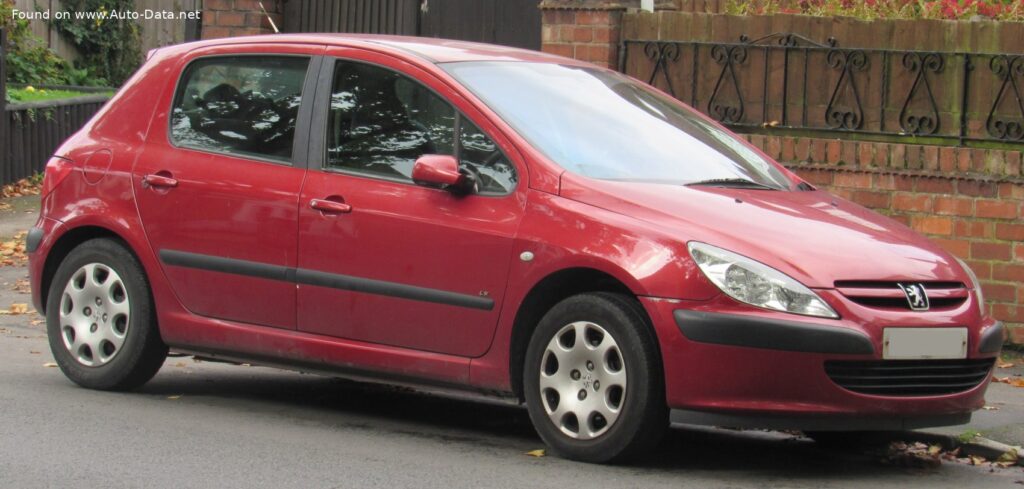
While the iconic Peugeot lion hasn’t graced North American dealership lots since the early 1990s, the French automaker continued to forge a path of innovation and design excellence in Europe and other global markets. These vehicles often offered a tantalizing glimpse into a world of sophisticated, often understated, European compacts that, had Peugeot remained, might have offered compelling alternatives to the familiar domestic and Asian offerings across the Atlantic. Among these notable machines was the Peugeot 307, a compact hatchback that garnered the prestigious European Car of the Year award in 2002. It was lauded for its forward-thinking design, impressive practicality, and engaging driving dynamics. This article delves into a specific, yet representative, variant: the Peugeot 307 1.4 i 16V (88 Hp), a model that exemplifies the accessible yet capable nature of the 307 range and offers a window into what North American drivers missed.
The Peugeot 307: A European Contender
Unveiled in 2001 as the successor to the immensely popular Peugeot 306, the 307 aimed to redefine the compact segment (known as the C-segment in Europe). It introduced a distinctive “tallboy” design philosophy, a bold move that cleverly blended the practicality and spaciousness typically associated with a small MPV (multi-purpose vehicle) with the agile footprint of a traditional hatchback. This innovative approach resulted in an unusually airy and voluminous cabin for its class, a feature that resonated strongly with European families and urban commuters who valued space without a sprawling exterior.
The 307 quickly became a cornerstone of Peugeot’s lineup, showcasing the brand’s versatility. It was offered in a diverse array of body styles, including practical 3-door and 5-door hatchbacks, a versatile station wagon (badged as the SW), a sedan primarily aimed at emerging markets, and even a stylish retractable hardtop convertible (the 307 CC), which added a dash of glamour to the range. Each variant demonstrated Peugeot’s commitment to offering a car for every need, all built upon a shared platform of comfort and robust engineering.
Design and Innovation of the Peugeot 307 1.4 i 16V (88 Hp) for Its Era
The Peugeot 307 1.4 i 16V (88 Hp), like its more powerful siblings, encapsulated a design language that was both contemporary and inherently functional. Its defining “tallboy” stance, characterized by a high roofline and a steeply raked windshield, was a deliberate and effective strategy to maximize interior volume and significantly enhance driver visibility. This design choice, while perhaps less overtly sporty than some of its rivals, provided a commanding driving position and an impressive sense of openness, particularly for rear passengers. The expansive glass areas further contributed to the bright, unconfined feel of the cabin, marking a significant departure from the often more constricted interiors prevalent in many of its contemporaries.
Innovation during the 307’s production run focused squarely on practical advancements that genuinely improved the user experience. The 307 was among the trailblazers in its class to offer features that were still considered premium amenities in the early 22nd century, such as automatic climate control, rain-sensing windshield wipers, and automatic headlamps. These conveniences, now commonplace, represented a significant step forward in making everyday driving more comfortable and less demanding.
Safety was also a paramount concern for Peugeot, a commitment reflected in the 307’s respectable four-star Euro NCAP crash test rating upon its launch. Standard safety features across the range often included multiple airbags and an Anti-lock Braking System (ABS), which, for a compact car of its vintage, underscored Peugeot’s dedication to passenger protection. While the 307 predated the widespread adoption of advanced driver-assistance systems (ADAS) and the sophisticated, always-connected infotainment systems found in modern vehicles, it nevertheless provided a comfortable, well-equipped, and secure environment for its occupants. Critics often highlighted its robust build quality and commendable ride comfort, solidifying its position as a strong contender in a fiercely competitive European market.
The Engine and Performance of the Peugeot 307 1.4 i 16V (88 Hp)
At the heart of the Peugeot 307 1.4 i 16V (88 Hp) lay a relatively modest, yet remarkably efficient, 1.4-liter (1361 cm³) naturally aspirated inline-four petrol engine, internally designated KFU ET3J4. This sophisticated 16-valve unit was meticulously engineered for urban agility and exemplary fuel economy, delivering a respectable 88 horsepower at 5250 rpm. Torque output stood at 133 Nm, translating to a very usable 98.1 lb-ft, peaking at a accessible 3250 rpm. This power band provided ample grunt for navigating city streets with ease and maintaining momentum on the open highway, making it a versatile performer for daily driving.
Power was delivered to the front wheels via a smooth-shifting 5-speed manual transmission, a setup that offered drivers an engaging and connected driving experience. This front-wheel-drive hatchback could accelerate from 0 to 100 km/h (approximately 0-62 mph) in a measured 12.8 seconds, with a calculated 0-60 mph sprint arriving in a respectable 12.2 seconds. Its top speed reached 172 km/h (approximately 106.88 mph). While the 1.4 i 16V variant was never intended to be a performance powerhouse, it was expertly engineered for everyday usability, offering a smooth, linear power delivery and a responsive feel that belied its displacement. Fuel efficiency was a significant selling point, boasting a combined consumption figure of 6.5 l/100 km (equivalent to approximately 36.2 US mpg), making it an exceptionally economical choice for European drivers facing often higher fuel prices. Furthermore, its compliance with Euro 3 emission standards reflected Peugeot’s proactive commitment to environmental responsibility for its time, a factor increasingly important to European consumers.
Technical Specifications: Peugeot 307 1.4 i 16V (88 Hp)
| Category | Specification |
|---|---|
| Model Variant | Peugeot 307 1.4 i 16V (88 Hp) |
| Production Years | 2001 – 2008 (307 range) |
| Body Style | 3-door / 5-door Hatchback |
| Engine Type | Naturally Aspirated Inline-Four Petrol |
| Engine Code | KFU ET3J4 |
| Displacement | 1361 cm³ (1.4 liters) |
| Valves per Cylinder | 4 (16-valve total) |
| Horsepower | 88 hp @ 5250 rpm |
| Torque | 133 Nm (98.1 lb-ft) @ 3250 rpm |
| Drivetrain | Front-Wheel Drive (FWD) |
| Transmission | 5-speed Manual |
| 0-100 km/h (0-62 mph) | 12.8 seconds |
| Calculated 0-60 mph | 12.2 seconds |
| Top Speed | 172 km/h (106.88 mph) |
| Fuel Economy (Combined) | 6.5 l/100 km (36.2 US mpg) |
| Emission Standard | Euro 3 |
Market Legacy
The Peugeot 307 entered the fiercely contested European compact segment at a time of intense competition, going head-to-head with established and highly regarded rivals such as the venerable Volkswagen Golf, the Opel Astra (sold as the Vauxhall Astra in the UK), the European-market Ford Focus, and the Renault Mégane. Its unique “tallboy” design, a deliberate emphasis on maximizing interior space, and its commendably comfortable ride quality provided a distinct proposition that helped it carve out a significant share of the market. The 307’s success was underscored by its 2002 European Car of the Year award, a testament to its compelling blend of design, practicality, and driving dynamics.
In Europe, the 307 was generally well-received. Its launch MSRP, for a 1.4-liter variant like the one discussed, would have been positioned competitively against its segment rivals, likely starting in the range of €13,000 to €15,000 (roughly $12,000 to $14,000 USD at early 2000s exchange rates) depending on the market and trim level. This pricing offered a strong value proposition for a car that felt more substantial and offered more interior volume than many of its direct competitors.
For North American drivers, the Peugeot 307 represents a fascinating “what if” scenario. Had Peugeot maintained a presence in the USA and Canada into the 2000s, the 307 would have faced a different, yet equally competitive, landscape. It would have gone up against stalwarts like the Honda Civic, Toyota Corolla, and the domestic offerings such as the Ford Focus (North American version) and the Chevrolet Cavalier/Cobalt. Hypothetically, the 307’s European flair, sophisticated ride, and spacious cabin might have appealed to a niche of buyers looking for something distinct from the Japanese and American mainstream. Its emphasis on comfort and interior volume could have been a strong selling point against some of the more utilitarian domestic compacts of the era.
However, the smaller 1.4-liter engine, while efficient for Europe, might have been perceived as underpowered by North American standards, where larger engines and quicker acceleration were often preferred even in compacts. Peugeot’s lingering image issues from its previous North American exit, coupled with a potential lack of widespread dealership and service networks, would have presented significant hurdles. Nevertheless, the 307, particularly its innovative design and its European Car of the Year accolade, serves as a poignant reminder of the diverse and often excellent vehicles that remained just beyond the reach of North American consumers, offering a glimpse into a different automotive philosophy.
