The Peugeot 307 CC 2.0 i 16V (136 Hp): A European Pioneer in the Compact Coupe-Cabriolet Segment
The Peugeot 307 CC 2.0 i 16V (136 Hp) represents a significant chapter in the European automotive landscape, particularly in the early to mid-2000s. As a distinctive variant of the highly successful Peugeot 307 compact car, the 307 CC (Coupé-Cabriolet) was introduced in 2003, offering a blend of open-air driving exhilaration and the security and refinement of a fixed-roof coupé. This specific iteration, powered by a 2.0-liter, 16-valve gasoline engine producing 136 horsepower, was a popular choice for consumers seeking a versatile and stylish vehicle that could adapt to varying weather conditions with its innovative retractable hardtop.
While the Peugeot 307 CC was never officially sold in the United States market, its influence and role in Europe were substantial. It helped to popularize the concept of the affordable compact convertible with a folding metal roof, a design trend that offered greater comfort, noise insulation, and security compared to traditional soft-top convertibles. The 307 CC stood out in its segment by providing a practical four-seat configuration, making it a viable option for small families or those who needed occasional rear passenger capacity, unlike many two-seater roadsters. Its production run for this particular engine variant spanned from 2003 to 2005, during which it cemented Peugeot’s reputation as a leader in the coupe-cabriolet market.
Engine and Performance Characteristics of the Peugeot 307 CC
At the heart of the Peugeot 307 CC 2.0 i 16V (136 Hp) lies a robust and well-regarded powertrain designed for a balance of everyday usability and spirited driving. The engine, internally coded RFN EW10J4, is a naturally aspirated 2.0-liter (1997 cm3 or 121.86 cubic inches) inline-four cylinder unit. Featuring a Double Overhead Camshaft (DOHC) valvetrain with four valves per cylinder, this setup ensured efficient breathing and a responsive power delivery across the rev range. Fueling was managed by a multi-port manifold injection system, a standard and reliable technology for the era.
This engine generates a peak output of 136 horsepower at 6000 rpm, providing ample power for highway cruising and confident overtakes. Torque figures stand at 140.14 lb.-ft. (190 Nm) delivered at 4100 rpm, which contributes to its respectable acceleration. The power is efficiently sent to the front wheels via a five-speed manual transmission, offering direct driver engagement. From a standstill, the 307 CC 2.0 i 16V could accelerate from 0 to 60 miles per hour in a calculated 10.4 seconds, with a top speed reaching 128.62 mph (207 km/h). These performance metrics were competitive within its segment, offering a lively driving experience without being overtly sporty.
In terms of fuel efficiency, the 307 CC 2.0 i 16V achieved a combined fuel economy of 28.7 US mpg (8.2 l/100 km). Urban driving saw consumption at 20.5 US mpg (11.5 l/100 km), while extra-urban cycles improved to 37.9 US mpg (6.2 l/100 km). These figures, alongside its Euro 3 emission standard compliance and CO2 emissions of 194 g/km, reflected a respectable balance between performance and environmental considerations for its production period.
Design and Features: The Peugeot 307 CC’s Retractable Hardtop Innovation
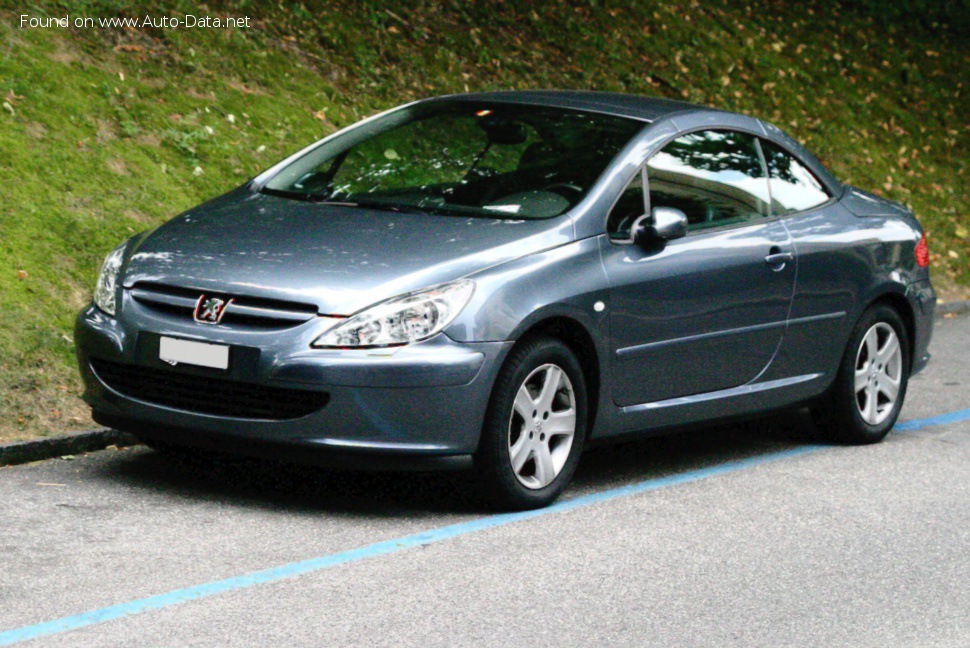
The defining characteristic of the Peugeot 307 CC is undeniably its Coupe-Cabriolet body type, featuring a sophisticated two-piece electrically operated retractable hardtop. This design offered the best of both worlds: the elegance and security of a coupé when the roof was up, and the invigorating experience of a convertible with the touch of a button. The transformation from coupé to cabriolet was a marvel of engineering for its time, taking approximately 25 seconds.
Visually, the 307 CC maintained a strong familial resemblance to the standard 307 hatchback from the front, but its profile and rear were entirely unique to accommodate the folding roof mechanism. With a length of 171.22 inches (4349 mm), a width of 69.25 inches (1759 mm), and a height of 55.79 inches (1417 mm), the car had a substantial road presence. The wheelbase measured 102.68 inches (2608 mm), contributing to a stable ride.
Despite being a compact convertible, the 307 CC was designed to accommodate four occupants, albeit with the rear seats being more suitable for shorter journeys or children. The trunk space varied significantly depending on the roof’s position; with the roof up, it offered a decent 12.36 cubic feet (350 liters) of cargo volume, which reduced to 7.24 cubic feet (205 liters) when the roof was stowed. This compromise was typical for retractable hardtop vehicles of the era.
Standard features included an Anti-lock Braking System (ABS) for enhanced safety, a crucial aspect for modern vehicles. The suspension system comprised a spring strut setup at the front and a torsion beam at the rear, tuned for a comfortable yet competent ride. Braking duties were handled by ventilated discs at the front and solid discs at the rear. The car rode on 16-inch wheels fitted with 205/55 R16 tires, offering a good balance of grip and ride comfort. The steering system was a responsive rack and pinion setup, providing precise control.
Technical Specifications
| Category | Specification |
|---|---|
| General Information | |
| Brand | Peugeot |
| Model | 307 CC |
| Type (Engine) | 2.0 i 16V (136 Hp) |
| Production Years | 2003 – 2005 |
| Body Type | Coupe – Cabriolet |
| Seats | 4 |
| Doors | 2 |
| Performance Specifications | |
| Fuel Consumption (Urban) | 20.5 US mpg (11.5 l/100 km) |
| Fuel Consumption (Extra Urban) | 37.9 US mpg (6.2 l/100 km) |
| Fuel Consumption (Combined) | 28.7 US mpg (8.2 l/100 km) |
| CO2 Emissions | 194 g/km |
| Fuel Type | Petrol (Gasoline) |
| Acceleration 0-60 mph | 10.4 sec |
| Maximum Speed | 128.62 mph (207 km/h) |
| Emission Standard | Euro 3 |
| Weight-to-Power Ratio | 10.7 kg/Hp |
| Engine Specifications | |
| Power | 136 Hp @ 6000 rpm |
| Torque | 140.14 lb.-ft. @ 4100 rpm (190 Nm) |
| Engine Layout | Front, Transverse |
| Engine Model/Code | RFN EW10J4 |
| Engine Displacement | 121.86 cu. in. (1997 cm3) |
| Number of Cylinders | 4 |
| Engine Configuration | Inline |
| Cylinder Bore | 3.35 in. (85 mm) |
| Piston Stroke | 3.46 in. (88 mm) |
| Compression Ratio | 10.8:1 |
| Valves per Cylinder | 4 |
| Fuel Injection System | Multi-port manifold injection |
| Engine Aspiration | Naturally aspirated |
| Valvetrain | DOHC |
| Engine Oil Capacity | 4.49 US qt (4.25 l) |
| Coolant Capacity | 6.55 US qt (6.2 l) |
| Dimensions, Volume, and Weights | |
| Kerb Weight | 3212.14 lbs. (1457 kg) |
| Maximum Weight | 4034.46 lbs. (1830 kg) |
| Maximum Load | 822.32 lbs. (373 kg) |
| Trunk (Boot) Space (min) | 7.24 cu. ft. (205 l) |
| Trunk (Boot) Space (max) | 12.36 cu. ft. (350 l) |
| Fuel Tank Capacity | 15.85 US gal (60 l) |
| Length | 171.22 in. (4349 mm) |
| Width | 69.25 in. (1759 mm) |
| Height | 55.79 in. (1417 mm) |
| Wheelbase | 102.68 in. (2608 mm) |
| Front Track | 58.94 in. (1497 mm) |
| Rear Track | 59.29 in. (1506 mm) |
| Ground Clearance | 4.72 in. (120 mm) |
| Drag Coefficient (Cd) | 0.31 |
| Minimum Turning Circle | 36.42 ft. (11.1 m) |
| Drivetrain, Brakes, and Suspension | |
| Drivetrain Architecture | Front-wheel drive, Internal Combustion engine |
| Gearbox Type | 5 gears, manual transmission |
| Front Suspension | Spring Strut |
| Rear Suspension | Torsion |
| Front Brakes | Ventilated discs |
| Rear Brakes | Disc |
| Assisting Systems | ABS (Anti-lock braking system) |
| Steering Type | Steering rack and pinion |
| Tires Size | 205/55 R16 |
| Wheel Rims Size | 16 inches |
Legacy and Market Impact of the Peugeot 307 CC
The Peugeot 307 CC, particularly the 2.0 i 16V (136 Hp) variant, holds a significant place in automotive history, particularly within the European market. It was a trailblazer in the compact segment for popularizing the retractable hardtop, a feature previously reserved for more expensive luxury vehicles. Before the 307 CC’s arrival, compact convertibles were largely soft-tops, which, while charming, often came with compromises in terms of security, noise insulation, and weather protection.
Peugeot’s ingenious design offered a compelling alternative, providing the best of both worlds: the open-air freedom of a convertible during sunny days and the refinement, security, and structural rigidity of a coupé in adverse weather. This dual-purpose nature made the 307 CC an incredibly attractive lifestyle vehicle for a broad demographic, from young professionals to empty nesters, seeking a stylish and versatile car.
The 307 CC faced competition from other European manufacturers, many of whom quickly followed Peugeot’s lead. Key rivals included the Renault Mégane CC, Opel Astra TwinTop, and later, the Volkswagen Eos and Ford Focus CC. However, the 307 CC carved out its niche early, establishing itself as a benchmark for the affordable coupe-cabriolet. Its success paved the way for a wave of similar models, demonstrating that the retractable hardtop concept could be successfully implemented in more accessible vehicle segments.
Beyond its technical innovation, the Peugeot 307 CC contributed to Peugeot’s brand image as a producer of stylish, innovative, and practical cars. It resonated with consumers looking for a vehicle that combined emotional appeal with everyday usability. While it may not have been a performance powerhouse, its comfortable ride, attractive design, and the sheer novelty of its folding hardtop ensured its popularity. The 307 CC’s legacy is defined by its role in democratizing the coupe-cabriolet, making open-top motoring a year-round possibility for a wider audience and influencing subsequent generations of compact convertibles in Europe and beyond.