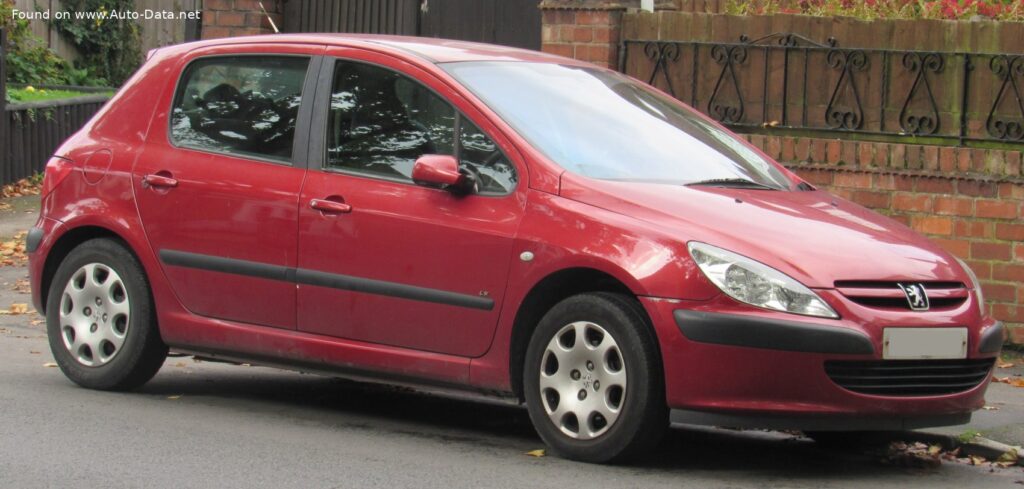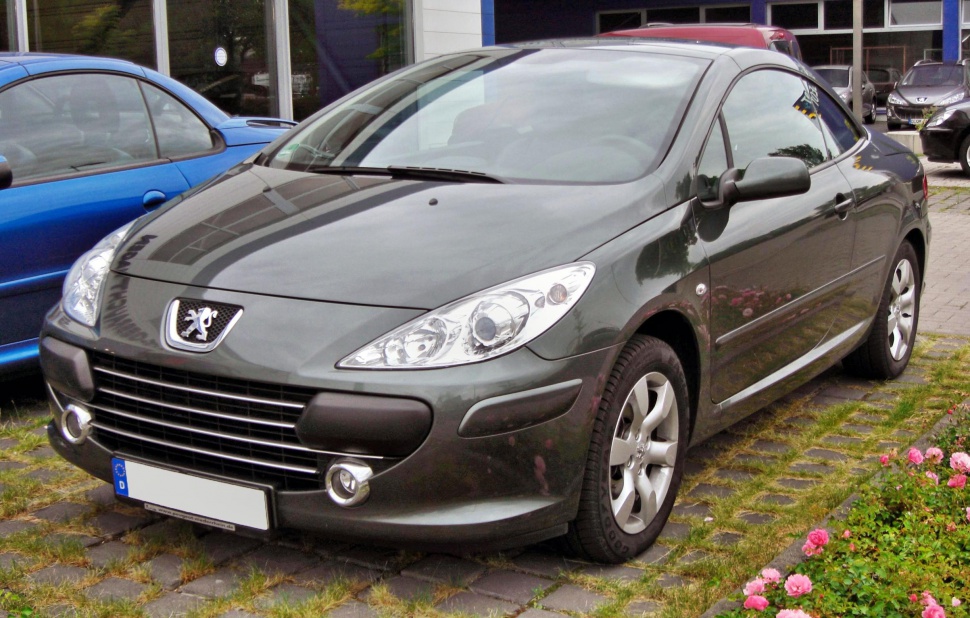
The Peugeot 307 CC (facelift 2005): A Stylish European Convertible
The Peugeot 307 CC (Coupe-Cabriolet) represents a significant chapter in the French automaker’s history, particularly in popularizing the retractable hardtop design within the mainstream compact segment. The model under review, specifically the 2.0i (140 Hp) variant from the 2005 facelift, stands as a prime example of Peugeot’s ambition to offer accessible open-top motoring with the practicality and security of a coupe. Launched in 2005, this refreshed generation of the 307 CC continued to build upon the success of its pre-facelift predecessor, refining its aesthetics, enhancing its features, and solidifying its position in the highly competitive European market. As a vehicle not officially sold in the United States, the 307 CC carved out its niche primarily across Europe and other international markets, where its blend of style, a folding hardtop, and everyday usability resonated with consumers seeking versatility and flair.
Engine and Performance of the Peugeot 307 CC (facelift 2005)
Powering this particular variant of the Peugeot 307 CC is a naturally aspirated 2.0-liter inline-four gasoline engine, designated by Peugeot as the RFJ EW10A or RFN EW10J4. This powerplant was a familiar and well-regarded unit within the PSA Group’s lineup, known for its balanced performance and reliability. With a displacement of 1997 cubic centimeters (121.86 cubic inches), the engine produces a respectable 140 horsepower at 6000 rpm. Its power per liter stands at 70.1 horsepower per liter, indicating an efficient output for a non-turbocharged engine of its era.
Torque output for the 2.0i engine is 200 Newton-meters (147.51 lb.-ft.) delivered at 4000 rpm, providing ample pulling power for daily driving and highway cruising. The engine features a DOHC (Dual Overhead Camshaft) valvetrain with four valves per cylinder, contributing to its smooth operation and efficient combustion. Fuel is delivered via a multi-port manifold injection system. The engine’s compression ratio is 10.8:1, optimized for regular unleaded gasoline.
Mated to a 5-speed manual transmission, the 2.0i engine drives the front wheels, a common architecture for compact European vehicles. This setup allows the 307 CC to accelerate from 0 to 60 mph in a respectable 9.6 seconds (calculated by Auto-Data.net for 0-60 mph, while 0-100 km/h is 10.1 seconds). The top speed is rated at 205 kilometers per hour, or approximately 127.38 mph. Despite its convertible nature and the associated weight, the 307 CC offers a lively driving experience. Fuel economy figures are competitive for a vehicle of its size and type, with a combined rating of 8.1 liters per 100 kilometers (29 US mpg), an urban consumption of 11.3 l/100 km (20.8 US mpg), and an extra-urban figure of 6.2 l/100 km (37.9 US mpg). The vehicle meets the Euro 4 emission standard, reflecting its environmental compliance for the mid-2000s.
Design and Features
The Peugeot 307 CC (facelift 2005) is characterized by its distinctive coupe-cabriolet body type, featuring a fully automatic, electro-hydraulically operated retractable hardtop. This innovative design allowed owners to enjoy the open-air exhilaration of a convertible with the added security, refinement, and weather protection of a fixed-roof coupe. The facelift introduced subtle but effective styling updates, aligning the 307 CC with Peugeot’s contemporary design language. These changes included a revised front fascia with a larger, more prominent grille, updated headlights, and a generally more modern and assertive appearance. The rear lights were also subtly restyled to enhance its curb appeal.
Measuring 4360 mm (171.65 inches) in length, 1759 mm (69.25 inches) in width, and 1424 mm (56.06 inches) in height, the 307 CC maintains compact dimensions suitable for European city driving while offering a surprisingly spacious interior for its class. The wheelbase spans 2608 mm (102.68 inches), contributing to a stable ride. The interior is configured for four occupants, with two doors providing access. While the rear seats are more accommodating than many 2+2 convertibles, they are best suited for shorter journeys or children.
Key features for this generation included a focus on both comfort and safety. Standard safety equipment for the era included ABS (Anti-lock Braking System), a crucial system for maintaining steering control during hard braking. The vehicle’s kerb weight of 1468 kg (3236.39 lbs) reflects the added structural reinforcement and the weight of the hardtop mechanism necessary for a coupe-cabriolet. Despite the complex roof, the trunk space offers reasonable practicality, ranging from 204 liters (7.2 cu. ft.) with the roof down to 350 liters (12.36 cu. ft.) with the roof up, allowing for decent luggage capacity. The vehicle rides on 205/55 R16 V tires mounted on 16-inch wheel rims, providing a balance of comfort and handling.
Technical Specifications of the Peugeot 307 CC (facelift 2005) 2.0i (140 Hp)
| Category | Specification |
|---|---|
| General Information | |
| Brand | Peugeot |
| Model | 307 |
| Generation | 307 CC (facelift 2005) |
| Type (Engine) | 2.0i (140 Hp) |
| Start of Production | 2005 year |
| End of Production | 2009 year |
| Powertrain Architecture | Internal Combustion engine |
| Body type | Coupe – Cabriolet |
| Seats | 4 |
| Doors | 2 |
| Performance Specs | |
| Fuel consumption (economy) – urban | 11.3 l/100 km (20.8 US mpg) |
| Fuel consumption (economy) – extra urban | 6.2 l/100 km (37.9 US mpg) |
| Fuel consumption (economy) – combined | 8.1 l/100 km (29 US mpg) |
| CO2 emissions | 192 g/km |
| Fuel Type | Petrol (Gasoline) |
| Acceleration 0 – 100 km/h | 10.1 sec |
| Acceleration 0 – 60 mph (Calculated) | 9.6 sec |
| Maximum speed | 205 km/h (127.38 mph) |
| Emission standard | Euro 4 |
| Weight-to-power ratio | 10.5 kg/Hp, 95.4 Hp/tonne |
| Weight-to-torque ratio | 7.3 kg/Nm, 136.2 Nm/tonne |
| Engine Specs | |
| Power | 140 Hp @ 6000 rpm |
| Power per liter | 70.1 Hp/l |
| Torque | 200 Nm @ 4000 rpm (147.51 lb.-ft. @ 4000 rpm) |
| Engine layout | Front, Transverse |
| Engine Model/Code | RFJ EW10A, RFN EW10J4 |
| Engine displacement | 1997 cm3 (121.86 cu. in.) |
| Number of cylinders | 4 |
| Engine configuration | Inline |
| Cylinder Bore | 85 mm (3.35 in.) |
| Piston Stroke | 88 mm (3.46 in.) |
| Compression ratio | 10.8:1 |
| Number of valves per cylinder | 4 |
| Fuel injection system | Multi-port manifold injection |
| Engine aspiration | Naturally aspirated engine |
| Valvetrain | DOHC |
| Engine oil capacity | 4.3 l (4.54 US qt) |
| Engine oil specification | Not available in provided data |
| Coolant capacity | 6.2 l (6.55 US qt) |
| Space, Volume and Weights | |
| Kerb Weight | 1468 kg (3236.39 lbs) |
| Max. weight | 1880 kg (4144.69 lbs) |
| Max load | 412 kg (908.3 lbs) |
| Trunk (boot) space – minimum | 204 l (7.2 cu. ft.) |
| Trunk (boot) space – maximum | 350 l (12.36 cu. ft.) |
| Fuel tank capacity | 60 l (15.85 US gal) |
| Permitted trailer load with brakes (12%) | 1320 kg (2910.1 lbs) |
| Permitted trailer load without brakes | 750 kg (1653.47 lbs) |
| Dimensions | |
| Length | 4360 mm (171.65 in.) |
| Width | 1759 mm (69.25 in.) |
| Height | 1424 mm (56.06 in.) |
| Wheelbase | 2608 mm (102.68 in.) |
| Front track | 1497 mm (58.94 in.) |
| Rear (Back) track | 1492 mm (58.74 in.) |
| Ride height (ground clearance) | 120 mm (4.72 in.) |
| Drag coefficient (Cd) | 0.31 |
| Minimum turning circle (turning diameter) | 11.1 m (36.42 ft.) |
| Drivetrain, Brakes and Suspension Specs | |
| Drivetrain Architecture | The Internal combustion engine (ICE) drives the front wheels of the vehicle. |
| Drive wheel | Front wheel drive |
| Number of gears and type of gearbox | 5 gears, manual transmission |
| Front brakes | Ventilated discs |
| Rear brakes | Disc |
| Assisting systems | ABS (Anti-lock braking system) |
| Steering type | Steering rack and pinion |
| Tires size | 205/55 R16 V |
| Wheel rims size | 16 |
Legacy and Market Impact of the Peugeot 307 CC
The Peugeot 307 CC played a pivotal role in the European automotive landscape, particularly in the early to mid-2000s. It was one of the first mass-market compact cars to truly democratize the retractable hardtop, a feature previously reserved for more expensive luxury vehicles. This innovation allowed consumers to enjoy the best of both worlds: the open-air freedom of a convertible in good weather and the security, reduced wind noise, and improved insulation of a hardtop coupe when conditions were less favorable. This versatility was a significant selling point in markets with diverse climates.
In its primary European market, the 307 CC competed against a growing wave of similar coupe-cabriolets, including the Renault Mégane CC, Opel Astra TwinTop (known as the Saturn Astra in limited US markets), and later, the Volkswagen Eos. What set the Peugeot apart was its distinctive French styling, perceived comfort, and the established reputation of the Peugeot brand for producing engaging, if not outright sporty, front-wheel-drive vehicles. Its impact was primarily in making convertibles more practical and accessible to a broader audience, demonstrating that a stylish, open-top car didn’t necessarily have to be a niche, secondary vehicle.
The 307 CC’s reputation was generally positive, praised for its comfortable ride, attractive design, and the cleverness of its folding roof. While not a performance leader, the 2.0i engine provided adequate power for its intended use as a stylish cruiser. Its historical significance lies in paving the way for subsequent generations of Peugeot CC models and influencing other manufacturers to adopt the retractable hardtop in compact segments. The 307 CC helped solidify Peugeot’s image as a brand capable of delivering innovative and desirable vehicles, even if its presence was primarily felt outside of the American market. Its production run from 2005 to 2009 for this facelifted model ensured a consistent offering in the convertible segment, leaving a legacy as a popular and influential European open-top car.