Introduction to the Peugeot 307 (Facelift 2005) 1.4i (88 Hp)
The Peugeot 307, a prominent player in the European C-segment (compact car class), received a significant mid-cycle refresh in 2005, evolving into the generation known as the
Peugeot 307 (facelift 2005). This refreshed model aimed to solidify its position against fierce competition by introducing updated styling, improved interior materials, and enhanced technology. Produced from 2005 to 2008, the facelifted 307 continued to offer a practical and comfortable solution for families and individuals across Europe, Asia, and other international markets where Peugeot had a strong presence. The specific variant under review, the 1.4i with 88 horsepower, represented an accessible entry point into the 307 range, balancing fuel economy with adequate performance for daily commuting and urban driving. While never officially sold in the United States, the Peugeot 307 was a ubiquitous sight on European roads, embodying the French automaker’s philosophy of blending distinctive design with practical engineering.
Engine & Performance: The Heart of the Peugeot 307 (facelift 2005)
At the core of this particular Peugeot 307 (facelift 2005) variant lies a naturally aspirated 1.4-liter (1361 cm3 or 83.05 cu. in.) inline-four gasoline engine, codenamed KFU ET3J4. This engine, equipped with a Double Overhead Camshaft (DOHC) valvetrain and multi-port manifold injection, delivered a respectable 88 horsepower at 5250 rpm. Torque output stood at 98.1 lb.-ft. (133 Nm) at a relatively low 3250 rpm, providing a decent amount of usable power in the lower and mid-range, which was beneficial for city driving and maintaining momentum.
Paired exclusively with a 5-speed manual transmission, the 1.4i engine channeled its power to the front wheels, a common and efficient drivetrain architecture for compact hatchbacks of its era. This setup allowed the 307 to accelerate from 0 to 60 mph in a measured 12.2 seconds (0-100 km/h in 12.8 seconds), with a top speed of 106.88 mph (172 km/h). While not a performance leader, these figures were competitive for an entry-level engine in its class, offering sufficient capability for everyday driving without being overly strenuous on fuel.
Fuel efficiency was a key consideration for European buyers, and the 1.4i variant delivered reasonable numbers for its time. The combined fuel consumption was rated at 36.2 US mpg (6.5 l/100 km), with urban consumption at 27 US mpg (8.7 l/100 km) and extra-urban at an impressive 44.4 US mpg (5.3 l/100 km). With CO2 emissions of 155 g/km, the vehicle met the Euro 4 emission standard, reflecting a commitment to environmental responsibility that was becoming increasingly important in the mid-2000s. The 60-liter (15.85 US gallon) fuel tank provided a practical cruising range, making it suitable for longer journeys as well as daily commutes.
Design & Features: Practicality Meets Refinement
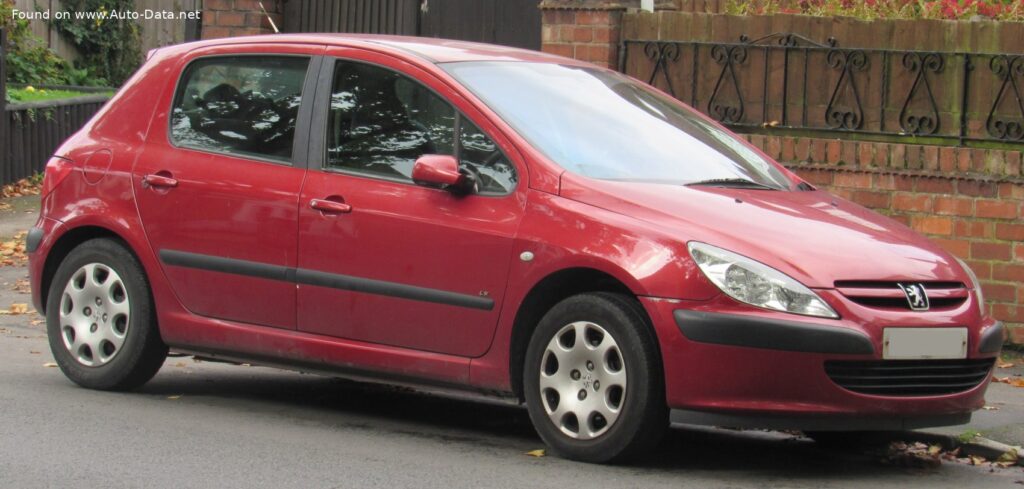
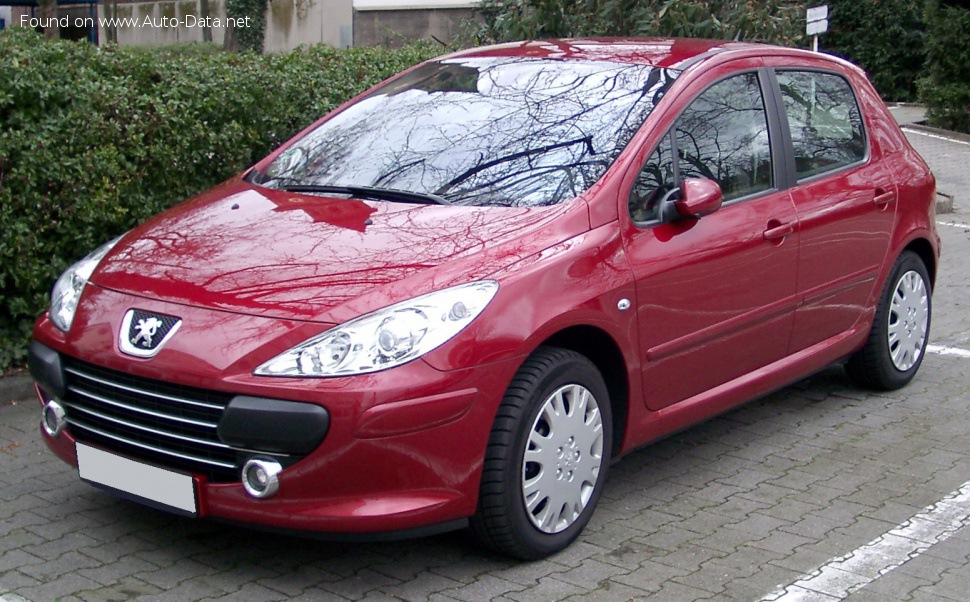
The 2005 facelift brought a refreshed aesthetic to the Peugeot 307, primarily focusing on the front fascia. It adopted a larger, more aggressive grille design, reminiscent of the larger Peugeot 407, along with redesigned headlights and bumpers. These changes gave the car a more modern and assertive look, moving away from the softer lines of the pre-facelift model. The 307 maintained its distinctive “tall boy” hatchback silhouette, which contributed significantly to its interior spaciousness and practicality. Available in both 3-door and 5-door configurations, the hatchback body type offered versatility, making it a popular choice for various demographics.
Measuring 165.83 inches in length, 68.74 inches in width, and 59.45 inches in height, with a wheelbase of 102.68 inches, the 307 provided a comfortable cabin for five occupants. The elevated roofline ensured ample headroom, a characteristic that set it apart from some competitors. Cargo capacity was also a strong point, with a minimum trunk space of 12.04 cu. ft. (341 liters), expandable to a generous 46.9 cu. ft. (1328 liters) with the rear seats folded down. This flexibility made the 307 a highly practical vehicle for hauling groceries, luggage, or even small furniture.
In terms of safety and driving dynamics, the Peugeot 307 (facelift 2005) featured ventilated disc brakes at the front and disc brakes at the rear, complemented by an Anti-lock Braking System (ABS) as standard. The steering system utilized a rack and pinion setup, offering predictable handling. The vehicle rode on 195/65 R15 tires, mounted on 15-inch wheel rims, providing a good balance between ride comfort and grip. The relatively compact turning circle of 36.52 feet (11.13 meters) enhanced its maneuverability in urban environments. While advanced driver-assistance systems were not common in this segment during this era, the 307 offered a solid foundation of passive and active safety features.
Technical Specifications
| Category | Specification | US Equivalent |
|---|---|---|
| Brand | Peugeot | |
| Model | 307 | |
| Generation | 307 (facelift 2005) | |
| Type (Engine) | 1.4i (88 Hp) | |
| Start of production | 2005 year | |
| End of production | 2008 year | |
| Powertrain Architecture | Internal Combustion engine | |
| Body type | Hatchback | |
| Seats | 5 | |
| Doors | 3-5 | |
| Performance Specs | ||
| Fuel consumption (economy) – urban | 8.7 l/100 km | 27 US mpg |
| Fuel consumption (economy) – extra urban | 5.3 l/100 km | 44.4 US mpg |
| Fuel consumption (economy) – combined | 6.5 l/100 km | 36.2 US mpg |
| CO2 emissions | 155 g/km | |
| Fuel Type | Petrol (Gasoline) | |
| Acceleration 0 – 60 mph | 12.2 sec | |
| Acceleration 0 – 100 km/h | 12.8 sec | |
| Maximum speed | 172 km/h | 106.88 mph |
| Emission standard | Euro 4 | |
| Weight-to-power ratio | 13.2 kg/Hp | 76 Hp/tonne |
| Weight-to-torque ratio | 8.7 kg/Nm | 114.9 Nm/tonne |
| Engine Specs | ||
| Power | 88 Hp @ 5250 rpm | |
| Power per liter | 64.7 Hp/l | |
| Torque | 133 Nm @ 3250 rpm | 98.1 lb.-ft. @ 3250 rpm |
| Engine layout | Front, Transverse | |
| Engine Model/Code | KFU ET3J4 | |
| Engine displacement | 1361 cm3 | 83.05 cu. in. |
| Number of cylinders | 4 | |
| Engine configuration | Inline | |
| Cylinder Bore | 75 mm | 2.95 in. |
| Piston Stroke | 77 mm | 3.03 in. |
| Compression ratio | 10.2:1 | |
| Number of valves per cylinder | 4 | |
| Fuel injection system | Multi-port manifold injection | |
| Engine aspiration | Naturally aspirated engine | |
| Valvetrain | DOHC | |
| Engine oil capacity | 2.75 l | 2.91 US qt |
| Coolant | 5.8 l | 6.13 US qt |
| Space, Volume and Weights | ||
| Kerb Weight | 1158 kg | 2552.95 lbs. |
| Max. weight | 1650 kg | 3637.63 lbs. |
| Max load | 492 kg | 1084.67 lbs. |
| Trunk (boot) space – minimum | 341 l | 12.04 cu. ft. |
| Trunk (boot) space – maximum | 1328 l | 46.9 cu. ft. |
| Fuel tank capacity | 60 l | 15.85 US gal |
| Permitted trailer load with brakes (12%) | 1200 kg | 2645.55 lbs. |
| Permitted trailer load without brakes | 615 kg | 1355.84 lbs. |
| Dimensions | ||
| Length | 4212 mm | 165.83 in. |
| Width | 1746 mm | 68.74 in. |
| Height | 1510 mm | 59.45 in. |
| Wheelbase | 2608 mm | 102.68 in. |
| Front track | 1505 mm | 59.25 in. |
| Rear (Back) track | 1500 mm | 59.06 in. |
| Ride height (ground clearance) | 120 mm | 4.72 in. |
| Drag coefficient (Cd) | 0.31 | |
| Minimum turning circle (turning diameter) | 11.13 m | 36.52 ft. |
| Drivetrain, Brakes and Suspension Specs | ||
| Drivetrain Architecture | The Internal combustion engine (ICE) drives the front wheels of the vehicle. | |
| Drive wheel | Front wheel drive | |
| Number of gears and type of gearbox | 5 gears, manual transmission | |
| Front brakes | Ventilated discs | |
| Rear brakes | Disc | |
| Assisting systems | ABS (Anti-lock braking system) | |
| Steering type | Steering rack and pinion | |
| Tires size | 195/65 R15 | |
| Wheel rims size | 15 | |
Legacy & Market Impact of the Peugeot 307
The Peugeot 307, particularly after its 2005 facelift, played a crucial role in Peugeot’s strategy to maintain its strong presence in the highly competitive European compact car segment. While the 1.4i (88 Hp) variant was an entry-level model, it contributed significantly to the 307’s overall sales volume by offering an affordable and economical option for a broad range of buyers. Its primary market was undoubtedly Europe, where it competed head-to-head with established rivals such as the Volkswagen Golf, Ford Focus, Opel Astra (Vauxhall Astra in the UK), and the Renault Mégane. In this context, the 307 was known for its comfortable ride quality, spacious interior, and distinctive French styling, which often offered a softer, more rounded aesthetic compared to some of its German counterparts.
The 307’s “tall boy” design, while initially somewhat controversial, ultimately proved to be a practical advantage, offering excellent interior space and a commanding driving position that many appreciated. This design philosophy resonated well with families seeking a versatile daily driver. The facelifted model addressed some of the earlier criticisms regarding build quality and aesthetics, presenting a more refined and visually appealing package that helped it stay relevant in a rapidly evolving market.
Despite its success, the 307’s era was also marked by increasing competition and evolving consumer expectations. Its legacy is one of a solid, practical, and stylish compact car that continued Peugeot’s tradition of offering comfortable and well-designed vehicles. The 307 eventually paved the way for the Peugeot 308, which launched in 2007 and further refined the brand’s compact car offering, building on the strengths and lessons learned from the 307. For many European motorists, the Peugeot 307 (facelift 2005) remains a memorable and reliable workhorse, emblematic of the early 21st-century compact car landscape. Its blend of French charm, practicality, and efficiency ensured its place as a significant model in Peugeot’s modern history.