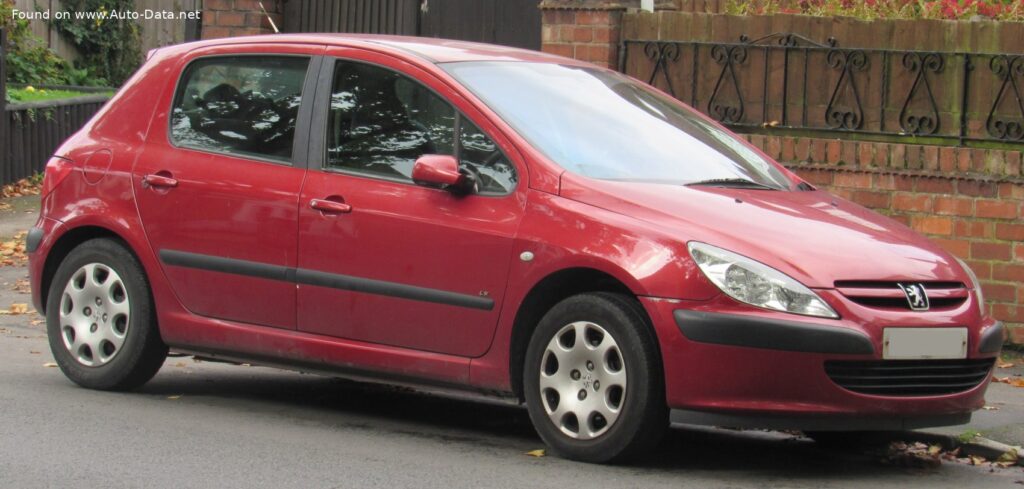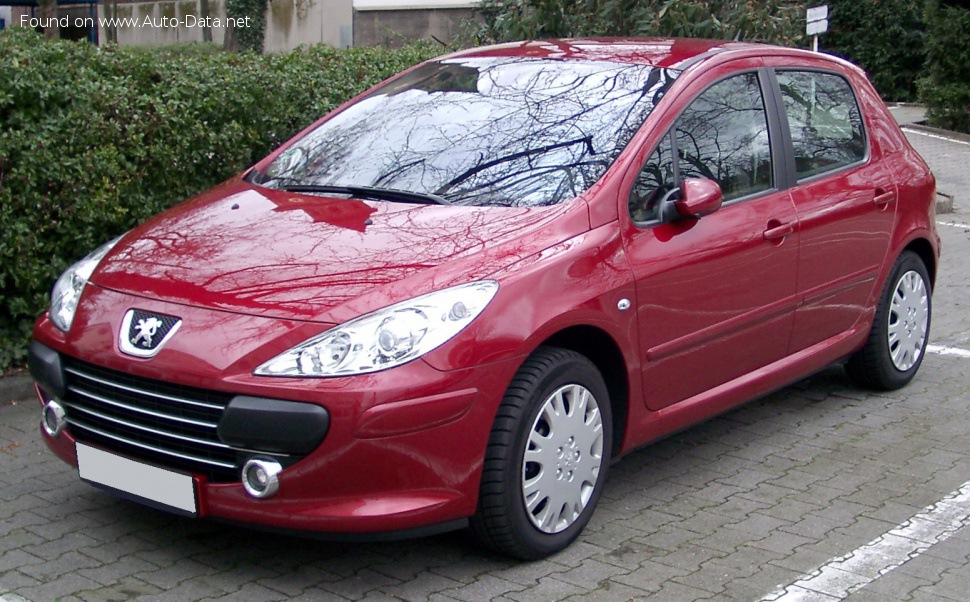
Peugeot 307 (facelift 2005) 2.0i (140 Hp)
The Peugeot 307 (facelift 2005) represents a significant mid-cycle refresh of Peugeot’s popular compact car, a vehicle primarily designed for and sold within the European and other international markets, where it competed fiercely in the C-segment. This particular variant, equipped with the 2.0-liter gasoline engine producing 140 horsepower, aimed to offer a compelling blend of performance, practicality, and efficiency. Launched in 2005, this updated model sought to build upon the commercial success of the original 307, which had earned the prestigious European Car of the Year award in 2002, by incorporating design enhancements, improved technology, and refined driving dynamics. While the Peugeot brand has a limited presence in the United States, the 307 played a crucial role in the competitive European automotive landscape, demonstrating Peugeot’s commitment to delivering stylish and capable family hatchbacks.
Evolution of the Peugeot 307
The Peugeot 307 was first introduced in 2001 as a replacement for the long-running Peugeot 306. It quickly established itself with its distinctive “tall boy” design, offering enhanced interior space and visibility compared to its segment rivals. The 2005 facelift, often referred to as the Phase 2, brought a series of updates to keep the 307 competitive. These changes included a redesigned front fascia, featuring a larger grille and new headlights, aligning its aesthetic with Peugeot’s contemporary design language seen in models like the 407. Interior refinements, improved material quality, and updated infotainment options also featured prominently in the refresh. Production of this facelifted generation continued until 2008, when it was succeeded by the Peugeot 308.
Engine and Performance of the Peugeot 307 (facelift 2005)
At the heart of this specific variant of the Peugeot 307 (facelift 2005) is a robust and proven 2.0-liter (1997 cubic centimeters or 121.86 cubic inches) naturally aspirated inline-four gasoline engine. Codenamed RFJ EW10A or RFN EW10J4, this powerplant was engineered to deliver a balanced performance suitable for both urban commuting and longer highway journeys. It features a Double Overhead Camshaft (DOHC) valvetrain with four valves per cylinder, optimizing airflow for better combustion efficiency. The engine employs a multi-port manifold injection system, a common and reliable fuel delivery method for its era.
This 2.0-liter unit generates a respectable 140 horsepower at 6000 revolutions per minute (rpm), providing ample power for its class. Torque output stands at 200 Newton-meters, which translates to approximately 147.51 pound-feet, peaking at 4000 rpm. This torque delivery ensures good responsiveness throughout the rev range, making the car feel lively in everyday driving scenarios. Power is sent to the front wheels via a smooth-shifting 5-speed manual transmission, offering direct driver engagement. The drivetrain architecture is front-wheel drive, a standard configuration for compact hatchbacks, contributing to packaging efficiency and predictable handling.
In terms of outright performance, the Peugeot 307 2.0i (140 Hp) is capable of accelerating from 0 to 60 miles per hour in a brisk 8.5 seconds, with a 0 to 100 kilometers per hour time of 8.9 seconds. Its top speed is rated at 127.38 miles per hour (205 km/h), making it a capable performer on European highways. Despite its performance capabilities, Peugeot also focused on efficiency for its time. The combined fuel economy is estimated at 7.7 liters per 100 kilometers, which equates to an impressive 30.5 US miles per gallon. Urban consumption stands at 10.7 l/100 km (22 US mpg), while extra-urban driving achieves 6 l/100 km (39.2 US mpg). The vehicle complies with Euro 4 emission standards, with CO2 emissions of 184 grams per kilometer, reflecting a reasonable environmental footprint for a gasoline engine of its generation.
Design and Features
The Peugeot 307 (facelift 2005) maintains its characteristic hatchback body style, available in both 3-door and 5-door configurations, offering seating for five occupants. The facelift brought a more assertive and modern front-end design, characterized by a larger, more prominent grille that integrated the Peugeot lion badge more seamlessly. The headlights were reshaped, giving the car a more sophisticated and contemporary appearance. The overall silhouette retained the “tall boy” design, which was a hallmark of the original 307, contributing to its airy cabin and generous headroom.
Measuring 165.83 inches (4212 mm) in length, 68.74 inches (1746 mm) in width, and 59.45 inches (1510 mm) in height, the 307 struck a balance between compact dimensions for urban maneuverability and sufficient interior volume. The 102.68-inch (2608 mm) wheelbase contributed to a stable ride and ample passenger space. Practicality was a strong suit, with a minimum trunk capacity of 12.04 cubic feet (341 liters), expandable to a substantial 46.9 cubic feet (1328 liters) with the rear seats folded down, making it highly versatile for families and cargo.
Safety features for the 2005 model year included standard Anti-lock Braking System (ABS), which was crucial for maintaining control during hard braking. The car was equipped with ventilated disc brakes at the front and disc brakes at the rear, providing confident stopping power. The steering system utilized a responsive rack and pinion setup, ensuring precise control. The vehicle rode on 205/55 R16 V tires mounted on 16-inch wheel rims, offering a good balance of grip and ride comfort. The facelift also typically included interior upgrades such as improved trim materials, updated instrumentation, and potentially more advanced audio or climate control options, enhancing the overall cabin experience for occupants.
Technical Specifications
| Category | Specification |
|---|---|
| Brand | Peugeot |
| Model | 307 |
| Generation | 307 (facelift 2005) |
| Type (Engine) | 2.0i (140 Hp) |
| Start of Production | 2005 year |
| End of Production | 2008 year |
| Powertrain Architecture | Internal Combustion engine |
| Body type | Hatchback |
| Seats | 5 |
| Doors | 3-5 |
| Fuel Consumption (Urban) | 10.7 l/100 km (22 US mpg) |
| Fuel Consumption (Extra Urban) | 6 l/100 km (39.2 US mpg) |
| Fuel Consumption (Combined) | 7.7 l/100 km (30.5 US mpg) |
| CO2 Emissions | 184 g/km |
| Fuel Type | Petrol (Gasoline) |
| Acceleration 0 – 60 mph | 8.5 sec |
| Acceleration 0 – 100 km/h | 8.9 sec |
| Maximum Speed | 205 km/h (127.38 mph) |
| Emission Standard | Euro 4 |
| Weight-to-Power Ratio | 8.9 kg/Hp (112.6 Hp/tonne) |
| Weight-to-Torque Ratio | 6.2 kg/Nm (160.9 Nm/tonne) |
| Power | 140 Hp @ 6000 rpm |
| Power per liter | 70.1 Hp/l |
| Torque | 200 Nm (147.51 lb.-ft.) @ 4000 rpm |
| Engine Layout | Front, Transverse |
| Engine Model/Code | RFJ EW10A, RFN EW10J4 |
| Engine Displacement | 1997 cm3 (2.0 l / 121.86 cu. in.) |
| Number of Cylinders | 4 |
| Engine Configuration | Inline |
| Cylinder Bore | 85 mm (3.35 in.) |
| Piston Stroke | 88 mm (3.46 in.) |
| Compression Ratio | 10.8:1 |
| Number of Valves per Cylinder | 4 |
| Fuel Injection System | Multi-port manifold injection |
| Engine Aspiration | Naturally aspirated engine |
| Valvetrain | DOHC |
| Engine Oil Capacity | 4.3 l (4.54 US qt) |
| Coolant Capacity | 6.2 l (6.55 US qt) |
| Kerb Weight | 1243 kg (2740.35 lbs.) |
| Max. Weight | 1700 kg (3747.86 lbs.) |
| Max Load | 457 kg (1007.51 lbs.) |
| Trunk (boot) space – minimum | 341 l (12.04 cu. ft.) |
| Trunk (boot) space – maximum | 1328 l (46.9 cu. ft.) |
| Fuel Tank Capacity | 60 l (15.85 US gal) |
| Permitted Trailer Load with brakes (12%) | 1500 kg (3306.93 lbs.) |
| Permitted Trailer Load without brakes | 655 kg (1444.03 lbs.) |
| Length | 4212 mm (165.83 in.) |
| Width | 1746 mm (68.74 in.) |
| Height | 1510 mm (59.45 in.) |
| Wheelbase | 2608 mm (102.68 in.) |
| Front Track | 1497 mm (58.94 in.) |
| Rear (Back) Track | 1492 mm (58.74 in.) |
| Ride Height (ground clearance) | 120 mm (4.72 in.) |
| Drag Coefficient (Cd) | 0.31 |
| Minimum Turning Circle | 11.13 m (36.52 ft.) |
| Drive Wheel | Front wheel drive |
| Number of Gears and Type of Gearbox | 5 gears, manual transmission |
| Front Brakes | Ventilated discs |
| Rear Brakes | Disc |
| Assisting Systems | ABS (Anti-lock braking system) |
| Steering Type | Steering rack and pinion |
| Tires Size | 205/55 R16 V |
| Wheel Rims Size | 16 |
Legacy and Market Impact of the Peugeot 307 (facelift 2005)
The Peugeot 307 (facelift 2005), and the 307 range as a whole, left a significant mark on the European compact car segment. Building on the strong foundation of its pre-facelift predecessor, which was lauded for its innovative design and practicality, the refreshed model continued to be a strong contender against established rivals. In a highly competitive market dominated by heavyweights like the Volkswagen Golf, Ford Focus, Opel Astra (Vauxhall Astra in the UK), and Renault Mégane, the 307 distinguished itself with its distinctive French styling, comfortable ride quality, and a focus on interior space and versatility.
The 307’s reputation was generally positive, particularly regarding its driving comfort and spacious cabin. The 2.0-liter engine variant, with its 140 horsepower, was considered a sweet spot in the lineup, offering a good balance of spirited performance and reasonable fuel economy without venturing into the sportier, high-performance GTI territory. This made it an attractive option for a wide range of buyers, from young families to individuals seeking a practical yet engaging daily driver.
While early models of the 307 faced some scrutiny regarding electrical reliability and build quality, common for many complex vehicles of its era, the facelift aimed to address these concerns with continuous improvements. The vehicle’s compliance with Euro 4 emission standards also highlighted Peugeot’s commitment to environmental responsibility, a growing concern in the European market during the mid-2000s.
Historically, the Peugeot 307 played a crucial role in bridging Peugeot’s compact car offerings from the turn of the millennium into the latter half of the decade. It successfully carried the torch from the beloved 306 and paved the way for the subsequent Peugeot 308, which continued the brand’s evolution in the C-segment. The 307’s design, particularly its “tall boy” architecture, influenced subsequent compact cars by demonstrating the benefits of a more upright stance for interior room and visibility. Its enduring presence on European roads years after production ceased is a testament to its robust engineering and continued appeal as a practical and comfortable used vehicle.