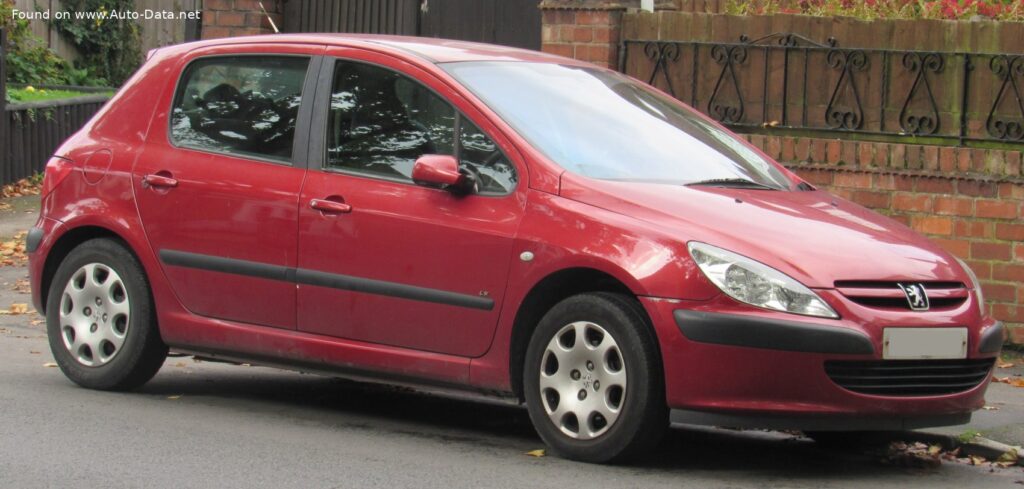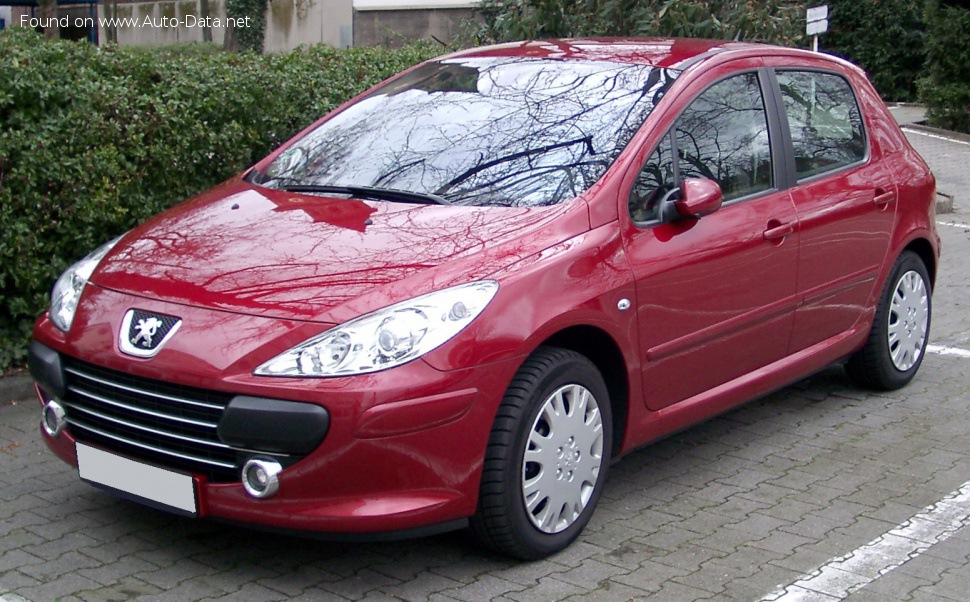
Introduction to the Peugeot 307 (facelift 2005)
The Peugeot 307, a compact car produced by the French automaker Peugeot, represented a significant entry in the highly competitive European C-segment (small family car segment). Introduced in 2001, it succeeded the popular Peugeot 306 and quickly garnered attention for its distinctive “tall” design, offering enhanced interior space and visibility. The model received a notable refresh in 2005, giving rise to the Peugeot 307 (facelift 2005). This mid-cycle update aimed to sharpen its aesthetic appeal, refine its interior, and enhance its mechanical package, ensuring it remained a strong contender against rivals like the Volkswagen Golf, Ford Focus, and Renault Mégane.
The specific variant under review, the Peugeot 307 (facelift 2005) 2.0i (140 Hp) Automatic, represented one of the more potent and comfortable options within the range. While never officially sold in the United States, the 307 played a crucial role in Peugeot’s global strategy, particularly in Europe, where it was lauded for its practicality, safety features, and a driving experience that balanced comfort with a touch of French flair. This particular model, produced from 2005 to 2008, combined a robust naturally aspirated gasoline engine with a convenient automatic transmission, appealing to drivers seeking ease of use in urban environments and relaxed cruising on highways.
Engine and Performance of the Peugeot 307 (facelift 2005)
Powering the Peugeot 307 (facelift 2005) 2.0i Automatic was a capable 2.0-liter (1997 cm³, or 121.86 cubic inches) inline-four cylinder gasoline engine. This unit, designated by codes like RFJ EW10A or RFN EW10J4, was a naturally aspirated powerplant featuring a Double Overhead Camshaft (DOHC) valvetrain with four valves per cylinder, a common and reliable configuration for its era. It utilized a multi-port manifold injection system to deliver fuel efficiently.
The engine produced a respectable 140 horsepower (Hp) at 6000 rpm, translating to a power-per-liter output of approximately 70.1 Hp/l. Torque figures stood at 200 Nm (147.51 lb.-ft.) delivered at 4000 rpm, providing ample pulling power for daily driving. With a compression ratio of 10.8:1, the engine was designed for efficiency and responsiveness.
Power was sent to the front wheels via a 4-speed automatic transmission. While modern vehicles often feature more gears, this 4-speed unit was typical for the segment at the time and contributed to a smooth, if not overtly sporty, driving experience. The combination allowed the 307 to accelerate from 0 to 60 mph in a calculated 9.3 seconds (or 0-100 km/h in 9.8 seconds), with a top speed of 124.27 mph (200 km/h). These figures placed it firmly in the mid-range of its competitors, offering sufficient performance for most European driving conditions. The vehicle’s weight-to-power ratio was 9.1 kg/Hp, or 110.1 Hp per ton, highlighting its balanced performance characteristics.
Fuel efficiency for the 2.0i Automatic was rated at a combined 8.2 liters per 100 kilometers, which translates to approximately 28.7 US mpg. Urban consumption was higher at 11.8 l/100 km (19.9 US mpg), while extra-urban driving saw improved figures of 6.2 l/100 km (37.9 US mpg). The vehicle met Euro 4 emission standards, with CO2 emissions of 195 g/km, reflecting the environmental considerations of vehicles from that period.
Design and Features
The Facelifted Peugeot 307’s Aesthetic and Practicality
The 2005 facelift brought a refreshed aesthetic to the Peugeot 307, primarily focusing on the front fascia to align it with Peugeot’s evolving design language, which had been introduced on models like the 407. The updated design featured a larger, more aggressive grille, revised headlights that swept further back into the fenders, and a more prominent lion badge, giving the car a more modern and assertive appearance. The body style remained a versatile hatchback, available in both 3-door and 5-door configurations, catering to different customer needs from sporty appeal to family practicality.
Measuring 165.83 inches (4212 mm) in length, 68.74 inches (1746 mm) in width, and 59.45 inches (1510 mm) in height, the 307 maintained its distinctive “tall” architecture. This design choice, coupled with a generous 102.68-inch (2608 mm) wheelbase, contributed significantly to its spacious interior. The car comfortably seated five occupants, offering ample headroom and legroom, a major selling point in its segment.
Practicality was a cornerstone of the 307’s design. The trunk space ranged from a respectable 12.04 cubic feet (341 liters) with the rear seats up, expanding to a substantial 46.9 cubic feet (1328 liters) when the rear seats were folded down. This flexibility made it suitable for a wide range of uses, from daily commuting to family vacations. The vehicle had a kerb weight of 2802.08 lbs (1271 kg) and a maximum permissible weight of 3814 lbs (1730 kg), allowing for a maximum load of 1011.92 lbs (459 kg). It also boasted a significant towing capacity, capable of pulling 3240.8 lbs (1470 kg) with brakes and 1477.1 lbs (670 kg) without.
Underneath, the 307 featured a front-wheel-drive architecture with a well-tuned suspension system designed for comfort over European road surfaces. It utilized ventilated disc brakes at the front and disc brakes at the rear, complemented by an Anti-lock Braking System (ABS) for enhanced safety. The steering system was a rack and pinion type, offering precise control. The car rode on 205/55 R16 V tires fitted on 16-inch wheel rims, providing a good balance of grip and ride comfort. With a minimum turning circle of 36.52 feet (11.13 meters), it was reasonably maneuverable in urban environments.
Technical Specifications: Peugeot 307 (facelift 2005) 2.0i (140 Hp) Automatic
| Category | Specification | Value (US Units) |
|---|---|---|
General Information |
||
| Brand | Peugeot | Peugeot |
| Model | 307 | 307 |
| Generation | 307 (facelift 2005) | 307 (facelift 2005) |
| Type (Engine) | 2.0i (140 Hp) Automatic | 2.0i (140 Hp) Automatic |
| Start of Production | 2005 year | 2005 |
| End of Production | 2008 year | 2008 |
| Powertrain Architecture | Internal Combustion engine | Internal Combustion engine |
| Body type | Hatchback | Hatchback |
| Seats | 5 | 5 |
| Doors | 3-5 | 3-5 |
Performance Specs |
||
| Fuel consumption (economy) – urban | 11.8 l/100 km | 19.9 US mpg |
| Fuel consumption (economy) – extra urban | 6.2 l/100 km | 37.9 US mpg |
| Fuel consumption (economy) – combined | 8.2 l/100 km | 28.7 US mpg |
| CO2 emissions | 195 g/km | 195 g/km |
| Fuel Type | Petrol (Gasoline) | Gasoline |
| Acceleration 0 – 100 km/h | 9.8 sec | 9.8 sec |
| Acceleration 0 – 62 mph | 9.8 sec | 9.8 sec |
| Acceleration 0 – 60 mph (Calculated) | 9.3 sec | 9.3 sec |
| Maximum speed | 200 km/h | 124.27 mph |
| Emission standard | Euro 4 | Euro 4 |
| Weight-to-power ratio | 9.1 kg/Hp | 20.06 lbs/Hp (110.1 Hp/ton) |
| Weight-to-torque ratio | 6.4 kg/Nm | 14.11 lbs/Nm (157.4 Nm/ton) |
Engine Specs |
||
| Power | 140 Hp @ 6000 rpm | 140 Hp @ 6000 rpm |
| Power per liter | 70.1 Hp/l | 70.1 Hp/l |
| Torque | 200 Nm @ 4000 rpm | 147.51 lb.-ft. @ 4000 rpm |
| Engine layout | Front, Transverse | Front, Transverse |
| Engine Model/Code | RFJ EW10A, RFN EW10J4 | RFJ EW10A, RFN EW10J4 |
| Engine displacement | 1997 cm3 | 121.86 cu. in. |
| Number of cylinders | 4 | 4 |
| Engine configuration | Inline | Inline |
| Cylinder Bore | 85 mm | 3.35 in. |
| Piston Stroke | 88 mm | 3.46 in. |
| Compression ratio | 10.8:1 | 10.8:1 |
| Number of valves per cylinder | 4 | 4 |
| Fuel injection system | Multi-port manifold injection | Multi-port manifold injection |
| Engine aspiration | Naturally aspirated engine | Naturally aspirated engine |
| Valvetrain | DOHC | DOHC |
| Engine oil capacity | 4.3 l | 4.54 US qt |
| Coolant | 6.8 l | 7.19 US qt |
Space, Volume and Weights |
||
| Kerb Weight | 1271 kg | 2802.08 lbs. |
| Max. weight | 1730 kg | 3814 lbs. |
| Max load | 459 kg | 1011.92 lbs. |
| Trunk (boot) space – minimum | 341 l | 12.04 cu. ft. |
| Trunk (boot) space – maximum | 1328 l | 46.9 cu. ft. |
| Fuel tank capacity | 60 l | 15.85 US gal |
| Permitted trailer load with brakes (12%) | 1470 kg | 3240.8 lbs. |
| Permitted trailer load without brakes | 670 kg | 1477.1 lbs. |
Dimensions |
||
| Length | 4212 mm | 165.83 in. |
| Width | 1746 mm | 68.74 in. |
| Height | 1510 mm | 59.45 in. |
| Wheelbase | 2608 mm | 102.68 in. |
| Front track | 1497 mm | 58.94 in. |
| Rear (Back) track | 1492 mm | 58.74 in. |
| Ride height (ground clearance) | 120 mm | 4.72 in. |
| Drag coefficient (Cd) | 0.31 | 0.31 |
| Minimum turning circle (turning diameter) | 11.13 m | 36.52 ft. |
Drivetrain, Brakes and Suspension Specs |
||
| Drivetrain Architecture | The Internal combustion engine (ICE) drives the front wheels of the vehicle. | Front-wheel drive ICE |
| Drive wheel | Front wheel drive | Front wheel drive |
| Number of gears and type of gearbox | 4 gears, automatic transmission | 4-speed automatic |
| Front brakes | Ventilated discs | Ventilated discs |
| Rear brakes | Disc | Disc |
| Assisting systems | ABS (Anti-lock braking system) | ABS (Anti-lock braking system) |
| Steering type | Steering rack and pinion | Rack and pinion |
| Tires size | 205/55 R16 V | 205/55 R16 V |
| Wheel rims size | 16 | 16-inch |
Legacy and Market Impact
The Peugeot 307, particularly the facelifted 2005 model, carved out a significant niche in the highly competitive European compact car market. Its primary competitors included stalwarts like the Volkswagen Golf, which set the benchmark for quality and refinement; the Ford Focus, renowned for its dynamic driving characteristics; and domestic rivals such as the Renault Mégane and Citroën C4. Against these formidable opponents, the 307 distinguished itself with its unique blend of style, practicality, and comfort.
The “tall” design philosophy, which was somewhat unconventional at its debut, ultimately proved to be a shrewd move by Peugeot. It offered a commanding driving position, excellent all-around visibility, and a feeling of spaciousness that many competitors struggled to match. This made the 307 a popular choice for families and those seeking a practical daily driver. The 2005 facelift helped to extend its appeal, giving it a more modern and cohesive look that kept it relevant in a rapidly evolving market.
The 2.0i (140 Hp) Automatic variant, while not the most fuel-efficient option in the lineup, was appreciated for its smooth power delivery and the convenience of its automatic transmission. In markets where manual transmissions still dominated, the automatic option provided a more relaxed driving experience, particularly in congested urban areas. Its performance was adequate for most scenarios, offering a comfortable ride without being overly sporty.
Over its production run, the Peugeot 307 received several accolades, including the prestigious European Car of the Year award in 2002. This recognition underscored its innovative design, strong safety features (it was one of the first cars in its class to achieve a five-star Euro NCAP rating), and overall market relevance. Despite some initial concerns regarding build quality and electronics in early models, the facelifted version generally saw improvements in these areas, bolstering its reputation for reliability.
The 307’s legacy is one of a practical, stylish, and safe family car that successfully carried Peugeot’s torch in the compact segment. It paved the way for its successor, the Peugeot 308, by demonstrating that a distinct design philosophy combined with robust engineering could yield a highly competitive product. While not a performance icon, its impact on the European market as a comfortable, spacious, and well-equipped compact hatchback was undeniable, solidifying Peugeot’s position as a major player in mainstream automotive design and engineering.