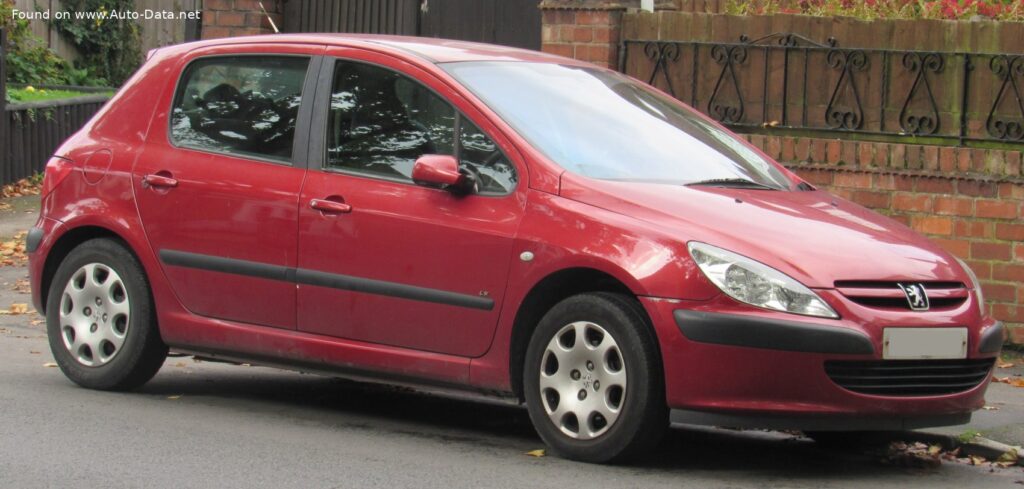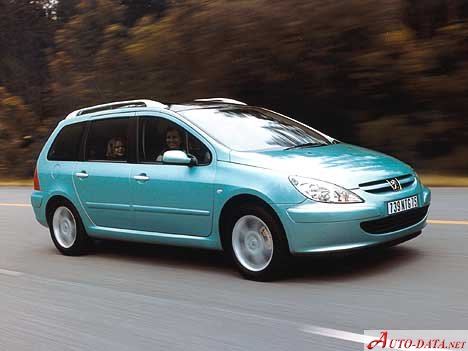
Peugeot 307 Station Wagon 1.6 16V (109 Hp): A European Compact Workhorse
The Peugeot 307, launched in 2001, marked a significant evolution for the French automaker in the compact car segment. Succeeding the popular 306, the 307 brought a taller, more spacious design, aiming to blend the practicality of an MPV with the driving dynamics of a traditional hatchback. The variant under review, the Peugeot 307 Station Wagon 1.6 16V (109 Hp), produced from 2002 to 2005, was a cornerstone of Peugeot’s offering in the European market, where station wagons (often referred to as ‘estate cars’) remain a highly popular choice for families and professionals alike. While the Peugeot 307 was not officially sold in the United States, it played a crucial role in its primary European and Asian markets, offering a compelling blend of utility, efficiency, and comfort in a highly competitive class.
This generation of the Peugeot 307 Station Wagon, specifically the 1.6 16V model, was designed to cater to a broad audience seeking a versatile vehicle capable of handling both urban commutes and longer journeys with ample cargo space. Its design philosophy centered on maximizing interior volume and practicality, a hallmark of European compact family cars of the early 2000s.
Engine and Performance of the Peugeot 307 Station Wagon
At the heart of the Peugeot 307 Station Wagon 1.6 16V (109 Hp) lies a robust and well-proven powertrain. The vehicle is equipped with a 1.6-liter (1587 cm³ or 96.84 cu. in.) naturally aspirated inline-four gasoline engine, designated by Peugeot as the NFU TU5JP4. This engine features a Double Overhead Camshaft (DOHC) valvetrain with 16 valves (4 per cylinder), optimizing airflow and combustion efficiency. Fuel is delivered via a multi-port manifold injection system, a standard and reliable technology for the era.
This 1.6-liter unit delivers a respectable 109 horsepower (Hp) at 5800 rpm, providing adequate power for its segment. Torque output is 147 Nm, which translates to approximately 108.42 lb.-ft. of torque, peaking at 4000 rpm. This torque delivery profile ensures decent low-to-mid range responsiveness, crucial for urban driving and hauling. Power is sent to the front wheels via a 5-speed manual transmission, a common and efficient setup for compact European vehicles.
In terms of performance, the Peugeot 307 Station Wagon 1.6 16V (109 Hp) accelerates from 0 to 60 mph in a computed 11.3 seconds (0-100 km/h in 11.9 seconds), making it suitable for everyday driving without being overtly sporty. Its maximum speed is rated at 113.09 mph (182 km/h). Fuel efficiency was a key consideration, and the combined cycle economy stands at 7.7 liters per 100 km, or approximately 30.5 US mpg. CO2 emissions were rated at 178 g/km, adhering to the Euro 3 emission standard prevalent during its production years.
Design and Features
The Peugeot 307 Station Wagon adopted a contemporary design for its time, characterized by its tall stature and expansive glass area, providing excellent visibility. The five-door, five-seat station wagon body type was engineered for practicality. Its dimensions, measuring 173.98 inches (4419 mm) in length, 69.17 inches (1757 mm) in width, and between 60.39 to 60.79 inches (1534-1544 mm) in height, contribute to a spacious interior despite its compact class footprint. The generous 106.61-inch (2708 mm) wheelbase further enhanced ride comfort and stability.
One of the primary selling points of the Peugeot 307 Station Wagon was its cargo capacity. With the rear seats in place, it offered a minimum trunk volume of 12.01 cubic feet (340 liters). Folding down the rear seats dramatically expanded this to an impressive 54.38 cubic feet (1540 liters), making it highly versatile for carrying luggage, sports equipment, or even small furniture. This flexibility was crucial for families and active individuals in its target market.
Standard features for the era included a hydraulic power steering system with rack and pinion steering, ensuring ease of maneuverability. Safety was addressed with front ventilated disc brakes and rear disc brakes, complemented by an Anti-lock Braking System (ABS), which was becoming increasingly standard in European vehicles. The suspension setup comprised a spring strut system at the front and a torsion beam at the rear, a common and cost-effective configuration for front-wheel-drive compact cars, offering a balance of comfort and handling.
Technical Specifications
| Category | Specification | US Equivalent / Notes |
|---|---|---|
| General Information | ||
| Brand | Peugeot | |
| Model | 307 | |
| Generation | 307 Station Wagon | |
| Engine Type | 1.6 16V (109 Hp) | |
| Production Start | 2002 year | |
| Production End | 2005 year | |
| Powertrain Architecture | Internal Combustion engine | |
| Body type | Station wagon (estate) | |
| Seats | 5 | |
| Doors | 5 | |
| Performance Specs | ||
| Fuel consumption (urban) | 9.9 l/100 km | 23.8 US mpg |
| Fuel consumption (extra urban) | 6.3 l/100 km | 37.3 US mpg |
| Fuel consumption (combined) | 7.7 l/100 km | 30.5 US mpg |
| CO2 emissions | 178 g/km | |
| Fuel Type | Petrol (Gasoline) | |
| Acceleration 0-60 mph (Calculated) | 11.3 sec | |
| Acceleration 0-100 km/h | 11.9 sec | |
| Maximum speed | 182 km/h | 113.09 mph |
| Emission standard | Euro 3 | |
| Weight-to-power ratio | 12.1 kg/Hp | 82.3 Hp/tonne |
| Weight-to-torque ratio | 9 kg/Nm | 111 Nm/tonne |
| Engine Specs | ||
| Power | 109 Hp @ 5800 rpm | |
| Power per liter | 68.7 Hp/l | |
| Torque | 147 Nm @ 4000 rpm | 108.42 lb.-ft. @ 4000 rpm |
| Engine layout | Front, Transverse | |
| Engine Model/Code | NFU TU5JP4 | |
| Engine displacement | 1587 cm³ | 1.6 Liters / 96.84 cu. in. |
| Number of cylinders | 4 | |
| Engine configuration | Inline | |
| Cylinder Bore | 78.5 mm | 3.09 in. |
| Piston Stroke | 82 mm | 3.23 in. |
| Compression ratio | 11:1 | |
| Valves per cylinder | 4 | |
| Fuel injection system | Multi-port manifold injection | |
| Engine aspiration | Naturally aspirated engine | |
| Valvetrain | DOHC | |
| Engine oil capacity | 3.25 l | 3.43 US qt |
| Coolant capacity | 6.2 l | 6.55 US qt |
| Space, Volume and Weights | ||
| Kerb Weight | 1324 kg | 2918.92 lbs. |
| Max. weight | 1923 kg | 4239.49 lbs. |
| Max load | 599 kg | 1320.57 lbs. |
| Trunk (boot) space – minimum | 340 l | 12.01 cu. ft. |
| Trunk (boot) space – maximum | 1540 l | 54.38 cu. ft. |
| Fuel tank capacity | 60 l | 15.85 US gal |
| Permitted trailer load with brakes (12%) | 1100 kg | 2425.08 lbs. |
| Permitted trailer load without brakes | 695 kg | 1532.21 lbs. |
| Dimensions | ||
| Length | 4419 mm | 173.98 in. |
| Width | 1757 mm | 69.17 in. |
| Height | 1534-1544 mm | 60.39 – 60.79 in. |
| Wheelbase | 2708 mm | 106.61 in. |
| Front track | 1505 mm | 59.25 in. |
| Rear (Back) track | 1510 mm | 59.45 in. |
| Front overhang | 878 mm | 34.57 in. |
| Rear overhang | 833 mm | 32.8 in. |
| Drivetrain, Brakes and Suspension | ||
| Drivetrain Architecture | Front-wheel drive, Internal Combustion engine | |
| Drive wheel | Front wheel drive | |
| Number of gears and type of gearbox | 5 gears, manual transmission | |
| Front suspension | Spring Strut | |
| Rear suspension | Torsion | |
| Front brakes | Ventilated discs | |
| Rear brakes | Disc | |
| Assisting systems | ABS (Anti-lock braking system) | |
| Steering type | Steering rack and pinion | |
| Power steering | Hydraulic Steering | |
| Tires size | 195/65 R15 | |
| Wheel rims size | 15 inches |
Legacy and Market Impact
The Peugeot 307 Station Wagon 1.6 16V (109 Hp), like the rest of the 307 range, garnered significant attention in the European market. It was a strong competitor in the C-segment (compact car segment), battling against rivals such as the Ford Focus Wagon, Opel Astra Caravan, Renault Mégane Estate, and Volkswagen Golf Variant. Its relatively high roofline and generous interior space were often highlighted as key advantages, offering more perceived roominess than some of its direct rivals.
For Peugeot, the 307 range, including the station wagon, represented a continuation of its tradition of producing practical, comfortable, and stylish family cars. It built upon the success of its predecessors by offering improved safety features for its time, including the aforementioned ABS, and often a comprehensive airbag count, contributing to positive Euro NCAP safety ratings. The 1.6-liter engine, while not a performance powerhouse, was a popular choice due to its balance of cost, fuel economy, and sufficient power for the average European driver.
The 307 Station Wagon’s impact was primarily felt in its ability to offer a compelling alternative to both traditional sedans and the burgeoning compact MPV segment. It proved that a station wagon could still be a highly relevant and desirable family vehicle, capable of adapting to diverse needs, from daily commuting to vacation travel. Its robust build quality and practical design contributed to its longevity on European roads, cementing its reputation as a reliable and versatile family car during its production run from 2002 to 2005.
Although the Peugeot 307 has since been replaced by newer generations (the 308 and subsequent models), the 307 Station Wagon 1.6 16V (109 Hp) remains an important chapter in Peugeot’s history, showcasing the brand’s commitment to delivering segment-appropriate vehicles that prioritize utility, comfort, and efficiency for its global audience, particularly in markets where compact station wagons thrive.