Peugeot 307 Station Wagon 2.0 HDi (136 Hp): A Comprehensive Overview
The Peugeot 307 Station Wagon, specifically the 2.0 HDi (136 Hp) variant produced in 2005, represents a significant offering within the compact family car segment in Europe. As a product of the French automaker Peugeot, this model was not widely available in the United States market, instead serving as a cornerstone of the brand’s strategy in its primary European and other international markets. The 307 generation, launched in 2001, succeeded the popular 306 and brought with it a taller, more spacious design that blurred the lines between a traditional hatchback and a compact MPV. The station wagon, or “estate” as it’s known across the Atlantic, further amplified the practicality and versatility of the 307 platform, catering to families and individuals requiring substantial cargo capacity without opting for a larger, more cumbersome vehicle.
The 2.0 HDi (136 Hp) model, produced for a specific window in 2005, showcased Peugeot’s commitment to advanced diesel technology. At a time when diesel engines were rapidly gaining popularity in Europe for their efficiency and robust torque delivery, this particular powertrain offered a compelling blend of performance, fuel economy, and environmental compliance, meeting the Euro 4 emission standards. It positioned the Peugeot 307 Station Wagon 2.0 HDi (136 Hp) as a highly competitive and desirable choice for consumers seeking a practical, economical, and comfortable family car.
Engine and Performance of the Peugeot 307 Station Wagon 2.0 HDi (136 Hp)
Powertrain Architecture and Specifications
At the heart of the 2005 Peugeot 307 Station Wagon 2.0 HDi (136 Hp) lies a sophisticated internal combustion engine, specifically a 2.0-liter (1997 cm3 or 121.86 cu. in.) inline four-cylinder diesel unit. This engine, internally coded RHR DW10BTED4, utilizes a front, transverse layout, driving the front wheels. It features a Double Overhead Camshaft (DOHC) valvetrain with four valves per cylinder, a configuration common in modern engines for optimizing airflow and combustion efficiency. The engine’s bore measures 3.35 inches (85 mm) and its piston stroke is 3.46 inches (88 mm), contributing to its strong torque characteristics.
The “HDi” designation signifies Peugeot’s High-Pressure Direct Injection common rail fuel system, a technology that was revolutionary for diesel engines in the early 2000s. This system, combined with a turbocharger and intercooler, allowed for precise fuel delivery, significantly improving performance, fuel efficiency, and reducing emissions compared to older indirect injection diesels. The compression ratio of 17.6:1 is typical for a modern diesel engine, balancing efficiency with refinement.
Power Output and Driving Dynamics
This 2.0 HDi engine generates a respectable 136 horsepower at 4000 revolutions per minute (rpm), making it one of the more potent diesel options available for the 307 at the time. More impressively for a family wagon, it delivers a substantial 236.02 lb.-ft. (320 Nm) of torque at a low 2000 rpm. This ample low-end torque is crucial for a vehicle of this type, providing strong acceleration from a standstill, effortless overtaking, and comfortable cruising, especially when fully loaded or towing. The power-to-weight ratio stands at 91.2 Hp per tonne, or 11 kg per Hp, indicating a lively yet economical drive.
Performance figures for the Peugeot 307 Station Wagon 2.0 HDi (136 Hp) are quite competitive for its class. It accelerates from 0 to 60 miles per hour in an estimated 10.3 seconds and can reach a maximum speed of 122.41 mph (197 km/h). Power is managed through a smooth and precise 6-speed manual transmission, which further enhances the driver’s engagement and allows for optimal use of the engine’s torque band, contributing to both performance and fuel efficiency.
Fuel Economy and Environmental Footprint
One of the primary selling points of the 2.0 HDi engine was its impressive fuel economy. The combined fuel consumption is rated at an excellent 42 US mpg (5.6 l/100 km). In extra-urban driving conditions, this figure improves dramatically to 50 US mpg (4.7 l/100 km), highlighting the efficiency of the diesel engine on longer journeys. Even in urban settings, it achieves a commendable 32.2 US mpg (7.3 l/100 km). With a 15.85 US gallon (60 liter) fuel tank, the 307 Station Wagon offered a substantial cruising range, a key advantage for European motorists.
Meeting Euro 4 emission standards, the vehicle produced 148 grams of CO2 per kilometer, an environmentally conscious figure for its era and vehicle segment, reflecting Peugeot’s efforts to balance performance with reduced environmental impact.
Design and Features
Exterior and Interior Design Philosophy
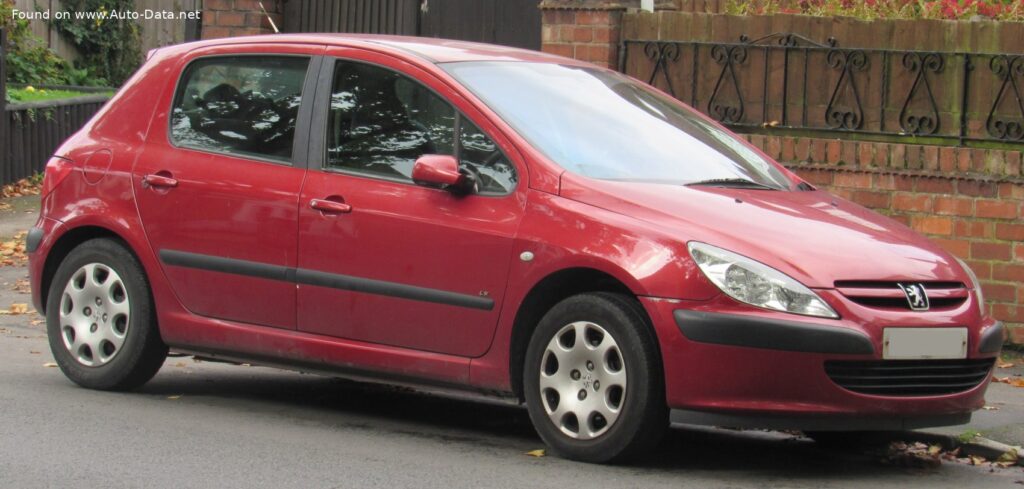
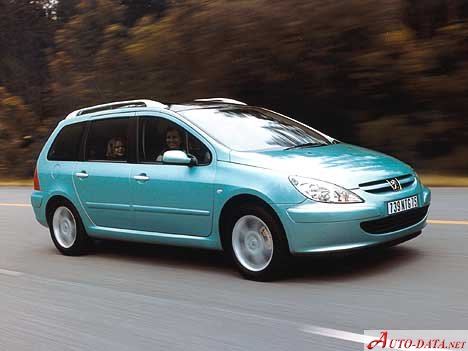
The Peugeot 307 Station Wagon, with its production run in 2005, embodied Peugeot’s design language of the early 2000s, characterized by its distinctive “cat’s eye” headlights, prominent grille, and a generally rounded, aerodynamic profile. The station wagon body type, with its five doors and five seats, was designed with practicality and family utility in mind. Its dimensions are substantial for a compact car, measuring 173.98 inches (4419 mm) in length, 69.17 inches (1757 mm) in width, and a height ranging from 60.39 to 60.79 inches (1534-1544 mm), providing a commanding road presence and generous interior space. The long wheelbase of 106.61 inches (2708 mm) contributed significantly to ride comfort and interior room, especially for rear passengers.
Inside, the 307 Station Wagon was designed for comfort and versatility. The elevated driving position, a hallmark of the 307 range, offered excellent visibility. The interior materials and ergonomics were generally well-regarded for their class. The true strength of the station wagon body style lay in its cargo capacity. With the rear seats in place, it offered a minimum trunk space of 12.01 cubic feet (340 liters). When the rear seats were folded down, this expanded dramatically to an impressive 54.38 cubic feet (1540 liters), making it capable of hauling significant loads, from family luggage to sports equipment or furniture.
Practicality and Safety Features
The 307 Station Wagon’s design emphasized usability. Its five doors provided easy access to both front and rear seating areas, and the wide-opening tailgate facilitated loading and unloading of cargo. The maximum load capacity of 1285.29 lbs (583 kg) further underscored its utility. Additionally, the vehicle was rated for a permitted trailer load of 3086.47 lbs (1400 kg) with brakes, or 1322.77 lbs (600 kg) without, adding to its versatility for towing small trailers or caravans.
For safety, the 2005 307 Station Wagon was equipped with essential features for its time. It included an Anti-lock Braking System (ABS), a crucial active safety system designed to prevent wheel lock-up during hard braking, maintaining steering control. The braking system comprised ventilated discs at the front and solid discs at the rear, providing reliable stopping power. The steering system utilized a rack and pinion setup, offering direct and predictable handling. The vehicle rode on 16-inch wheel rims fitted with 205/55 R16 V tires, providing a good balance of grip and ride comfort.
Technical Specifications
| Category | Specification |
|---|---|
| Brand | Peugeot |
| Model | 307 |
| Generation | 307 Station Wagon |
| Type (Engine) | 2.0 HDi (136 Hp) |
| Start of Production | 2005 year |
| End of Production | 2005 year |
| Powertrain Architecture | Internal Combustion engine |
| Body type | Station wagon (estate) |
| Seats | 5 |
| Doors | 5 |
| Fuel Consumption (urban) | 7.3 l/100 km (32.2 US mpg) |
| Fuel Consumption (extra urban) | 4.7 l/100 km (50 US mpg) |
| Fuel Consumption (combined) | 5.6 l/100 km (42 US mpg) |
| CO2 Emissions | 148 g/km |
| Fuel Type | Diesel |
| Acceleration 0-60 mph | 10.3 sec |
| Maximum Speed | 122.41 mph (197 km/h) |
| Emission Standard | Euro 4 |
| Weight-to-power ratio | 11 kg/Hp, 91.2 Hp/tonne |
| Weight-to-torque ratio | 4.7 kg/Nm, 214.5 Nm/tonne |
| Power | 136 Hp @ 4000 rpm |
| Power per liter | 68.1 Hp/l |
| Torque | 236.02 lb.-ft. (320 Nm) @ 2000 rpm |
| Engine layout | Front, Transverse |
| Engine Model/Code | RHR DW10BTED4 |
| Engine displacement | 2.0 l (1997 cm3, 121.86 cu. in.) |
| Number of cylinders | 4 |
| Engine configuration | Inline |
| Cylinder Bore | 3.35 in. (85 mm) |
| Piston Stroke | 3.46 in. (88 mm) |
| Compression ratio | 17.6:1 |
| Number of valves per cylinder | 4 |
| Fuel injection system | Diesel Commonrail |
| Engine aspiration | Turbocharger, Intercooler |
| Valvetrain | DOHC |
| Engine oil capacity | 5.55 US qt (5.25 l) |
| Coolant capacity | 8.56 US qt (8.1 l) |
| Kerb Weight | 3289.3 lbs. (1492 kg) |
| Max. weight | 4574.59 lbs. (2075 kg) |
| Max load | 1285.29 lbs. (583 kg) |
| Trunk (boot) space – minimum | 12.01 cu. ft. (340 l) |
| Trunk (boot) space – maximum | 54.38 cu. ft. (1540 l) |
| Fuel tank capacity | 15.85 US gal (60 l) |
| Permitted trailer load with brakes (12%) | 3086.47 lbs. (1400 kg) |
| Permitted trailer load without brakes | 1322.77 lbs. (600 kg) |
| Length | 173.98 in. (4419 mm) |
| Width | 69.17 in. (1757 mm) |
| Height | 60.39 – 60.79 in. (1534-1544 mm) |
| Wheelbase | 106.61 in. (2708 mm) |
| Front track | 59.25 in. (1505 mm) |
| Rear (Back) track | 59.45 in. (1510 mm) |
| Front overhang | 34.57 in. (878 mm) |
| Rear overhang | 32.8 in. (833 mm) |
| Drivetrain Architecture | The Internal combustion engine (ICE) drives the front wheels of the vehicle. |
| Drive wheel | Front wheel drive |
| Number of gears and type of gearbox | 6 gears, manual transmission |
| Front brakes | Ventilated discs |
| Rear brakes | Disc |
| Assisting systems | ABS (Anti-lock braking system) |
| Steering type | Steering rack and pinion |
| Tires size | 205/55 R16 V |
| Wheel rims size | 16 |
Legacy and Market Impact
The Peugeot 307, in all its iterations, including the Station Wagon, played a crucial role in Peugeot’s market presence in Europe and beyond during the early to mid-2000s. It was a strong contender in the highly competitive C-segment, where it faced off against formidable rivals such as the Volkswagen Golf Variant, Ford Focus Estate, Renault Mégane Estate, and Opel Astra Caravan. The 307 Station Wagon carved out its niche by offering a blend of distinctive French styling, a comfortable ride, and exceptional practicality, particularly with its flexible cargo space and efficient diesel powertrains.
The 2.0 HDi (136 Hp) variant, in particular, was a significant contributor to the 307’s reputation. At a time when diesel fuel prices were often more favorable than gasoline in many European countries, and with diesel technology having advanced considerably in terms of refinement and emissions, this engine provided a compelling argument for consumers. Its strong torque made it ideal for hauling families and luggage, while its outstanding fuel economy offered tangible savings over the life of the vehicle. This combination of attributes cemented its appeal among budget-conscious families and fleet buyers.
Peugeot’s legacy for comfortable suspension tuning was evident in the 307 Station Wagon, providing a compliant ride that absorbed road imperfections with ease, making it suitable for long-distance travel. While perhaps not renowned for razor-sharp handling, its driving dynamics were safe, predictable, and reassuring. The 307 series, including the station wagon, garnered praise for its interior versatility and bright, airy cabin, often enhanced by optional panoramic glass roofs which were a popular feature in Europe.
Ultimately, the Peugeot 307 Station Wagon 2.0 HDi (136 Hp) from 2005 stands as a testament to Peugeot’s engineering prowess in the compact segment. It successfully combined a practical and spacious body style with an advanced, efficient, and powerful diesel engine. While it never officially graced American showrooms, its impact on the European automotive landscape was undeniable, contributing to the widespread acceptance of diesel engines as a viable and desirable option for everyday family transportation. It remains a well-regarded example of European automotive design and engineering from its era, remembered for its blend of practicality, economy, and driving comfort.