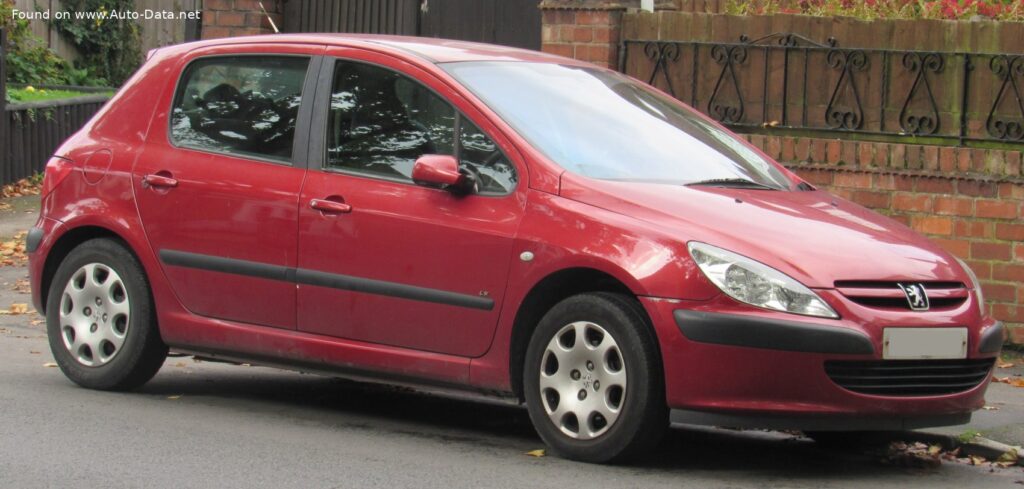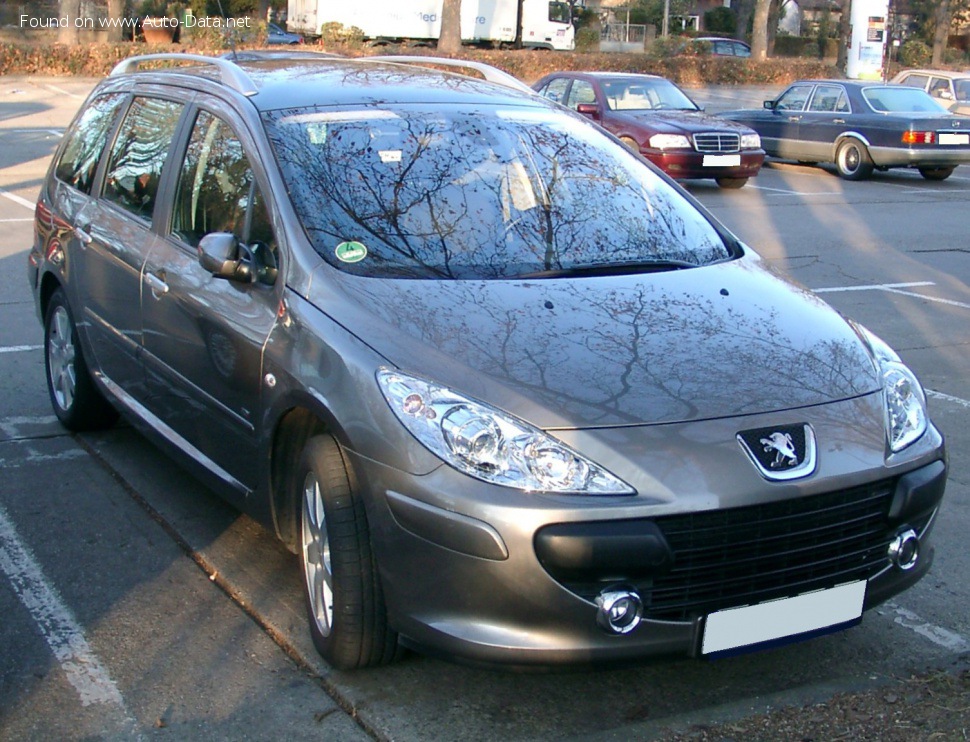
Peugeot 307 Station Wagon (facelift 2005)
The Peugeot 307 Station Wagon (facelift 2005) represents a significant iteration of the French automaker’s popular compact family car, specifically tailored for the European and other international markets where station wagons (or estates, as they are often called outside the US) hold considerable appeal. Launched in 2005, this refreshed model aimed to solidify the 307’s position in the highly competitive C-segment, offering enhanced styling, updated technology, and improved efficiency over its pre-facelift predecessor. While never officially sold in the United States, the 307 played a crucial role in Peugeot’s global strategy, particularly for families and individuals prioritizing practicality, fuel economy, and a comfortable ride in a compact package. This particular variant, equipped with the 1.6-liter (109 horsepower) engine, was a common and well-regarded choice for its balance of performance and economy.
Engine & Performance of the Peugeot 307 Station Wagon (facelift 2005) 1.6 (109 Hp)
At the heart of this specific Peugeot 307 Station Wagon (facelift 2005) model is a robust and widely used 1.6-liter (1587 cm³ or 96.84 cu. in.) inline four-cylinder gasoline engine, designated by Peugeot as the NFU TU5JP4. This naturally aspirated powerplant delivers a respectable 109 horsepower (Hp) at 5800 revolutions per minute (rpm), providing sufficient motivation for daily driving and family excursions. Torque output stands at 147 Newton-meters (Nm), or approximately 108.42 pound-feet (lb.-ft.), available at 4000 rpm. This torque curve ensures a flexible driving experience, with adequate pulling power for city traffic and highway cruising.
The engine employs a multi-port manifold injection system, a common and reliable fuel delivery method for its time, and features four valves per cylinder, optimizing airflow for both power and efficiency. Paired with a 5-speed manual transmission, the front-wheel-drive architecture emphasizes direct driver engagement and control. This powertrain setup contributes to a combined fuel economy rating of approximately 30.5 US miles per gallon (36.7 UK mpg or 7.7 l/100 km), which was competitive for a compact station wagon in the mid-2000s. Urban consumption is rated at 23.8 US mpg (9.9 l/100 km), while extra-urban driving could achieve up to 37.3 US mpg (6.3 l/100 km). With CO2 emissions of 178 g/km, the vehicle met the Euro 4 emission standards, reflecting the environmental considerations of its production era. The weight-to-power ratio of 13.2 kg/Hp (76 Hp/tonne) and a weight-to-torque ratio of 9.8 kg/Nm (102.4 Nm/tonne) underscore the car’s practical, rather than performance-oriented, design philosophy.
Design & Features: The Practicality of the Peugeot 307 Station Wagon
The Peugeot 307 Station Wagon (facelift 2005) retained the core design philosophy of the 307 range, characterized by its “tall” architecture, which provided excellent interior space and visibility for a compact vehicle. The 2005 facelift introduced subtle but effective changes to the exterior, including a redesigned front fascia with more prominent headlights and a larger, more assertive grille, aligning its aesthetics with Peugeot’s contemporary design language. The body type is a traditional 5-door station wagon (often referred to as an “estate” in Europe), designed to maximize utility and passenger comfort.
With seating for five occupants, the 307 Station Wagon offered a compelling blend of passenger room and cargo versatility. Its overall length measures 174.33 inches (4428 mm), with a width of 69.37 inches (1762 mm) and a height ranging from 61.42 to 62.2 inches (1560-1580 mm). The generous wheelbase of 106.61 inches (2708 mm) was instrumental in providing a stable ride and ample legroom for rear passengers.
Where the 307 Station Wagon truly excelled was in its cargo capacity. With the rear seats in place, it offered a substantial 18.36 cubic feet (520 liters) of trunk space. For larger items, the rear seats could be folded down, expanding the cargo volume to an impressive 78.08 cubic feet (2211 liters), transforming it into a highly capable load-hauler. This flexibility made it a favorite among families needing to transport luggage, sports equipment, or even small furniture.
In terms of safety, the 307 Station Wagon featured disc brakes on all four wheels, with ventilated discs at the front for improved heat dissipation and stopping power. An Anti-lock Braking System (ABS) was a standard assisting system, enhancing driver control during emergency braking maneuvers. The steering system utilized a rack and pinion setup, offering direct and responsive handling characteristics typical of European compact cars. The vehicle’s kerb weight was 3163.63 pounds (1435 kg), with a maximum permissible weight of 4276.97 pounds (1940 kg), allowing for a maximum load capacity of 1113.33 pounds (505 kg). Furthermore, it had a decent towing capacity, capable of pulling 2645.55 pounds (1200 kg) with braked trailers and 1576.31 pounds (715 kg) without.
Technical Specifications
| Category | Specification | Value |
|---|---|---|
| General Information | ||
| Brand | Peugeot | |
| Model | 307 | |
| Generation | 307 Station Wagon (facelift 2005) | |
| Engine Type | 1.6 (109 Hp) | |
| Production Start | 2005 | |
| Production End | 2008 | |
| Powertrain Architecture | Internal Combustion engine | |
| Body Type | Station wagon (estate) | |
| Seats | 5 | |
| Doors | 5 | |
| Performance Specifications | ||
| Fuel Consumption (Urban) | 23.8 US mpg (9.9 l/100 km) | |
| Fuel Consumption (Extra Urban) | 37.3 US mpg (6.3 l/100 km) | |
| Fuel Consumption (Combined) | 30.5 US mpg (7.7 l/100 km) | |
| CO2 Emissions | 178 g/km | |
| Fuel Type | Petrol (Gasoline) | |
| Emission Standard | Euro 4 | |
| Weight-to-Power Ratio | 13.2 kg/Hp (76 Hp/tonne) | |
| Weight-to-Torque Ratio | 9.8 kg/Nm (102.4 Nm/tonne) | |
| Engine Specifications | ||
| Power | 109 Hp @ 5800 rpm | |
| Power per liter | 68.7 Hp/l | |
| Torque | 108.42 lb.-ft. (147 Nm) @ 4000 rpm | |
| Engine Layout | Front, Transverse | |
| Engine Model/Code | NFU TU5JP4 | |
| Engine Displacement | 1.6 liters (1587 cm³ / 96.84 cu. in.) | |
| Number of Cylinders | 4 | |
| Engine Configuration | Inline | |
| Cylinder Bore | 3.09 in. (78.5 mm) | |
| Piston Stroke | 3.23 in. (82 mm) | |
| Valves per Cylinder | 4 | |
| Fuel Injection System | Multi-port manifold injection | |
| Engine Aspiration | Naturally aspirated | |
| Engine Oil Capacity | 3.49 US qt (3.3 l) | |
| Coolant Capacity | 6.55 US qt (6.2 l) | |
| Space, Volume and Weights | ||
| Kerb Weight | 3163.63 lbs. (1435 kg) | |
| Max. Weight | 4276.97 lbs. (1940 kg) | |
| Max Load | 1113.33 lbs. (505 kg) | |
| Trunk Space (Min) | 18.36 cu. ft. (520 l) | |
| Trunk Space (Max) | 78.08 cu. ft. (2211 l) | |
| Fuel Tank Capacity | 15.85 US gal (60 l) | |
| Permitted Trailer Load with Brakes (12%) | 2645.55 lbs. (1200 kg) | |
| Permitted Trailer Load without Brakes | 1576.31 lbs. (715 kg) | |
| Dimensions | ||
| Length | 174.33 in. (4428 mm) | |
| Width | 69.37 in. (1762 mm) | |
| Height | 61.42 – 62.2 in. (1560-1580 mm) | |
| Wheelbase | 106.61 in. (2708 mm) | |
| Front Track | 59.25 in. (1505 mm) | |
| Rear Track | 59.45 in. (1510 mm) | |
| Front Overhang | 34.96 in. (888 mm) | |
| Rear Overhang | 32.76 in. (832 mm) | |
| Drivetrain, Brakes, and Suspension | ||
| Drivetrain Architecture | Internal combustion engine (ICE) drives the front wheels. | |
| Drive Wheel | Front wheel drive | |
| Number of Gears and Gearbox Type | 5 gears, manual transmission | |
| Front Brakes | Ventilated discs | |
| Rear Brakes | Disc | |
| Assisting Systems | ABS (Anti-lock braking system) | |
| Steering Type | Steering rack and pinion | |
Legacy & Market Impact of the Peugeot 307 Station Wagon
The Peugeot 307, particularly its station wagon variant, left a notable mark on the European compact car segment during its production run from 2001 to 2008, with the facelifted model extending its relevance from 2005 onwards. As a vehicle primarily designed for the European and other international markets, it was never officially imported to the United States. However, its design philosophy and technical specifications provide insight into the preferences and engineering priorities of those regions.
In its home market, the 307 Station Wagon was a strong contender against rivals such as the Volkswagen Golf Variant, Ford Focus Estate, Opel Astra Caravan, and Renault Mégane Estate. What set the 307 apart was its emphasis on interior space and comfort, often feeling larger and more airy than its immediate competitors, thanks to its tall body design and generous greenhouse. This characteristic was particularly appreciated by families, who valued the ease of ingress and egress, as well as the commanding view of the road.
The 1.6-liter (109 Hp) engine, a mainstay in Peugeot’s lineup, was a popular choice due to its balance of adequate performance for daily driving and reasonable fuel economy. It offered enough power to handle highway speeds and fully loaded conditions without feeling overly strained, while still delivering combined fuel consumption figures that were appealing in markets with higher fuel prices. Its Euro 4 emission compliance also demonstrated Peugeot’s commitment to meeting evolving environmental standards.
The 307 Station Wagon’s reputation was built on its practicality and versatility. Its substantial cargo capacity, ranging from 18.36 cubic feet to an impressive 78.08 cubic feet with the rear seats folded, made it an invaluable tool for small businesses, active families, and anyone needing flexible load-carrying capabilities. The inclusion of standard safety features like ABS and all-around disc brakes further bolstered its appeal as a sensible family vehicle.
While the 307 generation did face some initial quality concerns in its early years, the 2005 facelift addressed many of these, solidifying its reliability and improving its overall appeal. Its smooth ride, comfortable interior, and practical design made it a benchmark for compact station wagons in Europe. The 307 Station Wagon ultimately paved the way for its successor, the 308 SW, continuing Peugeot’s tradition of offering compelling and versatile family vehicles in a segment where practicality and efficiency are paramount. Its legacy is one of a well-rounded, family-focused vehicle that successfully navigated the demands of its competitive market segment.