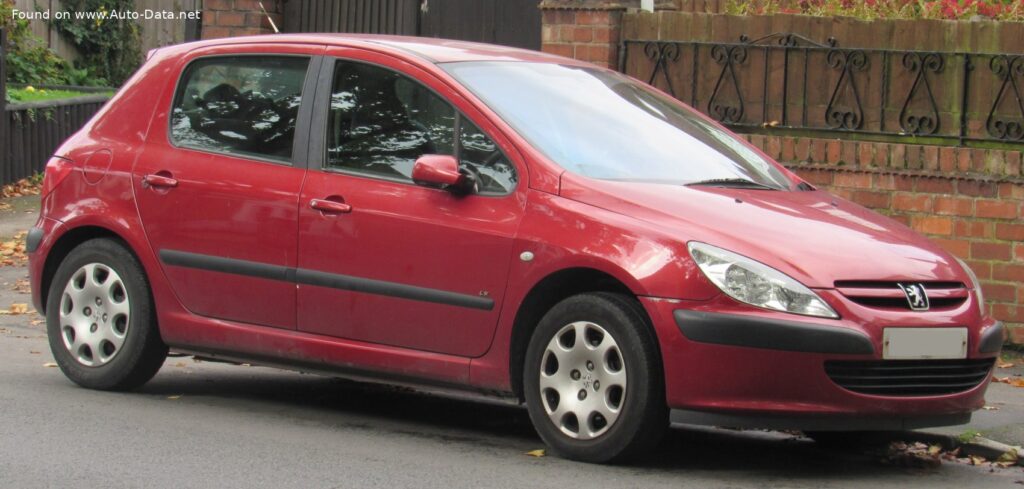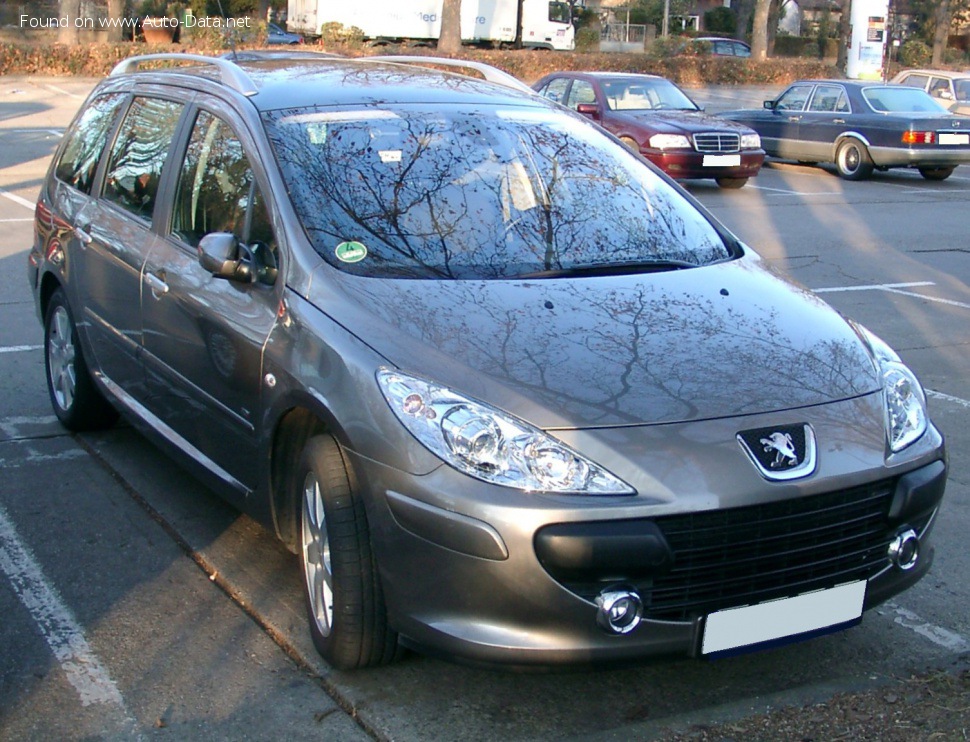
Peugeot 307 Station Wagon (facelift 2005) 2.0 (140 Hp) Automatic
The Peugeot 307 Station Wagon (facelift 2005) represents a significant chapter in the French automaker’s presence in the highly competitive European C-segment. Launched in 2005, this refreshed variant of the first-generation 307 was designed to bolster its appeal as a versatile and practical family vehicle, particularly in its estate (station wagon) configuration. Positioned as a direct competitor to popular models like the Volkswagen Golf Variant and Ford Focus Wagon, the 307 Station Wagon emphasized spaciousness, comfort, and a distinctive French design aesthetic. This specific iteration, equipped with a 2.0-liter engine delivering 140 horsepower and paired with an automatic transmission, aimed to offer a smooth and capable driving experience for European families and individuals prioritizing utility and ease of use. While never officially sold in the United States, its design and engineering principles offer a fascinating glimpse into the European automotive landscape of the mid-2000s.
Engine and Performance of the Peugeot 307 Station Wagon (facelift 2005)
Under the hood, the Peugeot 307 Station Wagon (facelift 2005) 2.0 (140 Hp) Automatic variant featured Peugeot’s well-regarded EW10A or EW10J4 engine, a naturally aspirated 2.0-liter (1997 cm³, or 121.86 cubic inches) inline four-cylinder gasoline powerplant. This engine, designed for a blend of efficiency and everyday performance, produced a respectable 140 horsepower at 6000 rpm. Torque output stood at 147.51 lb.-ft. (200 Nm) at 4000 rpm, providing ample pulling power for a vehicle of its size, especially when laden with passengers and cargo.
Power was delivered to the front wheels via a conventional 4-speed automatic transmission. While a 4-speed automatic might seem modest by today’s standards, it was a common and reliable choice in the mid-2000s, offering smooth shifts for urban driving and comfortable highway cruising. The engine’s layout was front, transverse, a standard configuration for front-wheel-drive compact cars, optimizing packaging and interior space. With a bore of 3.35 inches (85 mm) and a stroke of 3.46 inches (88 mm), the engine featured a multi-port manifold injection system and four valves per cylinder, ensuring efficient fuel delivery and combustion.
In terms of fuel economy, the 307 Station Wagon 2.0 Automatic provided competitive figures for its class and era. Combined fuel consumption was rated at 28 US mpg (8.4 l/100 km), with urban driving seeing approximately 19.3 US mpg (12.2 l/100 km) and extra-urban figures reaching an impressive 37.3 US mpg (6.3 l/100 km). These numbers reflected a balance between performance and economic operation, crucial for family cars in Europe. The vehicle also met the Euro 4 emission standard, indicating its compliance with then-current European environmental regulations, with CO2 emissions of 199 g/km. Its weight-to-power ratio was 10.7 kg/Hp, or 93.8 Hp/tonne, suggesting adequate responsiveness for daily driving scenarios.
Design and Features
The Practicality of the Peugeot 307 Station Wagon (facelift 2005)
The 2005 facelift brought subtle yet effective updates to the Peugeot 307’s exterior and interior, refreshing its appearance and enhancing its appeal. The Station Wagon body style, or “estate” as it’s known in Europe, was the cornerstone of the 307’s practicality. Measuring 174.33 inches (4428 mm) in length, 69.37 inches (1762 mm) in width, and with a height ranging from 61.42 to 62.2 inches (1560-1580 mm), it offered substantial interior volume without being overly cumbersome. The generous 106.61-inch (2708 mm) wheelbase contributed to a stable ride and maximized cabin space for its five occupants.
Designed with family versatility in mind, the 307 Station Wagon featured five doors, providing easy access to both front and rear seats. The true highlight, however, was its cargo capacity. With all seats in place, the trunk offered a substantial 18.36 cubic feet (520 liters) of space. Folding down the rear seats transformed the cargo area into a cavernous 78.08 cubic feet (2211 liters), making it exceptionally practical for hauling luggage, sports equipment, or even furniture. This flexibility was a key selling point in the European market, where station wagons are highly valued for their utility.
Safety features for the era included an Anti-lock Braking System (ABS), which was standard, ensuring controlled braking in emergency situations. The braking system comprised ventilated discs at the front and solid discs at the rear, providing reliable stopping power. The steering system utilized a rack and pinion setup, offering direct and predictable handling characteristics. While the 2005 facelift primarily focused on aesthetic refinements like updated front fascias and lighting elements, it also brought minor interior material upgrades and technological enhancements to keep the 307 competitive in its segment.
Technical Specifications
| Category | Specification |
|---|---|
General Information |
|
| Brand | Peugeot |
| Model | 307 |
| Generation | 307 Station Wagon (facelift 2005) |
| Type (Engine) | 2.0 (140 Hp) Automatic |
| Production Start | 2005 year |
| Production End | 2008 year |
| Body Type | Station wagon (estate), 5 Doors, 5 Seats |
| Powertrain Architecture | Internal Combustion engine |
Performance Specs |
|
| Fuel Consumption (Urban) | 12.2 l/100 km (19.3 US mpg) |
| Fuel Consumption (Extra Urban) | 6.3 l/100 km (37.3 US mpg) |
| Fuel Consumption (Combined) | 8.4 l/100 km (28 US mpg) |
| CO2 Emissions | 199 g/km |
| Fuel Type | Petrol (Gasoline) |
| Emission Standard | Euro 4 |
| Weight-to-Power Ratio | 10.7 kg/Hp (93.8 Hp/tonne) |
| Weight-to-Torque Ratio | 7.5 kg/Nm (134 Nm/tonne) |
Engine Specs |
|
| Power | 140 Hp @ 6000 rpm |
| Power per liter | 70.1 Hp/l |
| Torque | 200 Nm @ 4000 rpm (147.51 lb.-ft. @ 4000 rpm) |
| Engine Layout | Front, Transverse |
| Engine Model/Code | RFJ EW10A, RFN EW10J4 |
| Engine Displacement | 1997 cm³ (2.0 l / 121.86 cu. in.) |
| Number of Cylinders | 4 |
| Engine Configuration | Inline |
| Cylinder Bore | 85 mm (3.35 in.) |
| Piston Stroke | 88 mm (3.46 in.) |
| Valves per Cylinder | 4 |
| Fuel Injection System | Multi-port manifold injection |
| Engine Aspiration | Naturally aspirated engine |
| Engine Oil Capacity | 4.3 l (4.54 US qt) |
| Coolant Capacity | 6.8 l (7.19 US qt) |
Space, Volume and Weights |
|
| Kerb Weight | 1493 kg (3291.5 lbs.) |
| Max. Weight | 1985 kg (4376.18 lbs.) |
| Max Load | 492 kg (1084.67 lbs.) |
| Trunk (Boot) Space – Minimum | 520 l (18.36 cu. ft.) |
| Trunk (Boot) Space – Maximum | 2211 l (78.08 cu. ft.) |
| Fuel Tank Capacity | 60 l (15.85 US gal) |
| Permitted Trailer Load with Brakes (12%) | 1500 kg (3306.93 lbs.) |
| Permitted Trailer Load without Brakes | 745 kg (1642.44 lbs.) |
Dimensions |
|
| Length | 4428 mm (174.33 in.) |
| Width | 1762 mm (69.37 in.) |
| Height | 1560-1580 mm (61.42 – 62.2 in.) |
| Wheelbase | 2708 mm (106.61 in.) |
| Front Track | 1505 mm (59.25 in.) |
| Rear (Back) Track | 1510 mm (59.45 in.) |
| Front Overhang | 888 mm (34.96 in.) |
| Rear Overhang | 832 mm (32.76 in.) |
Drivetrain, Brakes and Suspension Specs |
|
| Drivetrain Architecture | Front-wheel drive (Internal Combustion engine drives front wheels) |
| Drive Wheel | Front wheel drive |
| Number of Gears and Type | 4 gears, automatic transmission |
| Front Brakes | Ventilated discs |
| Rear Brakes | Disc |
| Assisting Systems | ABS (Anti-lock braking system) |
| Steering Type | Steering rack and pinion |
Legacy and Market Impact
The Peugeot 307, including its Station Wagon variant, was a critically important model for Peugeot in the early to mid-2000s. It was the successor to the highly successful 306 and faced the daunting task of continuing Peugeot’s strong presence in the European compact car market. The 307 was widely recognized for its distinctive “tall boy” design philosophy, which aimed to offer greater interior space and a commanding driving position compared to its contemporaries. The 2005 facelift further refined this approach, keeping the model fresh against an onslaught of new competitors.
In its primary European market, the Peugeot 307 Station Wagon (facelift 2005) was a popular choice among families due to its exceptional practicality, comfortable ride, and relatively strong feature set for the price. Its generous cargo volume and versatile interior made it a compelling alternative to SUVs, which were just beginning their ascent in popularity, and a direct rival to traditional wagons from Ford (Focus Wagon), Opel/Vauxhall (Astra Caravan), and Renault (Mégane Estate). While Peugeot models often garnered a reputation for unique styling and a comfortable, compliant ride, some also noted occasional electrical quirks, a common perception associated with French cars of the era.
The 307 series, particularly in its estate form, contributed significantly to Peugeot’s sales volumes in Europe, reinforcing its image as a producer of practical, stylish, and comfortable family vehicles. It showcased Peugeot’s commitment to offering a diverse range of body styles within a single model line, catering to varied consumer needs. The 307’s legacy paved the way for its successor, the 308, which continued many of its design and market philosophies.
For American automotive enthusiasts, the Peugeot 307 Station Wagon represents a “forbidden fruit” – a competent and appealing European family car that never made it to U.S. shores. Peugeot had exited the North American market in 1991, leaving a void for its subsequent generations of vehicles. Had it been available, the 307 Station Wagon would have likely competed against compact wagons like the Ford Focus Wagon (which was sold in the US) or even entry-level offerings from Subaru or Volkswagen, appealing to buyers seeking European flair and practical utility in a segment that was slowly shrinking in favor of minivans and early crossovers in the US. Its existence highlights the differing market preferences and regulatory environments between Europe and North America during this period.