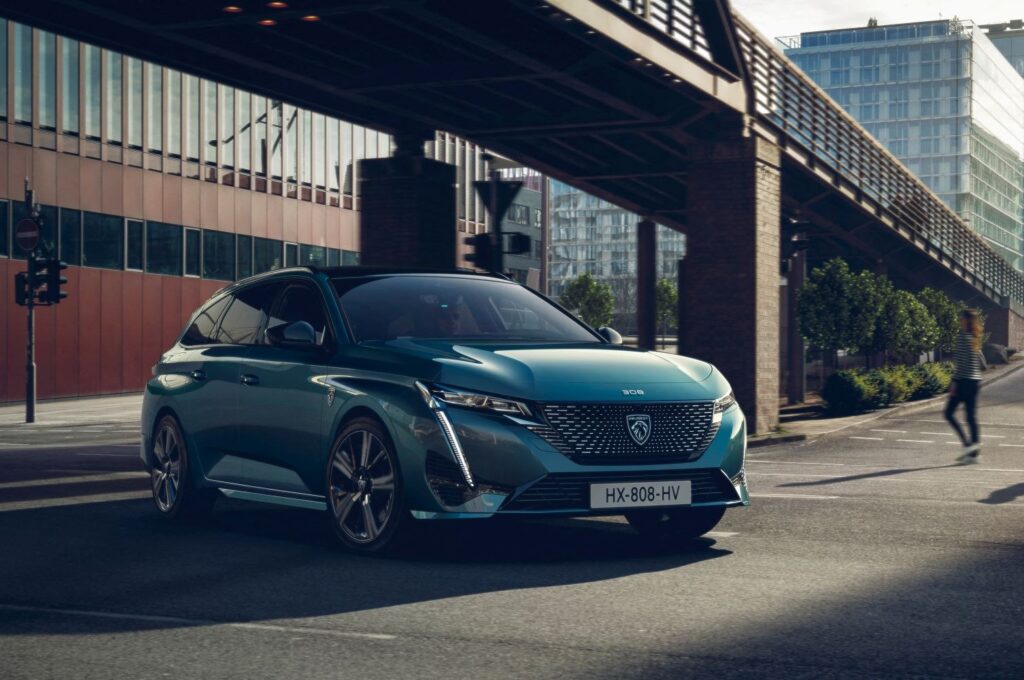
The Peugeot 308 SW III (Phase I, 2021) 1.2 (145 Hp) Mild Hybrid e-DCS represents a significant step forward for the French automaker in the highly competitive European C-segment. As part of its third generation, introduced in 2021, this particular variant, with a production window from March to August 2025, showcases Peugeot’s commitment to hybridization and efficiency without compromising practicality or driving dynamics. Positioned as a stylish and versatile station wagon, or estate as it is known in Europe, the 308 SW III is designed to cater to families and individuals seeking a blend of spaciousness, modern technology, and reduced environmental impact. This model integrates a mild-hybrid electric vehicle (MHEV) powertrain, marking it as a key offering in the brand’s strategy to electrify its lineup and meet stringent Euro 6e emission standards. While not typically sold in the North American market, the Peugeot 308 SW III plays a crucial role in Europe, providing a compelling alternative to established rivals through its distinctive design and advanced engineering.
Engine & Performance
At the heart of the Peugeot 308 SW III (Phase I, 2021) 1.2 (145 Hp) Mild Hybrid e-DCS lies a sophisticated and efficient powertrain. The internal combustion engine (ICE) is a 1.2-liter, three-cylinder inline unit, designated EB2LTD, featuring direct fuel injection, a turbocharger, and an intercooler to optimize power delivery and efficiency. This gasoline engine alone produces a respectable 136 horsepower at 5500 rpm and 169.64 lb.-ft. (230 Nm) of torque at a low 1750 rpm, providing ample thrust for daily driving and highway cruising. Its power-per-liter ratio stands at an impressive 113.4 Hp/l, indicative of its advanced design.
The mild-hybrid (MHEV) architecture significantly enhances these figures and the overall driving experience. It incorporates a 48-volt lithium-ion battery, strategically located below the floor under the front seats, and an electric motor seamlessly integrated into the 6-speed automatic e-DCS transmission. This synchronous electric motor provides a power assist, allowing for brief periods of electric-only driving at low speeds, during coasting, or when maneuvering, thereby improving fuel economy and reducing emissions. The combined system output for this Mild Hybrid Electric Vehicle (MHEV) reaches 145 horsepower, making it a potent performer in its class.
Performance metrics underscore the powertrain’s capabilities. The 308 SW III 1.2 Mild Hybrid e-DCS can accelerate from 0 to 60 mph in an estimated 8.8 seconds, with a 0 to 100 km/h sprint completed in 9.3 seconds. Its maximum speed is rated at 130.49 mph (210 km/h). These figures demonstrate a spirited character for a family-oriented station wagon. Fuel efficiency is a major highlight, with a combined WLTP rating of 49 to 46.1 US mpg (4.8-5.1 l/100 km), directly benefiting from the mild-hybrid system’s ability to recover energy during deceleration and provide torque fill during acceleration. CO2 emissions are kept impressively low at 109-115 g/km, ensuring compliance with the stringent Euro 6e emission standard. The powertrain’s front, transverse layout, coupled with front-wheel drive, ensures predictable handling and efficient power transfer.
Design & Features
The Peugeot 308 SW III (Phase I, 2021) presents a distinctive and modern design language that sets it apart in the compact segment. The station wagon body type, or “SW” for Sport Wagon, emphasizes practicality and elegant proportions. With five doors and seating for five occupants, it offers a versatile interior suitable for diverse needs, from daily commutes to family road trips. The exterior dimensions are substantial for its class, measuring 182.52 inches (4636 mm) in length, 72.91 inches (1852 mm) in width (81.18 inches or 2062 mm including mirrors), and 57.09 inches (1450 mm) in height. A generous wheelbase of 107.56 inches (2732 mm) contributes significantly to cabin space and ride comfort.
Practicality is a cornerstone of the 308 SW design. The trunk space is particularly noteworthy, offering a minimum of 19.35 cubic feet (548 liters) with all seats in place, expanding to an impressive 55.59 cubic feet (1574 liters) when the rear seats are folded down. This expansive cargo capacity makes it highly competitive among its rivals, ideal for luggage, sports equipment, or larger purchases. The vehicle’s kerb weight stands at 3328.98 lbs (1510 kg), with a maximum permissible weight of 4431.29 lbs (2010 kg), allowing for a substantial maximum load of 1102.31 lbs (500 kg). Furthermore, it boasts a permitted trailer load with brakes of 2425.08 lbs (1100 kg), adding to its utility.
Underneath its stylish exterior, the 308 SW III incorporates a well-engineered chassis. The front suspension utilizes an independent McPherson strut setup, known for its balance of comfort and dynamic handling. At the rear, an elastic beam suspension provides a compact and efficient solution for packaging and ride quality. Braking performance is assured by ventilated discs at the front and disc brakes at the rear, complemented by an Anti-lock Braking System (ABS) for enhanced safety. The electric power steering system, with a steering rack and pinion mechanism, offers precise control and ease of maneuverability in urban environments. The vehicle comes with various tire and wheel size options, including 205/55 R16 V, 225/45 R17 V, and 225/40 R18 Y, providing choices for different performance and aesthetic preferences. Modern amenities such as a Start & Stop System and a particulate filter are standard, reflecting its contemporary design and focus on environmental responsibility.
Technical Specifications: Peugeot 308 SW III (Phase I, 2021) 1.2 (145 Hp) Mild Hybrid e-DCS
| Category | Specification | Value |
|---|---|---|
| General Information | ||
| Brand | Peugeot | |
| Model | 308 | |
| Generation | 308 SW III (Phase I, 2021) | |
| Type (Engine) | 1.2 (145 Hp) Mild Hybrid e-DCS | |
| Start of Production | March, 2025 | |
| End of Production | August, 2025 | |
| Powertrain Architecture | MHEV (Mild Hybrid Electric Vehicle) | |
| Body type | Station wagon (estate) | |
| Seats | 5 | |
| Doors | 5 | |
| Performance Specs | ||
| Combined Fuel Consumption (WLTP) | 4.8-5.1 l/100 km (49 – 46.1 US mpg) | |
| CO2 Emissions (WLTP) | 109-115 g/km | |
| Fuel Type | Petrol (Gasoline) | |
| Acceleration 0 – 60 mph (Calculated) | 8.8 sec | |
| Acceleration 0 – 100 km/h | 9.3 sec | |
| Maximum Speed | 130.49 mph (210 km/h) | |
| Emission Standard | Euro 6e | |
| Weight-to-power ratio | 10.4 kg/Hp, 96 Hp/tonne | |
| Weight-to-torque ratio | 6.6 kg/Nm, 152.3 Nm/tonne | |
| Electric Cars and Hybrids Specs | ||
| Battery Voltage | 48 V | |
| Battery Technology | Lithium-ion (Li-Ion) | |
| Battery Location | Below the floor, under the front seats | |
| Electric Motor 1 Location | Integrated into the transmission | |
| Electric Motor Type | Synchronous | |
| System Power | 145 Hp | |
| Internal Combustion Engine Specs | ||
| Power | 136 Hp @ 5500 rpm | |
| Power per liter | 113.4 Hp/l | |
| Torque | 169.64 lb.-ft. (230 Nm) @ 1750 rpm | |
| Engine Layout | Front, Transverse | |
| Engine Model/Code | EB2LTD | |
| Engine Displacement | 1.2 liters (1199 cm3 / 73.17 cu. in.) | |
| Number of Cylinders | 3 | |
| Engine Configuration | Inline | |
| Number of Valves per Cylinder | 4 | |
| Fuel Injection System | Direct injection | |
| Engine Aspiration | Turbocharger, Intercooler | |
| Engine Oil Capacity | 3.7 US qt (3.5 l) | |
| Engine Systems | Start & Stop System, Particulate filter | |
| Space, Volume and Weights | ||
| Kerb Weight | 3328.98 lbs (1510 kg) | |
| Max. Weight | 4431.29 lbs (2010 kg) | |
| Max Load | 1102.31 lbs (500 kg) | |
| Trunk (boot) Space – minimum | 19.35 cu. ft. (548 l) | |
| Trunk (boot) Space – maximum | 55.59 cu. ft. (1574 l) | |
| Permitted Trailer Load with Brakes (12%) | 2425.08 lbs (1100 kg) | |
| Dimensions | ||
| Length | 182.52 in. (4636 mm) | |
| Width | 72.91 in. (1852 mm) | |
| Width with Mirrors Folded | 73.23 in. (1860 mm) | |
| Width Including Mirrors | 81.18 in. (2062 mm) | |
| Height | 57.09 in. (1450 mm) | |
| Wheelbase | 107.56 in. (2732 mm) | |
| Front Track | 61.38 in. (1559 mm) | |
| Rear (Back) Track | 61.18 in. (1554 mm) | |
| Front Overhang | 35.59 in. (904 mm) | |
| Rear Overhang | 39.37 in. (1000 mm) | |
| Drivetrain, Brakes and Suspension Specs | ||
| Drivetrain Architecture | ICE and electric motor drive front wheels; full electric or mixed mode capability | |
| Drive Wheel | Front wheel drive | |
| Number of Gears and Type of Gearbox | 6 gears, automatic transmission e-DCS | |
| Front Suspension | Independent type McPherson | |
| Rear Suspension | Elastic beam | |
| Front Brakes | Ventilated discs | |
| Rear Brakes | Disc | |
| Assisting Systems | ABS (Anti-lock braking system) | |
| Steering Type | Steering rack and pinion | |
| Power Steering | Electric Steering | |
| Tires Size | 205/55 R16 V; 225/45 R17 V; 225/40 R18 Y | |
| Wheel Rims Size | 16; 17; 18 | |
Legacy & Market Impact of the Peugeot 308 SW III (Phase I, 2021) 1.2 (145 Hp) Mild Hybrid e-DCS
The Peugeot 308 SW III has firmly established itself as a significant player in the highly competitive European C-segment, particularly within the station wagon sub-segment. Its reputation is built on a foundation of distinctive styling, a modern and high-quality interior, and a strong emphasis on efficiency and technological integration, exemplified by the 1.2 (145 Hp) Mild Hybrid e-DCS variant. In a market where practicality and environmental consciousness are increasingly paramount, this model offers a compelling package that resonates with a broad demographic.
In Europe, the 308 SW competes against formidable rivals such as the Volkswagen Golf Variant, Skoda Octavia Combi, Ford Focus Estate, and Opel Astra Sports Tourer. What sets the Peugeot apart is its bold design philosophy, often characterized by sharp lines, distinctive LED lighting signatures (like the “lion’s claw” motif), and a sophisticated interior featuring Peugeot’s i-Cockpit. The mild-hybrid powertrain of the 1.2 (145 Hp) e-DCS is a crucial differentiator, positioning it as an attractive option for buyers looking to reduce their running costs and carbon footprint without committing to a full plug-in hybrid or battery electric vehicle.
The historical significance of the 308 within Peugeot’s lineup is substantial. Each generation has evolved to meet contemporary demands, and the third generation, with its diverse powertrain options including this mild hybrid, represents a pivotal moment in the brand’s electrification journey. It helps to bridge the gap between traditional internal combustion engines and fully electric vehicles, making advanced technology accessible to a wider audience. The inclusion of a 48V mild-hybrid system, integrated into the transmission, showcases Peugeot’s engineering prowess and its ability to adapt to stringent Euro 6e emission standards efficiently. This technology not only improves fuel economy (49-46.1 US mpg) and lowers CO2 emissions, but also enhances the driving experience through smoother power delivery and torque assist.
The 308 SW III’s market impact is further solidified by its strong emphasis on utility. The generous trunk space and versatile interior configuration make it a highly practical choice for families, offering a compelling blend of form and function. This balance of design appeal, advanced hybrid technology, and everyday usability ensures that the Peugeot 308 SW III (Phase I, 2021) 1.2 (145 Hp) Mild Hybrid e-DCS remains a relevant and respected contender in its segment, reinforcing Peugeot’s image as a forward-thinking and innovative automaker in the global automotive landscape.