
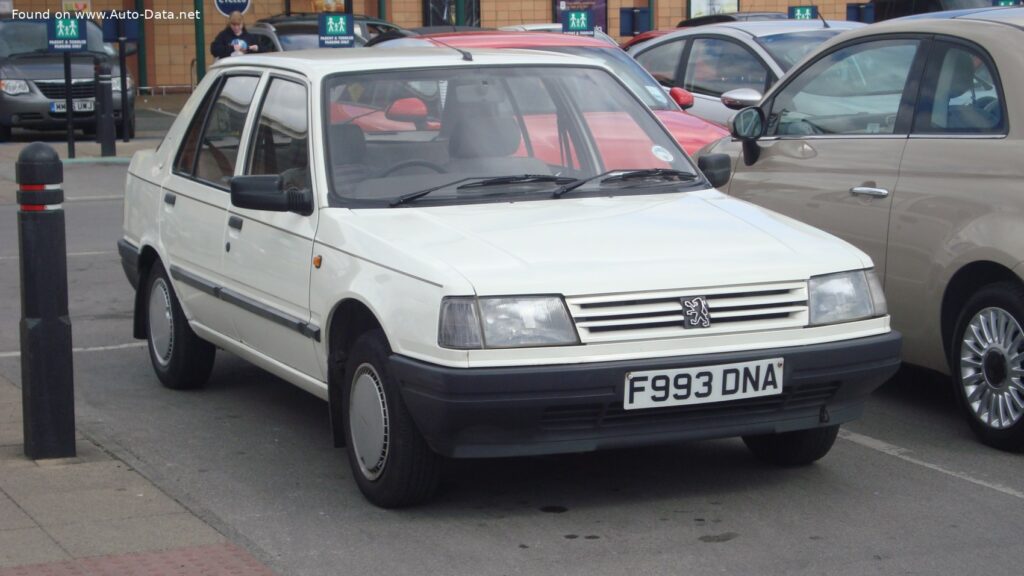
The Peugeot 309 (10C,10A) 1.9 GTI (120 Hp) stands as a notable, if somewhat understated, chapter in the storied history of European hot hatchbacks. Produced for a brief but impactful period between 1988 and 1989, this vehicle emerged during an era when Peugeot was at the zenith of its performance reputation, largely thanks to the phenomenal success of its smaller sibling, the 205 GTI. Unlike many of its contemporaries, the 309 was not officially marketed in the United States, cementing its status as a European-market specialty. It represented a unique blend of practicality and spirited performance, offering a more capacious and slightly more mature alternative to the often-frenzied character of the 205 GTI, while still retaining the engaging driving dynamics for which Peugeot had become renowned. Its internal combustion engine powertrain architecture and hatchback body type made it a quintessential example of the accessible performance cars that defined the late 1980s automotive landscape across the Atlantic.
The Legacy of the Peugeot 309 1.9 GTI
The genesis of the Peugeot 309 is a fascinating tale of corporate strategy and badge engineering. Originally conceived as a replacement for the Talbot Horizon under the project code C28, the car was intended to become a Talbot model. However, following PSA Group’s decision to phase out the Talbot brand in the mid-1980s, the C28 project was rebranded and launched as the Peugeot 309. This unusual lineage meant the 309 utilized a mix of components from both the Peugeot 205 and the larger 405, resulting in a car that felt distinct yet familiar within the Peugeot family. While the 205 GTI captured the hearts of enthusiasts with its nimble chassis and aggressive styling, the 309 GTI aimed for a slightly different niche. It offered a more spacious interior and a larger trunk, appealing to buyers who desired GTI-level performance without sacrificing everyday practicality. This strategic positioning allowed the 309 GTI to carve its own identity within the competitive European hot hatch segment, facing rivals such as the Volkswagen Golf GTI and Ford Escort XR3i.
The 1.9 GTI variant, produced from 1988 to 1989, represented the pinnacle of the 309’s performance offerings during its initial production run. It capitalized on the success of the 205 GTI’s larger engine option, bringing a similar level of potency to a slightly larger and arguably more refined platform. Peugeot’s engineering philosophy of lightweight construction and finely tuned chassis dynamics was fully evident in the 309 GTI. Despite its humble origins, the car quickly gained a reputation for its engaging handling and spirited performance, offering a driving experience that was both rewarding on winding country roads and comfortable enough for longer journeys. Its relatively short production window as a 120 Hp model makes this particular iteration a cherished classic among enthusiasts today, a testament to its enduring appeal and mechanical integrity.
Engine and Performance
At the heart of the Peugeot 309 (10C,10A) 1.9 GTI (120 Hp) lay the venerable DKZ XU9JAZ engine, a 1.9-liter naturally aspirated gasoline (petrol) unit that delivered a robust 120 horsepower. This engine was a direct descendant of the XU series that had powered numerous Peugeot and Citroën models, gaining particular fame in the 205 GTI. Its naturally aspirated design meant a linear power delivery and a direct, unadulterated connection between the driver’s right foot and the engine’s response, a characteristic highly prized by driving purists of the era. The 120 Hp output, combined with the 309’s relatively light curb weight (though not specified in the provided data, these cars were generally lighter than modern equivalents), translated into impressive acceleration and a lively driving experience for the late 1980s.
The XU9JAZ engine was known for its durability and strong mid-range torque, allowing for flexible driving without constant gear changes, though it was equally happy to rev freely towards its redline. The distinct mechanical symphony of a Peugeot XU engine under load became a signature sound for performance enthusiasts. The powertrain architecture, based on a front-mounted internal combustion engine driving the front wheels, was the conventional setup for hot hatchbacks of the time, offering a balance of manufacturing simplicity, packaging efficiency, and predictable handling characteristics. Maintenance aspects, such as the engine oil capacity of 4 liters (4.23 US quarts) and a coolant capacity of 8 liters (8.45 US quarts), were straightforward, contributing to the car’s reputation as a robust and owner-friendly performance vehicle. While specific engine oil specifications are not provided, the general robustness of the XU engine family meant it was relatively forgiving in terms of oil choices, though adherence to manufacturer recommendations was always paramount for longevity.
Design and Features
The design of the Peugeot 309 (10C,10A) 1.9 GTI (120 Hp) reflected the prevailing automotive aesthetics of the late 1980s, characterized by crisp lines and a functional, aerodynamic profile. As a hatchback, it offered a versatile body type that combined the sportiness of a coupe with the practicality of a small family car. The 309’s styling was a somewhat conservative evolution from the more aggressive 205, often described as a blend of the 205’s front end and the 405’s rear, creating a distinctive, if not universally acclaimed, appearance. The GTI variant typically featured subtle visual enhancements that hinted at its performance capabilities without resorting to overt flamboyance. These included specific alloy wheels, discreet side skirts, and perhaps a unique grille or badging, all designed to differentiate it from the standard 309 models while maintaining an understated sporting elegance.
Inside, the 309 GTI prioritized driver engagement. While luxury features by today’s standards were minimal, the focus was on a well-laid-out cockpit with clear instrumentation and supportive seating. Sports seats, often upholstered in distinctive fabrics, were a common feature, designed to hold occupants firmly during spirited driving. The steering wheel, typically a three-spoke design, offered a direct connection to the road, a hallmark of Peugeot’s renowned steering feel. Creature comforts were basic, but functional, with manual windows, simple heating and ventilation systems, and perhaps an aftermarket radio being typical. Safety features, too, were rudimentary compared to modern vehicles, relying primarily on the car’s inherent structural integrity and the driver’s skill. However, the 309 GTI compensated with exceptional chassis tuning, providing a highly communicative driving experience that allowed drivers to feel connected to the road and anticipate the car’s behavior, thereby contributing to active safety. Its robust suspension setup, often featuring torsion bars at the rear and MacPherson struts at the front, provided a compelling balance of ride comfort and agile handling, making it a joy to drive on challenging roads. The overall design ethos was one of purposeful engineering, where form followed function, resulting in a classic hot hatch that remains appreciated for its genuine driving character.
Technical Specifications
| Brand | Peugeot |
| Model | 309 |
| Generation | 309 (10C,10A) |
| Type (Engine) | 1.9 GTI (120 Hp) |
| Start of production | 1988 year |
| End of production | 1989 year |
| Powertrain Architecture | Internal Combustion engine |
| Body type | Hatchback |
| Fuel Type | Petrol (Gasoline) |
| Power | 120 Hp |
| Engine Model/Code | DKZ XU9JAZ |
| Engine aspiration | Naturally aspirated engine |
| Engine oil capacity | 4 l (4.23 US qt | 3.52 UK qt) |
| Engine oil specification | Information not provided |
| Coolant | 8 l (8.45 US qt | 7.04 UK qt) |
