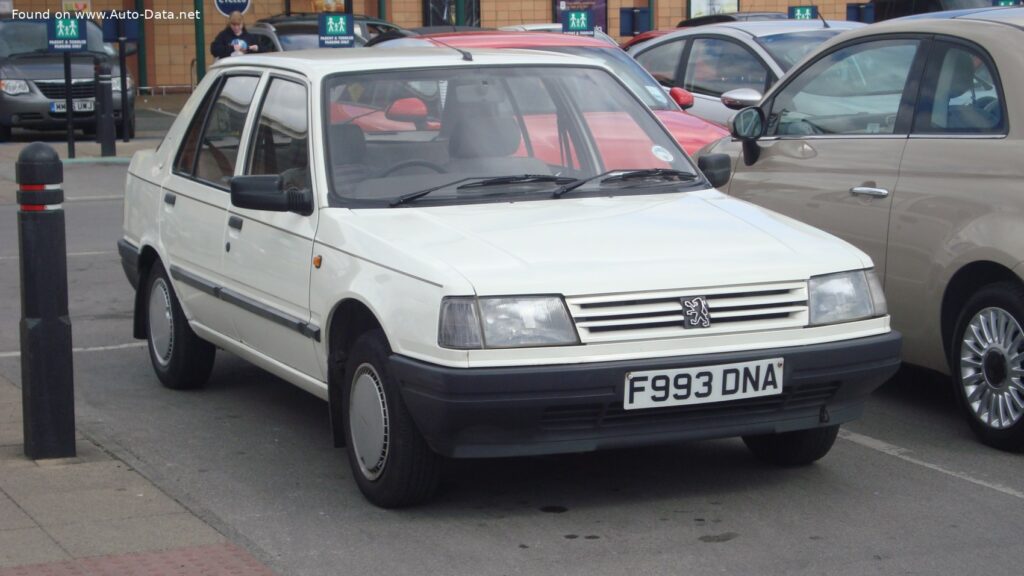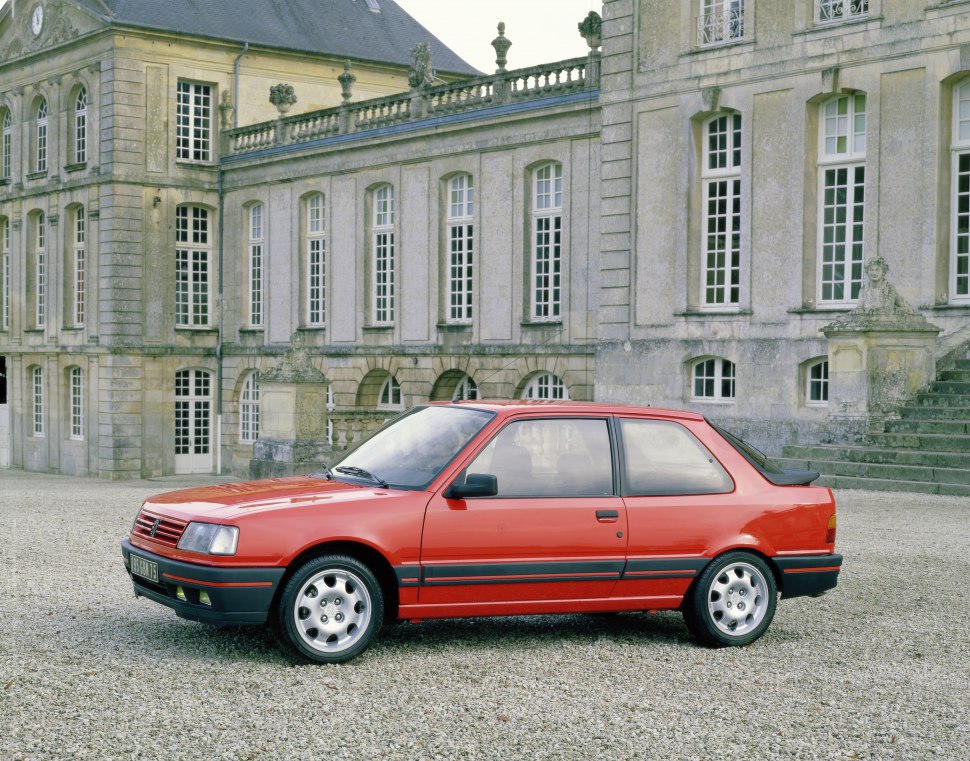
The Peugeot 309 (10C,10A) 3-door 1.6 (105 Hp) represents a significant chapter in the history of the French automaker, serving as a pivotal model in the European compact car segment during the mid-to-late 1980s. Launched in 1985, this particular generation, known internally as the 10C for the 3-door variant, was designed to fill a crucial gap in Peugeot’s lineup. It essentially replaced the Talbot Horizon, a legacy model from the acquired Chrysler Europe division, and positioned itself between the highly successful Peugeot 205 supermini and the larger 405 family sedan. While never officially sold in the United States, the 309 carved out a strong niche in its primary European markets, lauded for its blend of practicality, spirited performance, and engaging driving dynamics. This 1.6-liter, 105 horsepower variant, produced from 1985 to 1988, was a particularly popular choice, offering a compelling balance of everyday usability and a touch of sporting character within its three-door hatchback configuration. Its design, while sharing some visual cues with the smaller 205, aimed for a more mature and substantial presence, appealing to a broader customer base seeking a versatile and reliable compact vehicle. The 309’s engineering foundation laid important groundwork for future Peugeot models, showcasing the brand’s commitment to robust mechanicals and efficient packaging, cementing its place as a classic European compact.
Powering the Peugeot 309 (10C,10A) 3-door 1.6 (105 Hp): Engine and Performance
At the heart of the Peugeot 309 (10C,10A) 3-door 1.6 (105 Hp) lies a robust and well-regarded powertrain, emblematic of Peugeot’s engineering prowess during the era. This model was equipped with the XU5JP engine, a 1.6-liter (1580 cm3 or 96.42 cubic inches) inline-four cylinder unit, configured in a front, transverse layout. This naturally aspirated engine featured an OHC (Overhead Camshaft) valvetrain with two valves per cylinder, a common and reliable setup for the time, offering a good balance of power delivery and mechanical simplicity. Fuel delivery was managed by a multi-port manifold injection system, a step up from earlier carbureted designs, contributing to improved fuel efficiency and smoother running characteristics.