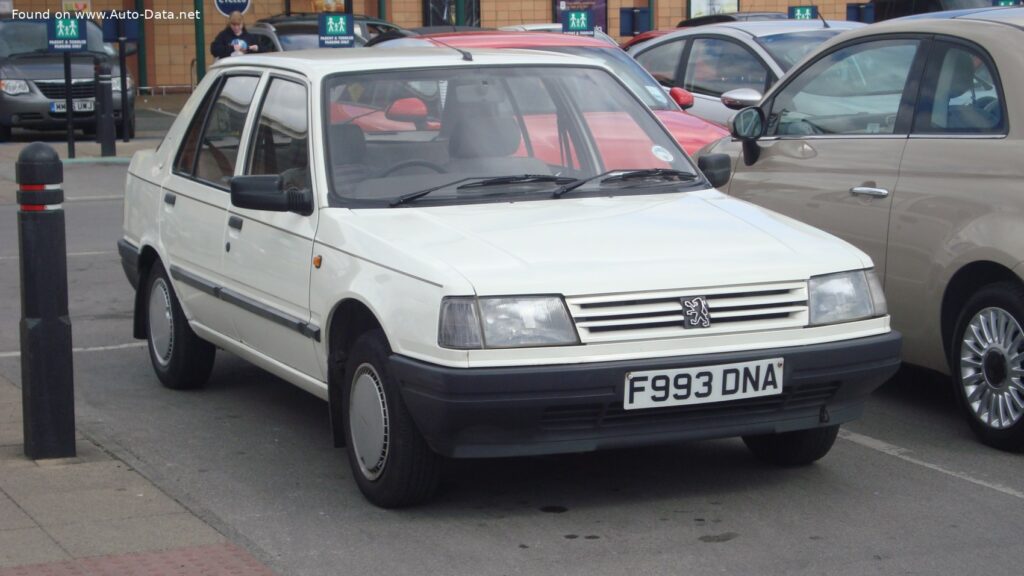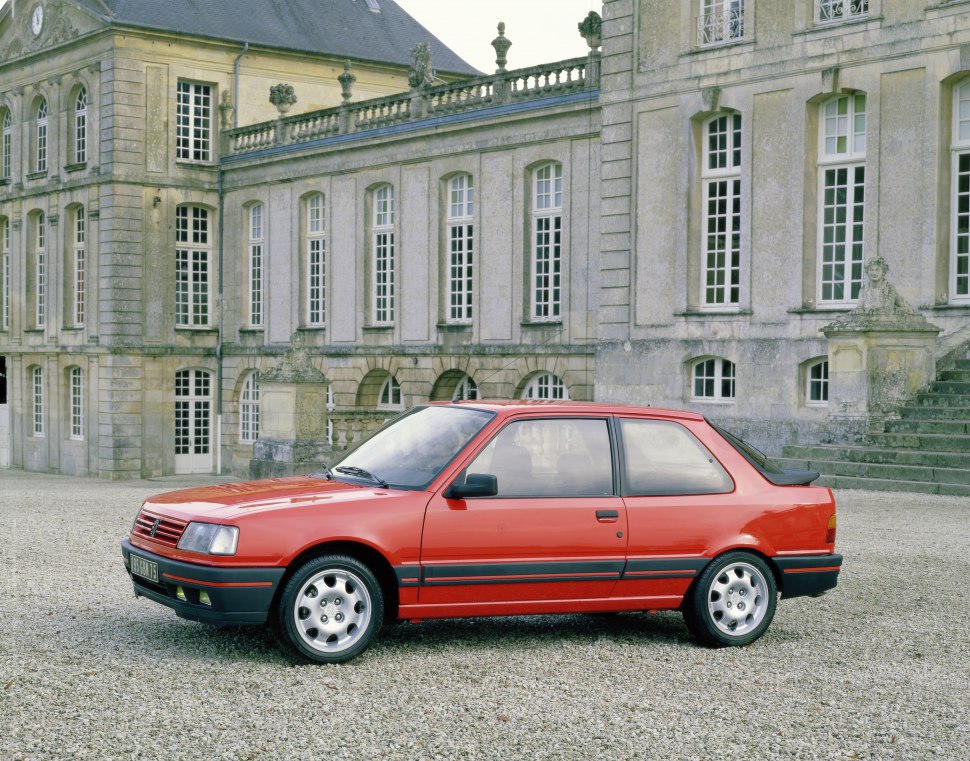
The Peugeot 309 (10C,10A) 3-door 1.9 D (64 Hp), produced between 1986 and 1989, represents a significant chapter in the European automotive landscape, particularly for the French manufacturer. Positioned in the compact family car segment, the 309 was initially conceived as a Talbot model before being rebadged as a Peugeot following the acquisition of Chrysler Europe (formerly Rootes Group and Simca) by PSA. This particular variant, with its 1.9-liter diesel engine and 3-door hatchback configuration, was a quintessential European offering, emphasizing fuel efficiency, practicality, and robust engineering for daily commuting and family use. While never officially sold in the United States, the 309 played a crucial role in strengthening Peugeot’s presence in its primary markets across Europe and parts of Asia, showcasing the brand’s commitment to economical and durable powertrains in an era when diesel technology was rapidly evolving. The 309 generation, specifically the (10C,10A) 3-door, was a testament to Peugeot’s design philosophy of the late 1980s, blending utilitarianism with a touch of French flair.
Engine and Performance: The Heart of the Peugeot 309 (10C,10A) 3-door 1.9 D (64 Hp)
At the core of this particular Peugeot 309 variant lies the venerable XUD9 engine, a 1.9-liter (1905 cm³) naturally aspirated inline-four diesel powerplant that has garnered a reputation for its reliability and longevity. Producing 64 horsepower at 4600 rpm and a healthy 88.51 lb.-ft. of torque at a low 2000 rpm, this engine was designed more for economical cruising and urban maneuverability than outright speed. The power-per-liter ratio stands at a modest 33.6 Hp/l, characteristic of naturally aspirated diesels of its time. Its front, transverse layout and OHC (Overhead Camshaft) valvetrain with two valves per cylinder were conventional for the period, ensuring straightforward maintenance and robust operation. The engine utilized a precombustion chamber injection system, a common design for indirect injection diesels, which contributed to smoother operation and reduced noise compared to early direct injection systems, though it meant a higher compression ratio of 23.5:1.
Performance figures for the 309 1.9 D reflect its utilitarian purpose. The vehicle accelerates from 0 to 60 mph in a calculated 14.5 seconds (0-100 km/h in 15.3 seconds), with a maximum speed of 99.42 mph (160 km/h). These numbers, while not exhilarating by modern standards, were perfectly adequate for the traffic conditions and speed limits prevalent in Europe during the late 1980s. More importantly, the fuel economy was a major selling point. In urban driving, the 309 achieved an impressive 33.6 US mpg (7 l/100 km), while on the extra-urban cycle, it could deliver an outstanding 53.5 US mpg (4.4 l/100 km). This exceptional efficiency made the 1.9 D a highly attractive option for budget-conscious buyers and those covering long distances, solidifying its position as a practical and cost-effective choice in its segment. The engine’s oil capacity is 5 liters, and the cooling system requires 8.5 liters of coolant, indicating a well-engineered thermal management system for consistent performance.
Design and Features: Practicality and European Heritage
The Peugeot 309 (10C,10A) 3-door is characterized by its hatchback body style, a highly popular and practical choice in Europe. With three doors and seating for five occupants, it offered a blend of compact exterior dimensions and surprisingly spacious interior volume. Measuring 159.49 inches in length, 64.09 inches in width, and 54.33 inches in height, the 309 was designed to navigate congested city streets with ease while still providing sufficient cabin space for a small family. Its wheelbase of 97.2 inches contributed to a stable ride and predictable handling, a hallmark of Peugeot vehicles of that era.
The design ethos of the 309 was one of functional aesthetics. While not groundbreaking, its clean lines and relatively low drag coefficient of 0.33 were competitive for the time, contributing to both fuel efficiency and reduced wind noise. The car’s kerb weight of just 2010.62 lbs (912 kg) was remarkably light, enhancing its agility and further aiding its impressive fuel economy. This lightweight construction, combined with the modest power output, resulted in a weight-to-power ratio of 14.3 kg/Hp, indicating its focus on efficiency rather than raw power.
Inside, the 309 prioritized utility. The 3-door configuration provided easy access to the front seats, while the rear bench offered adequate space for two adults or three children. The trunk space was a significant asset, offering a minimum of 14.02 cu. ft. (397 liters) with the rear seats in place. This capacity could be expanded dramatically to a cavernous 45.17 cu. ft. (1279 liters) by folding down the rear seats, transforming the hatchback into a highly versatile cargo hauler. This adaptability made it a favorite among families and individuals who needed a car capable of handling diverse tasks, from grocery runs to holiday trips.
In terms of chassis and drivetrain, the 309 featured a well-proven front-wheel-drive architecture, which was standard for compact cars of its generation. Power was delivered to the front wheels via a 5-speed manual transmission, offering direct engagement and maximizing the efficiency of the diesel engine. The suspension system consisted of an independent McPherson strut setup with coil springs and an anti-roll bar at the front, providing a comfortable yet controlled ride. The rear utilized a torsion bar suspension, a space-saving design that contributed to the generous trunk volume. Braking was handled by discs at the front and drums at the rear, a typical configuration for cars in this class, offering reliable stopping power. The steering was a rack and pinion type, known for its direct feel and responsiveness. The car rode on 13-inch wheels fitted with 145/70 R13 tires, a common size that balanced cost, comfort, and handling for its intended use.
Overall, the Peugeot 309 (10C,10A) 3-door 1.9 D (64 Hp) stands as a testament to Peugeot’s engineering prowess in the late 1980s. It was a no-frills, honest vehicle that excelled in its primary mission: providing economical, reliable, and practical transportation for the masses. Its enduring legacy in Europe is a reflection of its robust mechanicals and sensible design, making it a classic example of a utilitarian European compact car.
Technical Specifications
| Brand | Peugeot |
| Model | 309 |
| Generation | 309 (10C,10A) 3-door |
| Type (Engine) | 1.9 D (64 Hp) |
| Start of production | 1986 year |
| End of production | 1989 year |
| Powertrain Architecture | Internal Combustion engine |
| Body type | Hatchback |
| Seats | 5 |
| Doors | 3 |
| Fuel consumption (economy) – urban | 7 l/100 km (33.6 US mpg) |
| Fuel consumption (economy) – extra urban | 4.4 l/100 km (53.5 US mpg) |
| Fuel Type | Diesel |
| Acceleration 0 – 60 mph | 14.5 sec |
| Acceleration 0 – 100 km/h | 15.3 sec |
| Maximum speed | 160 km/h (99.42 mph) |
| Weight-to-power ratio | 14.3 kg/Hp |
| Weight-to-torque ratio | 7.6 kg/Nm |
| Power | 64 Hp @ 4600 rpm |
| Power per liter | 33.6 Hp/l |
| Torque | 120 Nm (88.51 lb.-ft.) @ 2000 rpm |
| Engine layout | Front, Transverse |
| Engine Model/Code | XUD9 |
| Engine displacement | 1905 cm³ (1.9 liters, 116.25 cu. in.) |
| Number of cylinders | 4 |
| Engine configuration | Inline |
| Cylinder Bore | 83 mm (3.27 in.) |
| Piston Stroke | 88 mm (3.46 in.) |
| Compression ratio | 23.5:1 |
| Number of valves per cylinder | 2 |
| Fuel injection system | Precombustion chamber injection |
| Engine aspiration | Naturally aspirated engine |
| Valvetrain | OHC |
| Engine oil capacity | 5 l (5.28 US qt) |
| Coolant | 8.5 l (8.98 US qt) |
| Kerb Weight | 912 kg (2010.62 lbs) |
| Max. weight | 1370 kg (3020.33 lbs) |
| Max load | 458 kg (1009.72 lbs) |
| Trunk (boot) space – minimum | 397 l (14.02 cu. ft.) |
| Trunk (boot) space – maximum | 1279 l (45.17 cu. ft.) |
| Fuel tank capacity | 55 l (14.53 US gal) |
| Permitted trailer load with brakes (12%) | 900 kg (1984.16 lbs) |
| Length | 4051 mm (159.49 in.) |
| Width | 1628 mm (64.09 in.) |
| Height | 1380 mm (54.33 in.) |
| Wheelbase | 2469 mm (97.2 in.) |
| Front track | 1408 mm (55.43 in.) |
| Rear (Back) track | 1376 mm (54.17 in.) |
| Front overhang | 753 mm (29.65 in.) |
| Rear overhang | 829 mm (32.64 in.) |
| Drag coefficient (Cd) | 0.33 |
| Drivetrain Architecture | Front wheel drive |
| Drive wheel | Front wheel drive |
| Number of gears and type of gearbox | 5 gears, manual transmission |
| Front suspension | Independent, type McPherson with coil spring and anti-roll bar |
| Rear suspension | Torsion |
| Front brakes | Disc |
| Rear brakes | Drum |
| Steering type | Steering rack and pinion |
| Tires size | 145/70 R13 |
| Wheel rims size | 13 inches |