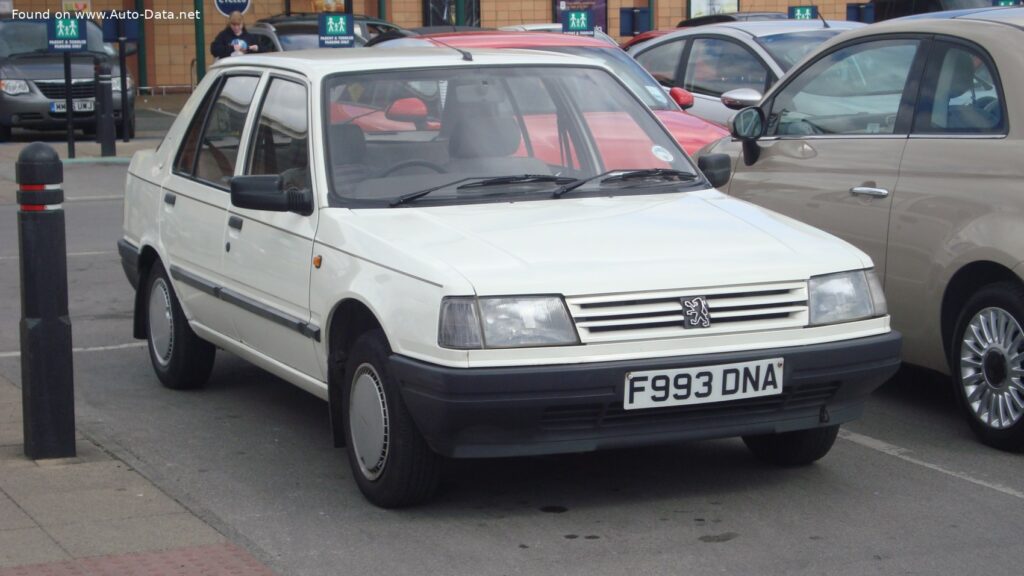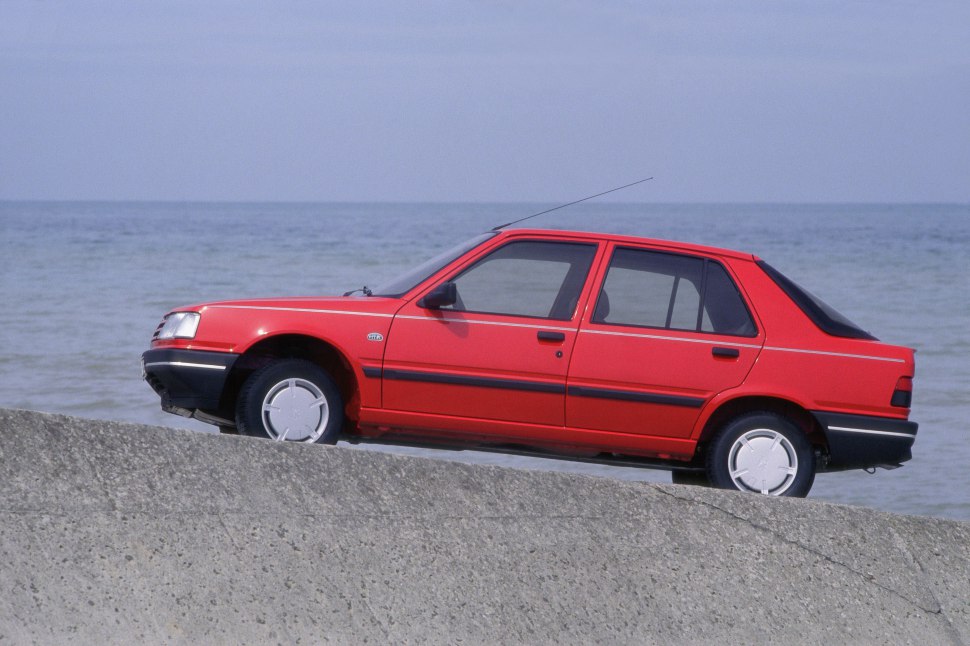
The Peugeot 309, particularly the 3C,3A facelift 1989 generation, represents a significant chapter in the history of the French automaker’s presence in the European compact car segment. Launched initially in 1985 as a replacement for the Talbot Horizon, the 309 occupied a crucial niche between the smaller 205 and the larger 405. The facelifted version, which commenced production in 1990 and ran until 1993, brought subtle yet effective updates to an already established platform. This particular iteration, equipped with the 1.4-liter (67 Hp) engine, was designed to offer a blend of economical operation, adequate performance for urban and suburban driving, and the renowned practicality of a hatchback, making it a popular choice across various European markets.
Peugeot 309 (3C,3A facelift 1989) Powertrain and Performance
Engine Characteristics
At the heart of the 1990-1993 Peugeot 309 (3C,3A facelift 1989) 1.4 model lies the K1D TU3A engine, a robust and well-proven unit from Peugeot’s TU-series engine family. This naturally aspirated, inline four-cylinder gasoline engine boasts a displacement of 1360 cubic centimeters, or approximately 82.99 cubic inches. With a bore of 75 millimeters (2.95 inches) and a stroke of 77 millimeters (3.03 inches), it features a slightly undersquare design, typically favoring torque output over high-revving power, which is ideal for a practical compact car. The engine utilizes a relatively modest compression ratio of 9.3:1 and features two valves per cylinder, a common configuration for efficiency and reliability during its era. Fuel delivery was handled by a carburettor system, a technology that was still prevalent in the early 1990s before widespread adoption of electronic fuel injection. This setup contributed to its straightforward maintenance and cost-effectiveness.
The 1.4-liter engine generates a respectable 67 horsepower at 5600 revolutions per minute, providing sufficient motivation for its compact dimensions and lightweight chassis. Torque output is rated at 109 Newton-meters, or approximately 80.39 pound-feet, peaking at a relatively low 3400 rpm. This low-end torque characteristic made the 309 1.4 feel responsive in city traffic and manageable on inclines, reducing the need for constant gear changes. The engine’s layout is front-mounted and transverse, a standard configuration for front-wheel-drive vehicles, optimizing space utilization within the engine bay and contributing to the car’s balanced weight distribution.
Driving Dynamics and Efficiency
The powertrain architecture of the Peugeot 309 (3C,3A facelift 1989) 1.4 is a classic front-wheel-drive setup, with the internal combustion engine driving the front wheels. This configuration is renowned for its packaging efficiency, improved traction in adverse conditions, and predictable handling characteristics. Power is channeled through a precise 5-speed manual transmission, offering drivers direct control over the engine’s output and contributing to the vehicle’s overall efficiency. The gear ratios were carefully selected to balance acceleration with fuel economy, catering to the needs of European drivers who often navigate a mix of urban environments and open roads.
Performance figures for the 309 1.4 were competitive for its class at the time. It could accelerate from 0 to 60 miles per hour in an estimated 12.4 seconds, with 0 to 100 kilometers per hour achieved in 13.1 seconds. The maximum speed reached approximately 103.15 mph (166 km/h). These figures underscored its role as a practical, rather than overtly sporty, compact car. Fuel efficiency was a strong point for the 309 1.4, reflecting Peugeot’s commitment to economical motoring. The combined fuel consumption was rated at 6.8 liters per 100 kilometers, which translates to an impressive 34.6 US miles per gallon. Urban driving yielded about 31.8 US mpg (7.4 l/100 km), while extra-urban cruising could achieve up to 48 US mpg (4.9 l/100 km), making it an attractive option for budget-conscious consumers. The vehicle’s kerb weight of 1873.93 pounds (850 kg) contributed significantly to these efficiency figures, resulting in a favorable weight-to-power ratio of 12.7 kg/Hp and a weight-to-torque ratio of 7.8 kg/Nm.
Design, Features, and Market Context
Exterior and Interior Design
The Peugeot 309 (3C,3A facelift 1989) maintained the practical and unassuming aesthetics characteristic of European compact hatchbacks of its era. Available in both 3-door and 5-door configurations, it offered versatility to cater to different consumer needs, from singles and couples to small families. The facelift introduced subtle enhancements, including revised lighting clusters and minor trim updates, to keep its appearance fresh against newer rivals. Its dimensions were well-suited for European cities, with a length of 159.45 inches (4050 mm), a width of 64.17 inches (1630 mm), and a height of 54.33 inches (1380 mm). The wheelbase measured 97.24 inches (2470 mm), providing a stable platform and contributing to a surprisingly spacious interior for its class.
Inside, the 309 was designed with functionality and ergonomics in mind. It comfortably accommodated five occupants, offering adequate headroom and legroom for its segment. The hatchback body style was a key selling point, providing excellent cargo versatility. Minimum trunk space started at 10.42 cubic feet (295 liters), which could be expanded significantly to 21.72 cubic feet (615 liters) by folding down the rear seats. This flexibility made the 309 a highly practical vehicle for daily errands, grocery runs, and even weekend trips. The fuel tank capacity of 14.53 US gallons (55 liters) ensured a decent cruising range, complementing its economical engine.
Chassis and Safety
Underneath its practical exterior, the Peugeot 309 (3C,3A facelift 1989) featured a well-engineered chassis that delivered a comfortable ride and predictable handling. The front suspension utilized a coil spring setup, a common and effective design for absorbing road imperfections and providing responsive steering. At the rear, a torsion beam suspension system was employed, known for its compact packaging and robust nature, allowing for maximum interior space while maintaining good road holding. The braking system comprised disc brakes at the front for effective stopping power and drum brakes at the rear, a standard configuration for many compact cars of the early 90s. Notably, the inclusion of an Anti-lock Braking System (ABS) was available as an assisting system, a significant safety feature for its time, enhancing control during emergency braking maneuvers.
Steering was managed by a rack and pinion system, providing direct feedback to the driver. The presence of hydraulic power steering further enhanced maneuverability, particularly at low speeds and during parking, making the 309 an easy car to drive in congested urban environments. The vehicle rode on 165/70 SR13 tires, offering a good balance of grip, comfort, and low rolling resistance. These chassis components, combined with the lightweight body, contributed to the 309’s nimble feel and agile handling, which were often praised by drivers in its home market.
Market Positioning
The Peugeot 309 (3C,3A facelift 1989) was never officially sold in the United States, but it carved out a substantial market share in Europe and other global markets. It was positioned as a sensible, value-for-money option in the fiercely competitive compact segment, competing against popular models like the Volkswagen Golf, Ford Escort, and Renault 19. Its strengths lay in its robust mechanicals, practical hatchback design, and commendable fuel efficiency, particularly with the 1.4-liter engine. The facelifted model served to modernize its appeal and maintain its competitiveness during its final years of production. While not a performance icon, the 309 was highly regarded for its reliability and low running costs, cementing its reputation as a dependable workhorse and a popular family car for many across the continent. Its legacy is one of practicality, efficiency, and a testament to Peugeot’s engineering capabilities in the late 20th century.
Technical Specifications: Peugeot 309 (3C,3A facelift 1989) 1.4 (67 Hp)
| Brand | Peugeot |
| Model | 309 |
| Generation | 309 (3C,3A facelift 1989) |
| Type (Engine) | 1.4 (67 Hp) |
| Start of Production | 1990 year |
| End of Production | 1993 year |
| Powertrain Architecture | Internal Combustion engine |
| Body Type | Hatchback |
| Seats | 5 |
| Doors | 3-5 |
| Fuel Consumption (Economy) – Urban | 7.4 l/100 km (31.8 US mpg) |
| Fuel Consumption (Economy) – Extra Urban | 4.9 l/100 km (48 US mpg) |
| Fuel Consumption (Economy) – Combined | 6.8 l/100 km (34.6 US mpg) |
| Fuel Type | Petrol (Gasoline) |
| Acceleration 0 – 60 mph (Calculated) | 12.4 sec |
| Acceleration 0 – 100 km/h | 13.1 sec |
| Maximum Speed | 166 km/h (103.15 mph) |
| Weight-to-Power Ratio | 12.7 kg/Hp, 78.8 Hp/tonne |
| Weight-to-Torque Ratio | 7.8 kg/Nm, 128.2 Nm/tonne |
| Power | 67 Hp @ 5600 rpm |
| Power per Liter | 49.3 Hp/l |
| Torque | 109 Nm (80.39 lb.-ft.) @ 3400 rpm |
| Engine Layout | Front, Transverse |
| Engine Model/Code | K1D TU3A |
| Engine Displacement | 1360 cm3 (82.99 cu. in.) |
| Number of Cylinders | 4 |
| Engine Configuration | Inline |
| Cylinder Bore | 75 mm (2.95 in.) |
| Piston Stroke | 77 mm (3.03 in.) |
| Compression Ratio | 9.3:1 |
| Number of Valves per Cylinder | 2 |
| Fuel Injection System | Carburettor |
| Engine Aspiration | Naturally aspirated engine |
| Engine Oil Capacity | 3.2 l (3.38 US qt) |
| Coolant Capacity | 5.7 l (6.02 US qt) |
| Kerb Weight | 850 kg (1873.93 lbs.) |
| Max. Weight (GVWR) | 1290 kg (2843.96 lbs.) |
| Max Load | 440 kg (970.03 lbs.) |
| Trunk (Boot) Space – Minimum | 295 l (10.42 cu. ft.) |
| Trunk (Boot) Space – Maximum | 615 l (21.72 cu. ft.) |
| Fuel Tank Capacity | 55 l (14.53 US gal) |
| Length | 4050 mm (159.45 in.) |
| Width | 1630 mm (64.17 in.) |
| Height | 1380 mm (54.33 in.) |
| Wheelbase | 2470 mm (97.24 in.) |
| Front Track | 1405 mm (55.31 in.) |
| Rear (Back) Track | 1380 mm (54.33 in.) |
| Drivetrain Architecture | Front wheel drive (ICE drives front wheels) |
| Drive Wheel | Front wheel drive |
| Number of Gears and Type of Gearbox | 5 gears, manual transmission |
| Front Suspension | Coil spring |
| Rear Suspension | Torsion |
| Front Brakes | Disc |
| Rear Brakes | Drum |
| Assisting Systems | ABS (Anti-lock braking system) |
| Steering Type | Steering rack and pinion |
| Power Steering | Hydraulic Steering |
| Tires Size | 165/70 SR13 |