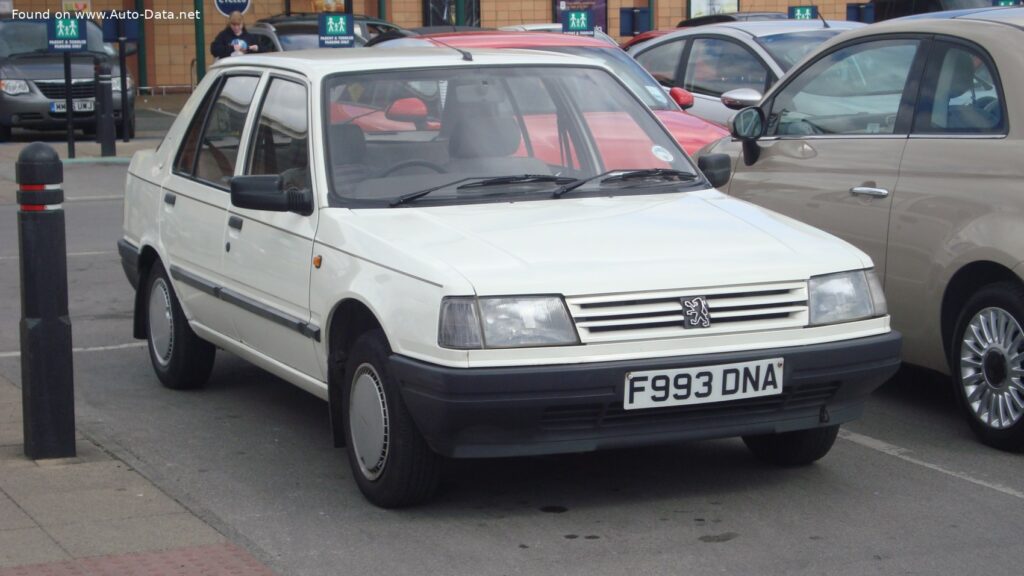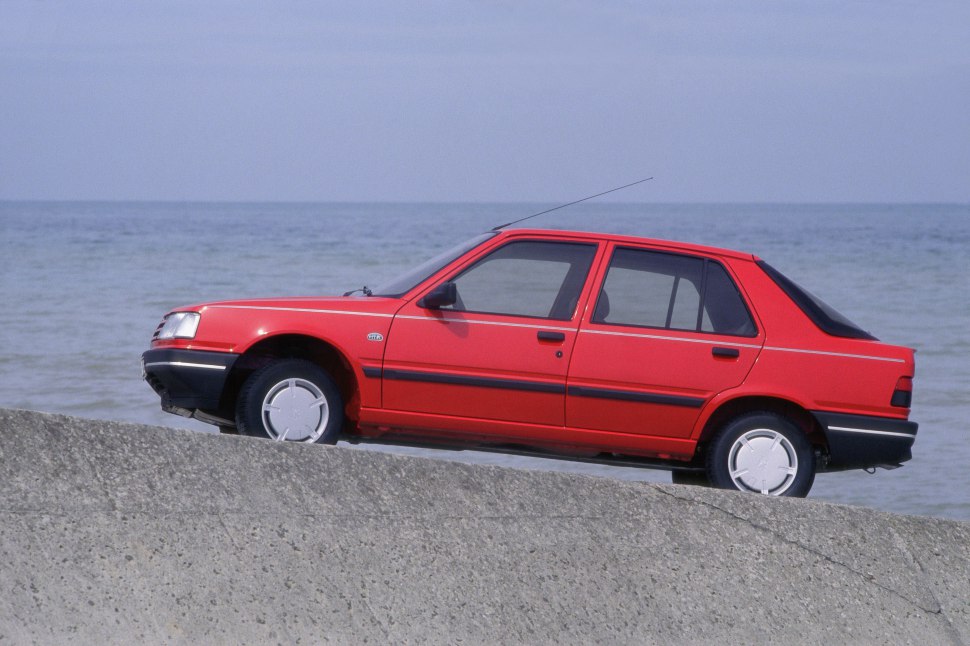
The Peugeot 309 (3C,3A facelift 1989) 1.6 (92 Hp) represents a pivotal offering from the French automaker during a period of significant evolution in the European compact car market. Produced from 1989 to 1993, this specific iteration of the 309 benefited from a mid-lifecycle refresh, enhancing its appeal and solidifying its position within Peugeot’s highly competitive lineup. Positioned strategically between the smaller, iconic 205 and the larger 405, the 309 was designed to cater to families and individuals seeking a practical, economical, and somewhat spirited hatchback for daily European driving. While never officially imported to the United States, its engineering and design principles resonate with the global automotive trends of its era, showcasing Peugeot’s commitment to robust mechanicals and efficient packaging for its primary markets in Europe and beyond.
Peugeot 309 (3C,3A facelift 1989): A European Compact Hatchback Legacy
The Peugeot 309, which debuted in 1985, was initially conceived as a Talbot Arizona, a successor to the Talbot Horizon. However, following Peugeot’s acquisition of Chrysler Europe (including the Simca and Talbot brands), the project was rebadged as a Peugeot. The 309 filled a crucial gap in Peugeot’s range, offering more space and practicality than the popular 205 supermini but retaining a compact footprint ideal for European cities and roads. The 1989 facelift, designated as the (3C,3A) generation, brought subtle yet effective updates to the vehicle’s styling, interior, and mechanical components, ensuring its competitiveness against rivals like the Volkswagen Golf, Ford Escort, and Renault 19. These revisions aimed to modernize its appearance, improve ergonomics, and refine its driving dynamics, all while maintaining its core attributes of affordability and reliability. The 309’s success in its home market and across Europe underscored Peugeot’s ability to adapt and thrive in a segment known for its fierce competition and discerning buyers.
Powertrain and Driving Dynamics
At the heart of the Peugeot 309 (3C,3A facelift 1989) 1.6 (92 Hp) model lies a robust and well-regarded 1.6-liter (1580 cm³ or 96.42 cu. in.) naturally aspirated inline-four engine, designated by the engine code B2B XU52C. This powerplant, a staple in Peugeot’s XU engine family, was known for its reliability and decent performance for its displacement. It delivered a respectable 92 horsepower at 6250 rpm, providing a good balance of power for its lightweight chassis. Torque output stood at 94.41 lb.-ft. (128 Nm) achieved at a relatively low 3250 rpm, which contributed to its flexible driving characteristics in urban environments and on the open road. The engine’s configuration, with two valves per cylinder and a compression ratio of 8.95:1, was fairly standard for the era, prioritizing durability and ease of maintenance.
Fuel delivery was managed by a carbureted system, a technology common in the late 1980s and early 1990s, before widespread adoption of electronic fuel injection. This setup, while less precise than modern injection systems, was simple and effective. Power was sent to the front wheels via a slick-shifting 5-speed manual transmission, a configuration that emphasized driver engagement and fuel efficiency. The powertrain architecture, with the engine mounted front-transverse, was typical for front-wheel-drive hatchbacks of the period, optimizing interior space and handling stability. The 309’s performance figures were quite competitive for its segment, achieving 0-60 mph in approximately 10 seconds and reaching a top speed of 111.85 mph (180 km/h). These numbers showcased its capability as a brisk performer for its class, making it suitable for both city commuting and longer journeys.
Fuel economy was a key selling point for the 309. The 1.6-liter model offered a combined fuel consumption of 34.6 US mpg (6.8 l/100 km), with even more impressive figures on the highway at 44.4 US mpg (5.3 l/100 km). Urban driving yielded 26.7 US mpg (8.8 l/100 km). These figures highlight the vehicle’s efficiency, a critical factor for European buyers. The kerb weight of just 1918.02 lbs (870 kg) contributed significantly to both its performance and economy, resulting in a favorable weight-to-power ratio of 9.5 kg/Hp and a weight-to-torque ratio of 6.8 kg/Nm. The simple yet effective suspension setup, featuring coil springs at the front and a torsion beam at the rear, provided a commendable balance between ride comfort and agile handling, a hallmark of Peugeot’s engineering philosophy during this era. Steering was managed by a hydraulic rack and pinion system, offering direct feedback and ease of maneuverability.
Design, Practicality, and Era-Specific Features
The Peugeot 309 (3C,3A facelift 1989) was offered primarily as a versatile hatchback, available in both 3-door and 5-door configurations, making it adaptable to various buyer needs. Its design, while functional, incorporated subtle styling cues that gave it a distinct Peugeot identity, characterized by clean lines and a practical silhouette. The facelift introduced minor aesthetic refinements, such as updated lighting and trim, to keep its appearance fresh. With an overall length of 159.45 inches (4050 mm), a width of 64.17 inches (1630 mm), and a height of 54.33 inches (1380 mm), the 309 was a compact vehicle, perfectly suited for the dense urban environments it primarily served. The 97.24-inch (2470 mm) wheelbase contributed to a stable ride and maximized interior volume within its modest dimensions.
Inside, the 309 was designed with practicality in mind, offering seating for five occupants. The interior, though not luxurious, was durable and functional, with controls that were straightforward and easy to use, typical of European cars of the period. Storage capacity was a strong suit for a vehicle of its size; the trunk offered a minimum of 10.42 cu. ft. (295 liters) with the rear seats in place, expanding to a generous 21.72 cu. ft. (615 liters) when the seats were folded down, making it highly adaptable for carrying luggage or larger items. The fuel tank capacity of 14.53 US gallons (55 liters) provided a good cruising range, complementing its economical engine.
Safety features, while not as comprehensive as modern vehicles, were appropriate for its time. The 309 was equipped with front disc brakes and rear drum brakes, a common and effective braking system. Notably, the data indicates the presence of ABS (Anti-lock Braking System) as an assisting system, which, while likely optional or reserved for higher trim levels, represented a significant advancement in safety for a compact car in the late 1980s. The 165/70 SR13 tire size reflected its lightweight construction and focus on efficiency and manageable handling. The overall design and feature set of the Peugeot 309 underscored its role as a reliable, economical, and practical workhorse for the European market, embodying the no-nonsense engineering and user-centric design that Peugeot was known for.
Technical Specifications: Peugeot 309 (3C,3A facelift 1989) 1.6 (92 Hp)
| Brand | Peugeot |
| Model | 309 |
| Generation | 309 (3C,3A facelift 1989) |
| Type (Engine) | 1.6 (92 Hp) |
| Start of production | 1989 year |
| End of production | 1993 year |
| Powertrain Architecture | Internal Combustion engine |
| Body type | Hatchback |
| Seats | 5 |
| Doors | 3-5 |
| Fuel consumption (economy) – urban | 26.7 US mpg (8.8 l/100 km) |
| Fuel consumption (economy) – extra urban | 44.4 US mpg (5.3 l/100 km) |
| Fuel consumption (economy) – combined | 34.6 US mpg (6.8 l/100 km) |
| Fuel Type | Petrol (Gasoline) |
| Acceleration 0 – 60 mph | 10 sec |
| Acceleration 0 – 100 km/h | 10.5 sec |
| Maximum speed | 111.85 mph (180 km/h) |
| Weight-to-power ratio | 9.5 kg/Hp, 105.7 Hp/tonne |
| Weight-to-torque ratio | 6.8 kg/Nm, 147.1 Nm/tonne |
| Power | 92 Hp @ 6250 rpm |
| Power per liter | 58.2 Hp/l |
| Torque | 94.41 lb.-ft. @ 3250 rpm (128 Nm @ 3250 rpm) |
| Engine layout | Front, Transverse |
| Engine Model/Code | B2B XU52C |
| Engine displacement | 96.42 cu. in. (1580 cm³) |
| Number of cylinders | 4 |
| Engine configuration | Inline |
| Cylinder Bore | 3.27 in. (83 mm) |
| Piston Stroke | 2.87 in. (73 mm) |
| Compression ratio | 8.95:1 |
| Number of valves per cylinder | 2 |
| Fuel injection system | Carburettor |
| Engine aspiration | Naturally aspirated engine |
| Engine oil capacity | 4.23 US qt (4 l) |
| Coolant | 7.93 US qt (7.5 l) |
| Kerb Weight | 1918.02 lbs (870 kg) |
| Max. weight | 2888.06 lbs (1310 kg) |
| Max load | 970.03 lbs (440 kg) |
| Trunk (boot) space – minimum | 10.42 cu. ft. (295 l) |
| Trunk (boot) space – maximum | 21.72 cu. ft. (615 l) |
| Fuel tank capacity | 14.53 US gal (55 l) |
| Length | 159.45 in. (4050 mm) |
| Width | 64.17 in. (1630 mm) |
| Height | 54.33 in. (1380 mm) |
| Wheelbase | 97.24 in. (2470 mm) |
| Front track | 55.31 in. (1405 mm) |
| Rear (Back) track | 54.33 in. (1380 mm) |
| Drivetrain Architecture | The Internal combustion engine (ICE) drives the front wheels of the vehicle. |
| Drive wheel | Front wheel drive |
| Number of gears and type of gearbox | 5 gears, manual transmission |
| Front suspension | Coil spring |
| Rear suspension | Torsion |
| Front brakes | Disc |
| Rear brakes | Drum |
| Assisting systems | ABS (Anti-lock braking system) |
| Steering type | Steering rack and pinion |
| Power steering | Hydraulic Steering |
| Tires size | 165/70 SR13 |