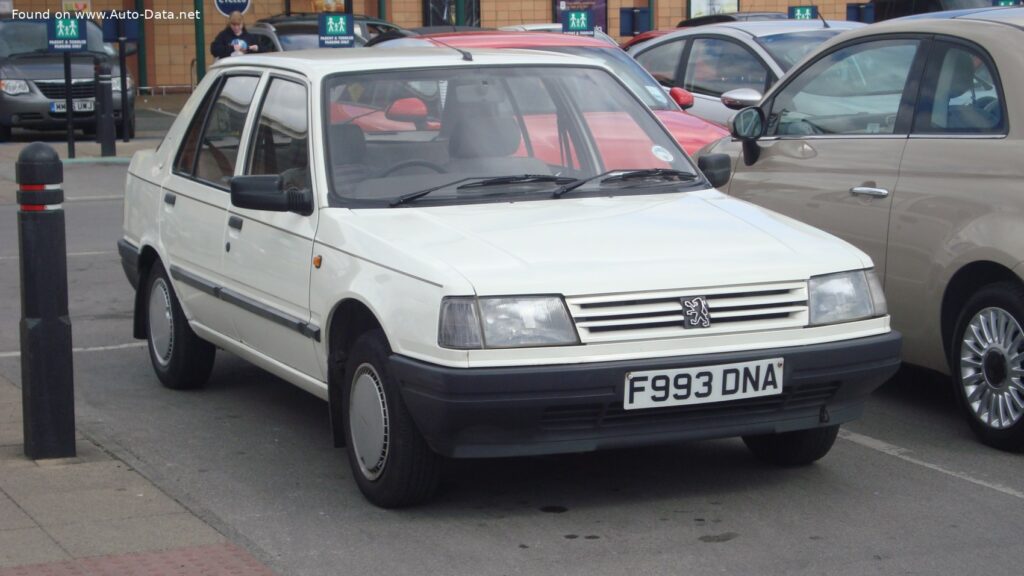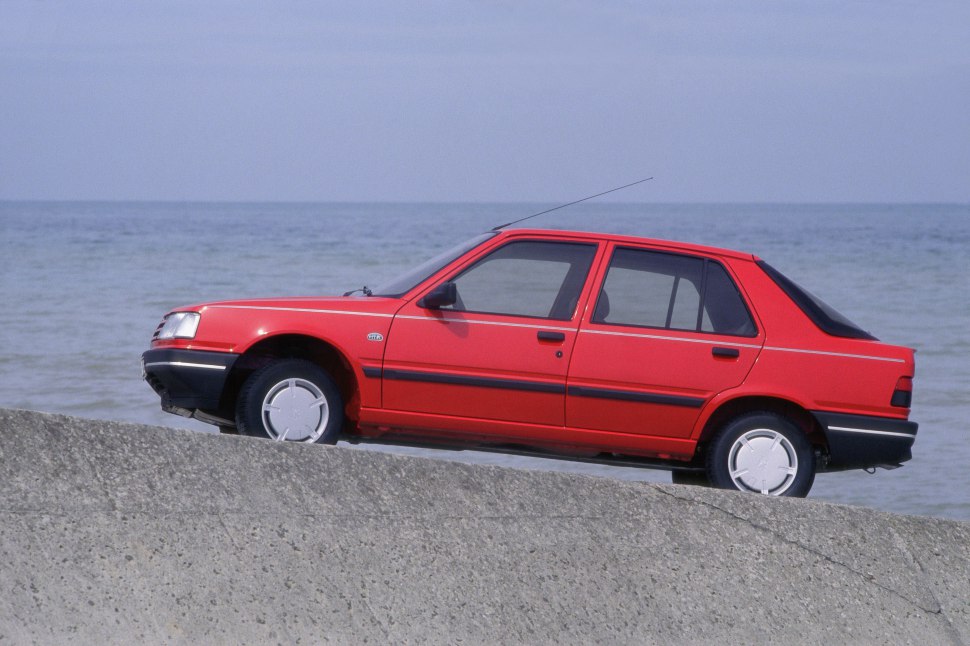
The Peugeot 309, particularly the 3C,3A facelift generation produced from 1989 to 1993, represents a significant chapter in the history of European compact family cars. Originating from the French marque Peugeot, this model was never officially sold in the United States, making it a distinctive example of European automotive engineering and market focus during its era. Positioned within the highly competitive C-segment, the {original_title} filled a crucial role in Peugeot’s lineup, bridging the gap between the smaller 205 and the larger 405. It was a car designed for practicality, economy, and everyday usability, resonating strongly with European consumers who valued efficiency and compact dimensions for navigating crowded cities and fuel-conscious budgets. Its production run saw various engine configurations, but the 1.8 Diesel (60 Hp) variant stood out as a particularly pragmatic choice, embodying the European embrace of diesel technology for its superior fuel economy and torque characteristics, even in a naturally aspirated form. This particular generation, benefiting from a mid-life refresh, aimed to keep the {original_title} competitive and appealing in a rapidly evolving automotive landscape, ensuring its continued relevance as a reliable workhorse for families and commuters across the continent.
The Peugeot 309: Engine and Performance
At the heart of the 1989-1993 Peugeot 309 (3C,3A facelift) 1.8 Diesel lay the venerable 161A XUD7 engine, a testament to Peugeot’s long-standing expertise in diesel powertrain development. This naturally aspirated 1.8-liter (approximately 110 cubic inches) four-cylinder diesel engine produced a modest but highly effective 60 horsepower (Hp). While 60 Hp might seem low by contemporary American standards, it was entirely adequate and, indeed, competitive for a compact diesel hatchback in the European market of the late 1980s and early 1990s. The strength of this engine lay not in outright speed, but in its robust construction, impressive fuel efficiency, and dependable low-end torque, which made it an ideal choice for daily commuting, urban driving, and even longer journeys where economy was paramount.
The naturally aspirated design meant the engine delivered its power smoothly and predictably, without the sudden surge associated with turbocharged units. This contributed to a relaxed driving experience, prioritizing durability and ease of maintenance over high-performance thrills. The XUD7 engine family, from which this unit was derived, earned a reputation for its reliability and longevity, often covering hundreds of thousands of miles with proper care. This characteristic was a significant selling point in markets where vehicle ownership often involved keeping cars for extended periods. For the 309, this engine provided sufficient propulsion for its relatively light chassis, allowing it to keep pace with traffic and offer reasonable acceleration for its class, especially when considering its primary role as an economical family car.
Fuel type was, of course, diesel, a prevalent choice in Europe due to its lower cost per liter and greater energy density compared to gasoline. The engine oil capacity was specified at 5 liters (5.28 US quarts), and the cooling system held 8.5 liters (8.98 US quarts), reflecting standard capacities for an engine of this size and type. These specifications highlight the straightforward and practical engineering philosophy behind the powertrain. The 60 Hp output, combined with the inherently efficient nature of diesel combustion, ensured that owners of the Peugeot 309 1.8 Diesel enjoyed significantly lower running costs compared to gasoline equivalents, a critical factor for many European buyers. The engine’s modest power output also meant less strain on components, further enhancing its reliability and contributing to its status as a dependable, no-frills workhorse in the compact segment.
Design and Features of the Peugeot 309
The Peugeot 309, especially in its 3C,3A facelift guise from 1989, presented itself as a practical and unpretentious hatchback, embodying the functional design philosophy prevalent in European compact cars of its era. The hatchback body type, a staple in the European market, offered an excellent balance of compact exterior dimensions for city maneuverability and a versatile interior with a flexible cargo area, thanks to its liftgate and often split-folding rear seats. This design made the 309 a highly adaptable vehicle, equally suited for daily commutes, grocery runs, or weekend trips requiring luggage capacity.
The 1989 facelift brought subtle yet effective updates to the 309’s aesthetics and possibly its interior appointments. Typically, facelifts of this period involved revised front and rear bumpers, a refreshed grille design, updated lighting clusters, and new wheel designs. These changes aimed to modernize the car’s appearance and keep it visually competitive against newer rivals. Inside, potential updates would have included new upholstery fabrics, revised trim materials, and minor ergonomic improvements to the dashboard or control layout. While the 309 shared some mechanical underpinnings with the smaller 205 and the larger 405, its exterior styling was distinctive, characterized by a somewhat angular yet cohesive design that reflected Peugeot’s design language of the late 1980s. Its clean lines and functional aesthetic contributed to its widespread appeal as a sensible and reliable mode of transport.
In terms of features, the 1989 Peugeot 309 1.8 Diesel, being a utilitarian model, focused on essential comforts and practicality rather than luxury. Standard equipment would have included basic heating and ventilation, manual windows, and a straightforward radio. Power steering, while not always standard on lower trims, was a common option that significantly improved maneuverability. Safety features, by late 1980s standards, primarily centered around robust body construction, seatbelts for all occupants, and a functional braking system. Airbags were not yet common in this segment, and advanced driver-assistance systems were still decades away. Instead, the focus was on passive safety through the car’s structure. The interior was designed for durability and ease of cleaning, with hard-wearing plastics and fabrics that could withstand the rigors of family use. The driving position was generally comfortable, and visibility was good, making it an easy car to drive and park in urban environments. The Peugeot 309, therefore, stood as a testament to practical, no-nonsense European car design, prioritizing utility, economy, and reliability for its target audience.
Technical Specifications
| Brand | Peugeot |
| Model | 309 |
| Generation | 309 (3C,3A facelift 1989) |
| Type (Engine) | 1.8 Diesel (60 Hp) |
| Start of production | 1989 year |
| End of production | 1993 year |
| Powertrain Architecture | Internal Combustion engine |
| Body type | Hatchback |
| Fuel Type | Diesel |
| Engine Power | 60 Hp |
| Engine Model/Code | 161A XUD7 |
| Engine aspiration | Naturally aspirated engine |
| Engine oil capacity | 5 l (5.28 US qt | 4.4 UK qt) |
| Coolant capacity | 8.5 l (8.98 US qt | 7.48 UK qt) |