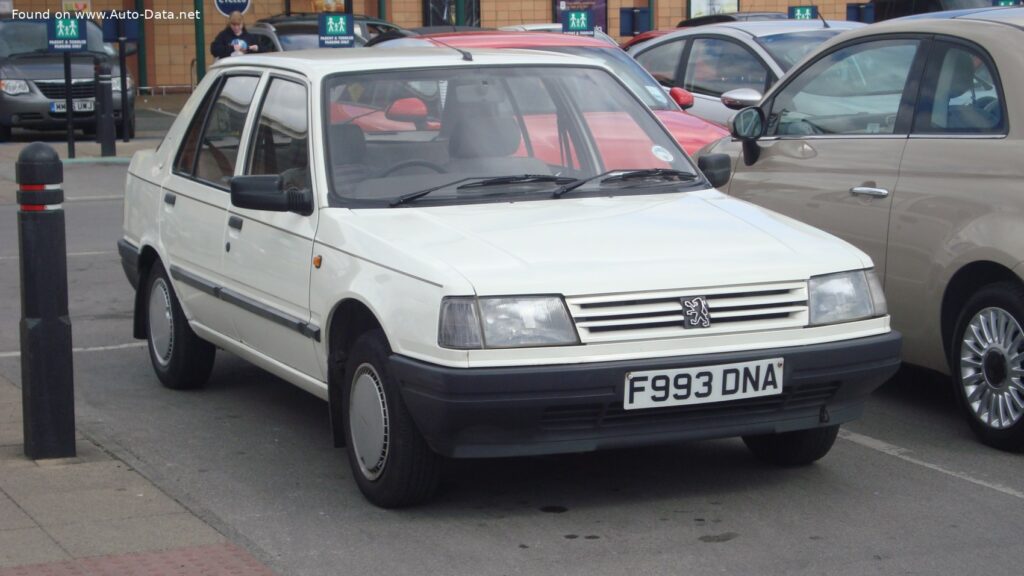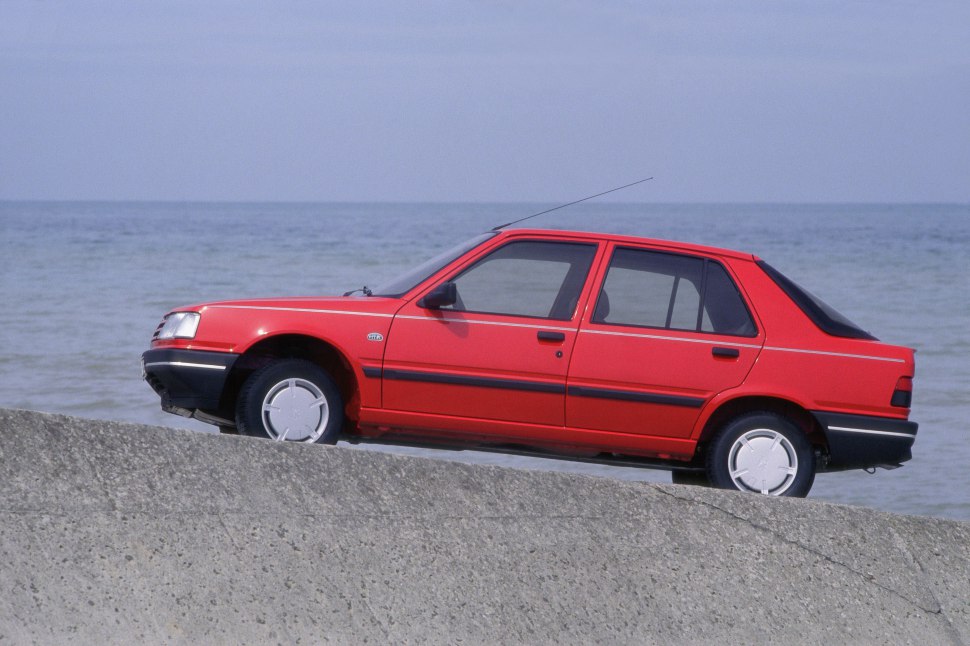
The Peugeot 309, particularly the 1.9 GTI (120 Hp) from the 1989 facelift generation, represents a significant chapter in the history of European hot hatchbacks. While never officially imported to the United States, this model carved out a formidable reputation in its primary European markets, standing as a testament to Peugeot’s engineering prowess in creating engaging, driver-focused vehicles. Launched as a successor to the 305 and positioned alongside the smaller, immensely popular 205, the 309 aimed to offer a more practical, yet equally thrilling, driving experience. The 1989 facelift brought subtle but effective refinements, solidifying the 1.9 GTI’s status as a formidable competitor in a fiercely contested segment that included rivals like the Volkswagen Golf GTI and Opel Kadett GSi. Its blend of spirited performance, agile handling, and everyday usability made it a darling among enthusiasts, embodying the quintessential characteristics of a late-1980s and early-1990s performance compact.
Engine and Performance: The Heart of the Peugeot 309 (3C,3A facelift 1989) GTI
At the core of the Peugeot 309 1.9 GTI’s appeal was its robust and responsive powertrain. The vehicle was equipped with a 1.9-liter (116.25 cu. in.) naturally aspirated inline four-cylinder engine, designated by codes such as DKZ XU9JAZ or DFY XU9JA. This powerplant was a finely tuned unit, delivering 120 horsepower at 6000 rpm and a healthy 118.75 lb.-ft. of torque at 4750 rpm. With a compression ratio of 9.6:1 and a multi-port manifold fuel injection system, the engine was designed for immediate throttle response and a linear power delivery, characteristic of the era’s performance engines. Each cylinder featured two valves, optimizing airflow for both power and efficiency without the added complexity of multi-valve designs that were becoming more common.
The performance metrics of the 309 GTI were impressive for its time and segment. It could accelerate from 0 to 60 mph in a swift 7.6 seconds, a figure that allowed it to keep pace with, and often outperform, many of its direct competitors. The top speed was rated at 128 mph (206 km/h), demonstrating its capability for sustained high-speed cruising on European motorways. A significant factor in its dynamic performance was its remarkably low curb weight of just 2050.3 lbs. (930 kg). This featherlight construction, combined with the 120 HP engine, resulted in an excellent power-to-weight ratio of 129 Hp per tonne (7.8 kg/Hp), contributing immensely to its lively character and agile handling.
Power was delivered to the front wheels via a precise 5-speed manual transmission, a setup that provided drivers with direct control over the engine’s output and enhanced the engaging driving experience. The front-wheel-drive architecture, typical for hot hatchbacks, offered predictable handling characteristics. Despite its performance orientation, the 309 GTI also managed respectable fuel economy. Its combined fuel consumption was rated at 29.8 US mpg (7.9 l/100 km), with urban driving yielding 23.5 US mpg (10 l/100 km) and extra-urban figures reaching 38.6 US mpg (6.1 l/100 km). These figures highlighted a practical balance between spirited driving and reasonable running costs, making it an attractive proposition for daily use as well as weekend thrills.
Design and Features: Form, Function, and Driving Dynamics
The Peugeot 309 (3C,3A facelift 1989) 1.9 GTI presented a classic hatchback silhouette, available in both 3-door and 5-door configurations, catering to varying needs for sportiness versus practicality. With a length of 159.45 inches (4050 mm), a width of 64.17 inches (1630 mm), and a height of 54.33 inches (1380 mm), the 309 was a compact vehicle, perfectly suited for navigating urban environments while offering ample interior space for five occupants. The wheelbase measured 97.24 inches (2470 mm), contributing to its stable yet nimble handling characteristics.
From a design perspective, the facelifted 309 maintained Peugeot’s distinctive late-80s aesthetic, characterized by clean lines and a purposeful stance. The GTI variant typically featured subtle enhancements to denote its performance pedigree, such as unique badging, perhaps alloy wheels, and a sportier interior trim. The minimal curb weight was a result of smart engineering and the use of materials common for the era, prioritizing performance and agility. Its compact dimensions and light weight were instrumental in its reputation for exceptional handling, a hallmark of Peugeot’s GTI models.
The chassis and suspension setup were crucial to the 309 GTI’s celebrated driving dynamics. It featured an independent front suspension with coil springs, providing a comfortable ride while maintaining excellent road holding. The rear utilized a torsion bar suspension, a common and effective setup for compact performance cars of that period, known for its space efficiency and ability to tune for sporty handling. Braking power was supplied by ventilated discs at the front and solid discs at the rear, a robust combination that offered confident stopping power for its performance level. The steering system was a hydraulic rack and pinion setup, delivering precise feedback and a direct connection to the road, a quality highly prized by driving enthusiasts.
Inside, the 309 GTI offered a functional cabin with seating for five. Despite its compact exterior, the hatchback body style provided practical cargo solutions. The minimum trunk space was 10.42 cu. ft. (295 liters), which could be expanded significantly to 21.72 cu. ft. (615 liters) with the rear seats folded, making it versatile for daily errands or longer trips. The fuel tank capacity of 14.53 US gallons (55 liters) ensured a decent range between fill-ups, especially considering its combined fuel economy. The standard tire size was 185/55 VR15, a specification that balanced grip and ride comfort, further contributing to the car’s dynamic capabilities.
The Peugeot 309 (3C,3A facelift 1989) 1.9 GTI, though a European market special, epitomized the hot hatchback ethos of its generation. It combined a potent, naturally aspirated engine with a lightweight chassis and a driver-centric setup, delivering an exhilarating driving experience that remains fondly remembered by enthusiasts. Its success lay in its ability to offer genuine performance and engaging dynamics without sacrificing the everyday practicality expected of a compact hatchback, cementing Peugeot’s legacy in the performance car world.
Technical Specifications: Peugeot 309 (3C,3A facelift 1989) 1.9 GTI (120 Hp)
| Brand | Peugeot |
| Model | 309 |
| Generation | 309 (3C,3A facelift 1989) |
| Type (Engine) | 1.9 GTI (120 Hp) |
| Start of production | 1989 year |
| End of production | 1993 year |
| Powertrain Architecture | Internal Combustion engine |
| Body type | Hatchback |
| Seats | 5 |
| Doors | 3-5 |
| Fuel consumption (economy) – urban | 23.5 US mpg (10 l/100 km) |
| Fuel consumption (economy) – extra urban | 38.6 US mpg (6.1 l/100 km) |
| Fuel consumption (economy) – combined | 29.8 US mpg (7.9 l/100 km) |
| Fuel Type | Petrol (Gasoline) |
| Acceleration 0 – 60 mph | 7.6 sec |
| Acceleration 0 – 62 mph (0 – 100 km/h) | 8 sec |
| Maximum speed | 128 mph (206 km/h) |
| Weight-to-power ratio | 7.8 kg/Hp, 129 Hp/tonne |
| Weight-to-torque ratio | 5.8 kg/Nm, 173.1 Nm/tonne |
| Power | 120 Hp @ 6000 rpm |
| Power per liter | 63 Hp/l |
| Torque | 118.75 lb.-ft. @ 4750 rpm (161 Nm @ 4750 rpm) |
| Engine layout | Front, Transverse |
| Engine Model/Code | DKZ XU9JAZ, DFY XU9JA |
| Engine displacement | 116.25 cu. in. (1905 cm3) |
| Number of cylinders | 4 |
| Engine configuration | Inline |
| Cylinder Bore | 3.27 in. (83 mm) |
| Piston Stroke | 3.46 in. (88 mm) |
| Compression ratio | 9.6:1 |
| Number of valves per cylinder | 2 |
| Fuel injection system | Multi-port manifold injection |
| Engine aspiration | Naturally aspirated engine |
| Engine oil capacity | 4.23 US qt (4 l) |
| Coolant | 8.45 US qt (8 l) |
| Kerb Weight | 2050.3 lbs. (930 kg) |
| Max. weight | 2976.24 lbs. (1350 kg) |
| Max load | 925.94 lbs. (420 kg) |
| Trunk (boot) space – minimum | 10.42 cu. ft. (295 l) |
| Trunk (boot) space – maximum | 21.72 cu. ft. (615 l) |
| Fuel tank capacity | 14.53 US gal (55 l) |
| Length | 159.45 in. (4050 mm) |
| Width | 64.17 in. (1630 mm) |
| Height | 54.33 in. (1380 mm) |
| Wheelbase | 97.24 in. (2470 mm) |
| Front track | 55.31 in. (1405 mm) |
| Rear (Back) track | 54.33 in. (1380 mm) |
| Drivetrain Architecture | The Internal combustion engine (ICE) drives the front wheels of the vehicle. |
| Drive wheel | Front wheel drive |
| Number of gears and type of gearbox | 5 gears, manual transmission |
| Front suspension | Coil spring |
| Rear suspension | Torsion |
| Front brakes | Ventilated discs |
| Rear brakes | Disc |
| Steering type | Steering rack and pinion |
| Power steering | Hydraulic Steering |
| Tires size | 185/55 VR15 |