
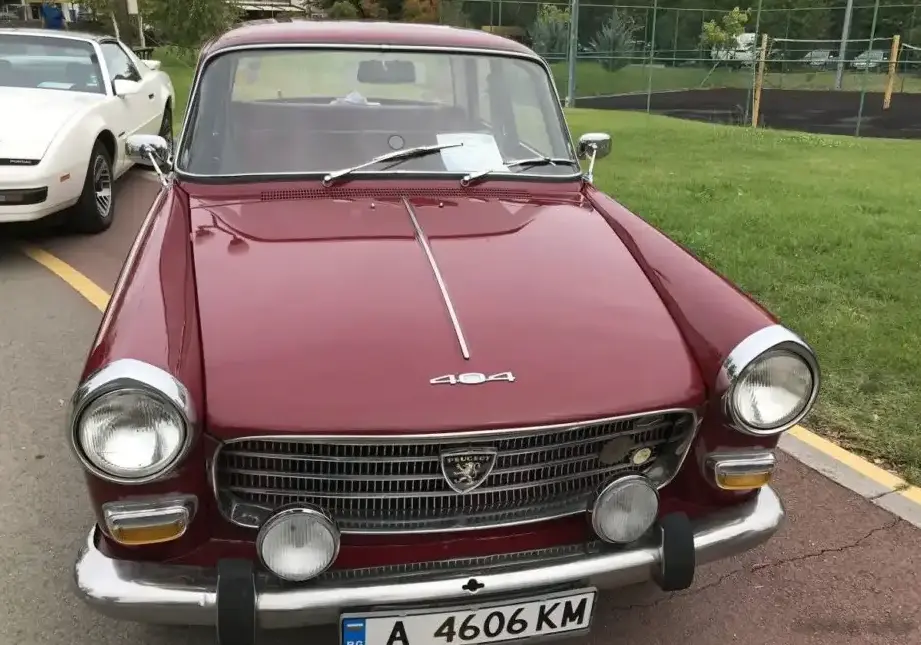
The Peugeot 404 Berline 1.6i Automatic, produced between 1965 and 1975, represents a significant chapter in Peugeot’s history. Positioned as a comfortable and relatively affordable option within the 404 range, this variant catered to buyers seeking a blend of practicality and ease of use. It was a mainstay of the 404 Berline (sedan) lineup, falling between the base models and the more powerful, often manually-equipped, higher-spec versions. The 404 itself was a pivotal model for Peugeot, representing a move towards more modern styling and engineering, and was particularly successful in both European and African markets, often serving as a durable and reliable vehicle in challenging conditions.
Technical Specifications
| Brand | Peugeot |
| Model | 404 |
| Generation | 404 Berline |
| Type (Engine) | 1.6i (68 Hp) Automatic |
| Start of production | 1965 |
| End of production | 1975 |
| Powertrain Architecture | Internal Combustion engine |
| Body type | Sedan |
| Seats | 5 |
| Doors | 4 |
| Fuel Type | Petrol (Gasoline) |
| Maximum speed | 148 km/h (91.96 mph) |
| Power | 68 Hp @ 5400 rpm |
| Power per litre | 42 Hp/l |
| Engine layout | Front, Longitudinal |
| Engine Model/Code | XC5 |
| Engine displacement | 1618 cm3 (98.74 cu. in.) |
| Number of cylinders | 4 |
| Engine configuration | Inline |
| Cylinder Bore | 84 mm (3.31 in.) |
| Piston Stroke | 73 mm (2.87 in.) |
| Compression ratio | 7.6:1 |
| Number of valves per cylinder | 2 |
| Fuel injection system | Carburettor |
| Engine aspiration | Naturally aspirated engine |
| Valvetrain | OHV |
| Engine oil capacity | 4 l (4.23 US qt | 3.52 UK qt) |
| Coolant | 7.5 l (7.93 US qt | 6.6 UK qt) |
| Trunk (boot) space – minimum | 400 l (14.13 cu. ft.) |
| Fuel tank capacity | 55 l (14.53 US gal | 12.1 UK gal) |
| Permitted trailer load with brakes (12%) | 1100 kg (2425.08 lbs.) |
| Length | 4450 mm (175.2 in.) |
| Width | 1620 mm (63.78 in.) |
| Wheelbase | 2650 mm (104.33 in.) |
| Front track | 1345 mm (52.95 in.) |
| Rear (Back) track | 1280 mm (50.39 in.) |
| Minimum turning circle (turning diameter) | 10.76 m (35.3 ft.) |
| Drivetrain Architecture | The Internal combustion engine (ICE) drives the rear wheels of the vehicle. |
| Drive wheel | Rear wheel drive |
| Number of gears and type of gearbox | automatic transmission ZF |
| Front suspension | Spring Strut, Coil spring |
| Rear suspension | Spring Strut, Coil spring |
| Front brakes | Disc |
| Rear brakes | Drum |
| Steering type | Worm-reduction unit |
| Tires size | 185/80 R15; 175/80 R16 |
| Wheel rims size | 15; 16 |
Powertrain & Engine Architecture
The heart of the 404 Berline 1.6i Automatic is the XC5 engine, a 1618cc inline-four cylinder unit. This engine utilized an overhead valve (OHV) valvetrain and a single carburetor for fuel delivery. The 7.6:1 compression ratio was typical for the era, prioritizing reliability and usability over outright performance. The engine’s longitudinal front-engine layout was a common configuration for rear-wheel-drive vehicles of the time. The automatic transmission was a three-speed unit sourced from ZF, a well-respected German transmission manufacturer. This ZF transmission was chosen for its durability and relatively smooth operation, although it wasn’t known for being particularly quick-shifting. The automatic gearbox was a significant selling point for buyers who preferred the convenience of not having to manually shift gears, especially in urban driving conditions.
Driving Characteristics
The 404 Berline 1.6i Automatic offered a comfortable, if not particularly sporty, driving experience. With 68 horsepower, acceleration was modest, and the car was geared more towards relaxed cruising than spirited driving. The automatic transmission, while convenient, did sap some power compared to the manual versions. Gear ratios were optimized for fuel economy and smooth transitions, rather than rapid acceleration. Compared to the more powerful 1.8-liter or V6-equipped 404s, the 1.6i Automatic felt noticeably slower, especially when fully loaded or climbing hills. However, the automatic transmission made it a more accessible and easier-to-drive option for a wider range of drivers.
Equipment & Trim Levels
The 1.6i Automatic trim generally included features considered standard for the time, such as a basic radio, heater, and cloth upholstery. The interior was functional and relatively spacious for a car of its size. Optional extras included a more sophisticated radio, whitewall tires, and upgraded interior trim. The dashboard layout was straightforward, with clearly marked gauges for speed, fuel level, and coolant temperature. The overall interior ambiance was one of understated elegance and practicality.
Chassis & Braking
The 404 Berline featured a traditional body-on-frame construction, providing a robust and durable chassis. Suspension consisted of coil springs and wishbone setups at the front and rear, offering a reasonably comfortable ride. Braking was accomplished via disc brakes at the front and drum brakes at the rear. Steering was handled by a worm-reduction unit, which provided a relatively heavy but precise steering feel. The suspension was tuned for comfort and stability, rather than aggressive handling. Stabilizer bars were often included, but their thickness varied depending on the specific market and trim level.
Market Reception & Comparison
The 404 Berline 1.6i Automatic was generally well-received by critics as a practical and reliable family car. It was praised for its comfortable ride, spacious interior, and ease of use. However, some reviewers noted its relatively modest performance compared to other models in the 404 range. Fuel economy was reasonable for the time, but not exceptional. Compared to the manual transmission versions, the automatic offered less driver engagement but greater convenience. The 1.6i Automatic was often seen as a good value proposition, offering a comfortable and reliable driving experience at a competitive price point.
Legacy
The Peugeot 404 Berline 1.6i Automatic has earned a reputation for durability and reliability. Many examples are still on the road today, a testament to the quality of their construction. The XC5 engine, while not particularly powerful, is known for its longevity and relatively simple maintenance requirements. The ZF automatic transmission, while aging, has also proven to be quite durable. In the used car market, the 1.6i Automatic is often sought after by enthusiasts who appreciate its classic styling and straightforward mechanicals. It represents a significant piece of automotive history, embodying the design and engineering principles of the 1960s and 1970s. Parts availability can be a challenge, but a dedicated community of enthusiasts continues to support the preservation of these classic Peugeots.
