
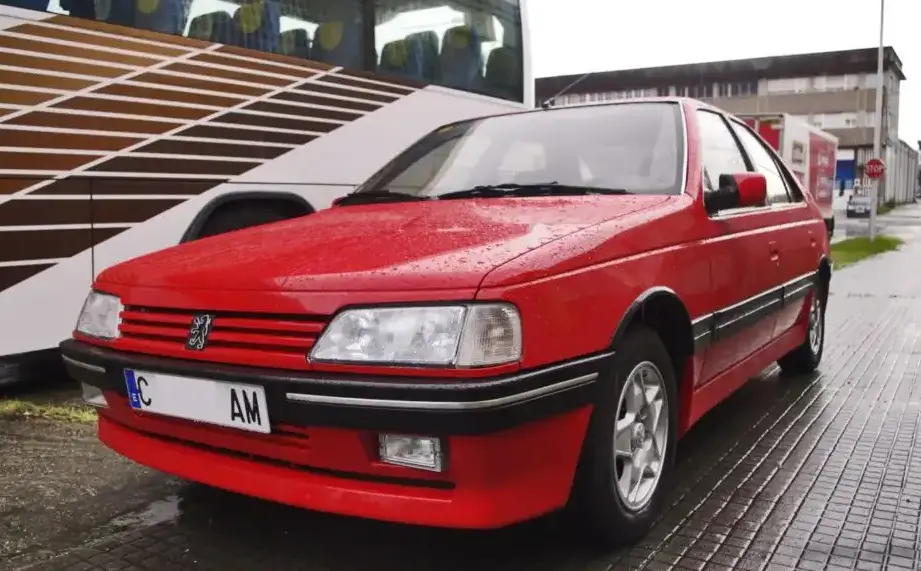
The Peugeot 405 1.6, producing 90 horsepower, was a mainstay of the 405 range from its introduction in 1989 until 1992. Positioned as the entry-level model in many European markets, it offered a balance of affordability, practicality, and Peugeot’s renowned driving characteristics. The 405 itself represented a significant step forward for Peugeot, replacing the aging 505 and embodying a more modern, aerodynamic design. Built on the platform designated 15B, the 405 aimed to compete with rivals like the Ford Sierra, Vauxhall/Opel Cavalier, and Citroën BX. This particular 1.6-liter variant was crucial for attracting budget-conscious buyers and establishing the 405 as a popular family sedan.
Technical Specifications
| Brand | Peugeot |
| Model | 405 |
| Generation | 405 I (15B) |
| Type (Engine) | 1.6 (90 Hp) |
| Start of production | 1989 |
| End of production | 1992 |
| Powertrain Architecture | Internal Combustion engine |
| Body type | Sedan |
| Seats | 5 |
| Doors | 4 |
| Fuel consumption (urban) | 9.5 l/100 km (24.8 US mpg) |
| Fuel consumption (extra urban) | 5.9 l/100 km (39.9 US mpg) |
| Fuel Type | Petrol (Gasoline) |
| Acceleration 0 – 100 km/h | 12.4 sec |
| Acceleration 0 – 62 mph | 12.4 sec |
| Acceleration 0 – 60 mph | 11.8 sec |
| Maximum speed | 175 km/h (108.74 mph) |
| Weight-to-power ratio | 11.4 kg/Hp |
| Weight-to-torque ratio | 7.8 kg/Nm |
| Power | 90 Hp @ 6000 rpm |
| Power per litre | 57 Hp/l |
| Torque | 132 Nm @ 2100 rpm (97.36 lb.-ft. @ 2100 rpm) |
| Engine layout | Front, Transverse |
| Engine Model/Code | BDZ XU5M |
| Engine displacement | 1580 cm3 (96.42 cu. in.) |
| Number of cylinders | 4 |
| Engine configuration | Inline |
| Cylinder Bore | 83 mm (3.27 in.) |
| Piston Stroke | 73 mm (2.87 in.) |
| Compression ratio | 9.26:1 |
| Number of valves per cylinder | 2 |
| Fuel injection system | Single-point injection |
| Engine aspiration | Naturally aspirated |
| Valvetrain | OHC |
| Engine oil capacity | 5 l (5.28 US qt | 4.4 UK qt) |
| Coolant | 6.5 l (6.87 US qt | 5.72 UK qt) |
| Kerb Weight | 1026 kg (2261.94 lbs.) |
| Max. weight | 1550 kg (3417.17 lbs.) |
| Max load | 524 kg (1155.22 lbs.) |
| Trunk (boot) space – minimum | 470 l (16.6 cu. ft.) |
| Fuel tank capacity | 70 l (18.49 US gal | 15.4 UK gal) |
| Permitted trailer load with brakes (12%) | 1200 kg (2645.55 lbs.) |
| Length | 4408 mm (173.54 in.) |
| Width | 1714 mm (67.48 in.) |
| Height | 1406 mm (55.35 in.) |
| Wheelbase | 2669 mm (105.08 in.) |
| Front track | 1448 mm (57.01 in.) |
| Rear (Back) track | 1441 mm (56.73 in.) |
| Front overhang | 817 mm (32.17 in.) |
| Rear overhang | 922 mm (36.3 in.) |
| Drag coefficient (Cd) | 0.31 |
| Minimum turning circle | 10.55 m (34.61 ft.) |
| Drivetrain Architecture | Front wheel drive |
| Drive wheel | Front wheel drive |
| Number of gears | 5 |
| Gearbox type | Manual transmission |
| Front suspension | Independent, McPherson with coil spring and anti-roll bar |
| Rear suspension | Torsion |
| Front brakes | Disc |
| Rear brakes | Drum |
| Steering type | Steering rack and pinion |
| Tires size | 175/70 R14 |
| Wheel rims size | 14 |
Powertrain & Engine Architecture
The heart of the 405 1.6 was the BDZ (or sometimes XU5M) engine, a 1.6-liter inline-four cylinder petrol engine. This engine was a staple in Peugeot and Citroën vehicles of the era. It featured a single overhead camshaft (OHC) valvetrain with two valves per cylinder. Fuel delivery was handled by a single-point fuel injection system, which, while less sophisticated than multi-point injection, contributed to reasonable fuel economy and acceptable performance for the target market. The engine produced 90 horsepower at 6000 rpm and 132 Nm (97.36 lb-ft) of torque at 2100 rpm. The engine’s relatively low compression ratio of 9.26:1 allowed it to run on lower octane fuel, a consideration for many European drivers. The 405 1.6 was typically paired with a five-speed manual transmission, although a three-speed automatic transmission was also available, albeit less common.
Driving Characteristics
The 405 1.6 with the manual transmission offered a reasonably engaging driving experience. While not a performance car, the engine provided adequate power for everyday driving. Acceleration from 0 to 60 mph took around 11.8 seconds, and the top speed was approximately 108.74 mph. The automatic transmission, however, noticeably dulled performance, extending the 0-60 mph time to around 13 seconds. The gear ratios in the automatic were optimized for fuel economy rather than spirited driving. The 405’s suspension, featuring a McPherson strut front setup and a torsion beam rear axle, provided a comfortable ride, absorbing bumps and imperfections in the road well. Steering was precise and well-weighted, contributing to a confident feel behind the wheel.
Equipment & Trim Levels
The 405 1.6 typically came with a fairly basic level of equipment, reflecting its position as the entry-level model. Standard features generally included central locking, power steering, and cloth upholstery. Higher trim levels, such as the GR or GL, added features like electric windows, a sunroof, and upgraded interior trim. Optional extras included air conditioning, alloy wheels, and a more sophisticated stereo system. The interior design was functional and straightforward, prioritizing practicality over luxury.
Chassis & Braking
The 405 1.6 utilized a front-wheel-drive layout. The front suspension consisted of independent McPherson struts with coil springs and an anti-roll bar, while the rear suspension employed a torsion beam. Braking was typically accomplished with disc brakes on the front wheels and drum brakes on the rear. The braking system provided adequate stopping power for the vehicle’s weight and performance. The 175/70 R14 tires offered a good balance of grip and ride comfort.
Market Reception & Comparison
The Peugeot 405 1.6 was generally well-received by automotive critics as a practical and affordable family sedan. It was praised for its comfortable ride, precise steering, and fuel efficiency. However, the 90-horsepower engine was sometimes criticized for being underpowered, particularly when paired with the automatic transmission. Compared to the more powerful 405 SRi or 405 T16 models, the 1.6 offered a significantly different driving experience, prioritizing economy and comfort over performance. The 1.9 TDI diesel version offered superior fuel economy but lacked the refinement of the petrol engine.
Legacy
The Peugeot 405 1.6, while not the most glamorous version of the 405, proved to be a reliable and durable vehicle. The XU5M engine is known for its longevity, and many examples are still on the road today. The availability of spare parts remains relatively good, making it a viable option for classic car enthusiasts. In the used car market, the 405 1.6 represents an affordable entry point into classic Peugeot ownership, offering a taste of French automotive engineering from the late 1980s and early 1990s. Its simplicity and robust construction contribute to its continued appeal among those seeking a practical and characterful classic car.
