
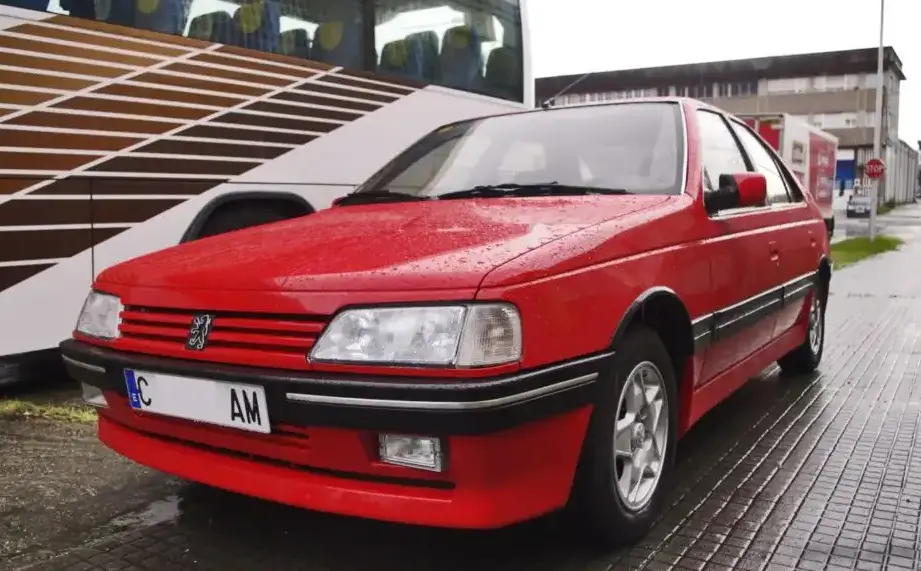
The Peugeot 405 1.9 Automatic, produced between 1988 and 1992, represented a significant step forward for Peugeot in the mid-size sedan segment. Part of the 405 I (15B) generation, this variant offered a blend of comfort and practicality aimed at buyers seeking a refined driving experience without sacrificing affordability. Positioned as a mid-range offering within the 405 lineup, it slotted between the base 1.6-liter models and the more performance-oriented 2.0-liter and V6 options. The 405, as a whole, was Peugeot’s replacement for the successful 505, and aimed to offer a more modern and aerodynamic design, coupled with improved fuel efficiency and handling.
Technical Specifications
| Brand | Peugeot |
| Model | 405 |
| Generation | 405 I (15B) |
| Type (Engine) | 1.9 (120 Hp) Automatic |
| Start of production | 1988 |
| End of production | 1992 |
| Powertrain Architecture | Internal Combustion engine |
| Body type | Sedan |
| Seats | 5 |
| Doors | 4 |
| Fuel consumption (urban) | 10.8 l/100 km (21.8 US mpg) |
| Fuel consumption (extra urban) | 7.1 l/100 km (33.1 US mpg) |
| Fuel Type | Petrol (Gasoline) |
| Acceleration 0 – 100 km/h | 12.5 sec |
| Acceleration 0 – 62 mph | 12.5 sec |
| Acceleration 0 – 60 mph | 11.9 sec |
| Maximum speed | 192 km/h (119.3 mph) |
| Weight-to-power ratio | 8.9 kg/Hp |
| Weight-to-torque ratio | 7 kg/Nm |
| Power | 120 Hp @ 6000 rpm |
| Torque | 153 Nm @ 3000 rpm (112.85 lb.-ft. @ 3000 rpm) |
| Engine layout | Front, Transverse |
| Engine Model/Code | DKZ XU9JAZ |
| Engine displacement | 1905 cm3 (116.25 cu. in.) |
| Number of cylinders | 4 |
| Engine configuration | Inline |
| Cylinder Bore | 83 mm (3.27 in.) |
| Piston Stroke | 88 mm (3.46 in.) |
| Compression ratio | 9.2:1 |
| Number of valves per cylinder | 2 |
| Fuel injection system | Multi-port manifold injection |
| Engine aspiration | Naturally aspirated engine |
| Valvetrain | OHC |
| Engine oil capacity | 4.8 l (5.07 US qt | 4.22 UK qt) |
| Coolant capacity | 6.6 l (6.97 US qt | 5.81 UK qt) |
| Kerb Weight | 1070 kg (2358.95 lbs.) |
| Max. weight | 1550 kg (3417.17 lbs.) |
| Max load | 480 kg (1058.22 lbs.) |
| Trunk (boot) space – minimum | 470 l (16.6 cu. ft.) |
| Fuel tank capacity | 70 l (18.49 US gal | 15.4 UK gal) |
| Permitted trailer load with brakes (12%) | 1200 kg (2645.55 lbs.) |
| Length | 4408 mm (173.54 in.) |
| Width | 1714 mm (67.48 in.) |
| Height | 1406 mm (55.35 in.) |
| Wheelbase | 2669 mm (105.08 in.) |
| Front track | 1450 mm (57.09 in.) |
| Rear (Back) track | 1443 mm (56.81 in.) |
| Front overhang | 817 mm (32.17 in.) |
| Rear overhang | 922 mm (36.3 in.) |
| Drag coefficient (Cd) | 0.31 |
| Minimum turning circle | 10.55 m (34.61 ft.) |
| Drivetrain Architecture | Front wheel drive |
| Number of gears and type of gearbox | 4 gears, automatic transmission |
| Front suspension | Independent, type McPherson with coil spring and anti-roll bar |
| Rear suspension | Torsion |
| Front brakes | Ventilated discs |
| Rear brakes | Disc |
| Steering type | Steering rack and pinion |
| Tires size | 185/65 R14 |
| Wheel rims size | 14 |
Powertrain & Engine Architecture
The heart of the 405 1.9 Automatic is the XU9JAZ engine, a 1.9-liter inline-four cylinder petrol engine. This engine, part of Peugeot’s XU series, was known for its robustness and relatively simple design. It featured a single overhead camshaft (OHC) operating two valves per cylinder. Fuel delivery was handled by a multi-port fuel injection system, contributing to improved fuel efficiency and smoother operation compared to carbureted engines. The engine produced 120 horsepower at 6000 rpm and 153 Nm (113 lb-ft) of torque at 3000 rpm. The automatic transmission was a four-speed unit, designed to provide comfortable and effortless shifting. While not known for its sportiness, it was well-suited to the engine’s torque characteristics and the car’s intended role as a comfortable family sedan.
Driving Characteristics
The 405 1.9 Automatic offered a comfortable and relaxed driving experience. Acceleration was adequate for everyday driving, with a 0-60 mph time of around 11.9 seconds. However, it was noticeably slower than the manual transmission versions or those equipped with the 2.0-liter engine. The automatic transmission, while smooth, did sap some power from the engine. The gear ratios were optimized for fuel economy and cruising comfort rather than outright performance. The steering was light and precise, making the car easy to maneuver in urban environments. The suspension provided a good balance between ride comfort and handling, absorbing bumps and imperfections in the road well.
Equipment & Trim Levels
The 405 1.9 Automatic typically came equipped with features such as power steering, central locking, and electric front windows. Interior upholstery was usually cloth, with a relatively simple and functional dashboard layout. Optional extras included air conditioning, a sunroof, and upgraded audio systems. The trim level often dictated the quality of the cloth upholstery and the availability of additional features. Generally, this trim level was aimed at buyers who prioritized comfort and convenience over sporty aesthetics or high-performance features.
Chassis & Braking
The 405 1.9 Automatic featured an independent McPherson strut front suspension with coil springs and an anti-roll bar. The rear suspension utilized a torsion beam setup, which was cost-effective and provided adequate ride comfort. Braking was handled by ventilated discs on the front wheels and discs on the rear, providing sufficient stopping power for the car’s weight and performance. The steering system was a rack and pinion type, offering precise and responsive steering feel.
Market Reception & Comparison
The Peugeot 405 1.9 Automatic was generally well-received by automotive critics as a practical and comfortable family sedan. It was praised for its ride quality, spacious interior, and fuel efficiency. However, some critics noted that the automatic transmission dulled the engine’s performance compared to the manual versions. Compared to the 2.0-liter models, the 1.9 Automatic offered a more affordable entry point into the 405 range, but at the expense of performance. Fuel economy was a strong point, offering around 21.8 mpg in the city and 33.1 mpg on the highway.
Legacy
The Peugeot 405 1.9 Automatic, while not the most exciting variant in the lineup, proved to be a reliable and durable car. The XU9JAZ engine is known for its longevity, and with proper maintenance, can withstand high mileage. Today, these cars are becoming increasingly sought after by classic car enthusiasts and collectors. Parts availability can be a challenge, but a dedicated community of owners and specialists exists to support the preservation of these vehicles. The 405, in general, is remembered as a well-engineered and stylish sedan that represented a high point in Peugeot’s design and engineering prowess.
