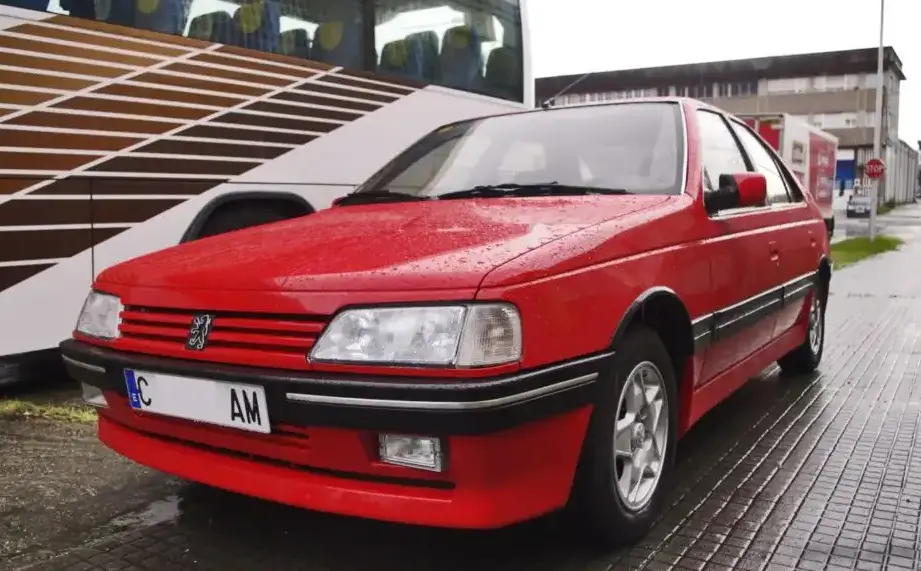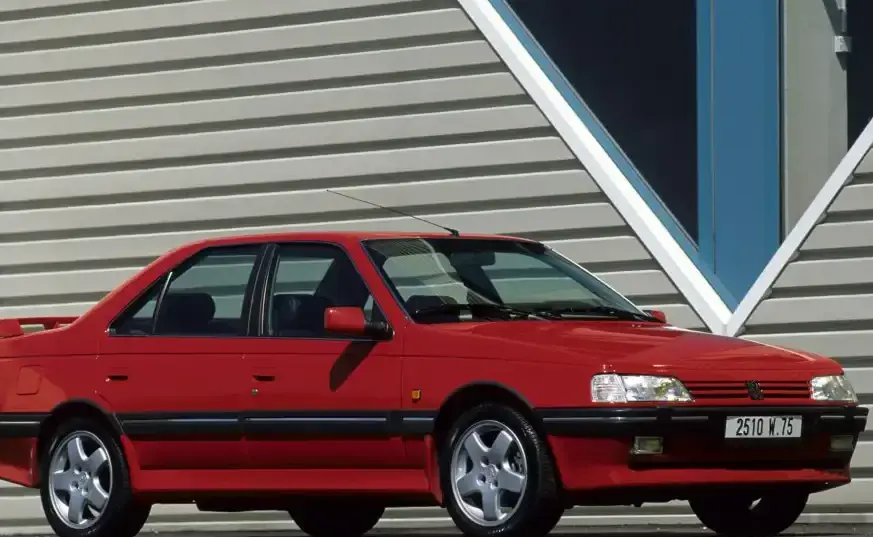
The Peugeot 405 1.6, produced from 1992 to 1995 as part of the 405 I (15B) facelift series, represented an entry-level offering within the broader 405 range. Positioned as a practical and economical sedan, it served as a stepping stone into the 405 lineup, appealing to buyers prioritizing affordability and fuel efficiency over outright performance. This variant played a significant role in Peugeot’s European market strategy, offering a comfortable and reliable family car at a competitive price point. The 405 itself was a pivotal model for Peugeot, replacing the aging 505 and introducing a more modern design and engineering approach.
Technical Specifications
| Brand | Peugeot |
| Model | 405 |
| Generation | 405 I (15B, facelift 1992) |
| Type (Engine) | 1.6 (88 Hp) |
| Start of production | 1992 |
| End of production | 1995 |
| Powertrain Architecture | Internal Combustion engine |
| Body type | Sedan |
| Seats | 5 |
| Doors | 4 |
| Fuel consumption (urban) | 9.9 l/100 km (23.8 US mpg) |
| Fuel consumption (extra urban) | 5.8 l/100 km (40.6 US mpg) |
| Fuel Type | Petrol (Gasoline) |
| Acceleration 0 – 100 km/h | 13.6 sec |
| Acceleration 0 – 62 mph | 13.6 sec |
| Acceleration 0 – 60 mph | 12.9 sec |
| Maximum speed | 176 km/h (109.36 mph) |
| Weight-to-power ratio | 12.4 kg/Hp |
| Weight-to-torque ratio | 8.3 kg/Nm |
| Power | 88 Hp @ 6000 rpm |
| Torque | 132 Nm @ 2600 rpm (97.36 lb.-ft. @ 2600 rpm) |
| Engine layout | Front, Transverse |
| Engine Model/Code | BDY XU5M2Z |
| Engine displacement | 1580 cm3 (96.42 cu. in.) |
| Number of cylinders | 4 |
| Engine configuration | Inline |
| Number of valves per cylinder | 2 |
| Fuel injection system | Single-point injection |
| Engine aspiration | Naturally aspirated |
| Engine oil capacity | 4.8 l (5.07 US qt | 4.22 UK qt) |
| Coolant capacity | 6.6 l (6.97 US qt | 5.81 UK qt) |
| Kerb Weight | 1090 kg (2403.04 lbs.) |
| Max. weight | 1570 kg (3461.26 lbs.) |
| Max load | 480 kg (1058.22 lbs.) |
| Trunk (boot) space – minimum | 470 l (16.6 cu. ft.) |
| Fuel tank capacity | 70 l (18.49 US gal | 15.4 UK gal) |
| Permitted trailer load with brakes (12%) | 1200 kg (2645.55 lbs.) |
| Length | 4408 mm (173.54 in.) |
| Width | 1714 mm (67.48 in.) |
| Height | 1406 mm (55.35 in.) |
| Wheelbase | 2669 mm (105.08 in.) |
| Front track | 1450 mm (57.09 in.) |
| Rear track | 1443 mm (56.81 in.) |
| Front overhang | 817 mm (32.17 in.) |
| Rear overhang | 922 mm (36.3 in.) |
| Drivetrain Architecture | Front wheel drive |
| Number of gears | 5 |
| Gearbox type | Manual transmission |
| Front suspension | Independent, McPherson with coil spring and anti-roll bar |
| Rear suspension | Torsion |
| Front brakes | Disc |
| Rear brakes | Drum |
| Steering type | Steering rack and pinion |
| Tires size | 175/70 R14 |
| Wheel rims size | 14 |
Powertrain & Engine Architecture
The 1.6-liter engine, designated BDY and belonging to the XU5M2Z series, was a naturally aspirated, inline-four cylinder unit. It featured a single overhead camshaft (SOHC) and two valves per cylinder. The fuel system employed single-point fuel injection, a relatively common technology in the early 1990s, offering a balance between cost and efficiency. This system delivered fuel into the intake manifold rather than directly into the cylinders, as seen in later multi-point injection systems. The engine produced 88 horsepower at 6000 rpm and 132 Nm (97.36 lb-ft) of torque at 2600 rpm. The 405 1.6 was typically paired with a five-speed manual transmission, although a three-speed automatic transmission was also available, albeit less common. The automatic gearbox was designed for smooth operation and ease of use, prioritizing comfort over sporty performance.
Driving Characteristics
The 1.6-liter engine in the 405 provided adequate, but not exhilarating, performance. Acceleration from 0 to 60 mph took around 12.9 seconds, and the top speed was approximately 109 mph. Compared to the more powerful 1.9 and 2.0-liter versions of the 405, the 1.6 felt noticeably slower, particularly when fully loaded or tackling inclines. The five-speed manual transmission allowed drivers to make the most of the available power, while the optional automatic transmission prioritized ease of driving. The automatic, while comfortable, resulted in a further reduction in acceleration and responsiveness. Gear ratios were tuned for fuel economy rather than outright speed, making it a suitable choice for urban commuting and long-distance cruising.
Equipment & Trim Levels
The 405 1.6 typically came with a relatively basic level of equipment, reflecting its position as the entry-level model. Standard features generally included central locking, power steering, and cloth upholstery. Higher trim levels, such as the GR or SR, offered additional features like electric windows, a sunroof, and upgraded interior trim. Optional extras included air conditioning, alloy wheels, and a more sophisticated audio system. The interior design was functional and straightforward, prioritizing practicality and durability. The dashboard layout was typical of early 1990s French cars, with a focus on ergonomics and ease of use.
Chassis & Braking
The 405 1.6 utilized an independent McPherson strut suspension at the front, providing a comfortable ride and decent handling. The rear suspension employed a torsion beam setup, which was cost-effective and space-efficient. Braking was handled by disc brakes at the front and drum brakes at the rear. The braking system was adequate for everyday driving, but lacked the stopping power of the larger, more powerful 405 variants. The 1.6 model’s lighter weight, compared to its siblings, helped to mitigate the limitations of the drum brakes. Stabilizer bars were fitted to both the front and rear axles to reduce body roll during cornering.
Market Reception & Comparison
The Peugeot 405 1.6 was generally well-received by critics as a practical and affordable family car. It was praised for its comfortable ride, decent fuel economy, and reliable engine. However, it was often criticized for its lack of performance compared to the higher-spec models. Compared to rivals like the Ford Sierra and Vauxhall Cavalier, the 405 1.6 offered a more refined driving experience and a more stylish interior. The 1.9-liter diesel version of the 405 offered superior fuel economy, while the 2.0-liter gasoline models provided significantly more power. The 1.6 was often seen as a sensible choice for buyers prioritizing economy and reliability over performance.
Legacy
The Peugeot 405 1.6, while not the most powerful or exciting version of the 405, proved to be a reliable and durable car. The XU5M2Z engine is known for its longevity, and many examples are still on the road today. The 405’s simple design and robust construction contribute to its enduring appeal. In the used car market, the 1.6 variant remains an affordable option for those seeking a classic French sedan. Maintenance costs are generally low, and parts availability is still reasonable. The 405 1.6 represents a significant chapter in Peugeot’s history, embodying the brand’s commitment to producing practical, reliable, and stylish vehicles.