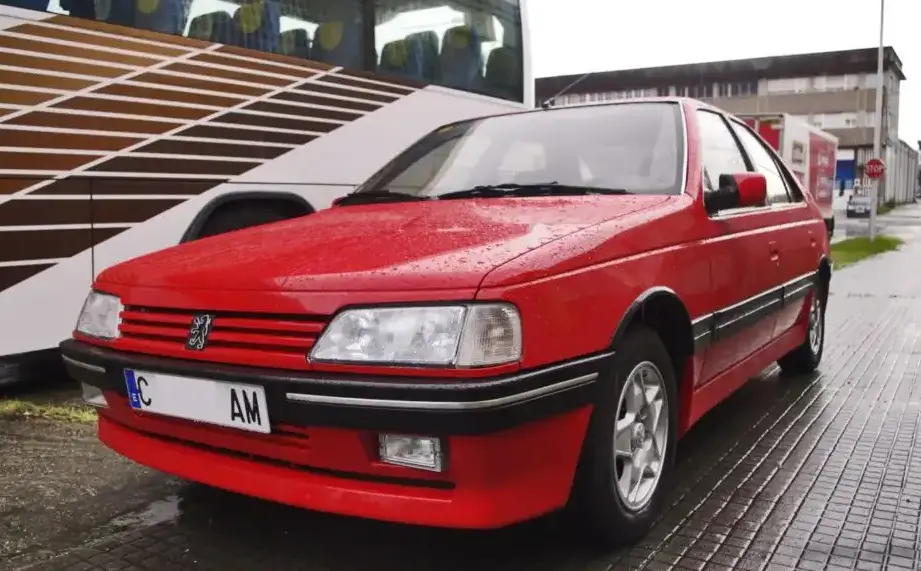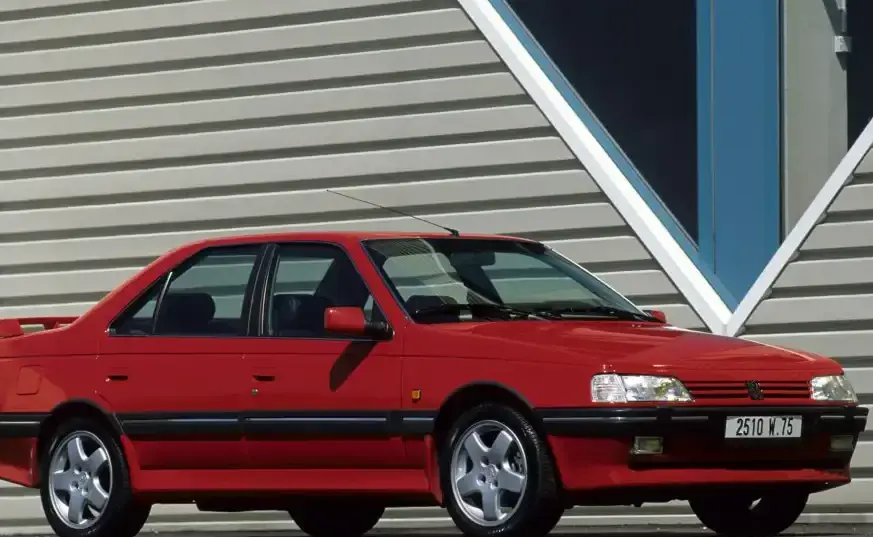
The Peugeot 405 I, specifically the 1.9 D variant produced between 1994 and 1995, represented an entry-level diesel offering within the refreshed 15B series of the popular 405 range. Following the 1992 facelift, this model aimed to provide economical transportation for buyers prioritizing fuel efficiency over outright performance. Positioned below the gasoline-powered variants and the more powerful diesel options, the 1.9 D served as a practical and affordable choice in European markets, particularly for high-mileage drivers. It was a key component of Peugeot’s strategy to offer a diverse lineup catering to a broad spectrum of customer needs.
Technical Specifications
| Brand | Peugeot |
| Model | 405 |
| Generation | 405 I (15B, facelift 1992) |
| Type (Engine) | 1.9 D (68 Hp) |
| Start of production | 1994 |
| End of production | 1995 |
| Powertrain Architecture | Internal Combustion engine |
| Body type | Sedan |
| Seats | 5 |
| Doors | 4 |
| Fuel consumption (combined) | 6.3 l/100 km (37.3 US mpg, 44.8 UK mpg, 15.9 km/l) |
| Fuel Type | Diesel |
| Acceleration 0 – 100 km/h | 18.3 sec |
| Acceleration 0 – 62 mph | 18.3 sec |
| Acceleration 0 – 60 mph | 17.4 sec |
| Maximum speed | 162 km/h (100.66 mph) |
| Weight-to-power ratio | 16.7 kg/Hp, 59.9 Hp/tonne |
| Weight-to-torque ratio | 9.5 kg/Nm, 105.7 Nm/tonne |
| Power | 68 Hp @ 4600 rpm |
| Power per litre | 35.7 Hp/l |
| Torque | 120 Nm @ 2000 rpm (88.51 lb.-ft. @ 2000 rpm) |
| Engine layout | Front, Transverse |
| Engine Model/Code | DJY XUD9A |
| Engine displacement | 1905 cm3 (116.25 cu. in.) |
| Number of cylinders | 4 |
| Engine configuration | Inline |
| Cylinder Bore | 83 mm (3.27 in.) |
| Piston Stroke | 88 mm (3.46 in.) |
| Compression ratio | 23:1 |
| Number of valves per cylinder | 2 |
| Fuel injection system | Precombustion chamber injection |
| Engine aspiration | Naturally aspirated engine |
| Valvetrain | OHC |
| Engine oil capacity | 4 l (4.23 US qt | 3.52 UK qt) |
| Coolant | 7.8 l (8.24 US qt | 6.86 UK qt) |
| Kerb Weight | 1135 kg (2502.25 lbs.) |
| Max. weight | 1615 kg (3560.47 lbs.) |
| Max load | 480 kg (1058.22 lbs.) |
| Trunk (boot) space – minimum | 470 l (16.6 cu. ft.) |
| Fuel tank capacity | 70 l (18.49 US gal | 15.4 UK gal) |
| Length | 4408 mm (173.54 in.) |
| Width | 1694 mm (66.69 in.) |
| Height | 1406 mm (55.35 in.) |
| Wheelbase | 2669 mm (105.08 in.) |
| Front track | 1450 mm (57.09 in.) |
| Rear (Back) track | 1443 mm (56.81 in.) |
| Drivetrain Architecture | The Internal combustion engine (ICE) drives the front wheels of the vehicle. |
| Drive wheel | Front wheel drive |
| Number of gears and type of gearbox | 5 gears, manual transmission |
| Front suspension | Wishbone |
| Rear suspension | Trailing arm |
| Front brakes | Ventilated discs |
| Rear brakes | Drum |
| Assisting systems | ABS (Anti-lock braking system) |
| Steering type | Steering rack and pinion |
| Power steering | Hydraulic Steering |
| Tires size | 175/70 R14 |
Powertrain & Engine Architecture
The heart of the 405 1.9 D was the XUD9A engine, specifically the DJY variant. This 1.9-liter inline-four diesel engine was a mainstay of Peugeot and Citroën vehicles throughout the 1980s and 1990s. It employed precombustion chamber injection, a system where fuel is injected into a small auxiliary chamber within the cylinder head, promoting more complete combustion. The engine featured a single overhead camshaft (OHC) operating two valves per cylinder. The XUD9A was known for its robustness and relatively simple design, contributing to its longevity. The 68 horsepower output was achieved at 4600 rpm, while peak torque of 120 Nm (88.51 lb-ft) arrived at 2000 rpm. The engine was transversely mounted in the front of the vehicle, driving the front wheels. The 405 1.9 D utilized a five-speed manual transmission, optimized for fuel economy rather than sporty acceleration.
Driving Characteristics
The 405 1.9 D offered a decidedly utilitarian driving experience. Acceleration was slow, with a 0-60 mph time of around 17.4 seconds. The focus was on maximizing fuel efficiency, and the engine’s torque characteristics meant that it was best suited for relaxed cruising and steady-state driving. The five-speed manual transmission helped to keep the engine within its optimal operating range, but required frequent shifting to maintain momentum, especially when encountering hills. Compared to the more powerful gasoline variants, the 1.9 D lacked the responsiveness and overall performance. However, it offered a significant advantage in fuel economy, making it a popular choice for drivers covering long distances. The gear ratios were spaced to prioritize economy, with a relatively tall fifth gear for highway cruising.
Equipment & Trim Levels
The 1.9 D trim level was generally considered the base model within the 405 range. Standard equipment typically included basic cloth upholstery, a simple dashboard layout, and manual windows and door locks. Power steering was often included, but air conditioning and other comfort features were usually optional extras. The interior was functional and durable, prioritizing practicality over luxury. Optional extras could include upgraded audio systems, central locking, and metallic paint finishes. The overall aesthetic was understated and focused on providing a comfortable and reliable driving environment.
Chassis & Braking
The 405 1.9 D utilized a relatively conventional chassis setup. The front suspension featured independent wishbones, while the rear suspension employed a trailing arm configuration. This setup provided a reasonable balance between ride comfort and handling. The braking system consisted of ventilated discs at the front and drum brakes at the rear. Anti-lock braking system (ABS) was often included as standard equipment, enhancing safety. The suspension was tuned for comfort, prioritizing a smooth ride over sporty handling. Stabilizer bars were present, but were relatively modest in size, reflecting the car’s focus on practicality rather than performance.
Market Reception & Comparison
The Peugeot 405 1.9 D was generally well-received as an economical and reliable family car. Critics praised its fuel efficiency and robust engine, but noted its lack of performance. Compared to the gasoline-powered 405 variants, the 1.9 D offered significantly better fuel economy, but at the expense of acceleration and overall driving enjoyment. Compared to other diesel offerings in its class, such as the Renault 19 1.9 D, the 405 1.9 D was considered to be a competitive option, offering a good balance of price, economy, and reliability. Its simplicity also meant lower maintenance costs compared to more complex gasoline engines.
Legacy
The Peugeot 405 1.9 D, and the XUD9A engine in particular, has earned a reputation for exceptional durability and longevity. Many examples are still on the road today, testament to the engine’s robust construction and relatively simple design. The XUD9A engine is known for its ability to withstand high mileage with proper maintenance. In the used car market, the 405 1.9 D remains a popular choice for budget-conscious buyers seeking a reliable and economical vehicle. While not a performance icon, the 405 1.9 D represents a practical and enduring example of 1990s French automotive engineering.