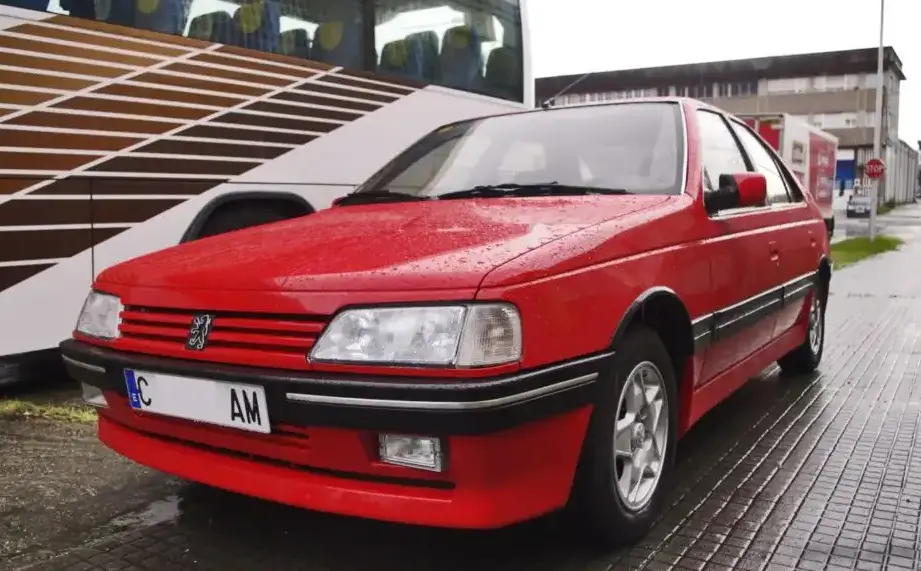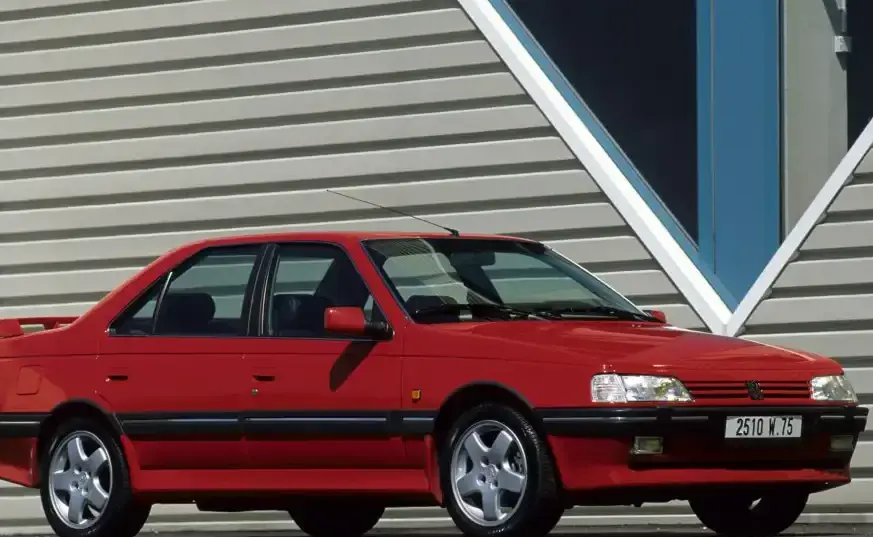
The Peugeot 405 2.0, produced from 1992 to 1995, represents a significant refinement of the original 405 series (15B), which debuted in 1987. This facelifted version, often referred to as the 405 I, aimed to enhance the model’s appeal with updated styling and improved mechanical components. The 2.0-liter variant occupied a mid-range position within the 405 lineup, offering a balance between performance and affordability, slotting above the base 1.6L models and below the more powerful and luxurious 2.0 SRi and V6 options. It was primarily marketed in Europe as a practical and comfortable family sedan, competing with vehicles like the Ford Mondeo, Opel Vectra, and Renault 21.
Technical Specifications
| Brand | Peugeot |
| Model | 405 |
| Generation | 405 I (15B, facelift 1992) |
| Type (Engine) | 2.0 (121 Hp) |
| Start of production | 1992 |
| End of production | 1995 |
| Powertrain Architecture | Internal Combustion engine |
| Body type | Sedan |
| Seats | 5 |
| Doors | 4 |
| Fuel Type | Petrol (Gasoline) |
| Acceleration 0 – 100 km/h | 11.3 sec |
| Acceleration 0 – 62 mph | 11.3 sec |
| Acceleration 0 – 60 mph | 10.7 sec |
| Maximum speed | 197 km/h (122.41 mph) |
| Weight-to-power ratio | 9.4 kg/Hp, 106.6 Hp/tonne |
| Weight-to-torque ratio | 6.4 kg/Nm, 155.1 Nm/tonne |
| Power | 121 Hp @ 5750 rpm |
| Power per litre | 60.6 Hp/l |
| Torque | 176 Nm @ 2750 rpm (129.81 lb.-ft. @ 2750 rpm) |
| Engine layout | Front, Transverse |
| Engine Model/Code | RFX XU10J2C |
| Engine displacement | 1998 cm3 (121.93 cu. in.) |
| Number of cylinders | 4 |
| Engine configuration | Inline |
| Cylinder Bore | 86 mm (3.39 in.) |
| Piston Stroke | 86 mm (3.39 in.) |
| Compression ratio | 9.5:1 |
| Number of valves per cylinder | 2 |
| Fuel injection system | Multi-port manifold injection |
| Engine aspiration | Naturally aspirated engine |
| Valvetrain | SOHC |
| Engine oil capacity | 4.3 l (4.54 US qt | 3.78 UK qt) |
| Coolant | 7 l (7.4 US qt | 6.16 UK qt) |
| Kerb Weight | 1135 kg (2502.25 lbs) |
| Max. weight | 1615 kg (3560.47 lbs) |
| Max load | 480 kg (1058.22 lbs) |
| Trunk (boot) space – minimum | 470 l (16.6 cu. ft.) |
| Fuel tank capacity | 70 l (18.49 US gal | 15.4 UK gal) |
| Length | 4408 mm (173.54 in.) |
| Width | 1694 mm (66.69 in.) |
| Height | 1406 mm (55.35 in.) |
| Wheelbase | 2669 mm (105.08 in.) |
| Front track | 1450 mm (57.09 in.) |
| Rear (Back) track | 1443 mm (56.81 in.) |
| Minimum turning circle | 11.00 m (36.09 ft.) |
| Drivetrain Architecture | The Internal combustion engine (ICE) drives the front wheels of the vehicle. |
| Drive wheel | Front wheel drive |
| Number of gears and type of gearbox | 5 gears, manual transmission |
| Front suspension | Wishbone |
| Rear suspension | Trailing arm |
| Front brakes | Ventilated discs |
| Rear brakes | Disc |
| Assisting systems | ABS (Anti-lock braking system) |
| Steering type | Steering rack and pinion |
| Power steering | Hydraulic Steering |
| Tires size | 185/65 R14 |
| Wheel rims size | 14 |
Powertrain & Engine Architecture
The heart of the 405 2.0 is the XU10J2C engine, a 1.998-liter (121.93 cubic inches) inline-four cylinder powerplant. This engine is a member of the XU series, renowned for its durability and relatively simple design. It features a single overhead camshaft (SOHC) valvetrain operating two valves per cylinder. Fuel delivery is managed by a Bosch multi-port fuel injection system, providing precise fuel metering for improved efficiency and reduced emissions. The engine’s 9.5:1 compression ratio contributes to its respectable power output of 121 horsepower at 5750 rpm and 176 Nm (129.81 lb-ft) of torque at 2750 rpm. The engine is transversely mounted, driving the front wheels. The standard transmission for this variant was a five-speed manual gearbox, although a three-speed automatic transmission was also available, albeit less common.
Driving Characteristics
The 405 2.0 with the five-speed manual transmission offered a reasonably engaging driving experience. While not a sports car, the engine provided adequate power for everyday driving and overtaking maneuvers. The gear ratios were well-spaced, allowing the engine to remain within its optimal power band. The automatic transmission, while offering convenience, noticeably dulled the car’s performance. Acceleration from 0 to 60 mph took approximately 10.7 seconds with the manual, increasing to around 12-13 seconds with the automatic. The suspension, featuring a wishbone front setup and a trailing arm rear, provided a comfortable ride, absorbing bumps and imperfections in the road effectively. Steering was precise, thanks to the rack and pinion system with hydraulic assistance.
Equipment & Trim Levels
The 405 2.0 typically came equipped with features considered standard for a mid-range family sedan of its era. These included central locking, power steering, and a basic stereo system. Interior upholstery was typically cloth, with options for upgraded materials available. The dashboard layout was functional and straightforward, with clearly labeled controls. Optional extras included air conditioning, electric windows, and a sunroof. The trim level often dictated the availability of these features, with higher trims offering more standard equipment.
Chassis & Braking
The 405 2.0 utilized a front-wheel-drive chassis with a MacPherson strut front suspension and a trailing arm rear suspension. Braking duties were handled by ventilated discs at the front and solid discs at the rear. An Anti-lock Braking System (ABS) was available, enhancing safety by preventing wheel lockup during hard braking. The car’s curb weight of 1135 kg (2502.25 lbs) contributed to its relatively nimble handling. Stabilizer bars were fitted to both the front and rear axles to reduce body roll during cornering.
Market Reception & Comparison
The Peugeot 405 2.0 was generally well-received by automotive critics. It was praised for its comfortable ride, spacious interior, and reliable engine. However, some reviewers noted that the styling was somewhat conservative compared to its rivals. Compared to the 1.6-liter models, the 2.0 offered a significant performance boost, making it a more enjoyable car to drive. The 2.0 SRi and V6 variants provided even greater performance, but at a higher price point. Fuel economy was respectable for its class, averaging around 28-32 mpg in mixed driving conditions. The 405 2.0 proved to be a reliable vehicle, with relatively few common mechanical issues.
Legacy
The Peugeot 405 2.0 has developed a loyal following among enthusiasts. The XU10J2C engine is known for its robustness and longevity, and well-maintained examples can still provide years of reliable service. The car’s simple design makes it relatively easy to repair and maintain. Today, the 405 2.0 is considered a classic car, and well-preserved examples are becoming increasingly collectible. While not as sought-after as some of its more powerful siblings, the 2.0 offers a compelling combination of practicality, comfort, and affordability, making it a worthy representative of Peugeot’s engineering prowess during the early 1990s.