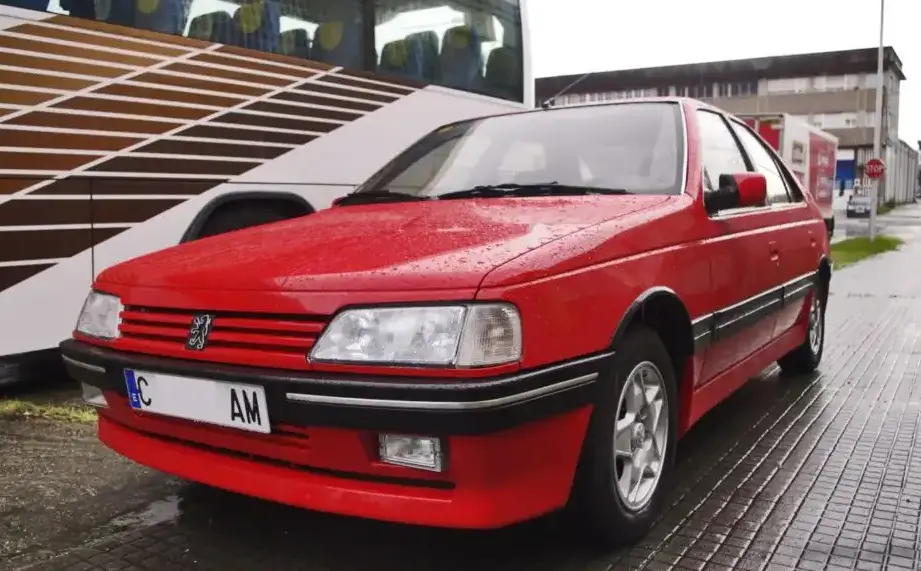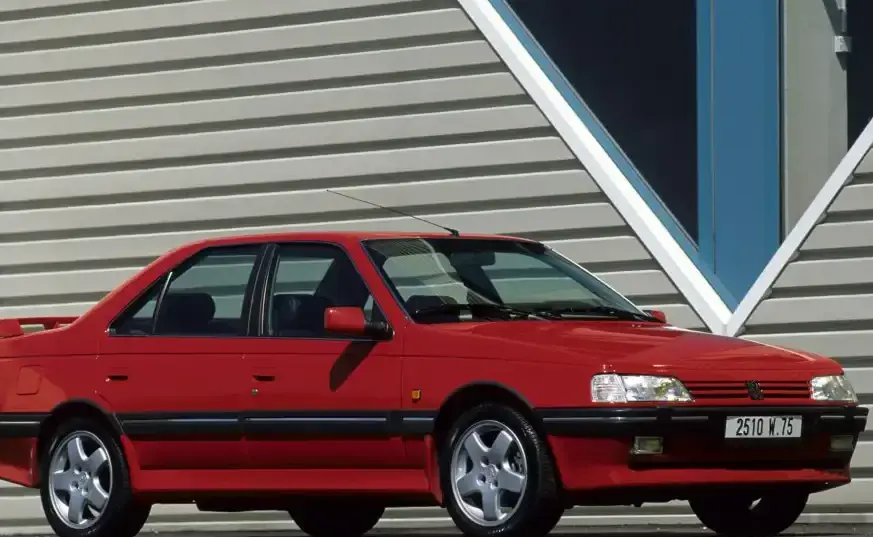
The Peugeot 405 2.0 16V, produced between 1994 and 1995, represents a high-performance variant of the popular 405 range. This model, designated as part of the 15B series following the 1992 facelift, was positioned as a sporty offering within the lineup, appealing to drivers seeking a more engaging driving experience. It built upon the success of the 405, a car that had established Peugeot as a maker of well-engineered and stylish mid-size sedans in Europe. The 2.0 16V was a key component of Peugeot’s strategy to offer a diverse range of engines and trim levels to cater to a broad customer base.
Technical Specifications
| Brand | Peugeot |
| Model | 405 |
| Generation | 405 I (15B, facelift 1992) |
| Type (Engine) | 2.0 16V (150 Hp) |
| Start of production | 1994 |
| End of production | 1995 |
| Powertrain Architecture | Internal Combustion engine |
| Body type | Sedan |
| Seats | 5 |
| Doors | 4 |
| Fuel consumption (combined) | 9.2 l/100 km (25.6 US mpg, 30.7 UK mpg, 10.9 km/l) |
| Fuel Type | Petrol (Gasoline) |
| Acceleration 0 – 100 km/h | 9.8 sec |
| Acceleration 0 – 62 mph | 9.8 sec |
| Acceleration 0 – 60 mph | 9.3 sec |
| Maximum speed | 215 km/h (133.59 mph) |
| Weight-to-power ratio | 7.9 kg/Hp, 127.1 Hp/tonne |
| Weight-to-torque ratio | 6.4 kg/Nm, 155.1 Nm/tonne |
| Power | 150 Hp @ 6500 rpm |
| Power per litre | 75.1 Hp/l |
| Torque | 183 Nm @ 3500 rpm (134.97 lb.-ft. @ 3500 rpm) |
| Engine layout | Front, Transverse |
| Engine Model/Code | RFT XU10J4 |
| Engine displacement | 1998 cm3 (121.93 cu. in.) |
| Number of cylinders | 4 |
| Engine configuration | Inline |
| Cylinder Bore | 86 mm (3.39 in.) |
| Piston Stroke | 86 mm (3.39 in.) |
| Compression ratio | 10.4:1 |
| Number of valves per cylinder | 4 |
| Fuel injection system | Multi-port manifold injection |
| Engine aspiration | Naturally aspirated engine |
| Valvetrain | DOHC |
| Engine oil capacity | 5.2 l (5.49 US qt | 4.58 UK qt) |
| Coolant | 7 l (7.4 US qt | 6.16 UK qt) |
| Kerb Weight | 1180 kg (2601.45 lbs.) |
| Max. weight | 1660 kg (3659.67 lbs.) |
| Max load | 480 kg (1058.22 lbs.) |
| Trunk (boot) space – minimum | 470 l (16.6 cu. ft.) |
| Fuel tank capacity | 70 l (18.49 US gal | 15.4 UK gal) |
| Length | 4408 mm (173.54 in.) |
| Width | 1714 mm (67.48 in.) |
| Height | 1406 mm (55.35 in.) |
| Wheelbase | 2669 mm (105.08 in.) |
| Front track | 1440 mm (56.69 in.) |
| Rear (Back) track | 1443 mm (56.81 in.) |
| Drivetrain Architecture | The Internal combustion engine (ICE) drives the front wheels of the vehicle. |
| Drive wheel | Front wheel drive |
| Number of gears and type of gearbox | 5 gears, manual transmission |
| Front suspension | Wishbone |
| Rear suspension | Trailing arm |
| Front brakes | Ventilated discs |
| Rear brakes | Disc |
| Assisting systems | ABS (Anti-lock braking system) |
| Steering type | Steering rack and pinion |
| Power steering | Hydraulic Steering |
| Tires size | 195/55 R15 |
Introduction
The Peugeot 405 2.0 16V, produced from 1994 to 1995, was a significant evolution of the 405 model line. The 405, launched in 1987, was Peugeot’s replacement for the successful 505, aiming to offer a more modern and refined package. The facelifted 15B series, introduced in 1992, brought subtle styling updates and mechanical improvements. The 2.0 16V variant, powered by the XU10J4 engine, sat near the top of the 405 range, offering a compelling blend of performance and practicality. It was primarily sold in European markets, where it competed with other sporty sedans like the Ford Sierra 2.0i and the Opel/Vauxhall Vectra 2.0 16V.
Powertrain & Engine Architecture
The heart of the 405 2.0 16V is the XU10J4 engine, a 1998cc inline-four cylinder unit. This engine is renowned for its durability and tunability. It features a cast iron block and an aluminum cylinder head, equipped with a dual overhead camshaft (DOHC) valvetrain operating four valves per cylinder. This configuration allowed for excellent breathing and contributed to the engine’s high specific output. Fuel delivery is managed by a Bosch Motronic multi-port fuel injection system, optimizing fuel efficiency and performance. The engine produces 150 horsepower at 6500 rpm and 183 Nm (135 lb-ft) of torque at 3500 rpm. The engine was paired exclusively with a five-speed manual transmission, designed to handle the increased power output. The transmission featured relatively short gear ratios, enhancing acceleration and responsiveness.
Driving Characteristics
The 405 2.0 16V offered a noticeably more spirited driving experience compared to lower-spec 405 models. The engine’s power delivery was linear and predictable, making it easy to control. Acceleration from 0 to 60 mph took around 9.3 seconds, and the car could reach a top speed of 133.59 mph. The five-speed manual transmission allowed drivers to keep the engine in its optimal power band, maximizing performance. While not a dedicated sports car, the 405 2.0 16V provided a satisfying level of engagement and responsiveness, particularly on winding roads. The steering was precise and well-weighted, contributing to a confident feel behind the wheel. Compared to the base 1.6L or 1.9L diesel versions, the 2.0 16V offered a substantial performance upgrade, but it came at the cost of slightly increased fuel consumption.
Equipment & Trim Levels
The 405 2.0 16V typically came with a relatively well-equipped specification. Standard features included central locking, electric front windows, power steering, and an anti-lock braking system (ABS). Interior upholstery was typically cloth, although leather options were available. The dashboard featured a comprehensive instrument cluster with a tachometer, speedometer, and various warning lights. Optional extras included a sunroof, air conditioning, and upgraded audio systems. The trim level was generally positioned as a mid-to-high range offering, bridging the gap between the more basic models and the luxurious SRi trim.
Chassis & Braking
The 405 2.0 16V utilized a MacPherson strut front suspension and a trailing arm rear suspension. This setup provided a good balance between ride comfort and handling. The front suspension featured a stabilizer bar to reduce body roll during cornering. Braking duties were handled by ventilated discs at the front and solid discs at the rear, providing adequate stopping power. The ABS system further enhanced safety by preventing wheel lockup during hard braking. The chassis was reinforced compared to lower-spec models to cope with the increased power and torque.
Market Reception & Comparison
The Peugeot 405 2.0 16V was generally well-received by automotive critics. It was praised for its strong engine, responsive handling, and comfortable ride. However, some critics noted that the interior styling was beginning to look dated compared to newer competitors. In terms of fuel economy, the 2.0 16V was less efficient than the diesel and smaller petrol engine options, averaging around 25.6 US mpg. However, it offered a significant performance advantage. Compared to the 1.9 TDI diesel, the 2.0 16V provided more power and a more engaging driving experience, but at the expense of fuel economy and torque. The 2.0 16V was often seen as a more sensible alternative to the more expensive and focused Peugeot 205 GTI.
Legacy
The XU10J4 engine, found in the 405 2.0 16V, is known for its robustness and longevity. Properly maintained examples can still be found running reliably today. The 405 2.0 16V has gained a following among classic car enthusiasts who appreciate its blend of performance, practicality, and affordability. While not as highly sought after as some other performance cars of the era, the 405 2.0 16V remains a capable and enjoyable classic, offering a glimpse into Peugeot’s engineering prowess of the early 1990s. The used car market values these models based on condition, mileage, and originality, with well-preserved examples commanding a premium.